

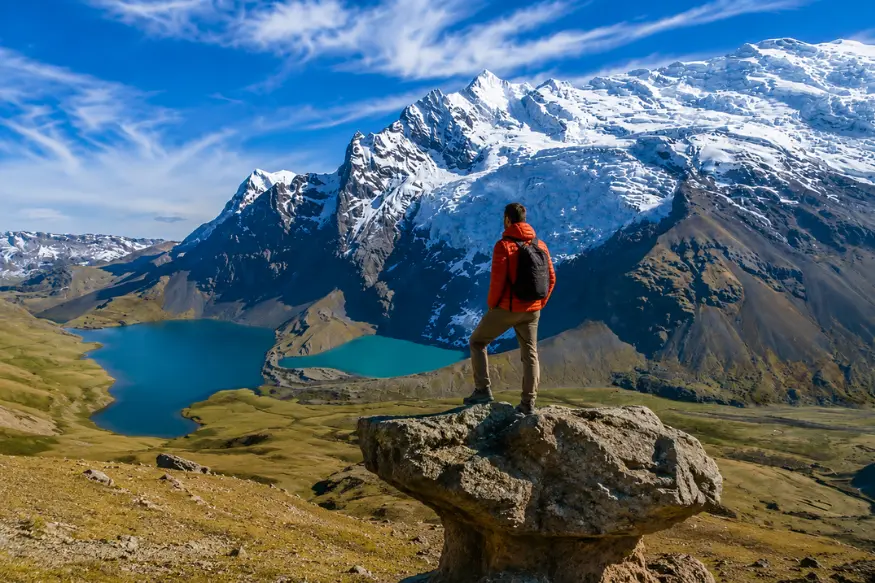
Peru is home to some of the world’s most spectacular trekking adventures. From the iconic Inca Trail to Machu Picchu and the scenic Salkantay Trek to the cultural Lares Trek and the remote Choquequirao Trek, every route offers a unique way to experience the Andes. Among them, however, the Ausangate Trek stands apart as Peru’s ultimate high-altitude wilderness adventure.
Circling the majestic Ausangate Mountain (6,384 m / 20,945 ft), the highest peak in the Cusco region, this incredible trek leads hikers through snow-capped mountains, turquoise glacial lakes, colorful valleys, natural hot springs, and traditional Quechua communities that have lived in harmony with these landscapes for generations.
Unlike the Classic Inca Trail, which culminates at Machu Picchu, or the Salkantay Trek, known for its dramatic transition from alpine mountains to cloud forests, the Ausangate Trek is all about untouched nature. There are no archaeological sites or crowded viewpoints—just endless Andean scenery, remote mountain passes above 5,000 meters (16,400 ft), and one of the most rewarding trekking experiences in South America.
Whether you’re considering the classic 5-day Ausangate Trek, a shorter 4-day itinerary, or a route that includes Rainbow Mountain and the Red Valley, this guide covers everything you need to know. You’ll learn how to get there, when to hike, what to pack, how difficult the trek really is, how much it costs, and how to choose the itinerary that best matches your experience and travel goals.
If you’re looking for a complete, up-to-date guide written by local trekking specialists, you’ve come to the right place.
Table of Contents
Why Hike the Ausangate Trek?
Choosing a trekking route in Peru is not easy. The country offers world-famous adventures that appeal to different types of travelers, from history enthusiasts to experienced mountaineers. Yet the Ausangate Trek continues to stand out because it offers something increasingly difficult to find: true wilderness.
Instead of following busy trails shared with hundreds of hikers each day, the Ausangate Trek leads you into one of the most remote regions of the Peruvian Andes, where nature remains largely untouched and local traditions continue to shape everyday life.
Some of the highlights that make the Ausangate Trek unforgettable include:
- Spectacular views of Ausangate Mountain throughout much of the route.
- Turquoise glacial lakes surrounded by snow-capped peaks.
- High mountain passes reaching more than 5,000 meters (16,400 ft).
- Colorful, mineral-rich landscapes unlike anywhere else in Peru.
- Opportunities to visit Rainbow Mountain and the Red Valley.
- Traditional Quechua communities where alpaca herding remains a way of life.
- Natural hot springs that provide the perfect place to relax after long hiking days.
- Exceptional opportunities for photography, especially at sunrise and sunset.
- Significantly fewer crowds compared to the Inca Trail and other popular trekking routes.
Perhaps the greatest appeal of the Ausangate Trek is its sense of isolation. There are long stretches where the only sounds come from the wind, nearby streams, and grazing alpacas, allowing hikers to experience the Andes in a way that feels both peaceful and authentic.
For many experienced trekkers, this combination of dramatic scenery, physical challenge, and cultural immersion makes the Ausangate Trek one of the finest high-altitude hiking experiences in the world.
Where Is the Ausangate Trek?
The Ausangate Trek is located in the Cusco Region of southern Peru, within the spectacular Vilcanota Mountain Range, one of the most impressive sections of the Peruvian Andes. The trail lies approximately 100 kilometers (62 miles) southeast of the city of Cusco, making it accessible while still feeling remarkably remote.
At the center of the trek rises Ausangate Mountain, the highest peak in the Cusco region and one of Peru’s most iconic snow-capped mountains. For centuries, local Quechua communities have regarded Ausangate as an Apu—a sacred mountain spirit believed to protect nearby villages, livestock, and water sources. Even today, this spiritual connection remains an important part of Andean culture and traditions.
Although the mountain itself dominates the skyline, the trekking circuit extends through a remarkably diverse landscape that includes glacier-fed rivers, alpine grasslands, wetlands, colorful valleys, and pristine lakes formed by melting ice. This unique geography creates an environment unlike any other trekking destination in Peru.
The trek typically begins in one of three small Andean communities:
- Tinqui, the traditional gateway to the classic circuit.
- Upis, a popular starting point for many guided tours.
- Pacchanta, known for its natural hot springs and shorter trekking itineraries.
Despite being only a few hours from Cusco, the Ausangate region remains largely untouched by mass tourism, preserving its extraordinary natural beauty and authentic mountain culture.
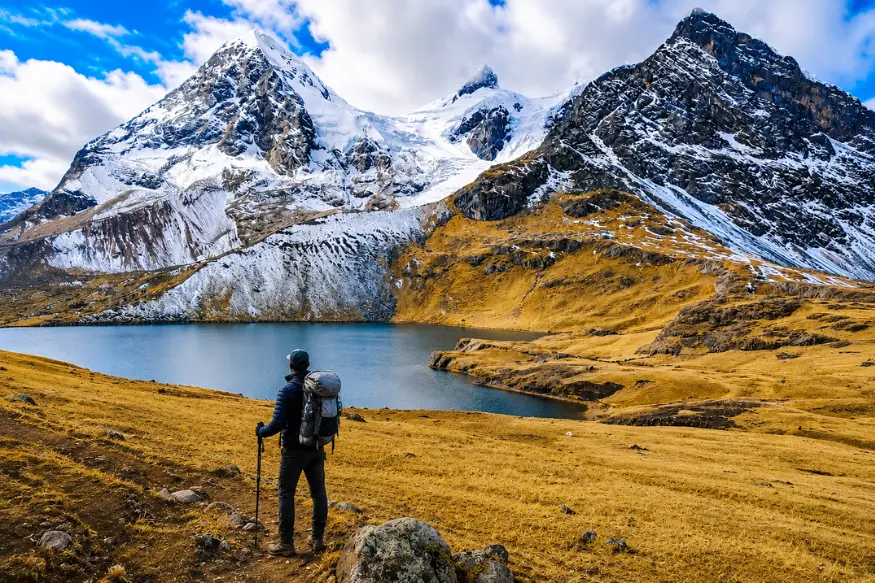
How to Get to the Ausangate Trek
The Ausangate Trek is located approximately 100 kilometers (62 miles) southeast of Cusco. Although the trail passes through one of Peru’s most remote mountain regions, reaching the starting point is relatively straightforward with the right planning.
Most hikers begin their journey from Cusco, where both independent travelers and organized tours can arrange transportation to the trailhead. Depending on the starting village and road conditions, the drive usually takes between 3 and 4 hours.
From Cusco
Cusco serves as the main gateway to the Ausangate Trek and offers several transportation options depending on your budget and travel style.

Organized Tours
Joining a guided tour is the easiest and most popular option. Most trekking operators include:
- Hotel pickup in Cusco.
- Round-trip private transportation.
- Professional trekking guide.
- Camping equipment.
- Meals during the trek.
- Pack horses and horsemen (depending on the itinerary).
This option eliminates the need to coordinate transportation or logistics before the trek begins.
Private Transportation
Hiring a private vehicle provides greater flexibility and allows you to stop at viewpoints or nearby villages along the way.
This option is ideal for:
- Private trekking groups.
- Families.
- Photographers.
- Travelers with customized itineraries.
Travel time from Cusco is generally 3 to 4 hours, depending on the chosen starting point.
Public Transportation
Independent travelers can also reach the trail using public transportation.
Most local buses and shared vans depart from Cusco toward the communities surrounding Ausangate, including Tinqui and nearby villages. From there, travelers usually continue by taxi to the exact trailhead if necessary.
While this is the most economical option, schedules may vary and services are less frequent than transportation to more popular destinations around Cusco.
Where Does the Ausangate Trek Start?
Unlike the Inca Trail, the Ausangate Trek does not have a single official starting point. Different itineraries begin in different villages depending on the number of hiking days and the route selected.
The most common trailheads are
Tinqui
The traditional starting point for the classic Ausangate circuit. Many multi-day itineraries begin here before gradually ascending into the surrounding mountains.
Upis
A popular starting location for 4- and 5-day treks. Beginning in Upis allows hikers to reach the famous Upis Hot Springs on the first day while enjoying impressive views of Ausangate Mountain.
Pacchanta
Known for its natural hot springs and breathtaking scenery, Pacchanta is often used as the starting or ending point for shorter itineraries or treks that combine Ausangate with Rainbow Mountain.
Although each route varies slightly, they all explore the spectacular landscapes surrounding Ausangate Mountain.
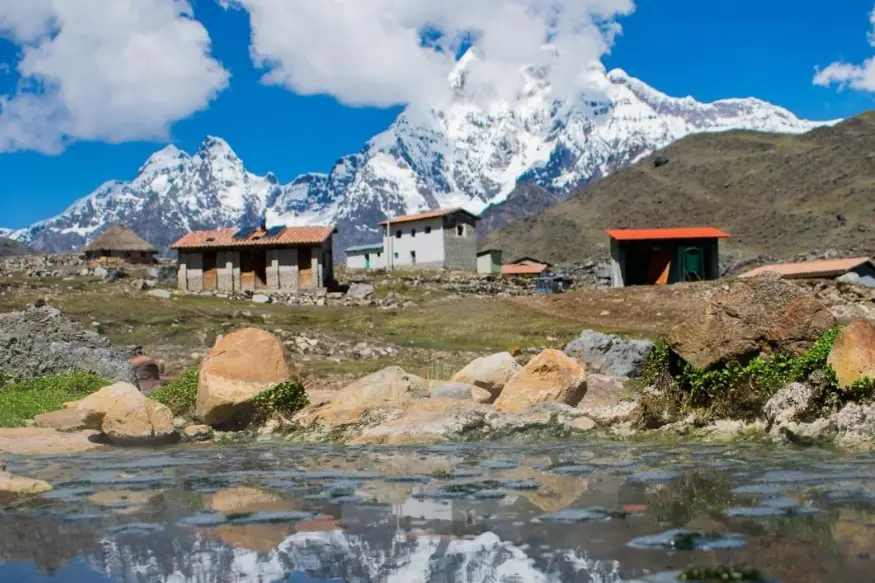
Can You Hike the Ausangate Trek Without a Guide?
Yes. It is possible to complete the Ausangate Trek independently, and experienced hikers choose this option every year.
However, independent trekking requires considerably more preparation than hiking with an organized tour.
Before attempting the trek on your own, you should consider:
- Previous experience with multi-day backpacking.
- Confidence navigating remote mountain terrain.
- Proper camping equipment suitable for freezing temperatures.
- Enough food for the entire trek.
- Water purification system.
- GPS navigation or offline maps.
- Emergency supplies and first-aid equipment.
- Adequate acclimatization before starting the hike.
Because the trail reaches elevations above 5,000 meters (16,400 ft) and weather conditions can change rapidly, many visitors prefer hiking with a licensed guide, especially if it is their first time trekking at high altitude in Peru.
How Long Does It Take to Reach the Ausangate Trek?
Although the trail feels incredibly remote, the journey from Cusco is relatively short.
Here’s a general estimate:
| Starting Point | Approximate Travel Time from Cusco |
|---|---|
| Tinqui | 3.5–4 hours |
| Upis | 3–3.5 hours |
| Pacchanta | 3.5–4 hours |
Most guided tours depart early in the morning, allowing hikers to begin walking before midday.
For independent travelers, spending the night in one of the nearby villages before starting the trek can be a good option, especially if you want to acclimatize and avoid rushing on your first hiking day.
Ausangate Trek Routes
One of the biggest advantages of the Ausangate Trek is its flexibility. Unlike some of Peru’s other famous hikes, there isn’t just one official itinerary. Depending on your available time, fitness level, and travel goals, you can choose from several different routes ranging from short adventures to complete mountain circuits.
Some itineraries focus exclusively on the Ausangate circuit, while others combine the trek with nearby attractions such as Rainbow Mountain (Vinicunca), the Red Valley, or the relaxing Pacchanta Hot Springs.
Below is an overview of the most popular Ausangate Trek routes to help you decide which option best matches your adventure.
Ausangate Trek 2 Days
The 2-day Ausangate Trek is ideal for travelers with limited time who still want to experience the breathtaking scenery surrounding Peru’s highest mountain in the Cusco region.
Although much shorter than the classic circuit, this itinerary still offers spectacular glacier views, turquoise lakes, mountain landscapes, and a chance to enjoy the famous hot springs of Pacchanta.
This option is best suited for:
- Travelers with limited vacation time.
- Experienced hikers looking for a short adventure.
- Visitors already acclimatized to Cusco.
- Those combining the trek with other destinations in Peru.
Ausangate Trek 3 Days
The 3-day itinerary provides a more complete introduction to the Ausangate region while remaining accessible for travelers who cannot commit to a longer expedition.
Depending on the route, hikers may visit several alpine lakes, cross high mountain passes, and experience traditional Andean communities before returning to Cusco.
This route offers a good balance between adventure and time efficiency.
It is recommended for:
- Active travelers.
- Photographers.
- Couples.
- Small private groups.
- Visitors combining several tours during their stay in Cusco.
Ausangate Trek 4 Days
The 4-day Ausangate Trek has become one of the most popular alternatives to the classic circuit.
It includes many of the region’s most impressive highlights while requiring one less day on the trail. Many itineraries also finish with a visit to Rainbow Mountain, allowing travelers to experience two of Peru’s most spectacular destinations in a single adventure.
The 4-day route is an excellent choice for hikers who want a complete experience without committing to a full week in the mountains.
Ausangate Trek 5 Days
The 5-day Ausangate Trek is widely considered the classic route and remains the most popular itinerary among international travelers.
Over five unforgettable days, hikers complete the full circuit around Ausangate Mountain while crossing several high-altitude mountain passes, camping beside glacial lakes, visiting remote Quechua communities, and enjoying some of the most spectacular scenery in the Peruvian Andes.
Many trekking specialists consider this itinerary the perfect balance between challenge, scenery, and cultural immersion.
If you’re visiting Ausangate for the first time, this is generally the route most travelers choose.
Ausangate Trek 6 Days
The 6-day itinerary follows a more relaxed pace, allowing hikers to spend additional time exploring the surrounding landscapes instead of covering long distances each day.
Depending on the operator and route, this version may include:
- More time for photography.
- Additional glacial lakes.
- Longer cultural experiences.
- Extra acclimatization.
- Alternative camping locations.
This option is ideal for travelers who prefer to fully immerse themselves in the mountains without rushing through the experience.
Ausangate Trek 7 Days
The 7-day Ausangate Trek is the most comprehensive itinerary available and is designed for hikers who want to experience every major highlight of the region.
In addition to completing the full Ausangate circuit, many 7-day routes include destinations such as Rainbow Mountain, the Red Valley, hidden alpine lakes, lesser-known mountain passes, and extended visits to local communities.
Because of its longer duration, this itinerary also allows for a more gradual pace, making it easier to appreciate the extraordinary landscapes that make Ausangate one of South America’s premier trekking destinations.
Which Ausangate Trek Route Should You Choose?
Choosing the right itinerary depends on several factors, including your available time, physical condition, previous trekking experience, and the places you want to visit.
As a general recommendation:
- 2 Days – Best for travelers with limited time.
- 3 Days – A good balance between adventure and convenience.
- 4 Days – Ideal if you want to combine Ausangate with Rainbow Mountain.
- 5 Days – The classic and most complete trekking experience.
- 6 Days – Perfect for photographers and hikers who prefer a slower pace.
- 7 Days – The ultimate Ausangate adventure, covering nearly every major highlight in the region.
No matter which itinerary you choose, every route showcases the spectacular beauty of the Vilcanota Mountain Range and offers an unforgettable high-altitude experience in the Peruvian Andes.
Best Time to Hike the Ausangate Trek
The best time to hike the Ausangate Trek is during Peru’s dry season, which generally runs from May to September. These months usually offer clearer skies, more stable trail conditions, better visibility of the glaciers, and a lower chance of prolonged rain.
However, the dry season also brings the coldest nights of the year. At campsites above 4,500 meters (14,764 ft), temperatures can fall below freezing, especially in June and July. Hikers should therefore prepare for sunny days, strong ultraviolet radiation, cold winds, and very low nighttime temperatures.
For most travelers, the best months are
-
May: Green landscapes, fewer hikers, improving weather, and relatively clear views.
-
June: Very dry conditions and excellent visibility, but extremely cold nights.
-
July: Stable weather and clear mountain views, with some of the coldest temperatures.
-
August: Dry trails, good visibility, strong winds, and slightly warmer daytime conditions.
-
September: Fewer visitors, pleasant daytime temperatures, and occasional early-season rain.
The shoulder months of April and October can also be excellent. They usually offer fewer hikers and more colorful scenery, although rain becomes less predictable.
The wettest period normally occurs from December through March. During these months, heavy rain, snow, fog, slippery trails, and reduced visibility can make the route considerably more difficult. The trek remains possible, but it is better suited to experienced hikers who are comfortable with unstable mountain conditions.
Ausangate Trek Weather
Weather on the Ausangate Trek is highly variable because most of the route lies above 4,000 meters (13,123 ft). Conditions can change within minutes, and hikers may experience sunshine, rain, hail, snow, and strong wind on the same day.
Daytime temperatures are often moderate when the sun is shining, but the air cools rapidly once clouds arrive or the sun disappears behind the mountains. Nights are consistently cold throughout the year.
Typical conditions include:
-
Daytime temperatures: Approximately 5°C to 15°C (41°F to 59°F).
-
Nighttime temperatures: Commonly between -10°C and 2°C (14°F to 36°F).
-
High mountain passes: Colder and windier than campsites and valleys.
-
Ultraviolet exposure: Very strong because of the elevation.
-
Rainfall: Most frequent between November and March.
-
Snowfall: Possible at any time of year near the highest passes.
Because weather forecasts are less reliable in remote mountain areas, hikers should always carry waterproof clothing, warm layers, gloves, a hat, and sun protection, even during the dry season.
Ausangate Trek Weather by Month
-
January: One of the wettest months. Expect frequent rain, cloudy skies, muddy trails, and occasional snow at high elevations. The mountains are green, but visibility may be limited.
-
February: Heavy rainfall continues, and some sections of the trail can become difficult to cross. This is one of the least recommended months for a full multi-day circuit.
-
March: Rain remains common, although conditions gradually begin to improve toward the end of the month. Trails are still wet, and clouds may hide the highest peaks.
-
April: A transitional month with greener landscapes, fewer visitors, and increasingly stable weather. Rain is still possible, especially during the first half of the month.
-
May: The beginning of the dry season. Days are generally clearer, trails improve, and the valleys remain relatively green after the rainy months.
-
June: One of the driest and clearest months. It offers outstanding views of Ausangate and the surrounding glaciers, but nights can be extremely cold.
-
July: Clear skies and dry trails are common. This is an excellent month for trekking, although freezing nighttime temperatures should be expected.
-
August: Mostly dry with excellent visibility. Strong afternoon winds are common on exposed mountain passes and open plateaus.
-
September: Conditions remain favorable, with slightly warmer days and fewer hikers. Short rain showers may begin to appear later in the month.
-
October: A good shoulder-season option. Landscapes start becoming greener, but rainfall becomes more frequent and less predictable.
-
November: The rainy season begins to establish itself. Morning weather can still be pleasant, while afternoon showers become increasingly common.
-
December: Rain, fog, and cloud cover are frequent. The scenery is greener, but high passes may receive snow, and trail conditions can deteriorate quickly.
The weather should not be the only factor when choosing your travel dates. Availability, acclimatization time, preferred scenery, tolerance for cold, and your level of trekking experience should also influence your decision.
Is the Ausangate Trek Open All Year?
The Ausangate Trek does not have an official annual closure like the Inca Trail. In theory, it can be hiked throughout the year.
However, trekking during the rainy season can involve:
-
Muddy and slippery paths.
-
Reduced visibility.
-
Higher river levels.
-
Snow on mountain passes.
-
Wet camping equipment.
-
Greater risk of itinerary delays.
Some operators may modify, postpone, or cancel departures when conditions are unsafe. Travelers planning to hike between January and March should remain flexible and confirm trail conditions before leaving Cusco.
For the most reliable combination of clear views, safer trails, and stable conditions, May through September remains the preferred trekking season.
Ausangate Trek Altitude
Altitude is one of the most important factors to consider before hiking the Ausangate Trek. Unlike many other trekking routes in Peru, this adventure remains above 4,000 meters (13,123 ft) for most of the journey, making it one of the country’s highest and most demanding multi-day hikes.
While the breathtaking scenery is one of the trek’s greatest rewards, the thin mountain air can significantly increase the physical challenge, even for experienced hikers in excellent condition.
Here are the most important altitude facts:
-
Cusco: 3,399 m (11,152 ft)
-
Trailhead: Approximately 4,200 m (13,780 ft)
-
Highest mountain pass: Around 5,200 m (17,060 ft)
-
Highest mountain: Ausangate Mountain – 6,384 m (20,945 ft)
-
Typical campsites: Between 4,300 and 4,700 m (14,108–15,420 ft)
At these elevations, oxygen levels are considerably lower than at sea level. As a result, hiking becomes more physically demanding, recovery takes longer, and symptoms of altitude sickness can appear if your body has not properly acclimatized.
Even simple activities such as walking uphill, setting up camp, or carrying a backpack may feel noticeably harder than expected.
Fortunately, most hikers who spend enough time acclimatizing in Cusco before starting the trek complete the route without major issues.
Acclimatization for the Ausangate Trek
Proper acclimatization is essential for anyone planning to hike the Ausangate Trek.
Because the trail begins at an elevation higher than many of the world’s famous mountains, arriving directly from sea level and starting the trek immediately is strongly discouraged.
To give your body enough time to adapt, most trekking specialists recommend spending at least 2 to 3 full days in Cusco before beginning the hike. During this time, it’s a good idea to explore nearby attractions, take short walks, stay well hydrated, and avoid strenuous physical activity on your first day.
Many travelers also choose to visit destinations such as the Sacred Valley, Humantay Lake, or the South Valley as part of their acclimatization process before attempting higher-altitude treks.
To reduce the risk of altitude sickness:
-
Spend at least 2–3 days acclimatizing before the trek.
-
Drink plenty of water throughout the day.
-
Eat light meals, especially during your first days at altitude.
-
Avoid excessive alcohol consumption before starting the hike.
-
Walk at a steady, comfortable pace instead of rushing.
-
Get enough sleep each night.
-
Listen to your body and rest whenever necessary.
Although some travelers use medications to help prevent altitude sickness, always consult a healthcare professional before taking any prescription medication.
The most effective acclimatization strategy is still allowing your body enough time to gradually adapt to the elevation.
Ausangate Trek Difficulty
The Ausangate Trek is widely considered one of the most challenging multi-day hikes in Peru. Although the trail does not require technical climbing or mountaineering experience, the combination of extreme altitude, long hiking days, and steep mountain passes makes it significantly more demanding than many other popular trekking routes.
For most hikers, the greatest challenge is not the terrain itself, but the reduced oxygen levels above 4,500 meters (14,764 ft).
Several factors contribute to the trek’s difficulty:
-
Long daily hiking distances.
-
Multiple mountain passes above 5,000 meters (16,400 ft).
-
Continuous elevation gain and descent.
-
Cold nighttime temperatures.
-
Strong winds in exposed areas.
-
High-altitude camping.
-
Limited facilities along the route.
Despite these challenges, thousands of hikers successfully complete the Ausangate Trek every year with proper preparation and acclimatization.
As a general guide:
| Experience Level | Difficulty |
|---|---|
| Beginner with no trekking experience | Challenging |
| Active traveler with good fitness | Moderate to Challenging |
| Experienced trekker | Moderate |
Many people assume the Ausangate Trek is technically difficult because of its elevation. In reality, the trail itself is generally well-defined, and no climbing equipment is required. The real challenge comes from hiking for several consecutive days in a high-altitude environment where your body works much harder than it would at lower elevations.
For hikers who arrive well acclimatized, maintain a steady pace, and prepare physically before their trip, the Ausangate Trek becomes a demanding yet highly rewarding adventure rather than an overwhelming one.
How to Train for the Ausangate Trek
Preparing your body before arriving in Peru can make a significant difference in your overall trekking experience.
Although you don’t need to be an elite athlete, a good level of cardiovascular fitness and leg strength will help you enjoy the trek much more.
A balanced training routine should include:
-
Regular hiking on hills or uneven terrain.
-
Stair-climbing workouts.
-
Running, cycling, or swimming to improve endurance.
-
Strength training focused on the legs and core.
-
Walking with a loaded backpack to simulate trekking conditions.
-
Stretching and mobility exercises to reduce muscle fatigue.
If possible, begin training 6 to 8 weeks before your trip, gradually increasing both distance and elevation whenever available.
The goal is not to hike as fast as possible but to develop the endurance needed to comfortably walk for several hours each day while carrying your personal gear.
Remember that physical fitness alone cannot prevent altitude sickness, but it will make the demanding sections of the Ausangate Trek considerably more manageable.
Ausangate Trek Packing List
Packing the right equipment is essential for a safe and comfortable Ausangate Trek. Weather conditions in the Peruvian Andes can change rapidly, and hikers often experience warm sunshine, freezing temperatures, strong winds, rain, and even snow within the same day.
Layering your clothing is the best strategy, allowing you to adapt quickly to changing conditions without carrying unnecessary weight.
Essential Clothing
Your clothing should keep you warm, dry, and comfortable throughout the trek.
Recommended items include:
-
Moisture-wicking base layers.
-
Insulating fleece or down jacket.
-
Waterproof and windproof outer jacket.
-
Waterproof hiking pants.
-
Lightweight trekking pants.
-
Thermal leggings for cold nights.
-
Hiking shirts (long and short sleeves).
-
Warm hat or beanie.
-
Sun hat or cap.
-
Buff or neck gaiter.
-
Waterproof gloves.
-
Extra hiking socks.
-
Comfortable underwear.
Footwear
Your feet will carry you through mountain passes, rocky trails, streams, and uneven terrain, making proper footwear one of the most important investments.
Bring:
-
Waterproof hiking boots with good ankle support.
-
Comfortable camp shoes or sandals.
-
Gaiters (optional during the rainy season).
Avoid wearing brand-new boots on the trek. Break them in before your trip to reduce the risk of blisters.
Backpack and Camping Gear
If you’re joining a guided tour, most camping equipment is usually provided. Independent hikers will need to carry or rent their own gear.
Recommended equipment includes:
-
Daypack (20–35 liters).
-
Rain cover for your backpack.
-
Sleeping bag rated for below-freezing temperatures.
-
Sleeping pad.
-
Trekking poles.
-
Dry bags or waterproof stuff sacks.
-
Headlamp with extra batteries.
Personal Essentials
Don’t forget the small items that can make a big difference during several days in the mountains.
Pack:
-
Passport.
-
Cash in Peruvian soles.
-
Reusable water bottles or hydration reservoirs.
-
Water purification tablets or filter.
-
Sunscreen (SPF 50+).
-
Lip balm with sun protection.
-
Sunglasses with UV protection.
-
Personal medications.
-
Basic first-aid kit.
-
Hand sanitizer.
-
Wet wipes.
-
Toilet paper.
-
Power bank.
-
Camera or smartphone.
-
Portable charger cables.
Snacks
Although guided tours include meals, bringing additional snacks can help maintain your energy during long hiking days.
Good options include:
-
Energy bars.
-
Trail mix.
-
Chocolate.
-
Dried fruit.
-
Nuts.
-
Electrolyte tablets.
Optional Items
Depending on the season and your personal preferences, you may also want to pack:
-
Binoculars.
-
Small notebook.
-
Lightweight travel pillow.
-
Compression socks.
-
Waterproof phone pouch.
-
Extra memory cards.
-
Lightweight towel.
Packing light is important, but don’t sacrifice essential clothing for warmth. Temperatures can drop well below freezing at night, and being properly equipped will significantly improve your trekking experience.
What Will You See on the Ausangate Trek?
The Ausangate Trek is considered one of South America’s most scenic hiking routes because nearly every day introduces a completely different landscape. From towering glaciers to colorful mountains and peaceful alpine valleys, the scenery changes continuously throughout the journey.
Some of the highlights you can expect include:
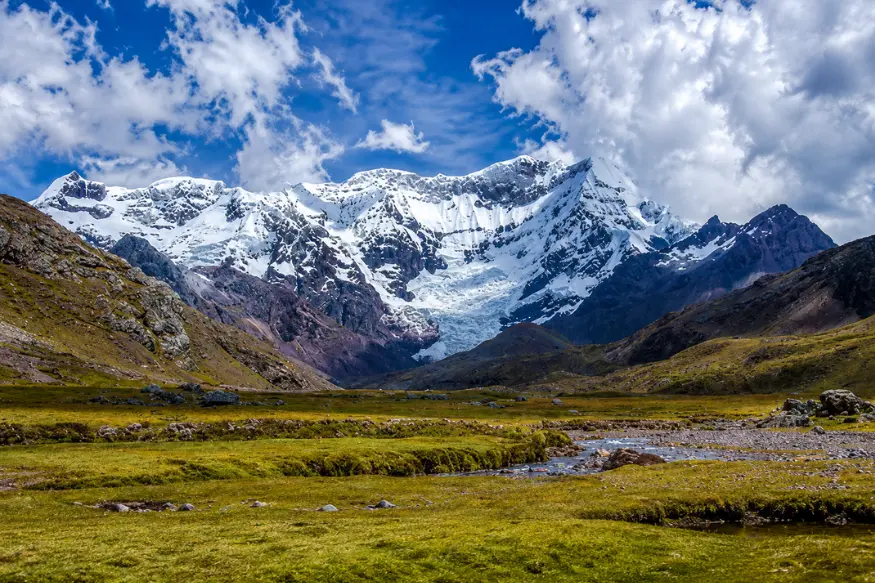
Ausangate Mountain
The trek revolves around the magnificent Ausangate Mountain, the highest peak in the Cusco region at 6,384 meters (20,945 feet).
Its massive glaciers dominate the skyline for much of the hike, creating spectacular panoramas from sunrise until sunset.
For local Quechua communities, Ausangate is also considered a sacred mountain, or Apu, deeply connected to Andean spirituality.
.
Turquoise Glacial Lakes
One of the most memorable features of the trek is the collection of brilliant turquoise lakes fed by melting glaciers.
Among the most famous are
-
Pucacocha.
-
Hatun Pucacocha.
-
Qomercocha.
-
Azulcocha.
Their vibrant colors contrast beautifully against the surrounding snow-capped peaks and make excellent photography locations.
High Mountain Passes
Several mountain passes rise above 5,000 meters (16,400 feet), rewarding hikers with breathtaking panoramic views of the Vilcanota Range.
These high points often become some of the most unforgettable moments of the entire trek.
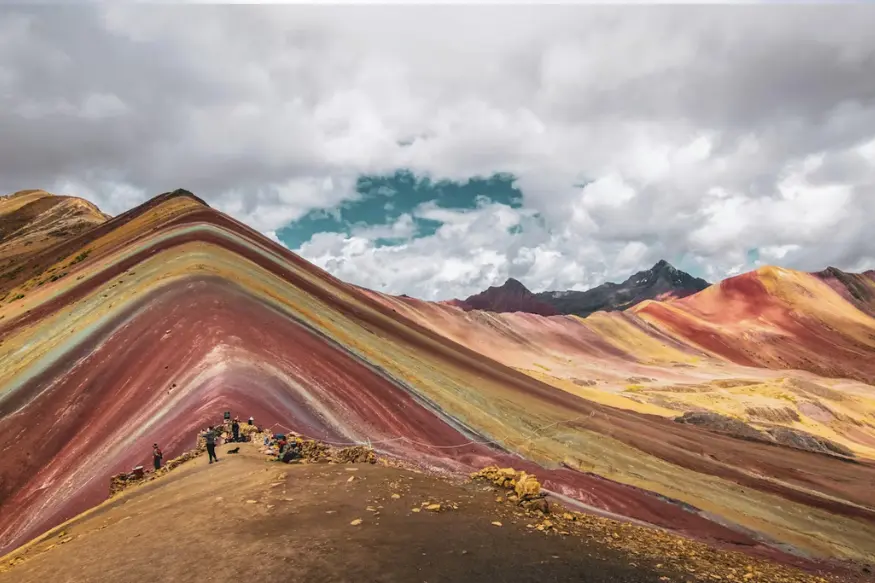
Rainbow Mountain
Many Ausangate itineraries finish with a visit to Rainbow Mountain (Vinicunca).
Its colorful mineral-rich slopes have become one of Peru’s most photographed natural attractions and provide an incredible finale to the adventure.
Visiting Rainbow Mountain as part of the Ausangate Trek usually allows hikers to arrive earlier than most day-tour groups.
Red Valley
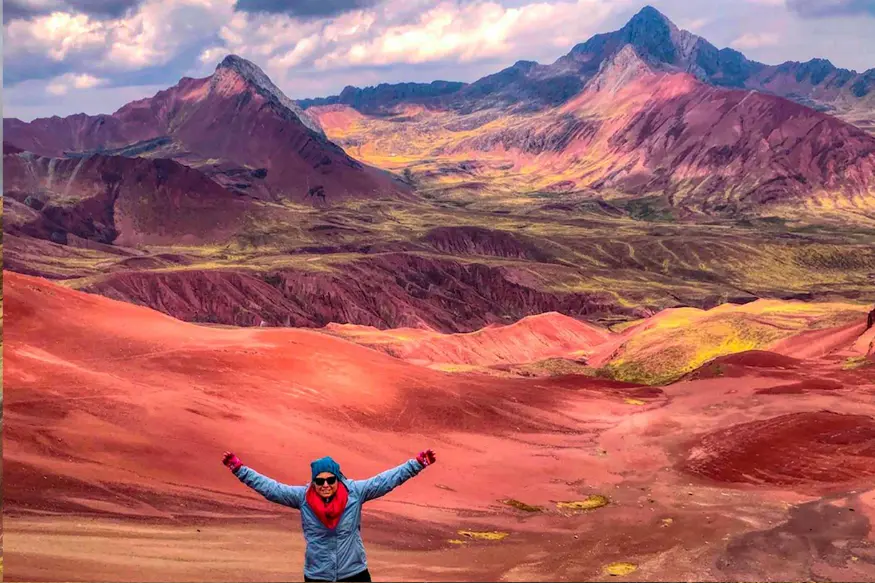
Located near Rainbow Mountain, the Red Valley remains one of the region’s hidden gems.
Its dramatic crimson hills, colorful ridges, and relatively small number of visitors create one of the most unique landscapes in the Peruvian Andes.
Pacchanta Hot Springs
After several demanding hiking days, relaxing in the natural hot springs of Pacchanta is the perfect reward.
Surrounded by glaciers and mountain scenery, these thermal pools offer an unforgettable way to conclude the trek.

Wildlife
The Ausangate region is home to a surprising variety of Andean wildlife.
With a bit of luck, hikers may spot:
-
Alpacas.
-
Llamas.
-
Vicuñas.
-
Vizcachas.
-
Andean geese.
-
Caracaras.
-
Andean condors.
Wildlife sightings are especially common during the early morning hours.
Traditional Quechua Communities
Beyond its natural beauty, the Ausangate Trek also provides an opportunity to experience authentic Andean culture.
Many local families continue to live much as their ancestors did, raising alpacas and llamas while preserving traditional clothing, weaving techniques, language, and customs.
Respecting these communities and asking permission before taking photographs helps support responsible and sustainable tourism.
By the end of the trek, you’ll have experienced one of the most diverse mountain landscapes in Peru—combining glaciers, alpine lakes, colorful valleys, remote villages, wildlife, and some of the highest trekking passes in the Andes.
Independent Ausangate Trek vs Guided Tour
One of the most common questions travelers ask is whether they should hike the Ausangate Trek independently or book a guided tour.
The answer depends on your trekking experience, confidence at high altitude, and the type of adventure you’re looking for.
While the trail can be completed without a guide, most visitors choose an organized tour because it simplifies logistics and allows them to focus entirely on enjoying the spectacular scenery.
Hiking the Ausangate Trek Independently
Independent trekking offers complete freedom. You decide your own pace, campsites, daily distances, and schedule.
This option is best suited for experienced backpackers who are comfortable navigating remote mountain environments and camping at high altitude.
Advantages
-
Complete flexibility.
-
Travel at your own pace.
-
Freedom to modify your itinerary.
-
Lower overall cost.
-
Ideal for experienced backpackers.
Challenges
-
Navigation is entirely your responsibility.
-
You’ll need to carry or rent camping equipment.
-
Food preparation is your responsibility.
-
Weather conditions can change rapidly.
-
Limited assistance in case of emergencies.
-
High-altitude trekking requires careful planning.
Independent hikers should also carry offline GPS maps, emergency supplies, water purification equipment, and sufficient food for the entire journey.
Joining a Guided Ausangate Trek
For most travelers, a guided tour offers the safest, easiest, and most enjoyable way to experience the Ausangate region.
Professional trekking companies handle transportation, meals, camping logistics, and route planning, allowing hikers to fully appreciate the scenery without worrying about daily logistics.
A typical guided trek includes:
-
Round-trip transportation from Cusco.
-
Professional bilingual guide.
-
Cook and support staff.
-
Camping equipment.
-
Pack horses for camping gear.
-
Freshly prepared meals.
-
First-aid kit.
-
Emergency oxygen.
-
Assistance throughout the trek.
Many operators also include visits to Rainbow Mountain and the Red Valley, making the experience even more rewarding.
Which Option Is Best?
For first-time visitors to Peru or anyone unfamiliar with high-altitude trekking, a guided tour is generally the best choice.
Independent trekking is better suited for hikers who already have experience with:
-
Multi-day backpacking.
-
High-altitude expeditions.
-
Wilderness navigation.
-
Cold-weather camping.
Although independent hiking offers greater freedom, guided treks provide additional safety, local knowledge, cultural insights, and logistical support that significantly enhance the overall experience.
Camping on the Ausangate Trek
Camping is an essential part of the Ausangate Trek experience.
Unlike the Inca Trail, where campsites are assigned and regulated, the Ausangate route passes through remote mountain valleys where campsites are generally managed by local communities.
Most campsites are located beside rivers, alpine lakes, or wide valleys with spectacular views of the surrounding glaciers.
Facilities are basic but adequate for multi-day trekking.
Depending on the campsite, you may find:
-
Flat camping areas.
-
Simple toilets.
-
Running water (not potable).
-
Small community shops.
-
Nearby natural hot springs at selected locations.
Because temperatures frequently fall below freezing after sunset, a high-quality sleeping bag and insulated sleeping pad are essential for a comfortable night’s sleep.
One of the greatest rewards of camping in the Ausangate region is the incredible night sky. With virtually no light pollution, clear evenings reveal thousands of stars, the Milky Way, and outstanding opportunities for astrophotography.
Useful Information Before Hiking the Ausangate Trek
Preparing in advance will help ensure a safer and more enjoyable trekking experience.
Here are some practical tips every hiker should know before arriving.
Mobile Phone Signal
Cell phone coverage is extremely limited along most sections of the Ausangate Trek.
Some villages may have occasional reception, but hikers should expect long periods without a reliable signal.
Downloading offline maps before leaving Cusco is highly recommended.
Internet Access
There is no dependable internet access on the trail.
If staying connected is important, notify family or friends that communication may not be possible for several days.
Electricity
Electricity is unavailable at most campsites.
Bring:
-
A fully charged power bank.
-
Charging cables.
-
Extra camera batteries if needed.
Cold temperatures can reduce battery performance, so keep electronics inside your sleeping bag overnight whenever possible.
Drinking Water
Natural streams are abundant throughout the trek, but untreated mountain water should never be consumed directly.
Always use:
-
Water filters.
-
Purification tablets.
-
Boiled water provided by your trekking crew.
Bathrooms
Facilities vary depending on the campsite.
Some locations have simple community toilets, while others require more basic wilderness practices.
Guided tours often provide portable toilet tents for additional comfort.
Cash
Carry enough Peruvian soles before leaving Cusco.
Remote communities generally do not accept:
-
Credit cards.
-
Debit cards.
-
Mobile payments.
Cash may be needed for:
-
Community entrance fees.
-
Snacks.
-
Drinks.
-
Souvenirs.
-
Hot springs.
-
Horse rentals.
Travel Insurance
Because the Ausangate Trek takes place in a remote high-altitude environment, comprehensive travel insurance is strongly recommended.
Choose a policy that covers:
-
High-altitude trekking.
-
Emergency evacuation.
-
Medical treatment.
-
Trip interruptions.
-
Lost or damaged luggage.
Respect Local Communities
The Ausangate region remains home to traditional Quechua communities that have lived in these mountains for generations.
Help preserve their culture by:
-
Asking permission before taking photographs.
-
Purchasing locally made handicrafts.
-
Respecting private property.
-
Following your guide’s instructions.
-
Leaving no trace.
Responsible tourism helps protect both the local communities and the extraordinary natural environment that make the Ausangate Trek so special.
Ausangate Trek vs. Inca Trail
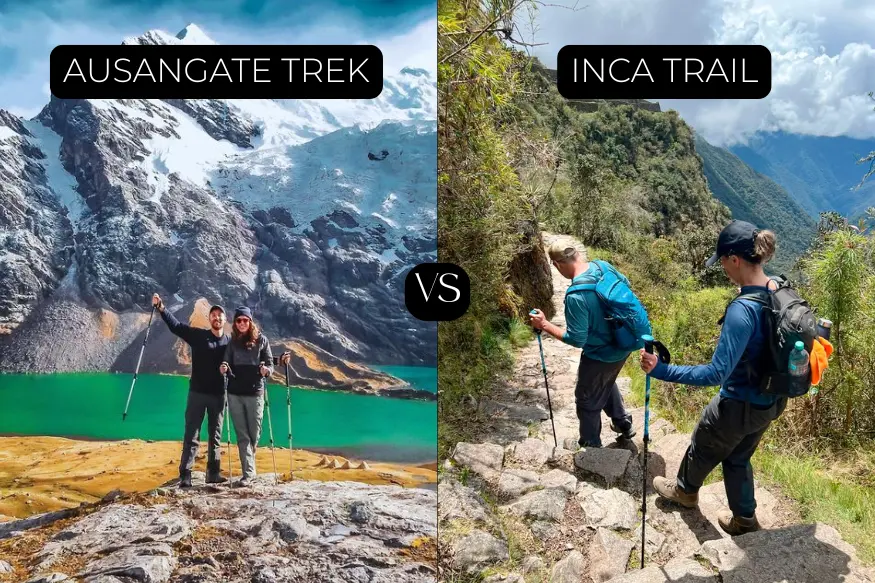
The Ausangate Trek and the Classic Inca Trail are two of Peru’s most iconic hiking experiences, but they offer completely different adventures.
The Inca Trail is famous for its archaeological significance, ancient Inca stone paths, cloud forests, and the unforgettable arrival at Machu Picchu through the Sun Gate. It is ideal for travelers who want to combine hiking with history and one of the New Seven Wonders of the World.
The Ausangate Trek, on the other hand, is all about raw mountain wilderness. There are no archaeological sites along the route. Instead, you’ll experience towering glaciers, turquoise lakes, colorful valleys, high mountain passes, and remote Quechua communities far from the crowds.
Choose the Inca Trail if you:
-
Want to visit Machu Picchu on foot.
-
Are interested in Inca history and archaeology.
-
Prefer a well-established trekking route.
-
Don’t mind booking permits months in advance.
Choose the Ausangate Trek if you:
-
Prefer dramatic alpine scenery.
-
Want a quieter trekking experience.
-
Enjoy remote wilderness.
-
Are looking for a greater physical challenge.
-
Have already visited Machu Picchu or plan to visit it separately.
Neither trek is objectively better—the right choice depends on the type of experience you’re looking for.
Ausangate Trek vs Salkantay Trek
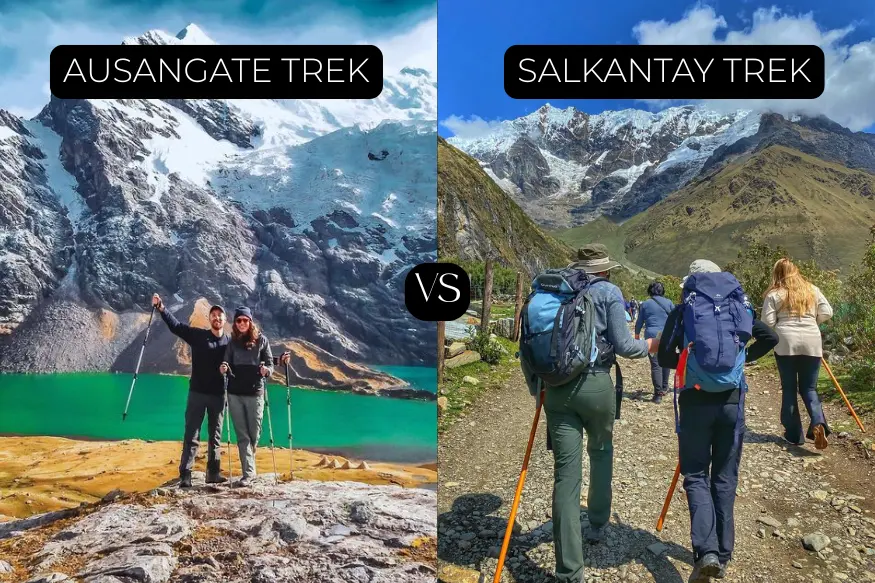
The Salkantay Trek is often considered the most popular alternative to the Inca Trail because it also ends at Machu Picchu.
While both treks feature spectacular mountain scenery, they differ significantly in terms of landscapes, altitude, and overall atmosphere.
The Salkantay Trek transitions through several ecosystems, including high mountains, cloud forests, and subtropical valleys. It offers more varied scenery and generally includes better-developed tourist infrastructure.
The Ausangate Trek remains at much higher elevations for most of the journey and focuses almost entirely on alpine landscapes. It is quieter, more remote, and physically more demanding.
Choose the Salkantay Trek if you:
-
Want to finish at Machu Picchu.
-
Prefer greater landscape diversity.
-
Are looking for more accommodation options.
-
Want a moderately challenging trek.
Choose the Ausangate Trek if you:
-
Want to experience Peru’s most spectacular mountain scenery.
-
Prefer fewer crowds.
-
Enjoy camping in remote wilderness.
-
Want a more challenging high-altitude adventure.
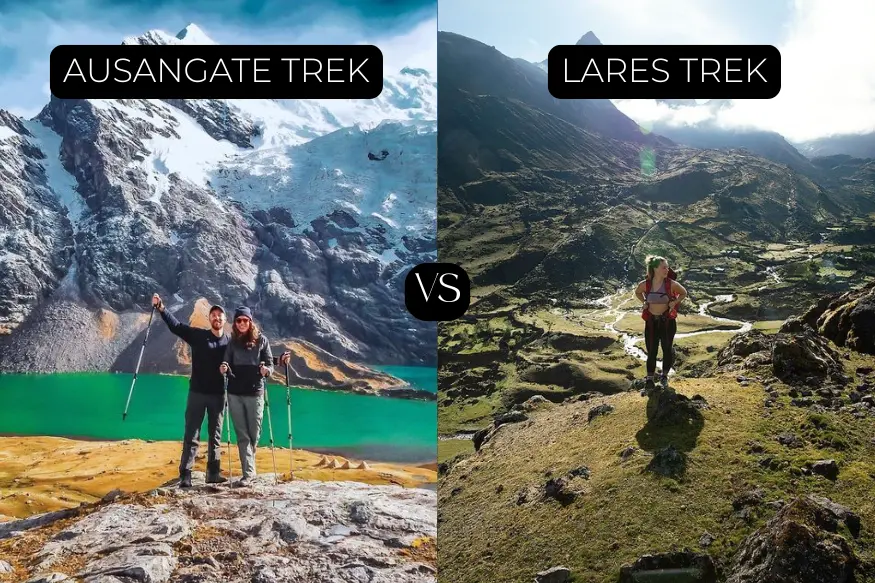
Ausangate Trek vs Lares Trek
Although both treks explore the Peruvian Andes, they provide very different experiences.
The Lares Trek is known for its cultural richness. It passes through traditional Andean villages where local families continue practicing centuries-old weaving techniques and agricultural traditions.
The scenery is beautiful, but the cultural interactions are often the highlight of the journey.
The Ausangate Trek, by contrast, emphasizes dramatic mountain landscapes, glaciers, alpine lakes, and high-altitude passes.
Choose the Lares Trek if you:
-
Want meaningful cultural experiences.
-
Enjoy visiting traditional communities.
-
Prefer a less demanding trek.
-
Plan to continue to Machu Picchu.
Choose the Ausangate Trek if you:
-
Prioritize spectacular mountain scenery.
-
Want to hike above 5,000 meters.
-
Enjoy wilderness camping.
-
Are looking for one of Peru’s most challenging trekking routes.
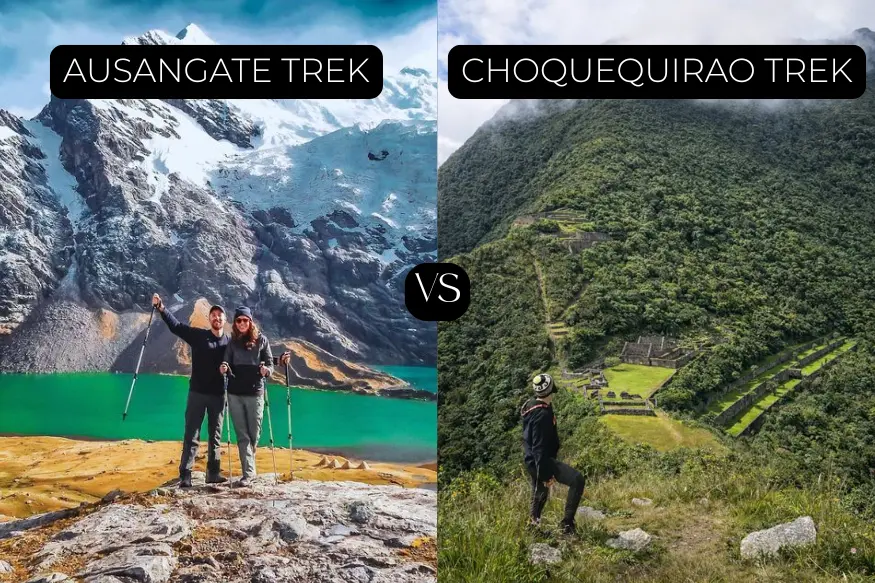
Ausangate Trek vs Choquequirao Trek
The Choquequirao Trek and the Ausangate Trek are both physically demanding, but they challenge hikers in different ways.
The Choquequirao Trek involves long, steep ascents and descents into deep canyons before reaching the impressive archaeological complex of Choquequirao, often referred to as the “sister city of Machu Picchu.”
The Ausangate Trek requires less extreme elevation gain and loss each day but remains at much higher altitudes throughout the expedition.
Choose the Choquequirao Trek if you:
-
Love archaeological sites.
-
Enjoy steep mountain hiking.
-
Want to explore a less-visited Inca city.
-
Don’t mind long uphill climbs.
Choose the Ausangate Trek if you:
-
Want glacier landscapes.
-
Prefer alpine lakes and snow-capped peaks.
-
Are interested in Andean wildlife.
-
Want a more remote mountain experience.
Both treks rank among Peru’s finest hiking adventures and appeal to experienced trekkers seeking unforgettable scenery away from the busiest tourist routes.
Frequently Asked Questions
How difficult is the Ausangate Trek?
The Ausangate Trek is considered moderate to challenging due to its high altitude, long hiking days, and multiple mountain passes above 5,000 meters (16,400 feet). Proper acclimatization is essential for a safe and enjoyable experience.
How many days do you need for the Ausangate Trek?
Most travelers choose the 5-day Ausangate Trek, which offers the best balance between scenery, challenge, and cultural experiences. Shorter 2-, 3-, and 4-day routes are also available, while longer 6- and 7-day itineraries provide a more comprehensive adventure.
What is the highest point of the Ausangate Trek?
Depending on the itinerary, the highest mountain pass reaches approximately 5,200 meters (17,060 feet) above sea level.
Can beginners hike the Ausangate Trek?
Yes, but only if they are in good physical condition and spend several days acclimatizing in Cusco before starting the trek. Previous hiking experience is helpful but not mandatory for guided tours.
Is the Ausangate Trek worth it?
Absolutely.
Many experienced hikers consider the Ausangate Trek one of the most beautiful mountain treks in South America thanks to its glaciers, turquoise lakes, colorful landscapes, wildlife, and authentic Andean culture.
Can you combine the Ausangate Trek with Rainbow Mountain?
Yes.
Many modern itineraries include Rainbow Mountain (Vinicunca) and the Red Valley, allowing hikers to experience two of Peru’s most spectacular destinations during the same adventure.
What wildlife can you see on the Ausangate Trek?
Common wildlife includes alpacas, llamas, vicuñas, vizcachas, Andean geese, caracaras, and, with a bit of luck, the majestic Andean condor.
Do you need permits for the Ausangate Trek?
Unlike the Inca Trail, the Ausangate Trek does not require a government-issued trekking permit. However, hikers usually pay small community entrance fees that help support local conservation and trail maintenance.
Is altitude sickness common on the Ausangate Trek?
Because the trek remains above 4,000 meters (13,123 feet) for much of the route, some hikers may experience mild symptoms of altitude sickness. Spending at least 2–3 days acclimatizing in Cusco significantly reduces the risk.
What is the best month to hike the Ausangate Trek?
The best conditions are typically found between May and September, when rainfall is lower, skies are clearer, and trail conditions are generally more stable.