
Tawantinsuyu
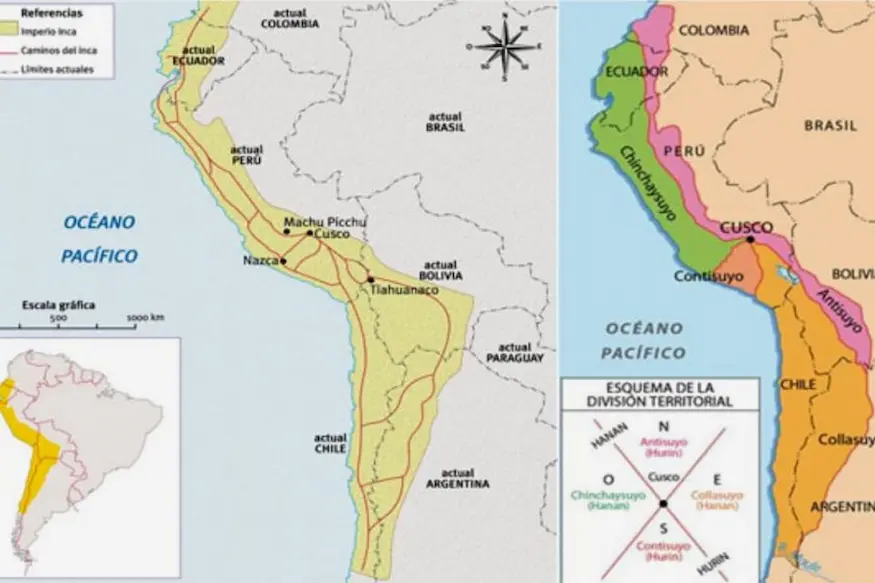
Tawantinsuyu, often referred to as the Inca Empire, was the largest and most advanced pre-Columbian civilization in South America. Spanning vast stretches of the Andes—from present-day Colombia to northern Chile—Tawantinsuyu unified diverse cultures, languages, and landscapes under a centralized yet flexible system of governance. The name itself, Tawantinsuyu, comes from Quechua and means “the four regions together” or “land of four quarters.”
Understanding Tawantinsuyu goes beyond the ruins of Machu Picchu or the image of gold-clad emperors. It is about a complex society built on communal labor, astronomical wisdom, and a unique worldview that still echoes in Andean life today.
What Does Tawantinsuyu Mean?
The term Tawantinsuyu is a compound of three Quechua words:
Tawa = Four
Inti = Sun
Suyu = Region or quarter
Literally, it means “the four regions of the sun.” The four suyus were the main administrative and territorial divisions of the Inca Empire. Each suyu represented a vast geographical area with unique cultural and environmental characteristics.
The Four Suyus of Tawantinsuyu
The Inca Empire was divided into four suyus, all radiating out from Cusco, the empire’s capital and sacred center.
1. Chinchaysuyu
Located northwest of Cusco, this was the most populous and powerful suyu. It included coastal areas and highland regions, reaching as far as present-day Ecuador. Chinchaysuyu encompassed important cities like Cajamarca and Quito.
2. Antisuyu
To the northeast, this suyu extended into the Amazon rainforest. It was the least developed due to its challenging terrain, but it was rich in biodiversity. “Anti” is the root of the word “Andes,” and Antisuyu was the source of exotic goods like feathers, medicinal plants, and tropical fruits.
3. Collasuyu
Located in the southeast, Collasuyu was the largest in area. It included parts of Bolivia, northern Argentina, and Chile. It was home to powerful cultures such as the Colla and was vital for its llama caravans, quinoa, and potato production.
4. Cuntisuyu
This southwestern region was the smallest, extending toward the coast of southern Peru. It played an important role in agriculture and early Inca expansion.
The Capital of Tawantinsuyu: Cusco
Cusco, or Qosqo in Quechua, was more than a city; it was the symbolic and literal center of the universe for the Incas. Shaped like a puma, Cusco’s layout reflected Inca cosmology. Major temples like the Qoricancha (Temple of the Sun) were aligned with celestial events, and roads extended from the city like spokes from a wheel.
All four suyus converged in Cusco, making it the political, spiritual, and administrative heart of Tawantinsuyu.
How Was Tawantinsuyu Governed?
Despite its size, the Inca Empire functioned without a written language or money. Instead, it relied on a highly organized bureaucracy and effective communication systems.
The Sapa Inca
At the top of the hierarchy was the Sapa Inca, the emperor believed to be a direct descendant of the sun god, Inti. He held absolute power, both religious and political.
The Ayllu System
Society was structured around ayllus, or family-based communities. Each ayllu shared land, worked together, and paid taxes in the form of labor (mita). This communal approach ensured everyone had food and shelter.
Mit’a System
Instead of monetary taxes, subjects contributed to the empire through mit’a, or mandatory public service. This labor built roads, temples, and agricultural terraces.
Roads, Communication, and Infrastructure
Tawantinsuyu had an incredibly advanced infrastructure for its time.
The Qhapaq Ñan (Royal Road)
Stretching over 40,000 kilometers, the Inca road system connected even the most remote parts of the empire. It included bridges, tunnels, and rest stations called tambos.
Chasquis: The Messengers
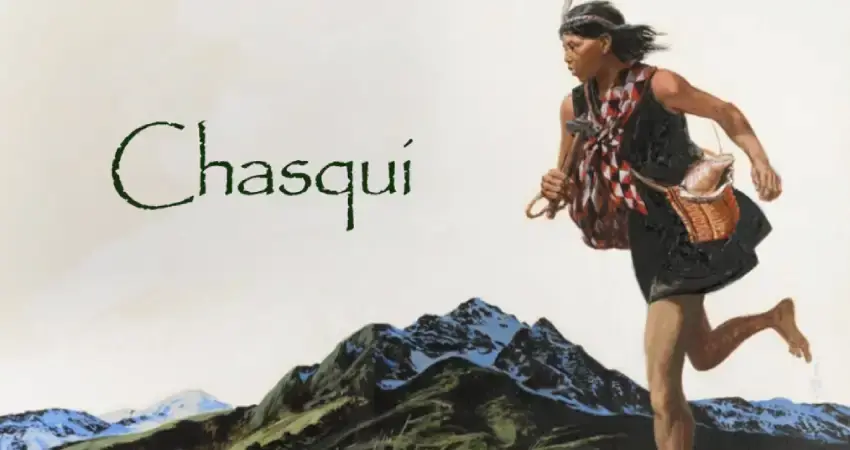
Since there was no writing system, trained runners called chasquis relayed messages using quipus (knotted cords) and oral communication. They could cover up to 250 km per day by working in relay.
Religion and Cosmology in Tawantinsuyu
The Inca worldview, or cosmovisión, was deeply spiritual and centered on harmony between humans and nature.
The Sun God Inti

Inti was the primary deity, and the Inti Raymi festival was held to honor him during the winter solstice. Other important gods included Pachamama (Mother Earth), Viracocha (creator god), and Mama Killa (moon goddess).
Sacred Sites
Temples, mountains, and rivers were considered wak’as, or sacred beings. Machu Picchu, the Sacred Valley, and Lake Titicaca were all holy places where rituals were held.
Language: The Power of Quechua
Quechua, or Runa Simi, was the lingua franca of Tawantinsuyu. It unified the empire linguistically and is still spoken today by millions in the Andes.
Agriculture and Engineering Achievements
In an empire with extreme terrains, the Incas mastered agricultural engineering:
Terraces (Andenes): Prevented erosion and maximized land use
Irrigation systems: Transported water from glaciers and springs
Storage facilities (Qollqas): Preserved food for years
Domestication: Llamas, alpacas, guinea pigs, and over 3,000 types of potatoes
Fall of Tawantinsuyu
When the Spanish arrived in 1532, Tawantinsuyu was already weakened by civil war and disease. The capture of Atahualpa, the last reigning Sapa Inca, marked the beginning of the empire’s collapse.
However, resistance continued for decades, especially in Vilcabamba, the last Inca stronghold.
Legacy of Tawantinsuyu Today
Though the Inca Empire fell nearly 500 years ago, its legacy endures in:
Language (Quechua and Aymara)
Traditions like Inti Raymi
Agricultural practices
Architecture and urban design
Deep respect for nature and Pachamama
Modern Peru and other Andean nations continue to celebrate their Tawantinsuyu heritage, not just as history, but as a living identity.
Final Thoughts: Why Tawantinsuyu Still Matters
Understanding Tawantinsuyu is essential for anyone interested in indigenous history, social innovation, and sustainable living. The empire managed to govern millions of people over diverse ecosystems using communal values, environmental harmony, and collective labor.
For travelers, scholars, and history lovers, the story of Tawantinsuyu offers powerful lessons about how a society can thrive without relying on money, writing, or modern technology—by focusing instead on unity, reciprocity, and balance.

