

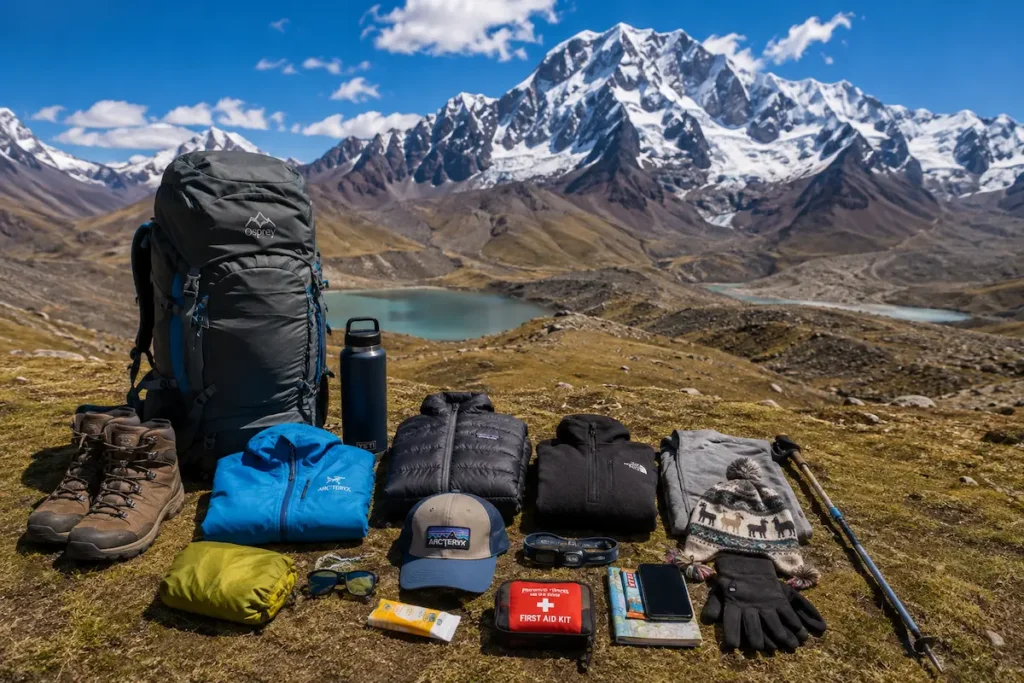
Ausangate trek packing list
Table of Contents
Preparing the right Ausangate Trek packing list is essential for dealing with the high altitude, cold nights, strong sun, changing weather, and several consecutive days of hiking in the Peruvian Andes.
Unlike a typical day hike from Cusco, the Ausangate Trek takes you through remote mountain terrain where opportunities to buy forgotten equipment are extremely limited. Much of the route remains above 4,000 meters (13,123 feet), and conditions can change quickly.
The goal is simple: pack enough to stay warm, dry, and comfortable without carrying unnecessary weight.
This complete packing list covers the clothing, hiking gear, personal items, and equipment you should consider for a multi-day Ausangate Trek.
Ausangate Trek Packing List at a Glance
Here are the main items you should prepare:
Essential Clothing
- Moisture-wicking base layers
- Hiking shirts
- Hiking pants
- Fleece or insulating mid-layer
- Warm down or synthetic jacket
- Waterproof jacket
- Waterproof pants
- Thermal underwear
- Hiking socks
- Warm hat or beanie
- Sun hat
- Gloves
Hiking Equipment
- Hiking boots
- Daypack
- Trekking poles
- Headlamp
- Reusable water bottle or hydration system
- Backpack rain cover
- Sunglasses
- Sunscreen
Personal Items
- Passport or identification
- Personal medications
- Toiletries
- Toilet paper
- Hand sanitizer
- Lip balm with SPF
- Small towel
- Power bank
- Camera or phone
We will explain each category below.
What Backpack Do You Need for the Ausangate Trek?
The backpack you need depends on whether you are hiking independently or joining an organized trek with horses or pack animals carrying the main equipment.
For a supported trek, a 20–30 liter daypack is generally enough for the items you need while walking.
Your daypack should have space for:
- Water
- Rain jacket
- Warm layer
- Snacks
- Sunscreen
- Camera
- Personal medication
- Gloves
- Hat
- Small personal items
If horses carry your main duffel bag, there is little reason to carry all your clothing and camping equipment during the day.
Independent trekkers will require a considerably larger backpack because they must carry camping equipment, food, and additional supplies themselves.
Clothing for the Ausangate Trek
The most effective way to dress for Ausangate is to use a layering system.
Temperatures can change dramatically throughout a single hiking day.
You may begin walking in freezing morning temperatures, feel warm while climbing under strong sunlight, encounter cold wind at a mountain pass, and experience another significant temperature drop after sunset.
Instead of relying on one heavy jacket, use several layers that can be added or removed.
Base Layers
Your base layer sits directly against your skin.
Choose moisture-wicking materials that help move sweat away from your body.
Bring:
- 2–3 moisture-wicking shirts
- 1–2 thermal tops
- Thermal leggings for cold nights
Merino wool or synthetic materials are generally more practical than cotton.
Cotton absorbs moisture and takes longer to dry, which can become uncomfortable in cold mountain conditions.
Insulating Layers
Your middle layer helps retain body heat.
A fleece jacket is one of the most useful pieces of clothing for Ausangate because it provides warmth without excessive weight.
Consider packing:
- Fleece jacket
- Lightweight insulated jacket
- Down or synthetic puffer jacket
A warm insulated jacket is particularly important around campsites and during early morning departures.
Waterproof Jacket
A waterproof outer shell should be included regardless of when you hike.
Even during the dry season, mountain weather can change unexpectedly.
Choose a jacket that protects against:
- Rain
- Wind
- Light snow or hail
A waterproof shell combined with insulating layers provides more flexibility than one extremely heavy jacket.
Hiking Pants
Bring comfortable hiking pants that allow good freedom of movement.
For a typical multi-day route:
- 2 pairs of hiking pants
- 1 pair of thermal leggings
- Waterproof over-pants if possible
Convertible hiking pants can also be useful, although temperatures at high altitude are often cool enough that shorts are unnecessary for much of the trek.
Hiking Boots
A good pair of hiking boots is one of the most important items on your Ausangate Trek packing list.
Choose footwear with:
- Good traction
- Ankle support
- Comfortable cushioning
- Water resistance
- Enough room for hiking socks
Most importantly, do not begin Ausangate with brand-new boots.
Wear them during training hikes beforehand to identify pressure points or fit problems before spending several days in the mountains.
Hiking Socks
Bring approximately 3–4 pairs of hiking socks for a five-day trek.
Wool or synthetic hiking socks are generally preferable to regular cotton socks because they manage moisture more effectively.
Consider keeping one pair specifically for sleeping.
Dry socks at night can make cold camps considerably more comfortable.
Warm Hat and Sun Hat
You should bring both.
A warm beanie helps protect against cold temperatures during early mornings, evenings, and mountain passes.
A sun hat or cap protects against strong high-altitude sunlight during the day.
The sun can feel surprisingly intense even when air temperatures are cold.
Gloves
Bring warm gloves.
Lightweight gloves may be enough during parts of the dry season, but insulated gloves provide better protection during freezing mornings or unexpected weather.
Water-resistant gloves are particularly useful during wetter conditions.
Sunglasses
High-quality sunglasses are essential.
UV exposure increases at altitude, and glare from snow, rock, and bright mountain environments can be intense.
Choose sunglasses with reliable UV protection.
Sunscreen
Use high-SPF sunscreen and reapply it throughout the day.
Do not assume cold weather means weak sunlight.
Ausangate’s high elevation exposes hikers to intense ultraviolet radiation.
Apply sunscreen to:
- Face
- Neck
- Ears
- Hands
- Any exposed skin
Lip balm with SPF is also highly recommended.
Trekking Poles
Trekking poles are extremely useful on Ausangate.
They provide additional stability during:
- Steep climbs
- Long descents
- Rocky sections
- Muddy trails
- River crossings
They can also reduce stress on your knees during prolonged downhill sections.
Travelers who do not normally use trekking poles may still find them valuable during a multi-day high-altitude trek.
Water Bottle or Hydration System
Bring a reusable water bottle or hydration bladder.
A total carrying capacity of approximately 1.5–2 liters is practical for most trekking days, although your guide or trekking company should advise you according to water availability along your specific route.
Avoid relying exclusively on disposable plastic bottles.
Headlamp
A headlamp is essential for camp.
You may need it for:
- Early morning departures
- Moving around camp after sunset
- Finding equipment inside your tent
- Bathroom trips during the night
Bring spare batteries or make sure the headlamp can be recharged with your power bank.
Sleeping Bag
Nighttime temperatures at Ausangate can fall well below freezing.
A sleeping bag suitable for cold mountain conditions is therefore essential.
For many itineraries, a sleeping bag rated around -10°C to -15°C (14°F to 5°F) provides an appropriate range, although conditions vary by season and campsite altitude.
Before buying one, check whether your trekking company provides or rents sleeping bags.
A sleeping bag liner can provide additional warmth and help keep the sleeping bag clean.
Duffel Bag
Many organized Ausangate treks provide a duffel bag for clothing and personal equipment.
Pack animals typically transport this bag between camps.
Weight limits vary between operators, so confirm the allowed weight before departure.
Your duffel should normally contain items you do not need while actively hiking, such as:
- Extra clothing
- Sleeping clothes
- Additional toiletries
- Spare socks
- Sleeping bag if required
Keep essential daytime items in your daypack.
Personal Toiletries
Keep toiletries simple.
Useful items include:
- Toothbrush
- Toothpaste
- Toilet paper
- Hand sanitizer
- Wet wipes
- Small quick-dry towel
- Biodegradable soap if appropriate
Avoid carrying full-size containers when small travel-size versions are sufficient.
Personal Medications
Bring any personal medication you normally require.
Do not assume you will be able to purchase medication once the trek begins.
Keep important medications in your daypack rather than inside a duffel transported by horses.
If you have concerns about hiking at high altitude, discuss them with an appropriate healthcare professional before traveling.
First-Aid Items
Organized trekking companies normally carry a group first-aid kit.
However, a small personal kit can still be useful.
Consider:
- Adhesive bandages
- Blister treatment
- Antiseptic wipes
- Pain relief medication you normally use
- Personal medication
Blister prevention and treatment are particularly useful during consecutive hiking days.
Electronics
Electricity is generally unavailable along much of the trekking route.
Bring:
- Phone
- Camera
- Power bank
- Charging cables
- Spare camera batteries if needed
Keep batteries protected from extreme cold because low temperatures can reduce battery performance.
Putting your phone on airplane mode can also significantly extend battery life.
Camera Equipment
Ausangate is one of the most photogenic trekking regions around Cusco, with glaciers, colorful mountains, alpine lakes, alpacas, and high-Andean valleys.
If photography is important to you, consider:
- Camera
- Extra battery
- Memory cards
- Lightweight protective case
- Lens cloth
- Power bank if compatible
Avoid carrying excessive photography equipment unless you are comfortable with the additional weight.
Documents and Money
Keep important documents protected from moisture.
Bring:
- Passport or appropriate identification
- Emergency contact information
- Travel insurance details if applicable
- Some Peruvian soles in cash
Cash can be useful for small purchases, local fees, tips, or communities encountered before or after the remote sections of the trek.
Do not rely on card payments once you enter the mountains.
Snacks
Organized treks normally provide meals, but personal snacks can be useful between meals.
Good options include:
- Energy bars
- Nuts
- Dried fruit
- Crackers
- Chocolate
- Electrolyte products
Bring foods you already know you enjoy.
Altitude can sometimes reduce appetite, so familiar snacks can be helpful.
Packing for Ausangate During the Dry Season
The best time to hike the Ausangate Trek is generally during the drier months, but dry season does not mean warm weather.
From approximately May through September, expect:
- Cold nights
- Freezing temperatures at high camps
- Strong daytime sunlight
- Dry air
- Cold winds
- Generally lower rainfall
Prioritize:
warm layers + sun protection + cold-weather sleeping equipment.
June and July can be particularly cold at night.
Packing for Ausangate During the Rainy Season
The wetter months require stronger protection against moisture.
Add or prioritize:
- Reliable waterproof jacket
- Waterproof pants
- Backpack rain cover
- Dry bags
- Waterproof protection for electronics
- Extra socks
- Quick-drying clothing
Rain can also make trails muddy and slippery, increasing the value of trekking poles and footwear with good traction.
What Should You Wear Each Day?
A typical hiking outfit might include:
Upper body:
Moisture-wicking shirt + fleece + waterproof shell when necessary.
Lower body:
Hiking pants + thermal layer during particularly cold conditions.
Feet:
Hiking socks + broken-in hiking boots.
Accessories:
Sun hat + sunglasses + sunscreen.
Keep your insulated jacket and waterproof shell accessible in your daypack.
Do not bury them inside your main duffel.
What Should You Wear at Camp?
Temperatures drop rapidly after sunset.
Once you stop walking, you also produce considerably less body heat.
At camp, you may want:
- Thermal base layer
- Fleece
- Insulated jacket
- Warm pants
- Dry socks
- Beanie
- Gloves
Keep one dry set of thermal clothing specifically for sleeping whenever possible.
What Not to Pack for the Ausangate Trek
Overpacking is one of the most common mistakes on multi-day treks.
Avoid unnecessary items such as:
- Multiple heavy jackets
- Excessive casual clothing
- Heavy toiletries
- Large amounts of electronics
- Unnecessary shoes
- Full-size cosmetic products
- Large books
- Equipment already provided by your trekking company
Every additional item adds weight.
Prioritize equipment that serves a clear purpose.
Ausangate Trek Packing Checklist
Before leaving Cusco, check that you have:
- Hiking boots
- Hiking pants
- Moisture-wicking shirts
- Thermal base layers
- Fleece jacket
- Insulated jacket
- Waterproof jacket
- Waterproof pants
- Hiking socks
- Warm hat
- Sun hat
- Gloves
- Sunglasses
- Sunscreen
- Lip balm with SPF
- Trekking poles
- Daypack
- Rain cover
- Water bottle or hydration bladder
- Headlamp
- Sleeping bag
- Personal medication
- Toiletries
- Toilet paper
- Hand sanitizer
- Power bank
- Charging cables
- Camera or phone
- Passport or identification
- Cash in Peruvian soles
- Personal snacks
Frequently Asked Questions
What size backpack do I need for the Ausangate Trek?
For an organized trek where pack animals transport your main luggage, a 20–30 liter daypack is generally sufficient. Independent trekkers require a larger backpack for camping equipment, food, and clothing.
How cold does the Ausangate Trek get?
High camps can experience freezing or below-freezing nighttime temperatures, particularly during the dry season. The Ausangate Trek altitude means temperatures can change significantly between daytime hiking and nighttime camping.
Do I need waterproof clothing for Ausangate?
Yes. A waterproof jacket should be carried regardless of season because mountain weather can change quickly. Waterproof pants become particularly useful during the rainy season.
Do I need trekking poles?
They are not mandatory, but they are highly recommended. Trekking poles provide stability and can reduce stress on the knees during long descents.
Can I wear sneakers on the Ausangate Trek?
Proper hiking footwear is preferable. Trails can include rocky, muddy, steep, and uneven sections, so hiking shoes or boots with good traction provide better support.
How heavy should my bag be?
Keep your daypack as light as reasonably possible. If you are joining an organized trek, check the specific duffel weight allowance because limits vary between operators.
Do I need a sleeping bag?
Yes, unless your trekking company provides one. Confirm what camping equipment is included before arriving in Cusco.
Final Thoughts
A good Ausangate Trek packing list is not about bringing as much equipment as possible. It is about selecting the right equipment for a remote, cold, and high-altitude environment.
Prioritize warm layers, waterproof protection, reliable hiking footwear, sun protection, hydration, and a suitable sleeping bag.
Your equipment is only one part of preparing for the route. The Ausangate Trek altitude and overall Ausangate Trek difficulty also require proper acclimatization and reasonable physical preparation.
Once you understand the conditions and pack accordingly, you can keep your equipment relatively simple and focus on enjoying one of the most spectacular trekking landscapes in the Peruvian Andes.
Related Tours


