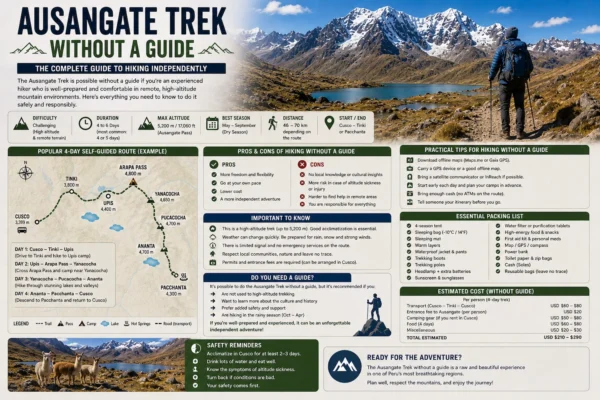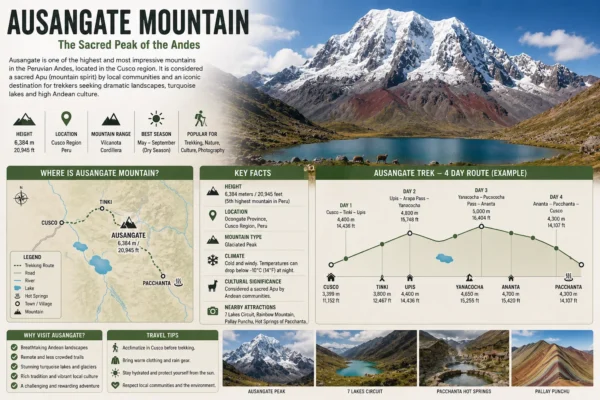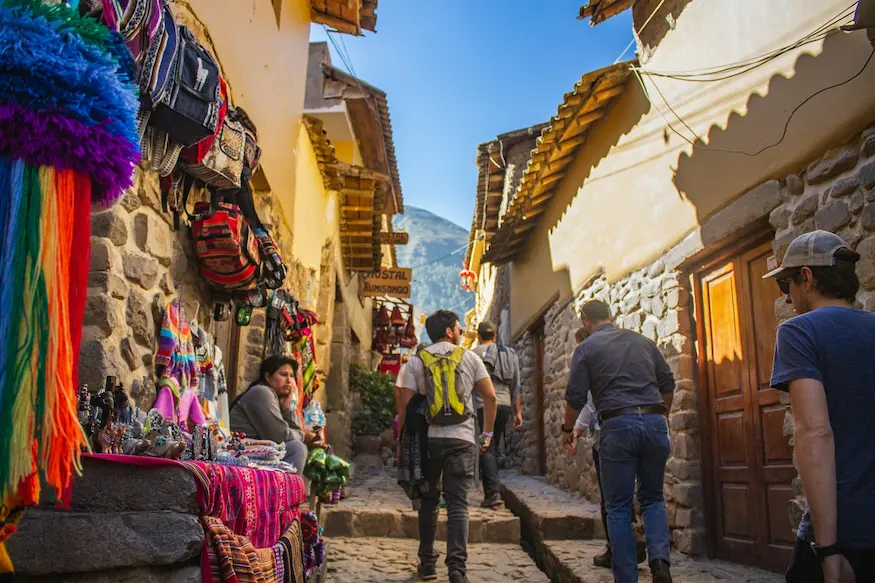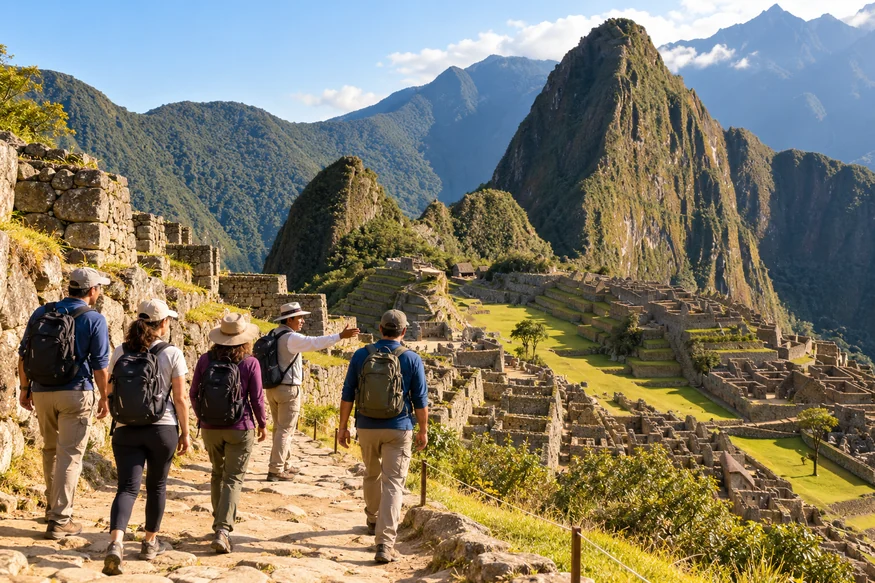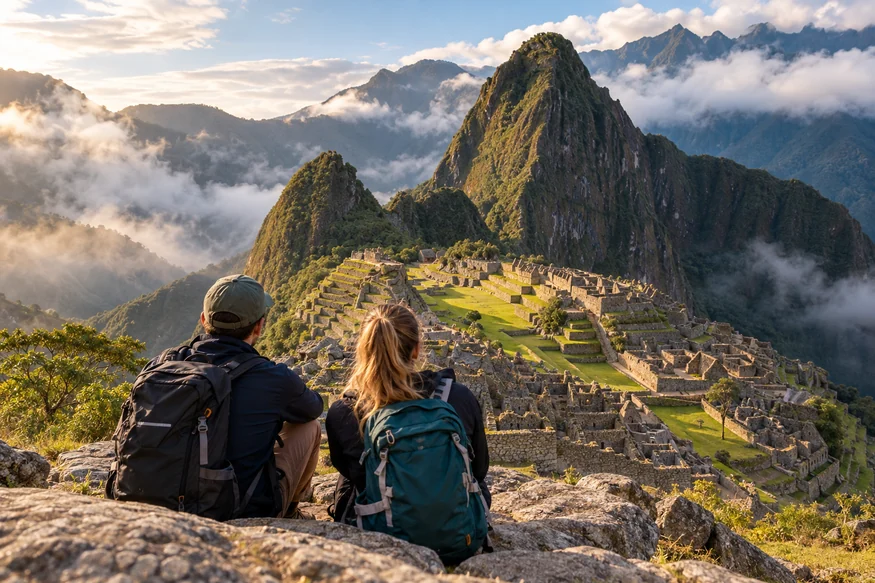
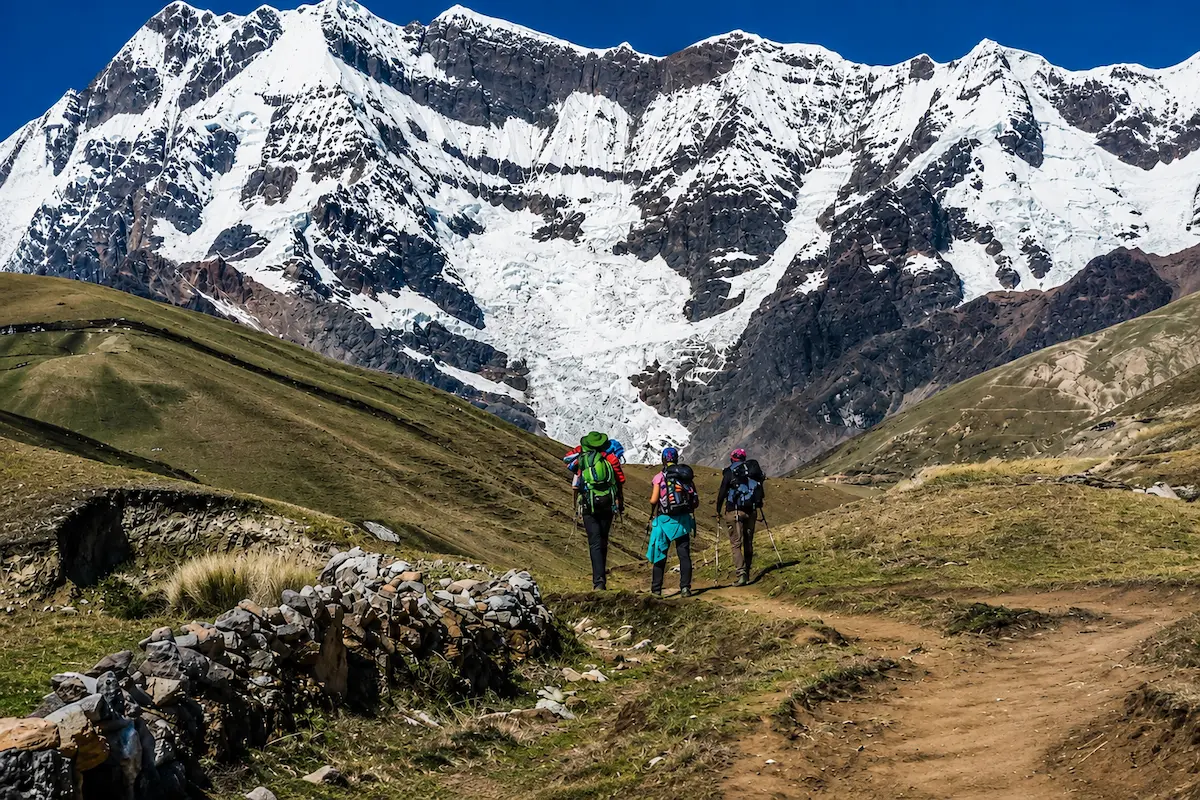

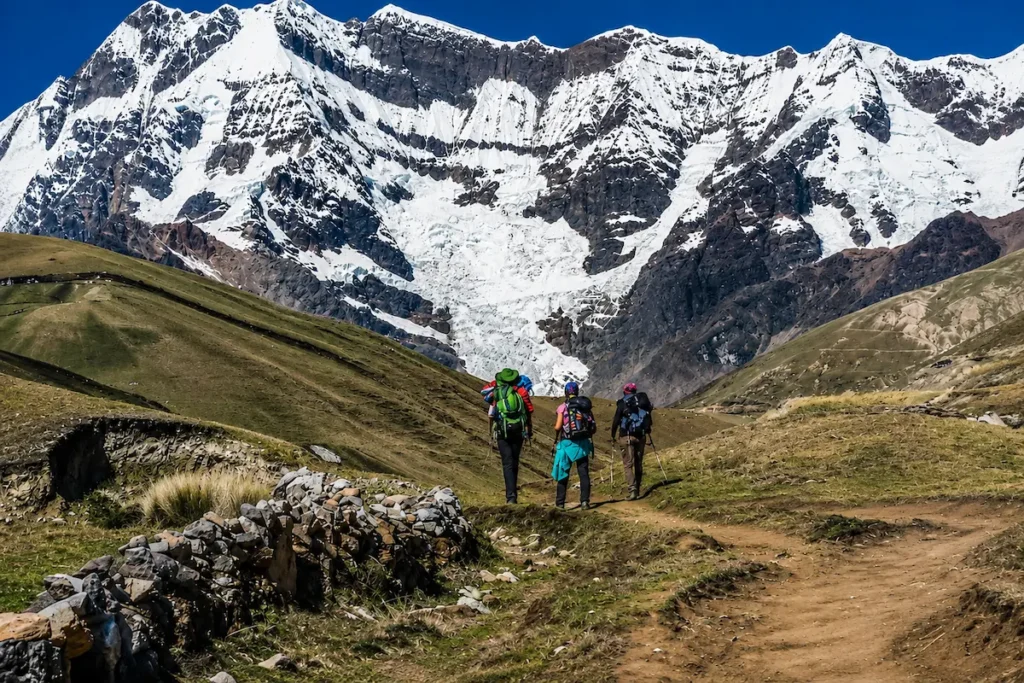
The Ausangate Trek difficulty is generally rated as challenging. The route involves several days of hiking at high altitude, steep mountain passes, cold temperatures, and long sections through remote areas of the Peruvian Andes.
However, the Ausangate Trek is not a technical climb. You do not need mountaineering experience to complete the classic trekking routes. For most travelers, the main challenge is the altitude rather than the technical difficulty of the trail.
Good physical condition, proper acclimatization in Cusco, and preparation for changing mountain weather can make a significant difference.
How Difficult Is the Ausangate Trek?
The Ausangate Trek is typically considered a challenging high-altitude trek, around 4 out of 5 in difficulty.
| Factor | Difficulty |
|---|---|
| Overall difficulty | Challenging |
| Physical fitness required | Good |
| Technical climbing | Not required |
| Altitude | Very challenging |
| Terrain | Moderate to challenging |
| Weather | Variable and cold |
| Typical duration | 4–6 days |
| Highest passes | Above 5,000 m (16,400 ft) |
| Previous trekking experience | Recommended but not essential |
The exact difficulty depends on the itinerary. A shorter route does not necessarily mean an easier trek because the same distance and elevation changes may be covered in fewer days.
What Makes the Ausangate Trek Difficult?
Unlike some hikes where steep terrain is the primary challenge, Ausangate combines several factors.
1. High Altitude
Altitude is probably the biggest challenge on the Ausangate Trek.
Much of the trek takes place above 4,000 meters (13,123 feet), while some mountain passes exceed 5,000 meters (16,404 feet).
At these elevations, there is less oxygen available. Even travelers who are physically fit may notice:
-
Shortness of breath
-
Faster heart rate
-
Headaches
-
Reduced hiking pace
-
Fatigue
-
Difficulty sleeping
This is why acclimatization is more important than simply being strong or athletic.
Spending a few days in Cusco or the Sacred Valley before beginning the trek can help your body gradually adjust to the elevation.
Ausangate Trek Highest Point
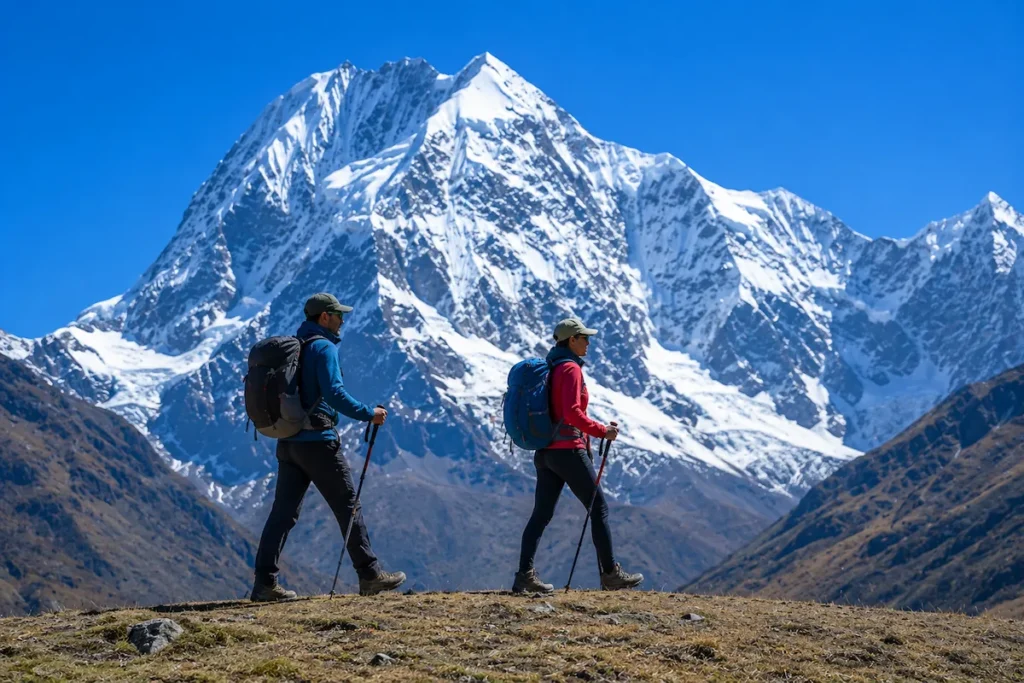
The exact highest point depends on the route you follow.
On classic Ausangate circuits, trekkers cross several high mountain passes, with some reaching approximately 5,000–5,200 meters (16,404–17,060 feet) above sea level.
At these elevations, even relatively short climbs can feel demanding.
You may walk slowly, stop frequently to catch your breath, and require considerably more time to cover distances that would normally feel easy at lower elevations.
This is completely normal when trekking at high altitude.
Is the Ausangate Trek Technically Difficult?
No. The classic Ausangate Trek is generally not considered a technical mountaineering route.
You normally do not need:
-
Ropes
-
Harnesses
-
Crampons under normal trail conditions
-
Rock-climbing skills
-
Mountaineering experience
Most of the route consists of mountain trails, valleys, gradual climbs, steep ascents to passes, and descents.
However, trail conditions can change because of rain, snow, ice, or erosion. Conditions around the highest passes can be especially different depending on the season.
The absence of technical climbing should therefore not be confused with an easy trek.
Ausangate Trek Terrain
The terrain changes considerably throughout the route.
You can expect a combination of:
-
Rocky mountain trails
-
Dirt paths
-
High-altitude grasslands
-
Steep ascents
-
Long descents
-
Mountain passes
-
Glacial valleys
-
Wet or muddy sections during the rainy season
Some sections are relatively flat and comfortable, while the climbs toward the mountain passes are considerably more demanding.
One advantage is that much of the trail allows you to establish a steady hiking rhythm rather than constantly navigating technical obstacles.
How Many Hours Do You Hike Each Day?
On a typical multi-day Ausangate Trek, expect approximately 5 to 8 hours of hiking per day.
Some days may be shorter, while days involving major mountain passes can take longer.
Daily difficulty depends on three main factors:
Distance + elevation gain + altitude.
A 10 km hike above 4,500 meters can feel much harder than a considerably longer hike at low elevation.
For this reason, daily distance alone is not a good way to judge the difficulty of Ausangate.
How Fit Do You Need to Be?
You do not need to be an elite athlete, but you should have a good basic level of cardiovascular fitness and endurance.
Before the trek, you should ideally be comfortable with:
-
Walking for several hours
-
Hiking uphill
-
Hiking consecutive days
-
Carrying a small daypack
-
Walking on uneven terrain
-
Recovering overnight and hiking again the next morning
Cardiovascular endurance is particularly useful because your body will be working with less oxygen at high elevation.
Can Beginners Do the Ausangate Trek?
Yes, a beginner can complete the Ausangate Trek, but it is not an ideal trek to attempt completely unprepared.
A first-time trekker has a much better chance of enjoying the route if they:
-
Train beforehand
-
Spend time acclimatizing
-
Choose an itinerary with reasonable daily distances
-
Use proper hiking equipment
-
Trek with experienced support
-
Maintain a slow and consistent pace
If you have never completed a multi-day trek before, Ausangate will likely feel significantly harder than it does for someone accustomed to hiking in the mountains.
Previous trekking experience is helpful, but proper acclimatization is even more important.
How Does Altitude Affect the Difficulty?
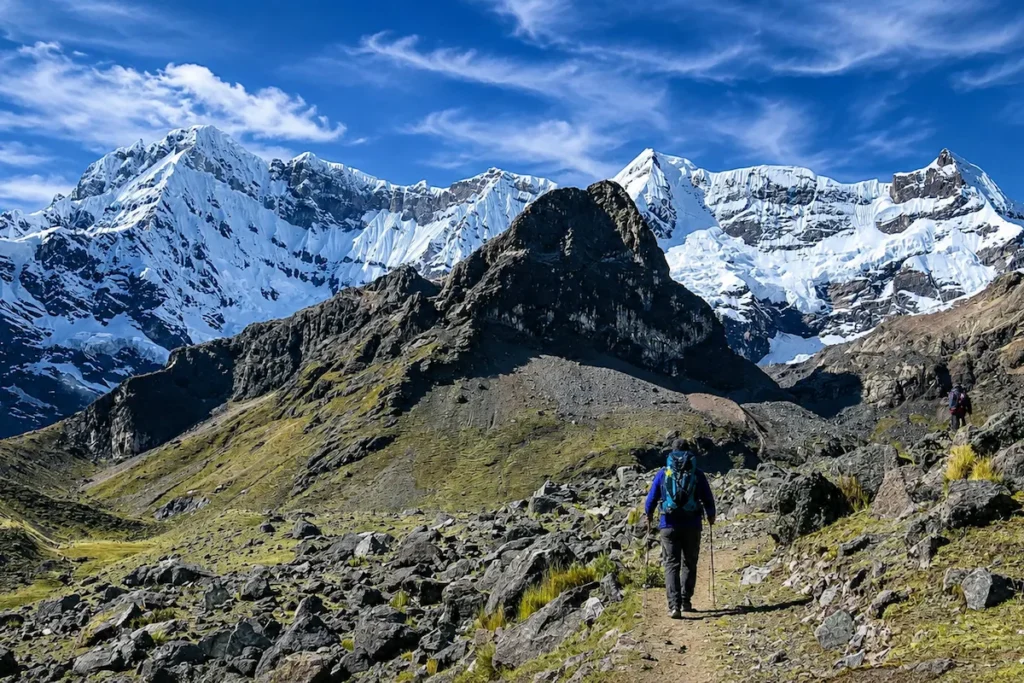
Altitude changes how your body performs.
At elevations above 4,000 meters, you may notice that your normal hiking speed becomes difficult to maintain. Your breathing becomes faster and your muscles may fatigue sooner.
Trying to maintain the same pace you use at sea level is usually unnecessary.
A better strategy is to walk slowly and consistently.
The Ausangate Trek should not be approached as a race.
Giving your body enough time to adapt before the trek and maintaining a controlled pace during the route can make the experience considerably more manageable.
How Many Days Should You Acclimatize?
For travelers arriving from low elevation, spending approximately 2–3 days at altitude before starting Ausangate is a sensible minimum.
Some travelers may benefit from longer.
Cusco sits at approximately 3,400 meters (11,150 feet), making it a useful base for acclimatization before heading into the considerably higher Ausangate region.
During your acclimatization days, you can take short hikes rather than remaining completely inactive.
Gradually exposing yourself to higher elevations before the trek can help prepare your body for the mountain passes.
Weather Makes Ausangate More Challenging
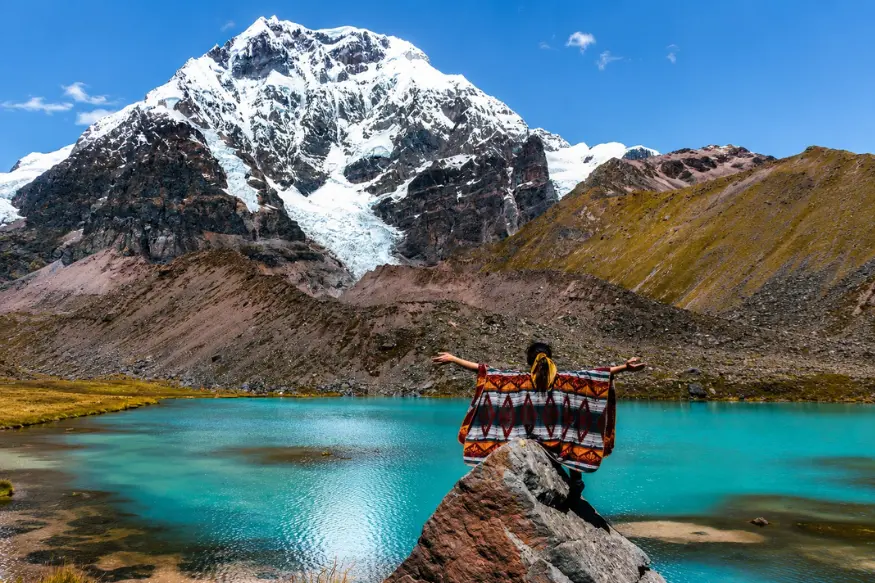
Weather is another important part of the Ausangate Trek difficulty.
Conditions in the high Andes can change quickly.
During the same trekking day, you may experience:
-
Strong sunshine
-
Cold wind
-
Clouds
-
Rain
-
Hail
-
Snow
-
Freezing nighttime temperatures
The dry season generally provides more stable hiking conditions, but cold nights are common because of the high elevation.
During the wetter months, rain, mud, cloud cover, and occasional snow at higher elevations can increase the difficulty of the route.
For a detailed seasonal breakdown, read our Best Time to Hike the Ausangate Trek guide.
Ausangate Trek Difficulty by Season
| Season | Trail Conditions | Difficulty |
|---|---|---|
| May – June – July – August – September | Drier trails, cold nights | Challenging |
| October–November | Increasing rainfall | Challenging |
| December – January – February –March | Rain, mud and less predictable conditions | More challenging |
| April | Transition toward drier weather | Challenging |
Even during the dry season, weather at high altitude is never completely predictable.
Trekkers should always carry layers and waterproof protection.
How to Train for the Ausangate Trek
You do not need an extreme training program.
Instead, focus on building endurance several weeks before traveling.
Useful preparation includes:
Hiking
Regular hikes are probably the most specific preparation.
Gradually increase:
-
Distance
-
Elevation gain
-
Time on your feet
-
Weight carried in your daypack
Cardiovascular Training
Activities such as:
-
Walking uphill
-
Running
-
Cycling
-
Swimming
-
Stair climbing
can help improve cardiovascular endurance.
Leg Strength
Exercises such as squats, lunges, step-ups, and controlled downhill walking can strengthen the muscles used during long ascents and descents.
Back-to-Back Hiking Days
One of the best forms of preparation is hiking on consecutive days.
Ausangate is not difficult because of one single hike. The challenge comes from repeating long hiking days while your body is recovering at altitude.
What Can Make the Trek Easier?
A few decisions can significantly improve your experience.
Acclimatize properly.
Do not arrive in Cusco and immediately begin Ausangate.
Walk slowly.
A sustainable pace is more important than speed.
Stay hydrated.
High-altitude environments are dry, and dehydration can make you feel considerably worse.
Use trekking poles.
They can provide additional stability during steep descents and reduce stress on your knees.
Pack appropriate layers.
Temperatures can change dramatically between sunny valleys and exposed mountain passes.
Choose a suitable itinerary.
Adding an extra day can make the route more manageable by reducing daily distances.
Ausangate Trek vs Salkantay Trek Difficulty
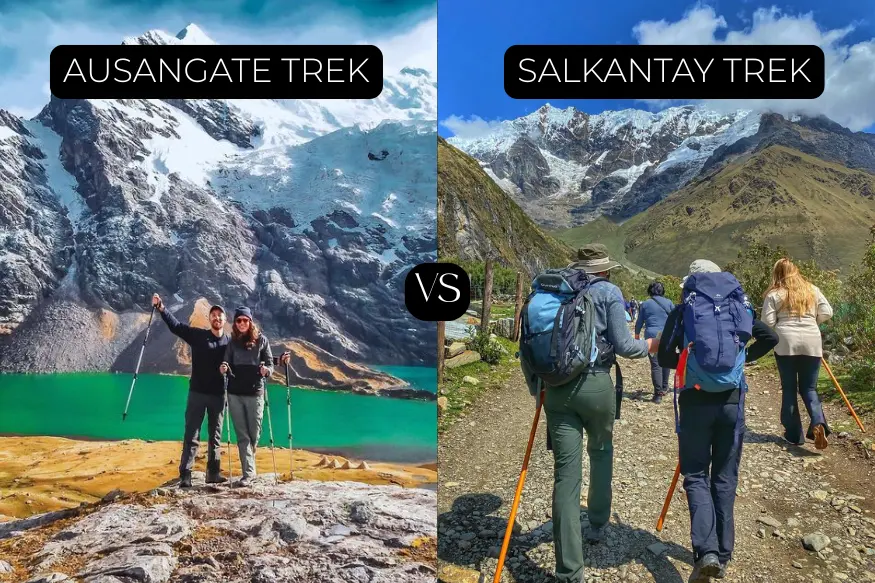
Both are demanding Andean treks, but Ausangate generally involves more sustained time at very high altitude.
| Factor | Ausangate Trek | Salkantay Trek |
|---|---|---|
| Difficulty | Challenging | Moderate–challenging |
| Highest elevation | Above 5,000 m on some routes | Around 4,630 m |
| Days at high altitude | More | Fewer |
| Remote terrain | Very high | Moderate |
| Tourist infrastructure | Limited | More developed |
| Technical climbing | No | No |
Salkantay reaches a major high pass, but the route later descends substantially toward warmer valleys. This difference is important when comparing the Ausangate Trek vs Salkantay Trek.
Ausangate remains at high elevation for much more of the journey, which is one of the main reasons the Ausangate Trek altitude is such an important factor to consider.
For travelers concerned primarily about altitude, Ausangate is generally the more demanding trek.
Ausangate Trek vs Inca Trail Difficulty
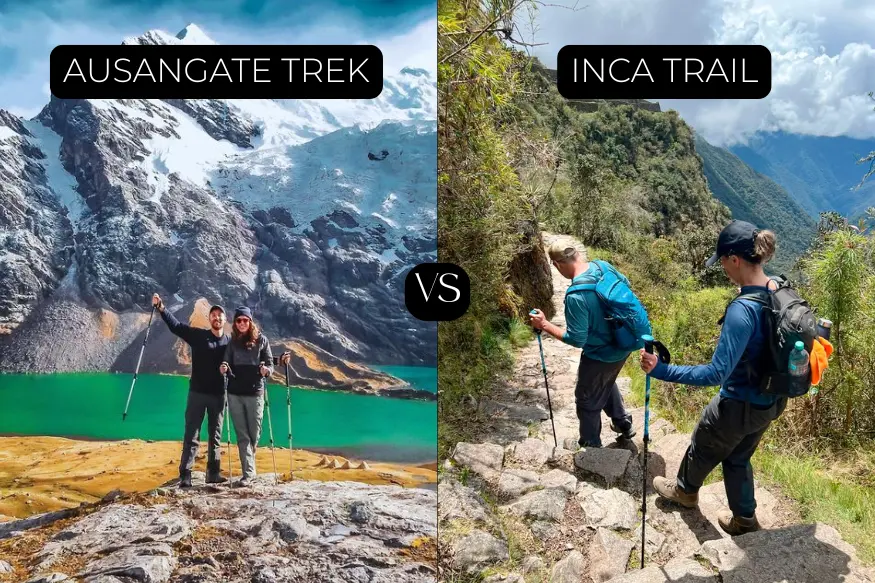
The Classic Inca Trail presents different challenges.
The Inca Trail includes many stone staircases and steep ascents and descents, while Ausangate reaches considerably higher elevations and spends more time in remote high-Andean environments. Our Ausangate Trek vs Inca Trail comparison covers these differences in more detail.
For many travelers:
Inca Trail: demanding because of stairs and elevation changes.
Ausangate Trek: demanding because of sustained altitude, mountain passes, cold conditions, and remoteness.
A person who has successfully completed the Inca Trail should still take the altitude of Ausangate seriously.
Is Ausangate Harder Than Rainbow Mountain?
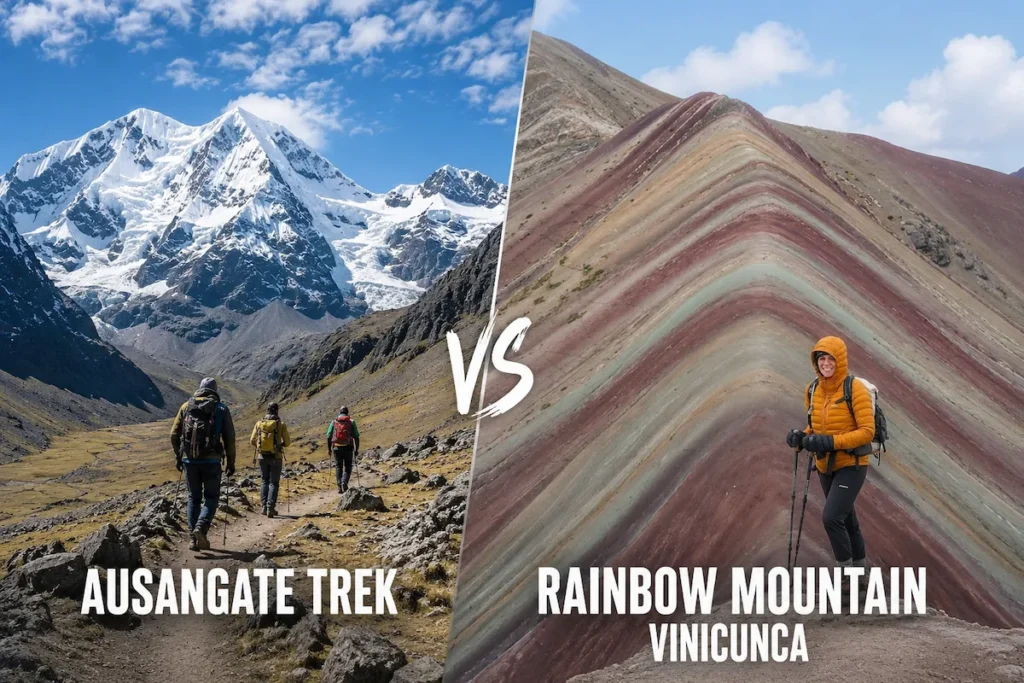
Yes.
Rainbow Mountain is normally completed as a day hike, while the classic Ausangate Trek is a multi-day expedition through the Vilcanota mountain range.
Rainbow Mountain can still feel difficult because of its extreme altitude, but Ausangate requires considerably greater endurance.
You must repeat high-altitude hiking for several consecutive days rather than completing one climb and returning to Cusco.
Who Should Consider the Ausangate Trek?
Ausangate is particularly suitable for travelers who:
-
Enjoy multi-day trekking
-
Are comfortable with basic camping
-
Want remote mountain landscapes
-
Have reasonable cardiovascular fitness
-
Can acclimatize before departure
-
Prefer less developed trekking routes
Travelers looking for an easy first hike in Cusco may prefer starting with shorter day hikes before attempting Ausangate.
Frequently Asked Questions About Ausangate Trek Difficulty
Is the Ausangate Trek difficult?
Yes. The Ausangate Trek is considered challenging primarily because of its high altitude, multiple mountain passes, consecutive hiking days, cold temperatures, and remote location.
What is the hardest part of the Ausangate Trek?
For most travelers, altitude is the hardest part. Several sections exceed 4,500 meters, and some routes cross passes above 5,000 meters.
Do I need hiking experience for Ausangate?
Previous multi-day hiking experience is recommended but not mandatory. Good fitness, proper equipment, acclimatization, and a realistic hiking pace are more important.
Can I hike Ausangate if I have never trekked before?
It is possible, but you should train beforehand and acclimatize properly. A shorter trek at altitude before Ausangate can also help you understand how your body responds.
Do you need technical climbing skills?
No. Standard Ausangate trekking routes do not normally require technical climbing skills or mountaineering equipment.
Is Ausangate harder than Salkantay?
Generally, yes. Ausangate remains at high elevation for longer and crosses several high mountain passes. Salkantay is also challenging, but much of its route eventually descends toward lower elevations.
What is the difficulty level of the Ausangate Trek?
A reasonable general rating is challenging (4/5). However, difficulty varies according to your fitness, previous hiking experience, acclimatization, weather conditions, and chosen itinerary.
Final Thoughts: How Hard Is the Ausangate Trek?
The Ausangate Trek is challenging, but its difficulty should not be exaggerated.
It is not a technical mountaineering expedition, and experienced recreational hikers can complete it with appropriate preparation.
The real challenge comes from combining high altitude, consecutive hiking days, mountain passes, cold weather, and remote terrain.
If you arrive properly acclimatized, train beforehand, carry suitable equipment, and maintain a steady pace, the Ausangate Trek becomes much more manageable.
For travelers prepared for the altitude and physical demands, the difficulty is also part of what makes Ausangate one of the most rewarding high-altitude trekking experiences in the Cusco region.