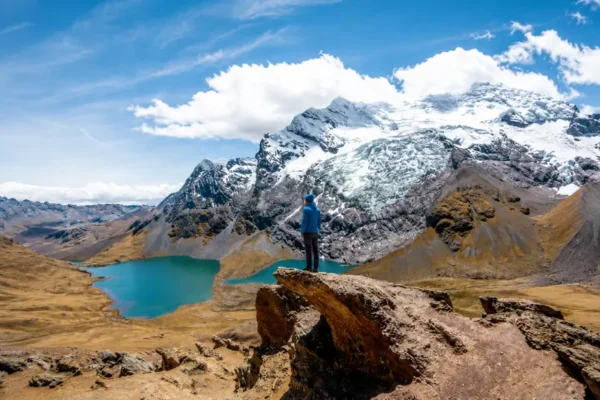
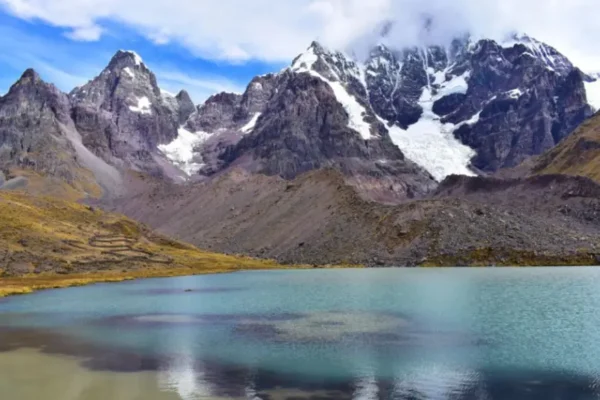
The Ausangate Trek is one of Peru’s highest and most spectacular hiking routes, reaching elevations of more than 5,000 meters (16,400 ft). Because of its altitude, weather conditions can change quickly, making it one of the most important factors to consider when planning your trek.
Unlike lower-altitude destinations around Cusco, temperatures on the Ausangate Trek remain cool throughout the year. Sunny mornings can quickly turn into cloudy afternoons, while nights are often cold enough to drop below freezing. Understanding how the weather changes from season to season will help you choose the right time to hike and know what to expect on the trail.
In this guide, you’ll find everything you need to know about the weather on the Ausangate Trek, including seasonal conditions, temperatures, rainfall, snowfall, and how the climate affects the overall hiking experience.
What Is the Weather Like on the Ausangate Trek?
The Ausangate Trek has a typical high-altitude Andean climate with two well-defined seasons: the dry season and the rainy season. While temperatures remain relatively similar throughout the year, rainfall, visibility, and trail conditions change considerably depending on the season.
The dry season generally offers clearer skies, more stable weather, and better visibility, making it the most popular time for trekking. During the rainy season, the landscape becomes greener and quieter, although rainfall is more frequent and trails can become muddy.
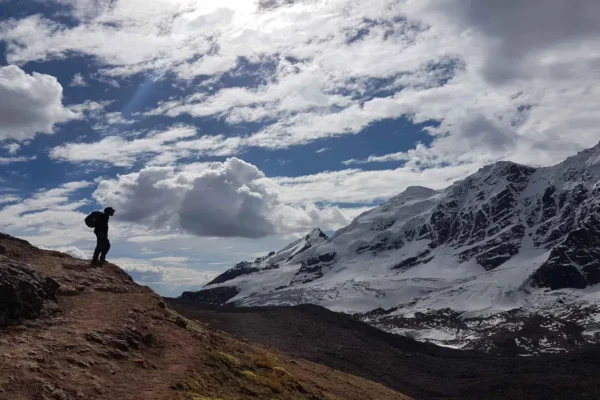
Because much of the trek takes place above 4,500 meters (14,760 ft), hikers should always be prepared for cold temperatures and sudden weather changes, regardless of the month.
If you’re trying to decide when to visit, read our complete Best Time to Hike the Ausangate Trek guide for a detailed comparison of each season.
Dry Season vs. Rainy Season
The weather on the Ausangate Trek changes significantly between the dry and rainy seasons, and each offers a different hiking experience.
The dry season, which runs from May to September, is known for sunny days, clear mountain views, and more reliable trail conditions. Rainfall is limited, making it easier to enjoy panoramic landscapes and camp under clear skies. The only downside is the cold, as nighttime temperatures frequently fall below freezing.
The rainy season, from November to March, brings regular rainfall that transforms the landscape into a greener and more vibrant environment. While the scenery is beautiful, hikers should expect wetter trails, reduced visibility, and more unpredictable mountain weather.
If you’d like a detailed month-by-month breakdown of temperatures, rainfall, and seasonal conditions, continue reading below.
Ausangate Trek Weather by Month
| Month | Weather | Conditions | Hiking |
|---|
| January | 🌧️ Rainy | Heavy afternoon showers | Challenging |
| February | ⛈️ Very Rainy | Wettest month of the year | Difficult |
| March | 🌦️ Mixed | Rain begins to decrease. | Moderate |
| April | ⛅ Mostly Sunny | Transition season | Very Good |
| May | ☀️ Sunny | Dry and stable | Excellent |
| June | ☀️ Sunny | Crystal-clear skies | Excellent |
| July | ☀️ Sunny & Cold | Cold nights | Excellent |
| August | 🌤️ Sunny | Occasional strong winds | Excellent |
| September | 🌤️ Mostly Sunny | Pleasant conditions | Very Good |
| October | ⛅ Mixed | Occasional showers | Good |
| November | 🌦️ Rainy | Rain returns. | Moderate |
| December | 🌧️ Rainy | Beginning of rainy season | Moderate |
Learn about Ausangate Trek weather by month, seasonal temperatures, rainfall, and trail conditions to choose the best time for your adventure in Peru.
Temperature on the Ausangate Trek
Because of the high altitude, temperatures remain cool throughout the year. During the day, temperatures generally range between 8°C and 18°C (46°F to 64°F), depending on the altitude and cloud cover.
Once the sun sets, temperatures drop quickly. At campsites above 4,500 meters (14,760 ft), nighttime temperatures commonly fall below 0°C (32°F) and may reach -10°C (14°F) during the coldest months.
The large difference between daytime and nighttime temperatures is one of the defining characteristics of the Ausangate Trek.
How Weather Affects the Trek
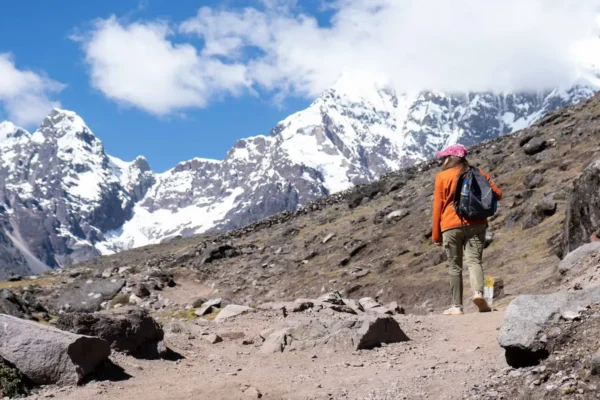
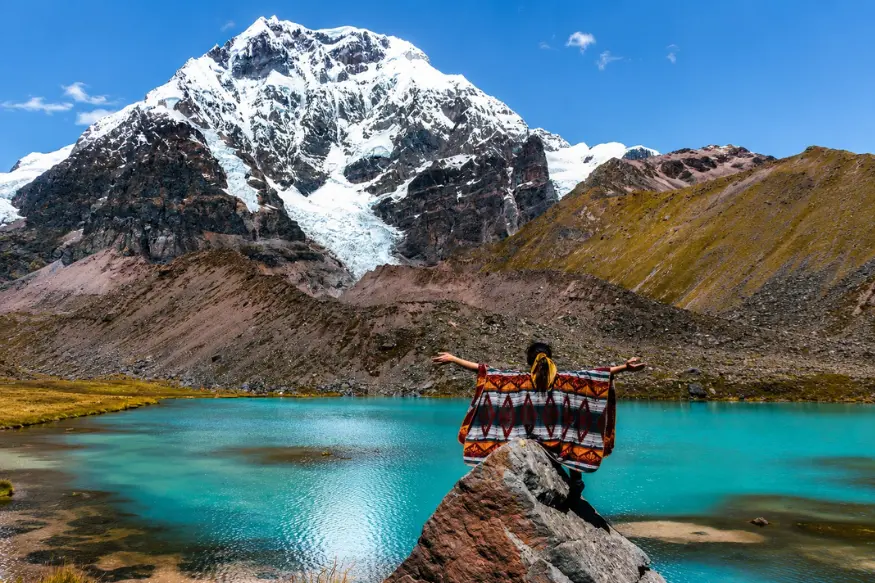
Weather conditions influence every stage of the Ausangate Trek. During the dry season, trails are generally firmer, river crossings are easier, and visibility is excellent, allowing hikers to fully appreciate the surrounding mountains and glacial lakes.
During the rainy season, trails can become muddy, streams may carry more water, and cloud cover occasionally limits long-distance views. Although these conditions make the trek more demanding, they also create greener landscapes and a quieter atmosphere.
Weather at Rainbow Mountain vs. Ausangate Trek
Many hikers visit Rainbow Mountain (Vinicunca) before or after completing the Ausangate Trek. Since both destinations are located within the same mountain range, they experience similar seasonal weather patterns.
The dry season generally offers the clearest views and the most stable conditions for both destinations. During the rainy season, cloud cover becomes more common, although the surrounding landscapes become greener and less crowded.
For a complete overview of temperatures, rainfall, and seasonal conditions at Vinicunca, read our Rainbow Mountain Weather guide.