
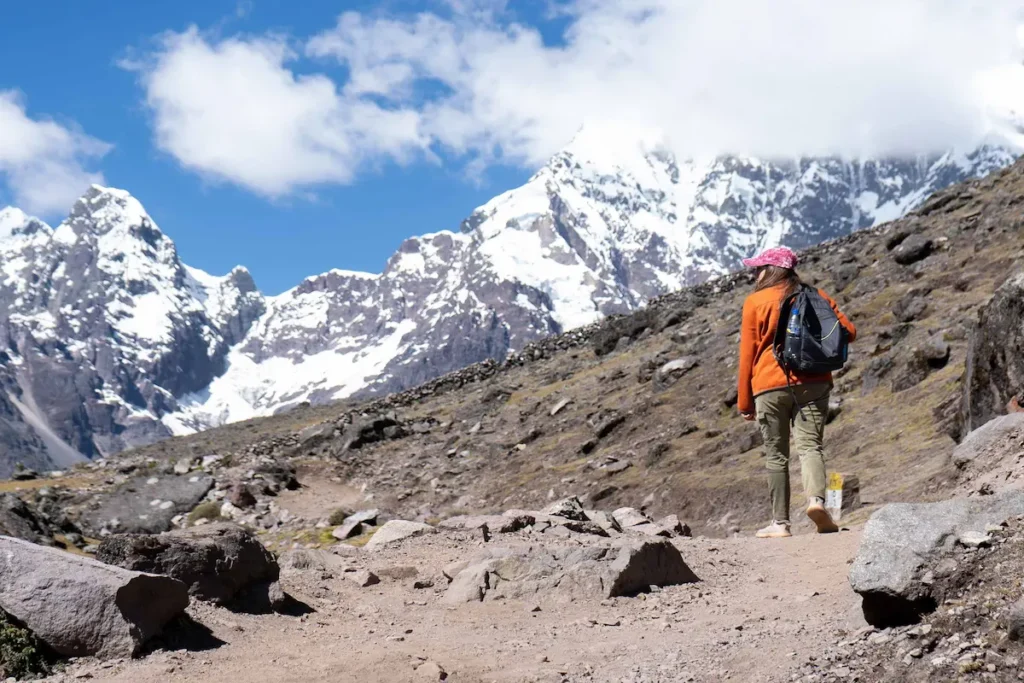
Ausangate Trek in October
The Ausangate Trek in October can be an excellent option for travelers looking for fewer hikers while still having a reasonable chance of good weather. October is a transition month between the dry and rainy seasons in the Peruvian Andes.
Conditions are less predictable than from June through August, but heavy rainy-season weather has usually not fully established itself yet. You can expect a mix of sunny periods, clouds, occasional rain, cold nights, and rapidly changing weather at high elevations.
Is October a Good Time to Hike the Ausangate Trek?
Yes. October is generally a good month for the Ausangate Trek, particularly for travelers who want to avoid peak-season crowds.
The main trade-off is weather stability. Rain becomes more frequent as the month progresses, especially compared with August and September.
| Factor | October Conditions |
|---|---|
| Season | Transition season |
| Rain | Low to moderate, increasing |
| Daytime temperatures | Around 5–16°C |
| Nights | Around 0°C or below at high camps |
| Trail conditions | Generally good, occasional mud |
| Crowds | Low–moderate |
| Mountain visibility | Generally good |
| Landscape | Beginning to turn greener |
| Difficulty | Challenging |
| Recommended? | Yes |
Ausangate Weather in October
October marks the transition from the dry season toward the wetter months around Cusco and Ausangate.
Early October can still feel relatively dry, while rainfall tends to become more frequent toward the end of the month.
Hikers can experience:
-
Clear and sunny mornings
-
Increasing afternoon clouds
-
Occasional rain showers
-
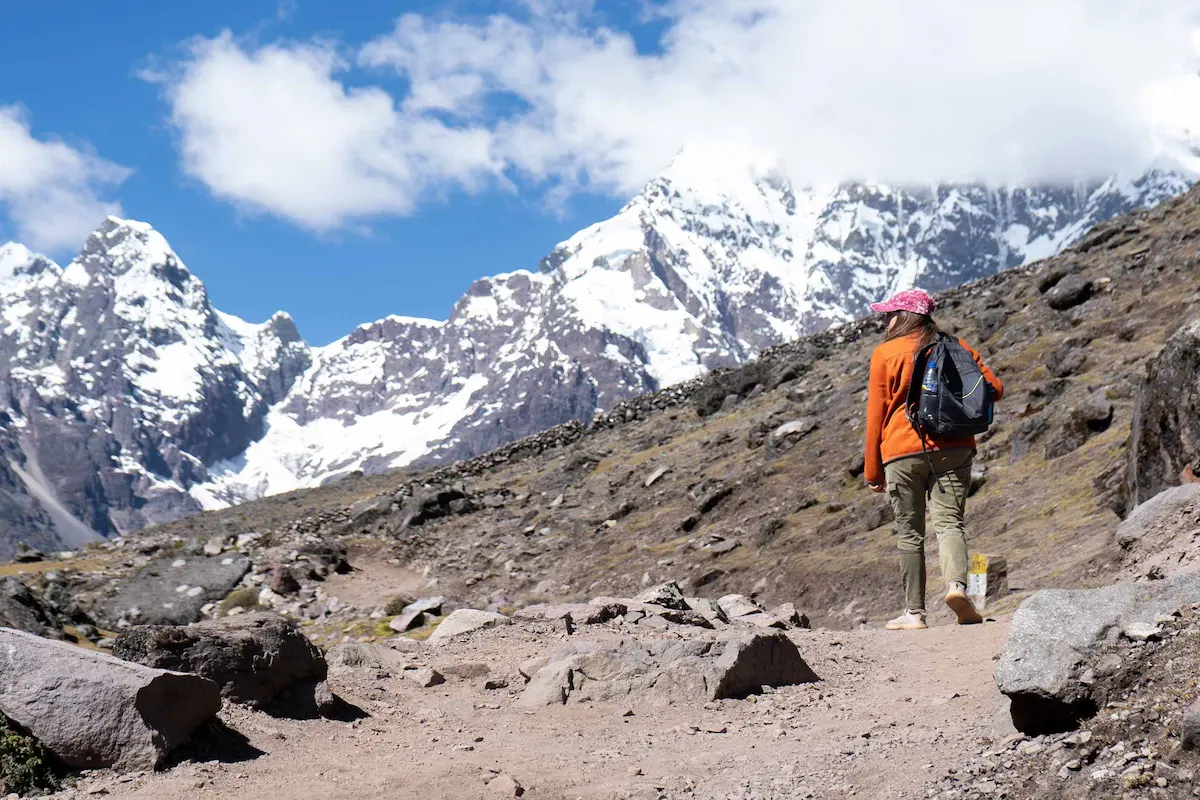
Strong winds at high passes
-
Hail
-
Possible snow at higher elevations
-
Rapid temperature changes
Rain usually does not mean an entire day of bad weather. A clear morning can turn cloudy or rainy during the afternoon.
If weather is your main factor when choosing a date, see our Best Time to Hike the Ausangate Trail guide for a complete seasonal comparison.
Ausangate Temperatures in October
Daytime temperatures along the route can generally range from approximately 5°C to 16°C (41°F–61°F) depending on altitude, sunlight, and cloud cover.
At night, temperatures around the highest camps can approach or fall below 0°C (32°F).
October nights can still be very cold, particularly at camps located above 4,000 meters.
The difference between sunshine and shade is also significant at this altitude, so hikers should dress in layers rather than relying on one heavy jacket.
Does It Rain in Ausangate in October?
Yes, rain is possible.
October is not as dry as June, July, or August, but it is generally not as wet as November, December, January, or February.
Rainfall tends to increase throughout the month.
This makes the timing within October relevant:
| Early October | Late October |
|---|---|
| More dry-season influence | More rainy-season influence |
| Lower chance of rain | Increasing chance of rain |
| Drier trails | Occasional mud possible |
| Good visibility | More variable visibility |
| Moderate crowds | Fewer hikers |
These are general seasonal patterns rather than guarantees. High-altitude weather can change at any time.
Is the Ausangate Trek Safe in October?
Yes. October is generally considered a suitable month for hiking Ausangate, provided hikers are properly prepared and weather conditions remain safe.
The main seasonal concern is changing weather.
Rain can make some sections slippery, while snow, hail, fog, or thunderstorms can occasionally affect high mountain passes.
However, altitude remains a bigger challenge than October weather for many travelers.
Ausangate spends much of the trek above 4,000 meters and crosses passes above 5,000 meters.
Before attempting the route, read our Ausangate Trek Altitude guide to understand how elevation affects the trek.
October: High Season or Low Season?
October is generally considered a shoulder-season month.
Peak trekking season around Cusco and Ausangate occurs mainly between June and August, when conditions are driest.
By October, visitor numbers have decreased considerably.
This gives hikers an attractive combination:
fewer people + relatively favorable weather + landscapes beginning to turn greener.
For some travelers, that balance makes October more appealing than the busiest dry-season months.
Advantages of Hiking Ausangate in October
Fewer Hikers
The trail is considerably quieter than during June, July, and August.
Campsites and viewpoints generally feel less crowded, which is especially valuable on a remote route such as Ausangate.
Good Chance of Clear Mountain Views
October can still provide excellent visibility of the Ausangate massif, glaciers, lakes, and surrounding mountains.
Clouds become more frequent as the rainy season approaches, but clear days are still common.
Landscapes Begin Turning Greener
After several dry months, the first seasonal rains begin bringing more color back to the valleys and grasslands.
This creates an interesting balance between dry-season visibility and greener scenery.
Less Extreme Dry-Season Cold
Nights remain cold, but the extremely dry and freezing conditions associated with the middle of the Andean winter begin to ease.
Disadvantages of Hiking in October
October’s biggest disadvantage is that the weather becomes less predictable.
Possible conditions include:
-
Afternoon rain
-
Muddy trail sections
-
Clouds covering mountain views
-
Hail or snow at high elevations
-
Sudden storms
-
Rapid temperature changes
If having the driest possible trail is your priority, June through August generally provides more reliable conditions.
Ausangate Trek: October vs November
October generally provides more stable weather than November.
| October | November |
|---|---|
| Transition from dry season | Transition toward rainy season |
| Less rain | Increasing rainfall |
| Generally drier trails | More mud possible |
| Good visibility | More variable visibility |
| Low–moderate crowds | Low crowds |
| Landscape starting to green | Greener landscapes |
| Very good overall | Good with preparation |
If your trip is closer to the rainy season, read our Ausangate Trek in November guide to see how conditions begin changing.
What Should You Pack for Ausangate in October?
You need equipment for both dry and wet conditions.
Important items include:
-
Waterproof hiking jacket
-
Rain pants or poncho
-
Hiking boots
-
Backpack rain cover
-
Warm base layers
-
Fleece jacket
-
Insulated jacket
-
Warm hat and gloves
-
Extra hiking socks
-
Sun hat
-
Sunglasses
-
Sunscreen
-
Dry bags
-
Sleeping bag suitable for freezing temperatures
Even when rain is unlikely, waterproof equipment should always be carried in the Andes.
See our complete Ausangate Trek Packing List before preparing your backpack.
Should Beginners Hike Ausangate in October?
October can be suitable for beginners who already have good physical fitness and take enough time to acclimatize.
However, Ausangate itself should not be considered an easy beginner trek.
Long hiking days, remote terrain, cold nights, and passes above 5,000 meters make the route physically demanding regardless of the month.
Our Ausangate Trek Difficulty guide explains what makes this route challenging and how it compares with other treks around Cusco.
How Many Days Should You Acclimatize?
Plan at least 2–3 days at altitude before starting Ausangate, particularly if you arrive in Cusco directly from sea level.
Some travelers may benefit from additional acclimatization.
Short hikes around Cusco or the Sacred Valley can also help you understand how your body responds to altitude before committing to several days above 4,000 meters.
Do You Need a Guide in October?
Experienced hikers can trek independently, but Ausangate remains a remote high-altitude route with limited infrastructure.
Traveling with a local guide can make navigation, campsites, weather decisions, and logistics considerably easier.
Travelers who prefer an organized experience can consider our Ausangate Trek 5 Days, which explores the main landscapes around the Ausangate massif.
Ausangate Trek Month-by-Month
If you have flexible travel dates, compare October with the rest of the year:
| Month | Weather | Crowds | Overall |
|---|---|---|---|
| Ausangate Trek in January | Very wet | Very low | Difficult |
| Ausangate Trek in February | Very wet | Very low | Least recommended |
| Ausangate Trek in March | Wet | Low | Challenging |
| Ausangate Trek in April | Transition | Low | Good |
| Ausangate Trek in May | Dry | Moderate | Excellent |
| Ausangate Trek in June | Dry & cold | High | Excellent |
| Ausangate Trek in July | Dry & very cold | High | Excellent |
| Ausangate Trek in August | Dry & windy | High | Excellent |
| Ausangate Trek in September | Mostly dry | Moderate | Very good |
| Ausangate Trek in October | Transition | Low–moderate | Good |
| Ausangate Trek in November | Increasing rain | Low | Possible |
| Ausangate Trek in December | Wet | Low | Possible with caution |
Each month can link to its individual guide, while our Best Time to Hike the Ausangate Trail article provides the complete year-round comparison.
Is October Better Than September for Ausangate?
September generally offers slightly drier and more predictable conditions.
October, however, usually has fewer hikers and increasingly green landscapes.
Choose September if weather stability is your priority.
Choose October if you prefer quieter trails and don’t mind a slightly higher chance of rain.
Is October Better Than November?
For most travelers, October is the better choice.
November receives increasing rainfall as the rainy season approaches, while October retains more influence from the dry season.
Travelers looking for a balance between good weather and fewer crowds may therefore find October particularly attractive.
Can You See Rainbow Mountain in October?
Yes.
October can provide excellent views of Rainbow Mountain, especially during clear mornings.
Clouds and afternoon rain become increasingly possible later in the month, so early departures are generally preferable.
Is Ausangate Green in October?
The landscape begins becoming greener during October as the first seasonal rains arrive.
It will generally not be as lush as December, January, or February, but vegetation starts recovering from the long dry season.
For photographers, October can offer an interesting combination of clearer skies, snow-covered peaks, colorful lakes, and gradually greener valleys.
So, Should You Hike the Ausangate Trek in October?
Yes. October is one of the better shoulder-season months for hiking Ausangate.
Choose October if you:
-
Want fewer hikers
-
Still want a good chance of clear mountain views
-
Prefer quieter campsites
-
Don’t mind occasional rain
-
Want landscapes beginning to turn greener
Consider the core dry season if you:
-
Want the most predictable weather possible
-
Want the lowest chance of rain
-
Have very limited flexibility
Overall, October offers a strong balance between weather, crowds, and scenery. Conditions become less predictable as the rainy season approaches, but for properly prepared hikers, it can be an excellent time to experience Ausangate.
FAQs About Ausangate Trek in October
Can you hike Ausangate in October?
Yes. October is a good shoulder-season month for the Ausangate Trek, with fewer hikers and generally manageable weather conditions.
Is October rainy in Ausangate?
Some rain is possible, and rainfall generally increases as the month progresses. However, October is usually considerably drier than the main rainy-season months.
Is Ausangate crowded in October?
No. Crowds generally decrease after the main June-to-August trekking season.
Is October or November better for Ausangate?
October generally offers more stable and drier conditions. November has greener landscapes but a greater chance of rain.
Is October a good month for photography?
Yes. Clear mountain views are still possible, while early seasonal rains can begin adding more green to the surrounding landscape.
What is the biggest challenge in October?
Altitude remains the main challenge. Weather can add difficulty, but the high elevations, long hiking days, and remote terrain are important considerations during every month of the year.
Related Articles
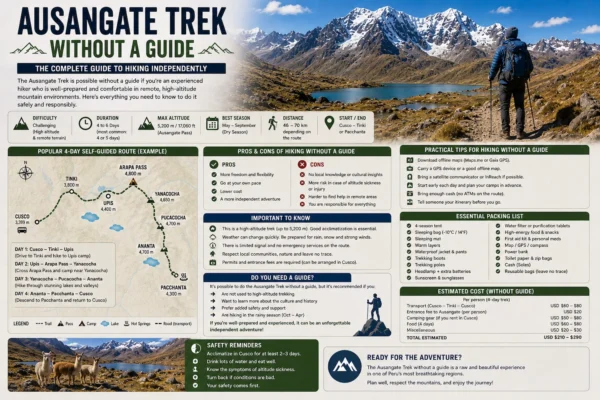
Ausangate Trek Without a Guide
Ausangate Trek Without a Guide Can you do the Ausangate Trek without a guide?…

How Much Does the Ausangate Trek Cost?
How Much Does the Ausangate Trek Cost? The Ausangate Trek cost typically ranges from…

Lakes of Ausangate The Lakes of Ausangate are among the most spectacular natural features…

Wildlife on the Ausangate Trek
Wildlife on the Ausangate Trek The wildlife on the Ausangate Trek is adapted to…
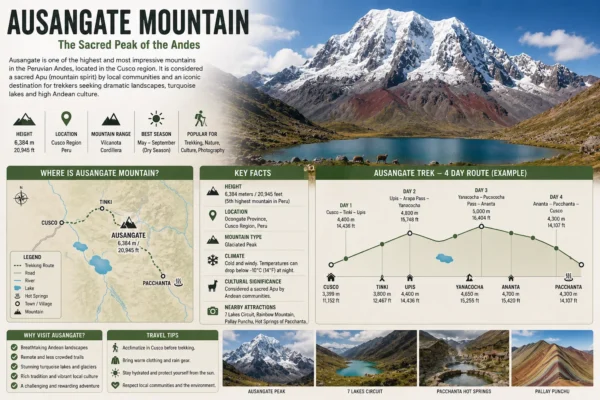
Ausangate Mountain Ausangate Mountain is one of the highest and most important mountains in…
Related Tours