
Ausangate vs Salkantay Trek
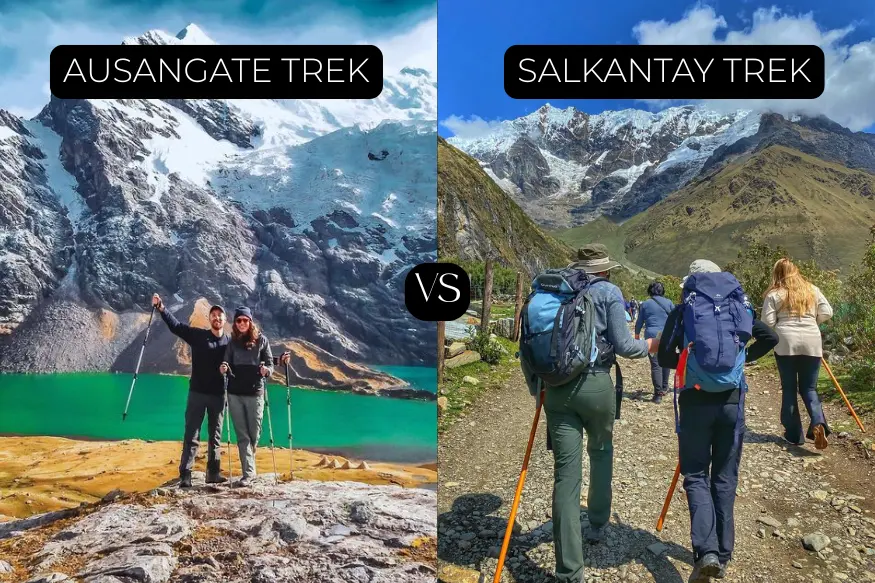
The Ausangate Trek and Salkantay Trek are two of the best mountain treks in Peru, but they offer very different experiences.
Ausangate is higher, quieter, and more remote. Salkantay combines high mountains with changing landscapes on the journey toward Machu Picchu.
So, which trek should you choose?
Ausangate Trek vs Salkantay Trek: Key Differences
If you want the quick answer, these are the main differences between the two routes.
| Comparison | Ausangate Trek | Salkantay Trek |
|---|---|---|
| Typical duration | 5 days | 4–5 days |
| Highest point | Around 5,000–5,200 m | Around 4,630 m |
| Difficulty | Challenging | Moderate to challenging |
| Main scenery | Glaciers and alpine lakes | Mountains and cloud forest |
| High passes | Several | One main pass |
| Crowds | Fewer hikers | More popular |
| Machu Picchu | Separate visit | Usually included |
| Best for | High-altitude adventure | Trekking + Machu Picchu |
The main difference is simple: Ausangate keeps you in the high Andes, while Salkantay takes you across the mountains toward Machu Picchu.
What Is the Salkantay Trek?
The Salkantay Trek is a multi-day hiking route through the Vilcabamba mountain range.
The most famous section is Salkantay Pass, located beneath the massive snow-covered Salkantay Mountain. This is the highest and most demanding point on the classic route.
But Salkantay is not only about the pass.
After leaving the high mountains, the trail gradually descends toward warmer valleys. The vegetation becomes greener, temperatures rise and the environment begins to feel completely different.
Most classic itineraries eventually continue toward Machu Picchu.
This combination of high mountains, changing landscapes and Machu Picchu is what makes Salkantay one of Peru’s most popular treks.
What Is the Ausangate Trek?
The Ausangate Trek explores the Vilcanota mountain range southeast of Cusco.
Instead of crossing one major mountain pass and descending toward lower elevations, Ausangate remains high for much of the journey.
The route passes glaciers, turquoise lakes, remote valleys, alpaca herds and several high mountain passes surrounding Ausangate Mountain.
The traditional trek does not finish at Machu Picchu.
Here, the mountains themselves are the destination.
How Does Each Trek Feel?
Both routes offer serious mountain trekking, but the experience on the trail is noticeably different.
| Experience | Ausangate Trek | Salkantay Trek |
|---|---|---|
| Atmosphere | Remote and wild | Adventurous and varied |
| Trail | High-mountain paths | Mountain and valley trails |
| Surroundings | Glaciers, lakes and alpacas | Mountains, valleys and forest |
| Other hikers | Usually fewer | More trekking groups |
| Best moment | Crossing high passes | Crossing Salkantay Pass |
| Overall feeling | Mountain expedition | Journey toward Machu Picchu |
Ausangate feels more isolated. There are long stretches where mountains, glaciers and open valleys dominate everything around you.
Salkantay feels more like a journey between different environments. You begin among high mountains and gradually move toward warmer, greener landscapes.
What Will You See on Ausangate vs Salkantay?
Both treks have impressive mountain scenery, but what you see along the way is different.
| What You Will See | Ausangate Trek | Salkantay Trek |
|---|---|---|
| Glaciers | Throughout several sections | Mainly around Salkantay |
| Alpine lakes | Numerous | Several |
| Snow-capped peaks | Throughout the route | Mainly higher sections |
| Alpacas and llamas | Common | Occasional |
| High passes | Several | One main pass |
| Cloud forest | Very limited | Yes |
| Rainbow Mountain | Possible on some routes | No |
| Machu Picchu | No | Usually yes |
Ausangate is stronger if you want continuous high-mountain scenery.
Salkantay gives you more contrast. Mountains and glaciers dominate the beginning, while forest and warmer valleys become more important later.
Ausangate Trek vs Salkantay Trek Distance
There are different versions of both routes, so exact distances vary according to the itinerary.
| Distance | Ausangate Trek | Salkantay Trek |
|---|---|---|
| Typical duration | Around 5 days | Around 4–5 days |
| Approximate distance | Around 60–70 km | Around 70–75 km |
| Hiking days | Usually 5 | Usually 4–5 |
| Terrain | High passes and valleys | Mountains and lower valleys |
| Main challenge | Altitude | Long hiking days |
Distance alone does not determine difficulty.
Salkantay may involve longer hiking days, but Ausangate keeps you at considerably higher elevations for longer.
A relatively short day above 4,500 meters can feel harder than a longer day at lower altitude.
Ausangate Trek vs Salkantay Trek Altitude
Altitude is one of the most important differences between the two treks.
| Altitude | Ausangate Trek | Salkantay Trek |
|---|---|---|
| Highest point | Around 5,000–5,200 m | Around 4,630 m |
| Time above 4,000 m | Several days | Mainly higher sections |
| High passes | Several | One main pass |
| Sleeping altitude | Generally higher | Drops after the pass |
| Acclimatization | Essential | Strongly recommended |
Salkantay has one major high-altitude challenge at Salkantay Pass. After crossing it, the trail begins descending.
Ausangate keeps you at high elevation for much longer.
That sustained altitude is one of the main reasons Ausangate is the harder trek.
Ausangate Trek vs Salkantay Trek Difficulty
Neither route requires technical climbing, but both require good fitness and preparation.
| Difficulty | Ausangate Trek | Salkantay Trek |
|---|---|---|
| Overall level | Challenging | Moderate to challenging |
| Main challenge | Sustained altitude | Salkantay Pass |
| High passes | Several | One major pass |
| Cold | More consistent | Mainly higher sections |
| Recovery | At high altitude | Easier after descending |
| Previous hiking | Recommended | Helpful |
Which Is Harder: Ausangate or Salkantay?
For most hikers, Ausangate is harder than Salkantay.
The difference is not simply the maximum elevation.
On Ausangate, you repeatedly cross high passes and spend several consecutive days at elevations where your body has to work harder.
Salkantay also has a demanding climb to its main pass, but once you cross it, the route begins losing elevation.
Ausangate demands more consistency at altitude.
Acclimatization Before Ausangate or Salkantay
Proper acclimatization is important for both routes.
Spending a few days in Cusco or the surrounding region before starting gives your body time to adjust to the altitude.
This becomes particularly important for Ausangate because the trek spends so much time above 4,000 meters.
Being physically fit at sea level does not guarantee that you will feel comfortable at 4,500 or 5,000 meters.
If possible, doing a shorter hike before either trek can help you understand how your body responds to altitude.
Ausangate vs Salkantay Trek Weather
Weather can change quickly in the Andes, but the conditions you experience throughout each trek are different.
| Weather | Ausangate Trek | Salkantay Trek |
|---|---|---|
| Temperature | Generally colder | More varied |
| Nights | Very cold | Cold in higher sections |
| Wind | Strong on exposed passes | Strong near Salkantay Pass |
| Rain | Seasonal | Seasonal |
| Snow | Possible | Possible at high elevations |
| Humidity | Generally lower | Higher after descending |
Ausangate remains colder because the route stays high.
Cold nights, strong sun, wind and sudden changes in weather are normal parts of trekking in this region.
Salkantay begins with similar mountain conditions, but the climate changes after the pass. As you descend, temperatures rise and the environment becomes increasingly humid.
Which Trek Has Better Scenery?
This is probably the hardest comparison because both routes are spectacular.
Ausangate is dominated by glaciers, alpine lakes, snow-covered peaks and enormous open valleys. The mountain scenery continues for almost the entire trek.
Salkantay has a different strength: variety.
You start beneath glaciers and snow-covered mountains, cross Salkantay Pass and then descend toward greener valleys and cloud forest.
If you want pure high-mountain scenery, Ausangate is the stronger option.
If you want dramatic changes in landscape, Salkantay offers more variety.
Which Trek Has Fewer Crowds?
Ausangate.
Salkantay is one of the most popular trekking routes to Machu Picchu, so encountering other groups is normal, especially during the busiest months.
The route is also more developed, with established camps and accommodation along several sections.
Ausangate receives fewer hikers.
Groups are generally more spread out, and some sections can feel completely isolated.
If solitude is one of your main reasons for trekking in Peru, Ausangate has a clear advantage.
Camping on Ausangate vs Salkantay
Camping on Ausangate is generally more traditional and remote.
Most itineraries use camps in high mountain areas where facilities are basic and there is very little development nearby.
The reward is waking up surrounded by mountains, lakes and open valleys.
Salkantay has a more developed trekking infrastructure.
Depending on the operator, accommodation can range from traditional tents to permanent camps, cabins or mountain lodges.
If you prefer a more isolated camping experience, Ausangate is the better fit.
If you prefer more established facilities, Salkantay provides more options.
Ausangate Trek vs Salkantay Trek Cost
Prices vary according to the operator, group size, accommodation and services included.
| Cost | Ausangate Trek | Salkantay Trek |
|---|---|---|
| Guide | Included | Included |
| Cook | Usually included | Usually included |
| Meals | Included | Included |
| Equipment transport | Horses or mules | Horses or mules |
| Accommodation | Mainly camping | Camping or lodges |
| Machu Picchu | Usually separate | Usually included |
| Main expense | Remote mountain logistics | Trek + Machu Picchu logistics |
What Are You Paying for on the Ausangate Trek?
On Ausangate, much of the price covers the logistics required to operate safely in remote mountain terrain.
Your trekking team normally includes a guide, cook and horsemen. Horses or mules transport camping equipment, food and other supplies between camps.
Good equipment also matters because nights can be extremely cold and many camps are far from roads or towns.
You are primarily paying for remote high-altitude trekking logistics.
What Are You Paying for on the Salkantay Trek?
Salkantay has many of the same trekking expenses, including guides, cooks, equipment transportation, meals and accommodation.
The difference is Machu Picchu.
Many Salkantay packages also include arrangements related to Machu Picchu and the return journey toward Cusco.
When comparing prices, check whether the Machu Picchu entrance, accommodation in Aguas Calientes, buses and return train are included.
Ausangate vs Salkantay Trek Availability
Neither route uses the limited permit system of the Classic Inca Trail.
| Availability | Ausangate Trek | Salkantay Trek |
|---|---|---|
| Special trek permit | No | No |
| Advance booking | Recommended | Recommended |
| Last-minute departure | Often possible | Often possible |
| Route flexibility | High | High |
| Private tours | Flexible | Flexible |
| Main limitation | Weather and logistics | Machu Picchu availability |
Ausangate is generally flexible when it comes to departure dates.
Salkantay is also flexible as a trekking route, but there is an important difference: Machu Picchu availability.
The trail may have availability while your preferred Machu Picchu entrance or circuit does not.
If Machu Picchu is an important part of your Salkantay experience, booking earlier gives you more options.
What Should You Pack for Ausangate vs Salkantay?
Both routes require proper hiking equipment, but your priorities are slightly different.
| Essential Gear | Ausangate Trek | Salkantay Trek |
|---|---|---|
| Hiking boots | Essential | Essential |
| Waterproof jacket | Essential | Essential |
| Warm jacket | Essential | Essential |
| Thermal layers | Essential | Recommended |
| Gloves | Essential | Recommended |
| Sun protection | Essential | Essential |
| Trekking poles | Recommended | Recommended |
| Headlamp | Essential | Essential |
| Insect repellent | Optional | Recommended |
| Passport | Carry it | Required for Machu Picchu |
For Ausangate, prepare especially for cold, wind and strong high-altitude sun.
For Salkantay, your clothing needs to handle a wider range of conditions because you move from cold mountain environments into warmer and more humid areas.
Ausangate Trek vs Salkantay Trek: Final Comparison
| If Your Priority Is… | Choose |
|---|---|
| Glaciers and alpine lakes | Ausangate |
| Higher mountain passes | Ausangate |
| Fewer hikers | Ausangate |
| Remote wilderness | Ausangate |
| Bigger altitude challenge | Ausangate |
| Machu Picchu | Salkantay |
| Cloud forest | Salkantay |
| Changing landscapes | Salkantay |
| First multi-day trek | Salkantay |
| More developed route | Salkantay |
Which Is Better: Ausangate Trek or Salkantay Trek?
Choose the Ausangate Trek if you want a higher, quieter and more remote mountain adventure. Glaciers, alpine lakes, high passes and wide Andean valleys are the main attractions.
Choose the Salkantay Trek if you want mountain scenery combined with changing ecosystems and Machu Picchu as part of the same journey.
For experienced hikers focused primarily on mountains and wilderness, Ausangate is usually the stronger choice.
For travelers who want a challenging trek combined with Machu Picchu, Salkantay is usually the better fit.
Ausangate keeps you in the high Andes. Salkantay takes you across them toward Machu Picchu.
Related Articles
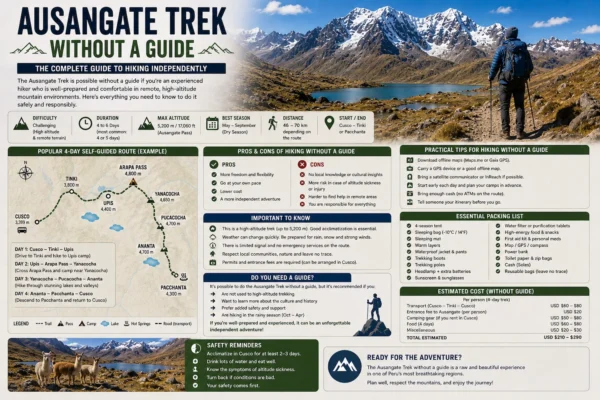
Ausangate Trek Without a Guide
Ausangate Trek Without a Guide Can you do the Ausangate Trek without a guide?…
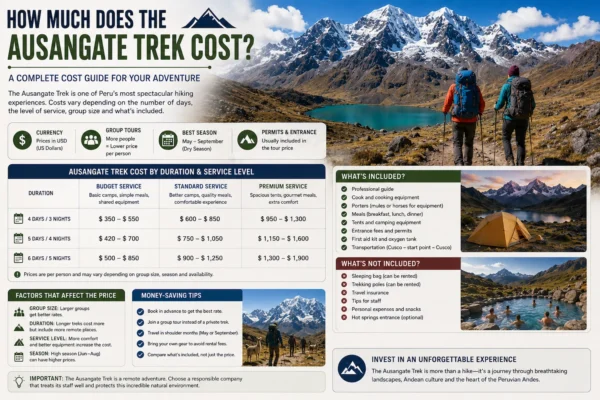
How Much Does the Ausangate Trek Cost?
How Much Does the Ausangate Trek Cost? The Ausangate Trek cost typically ranges from…
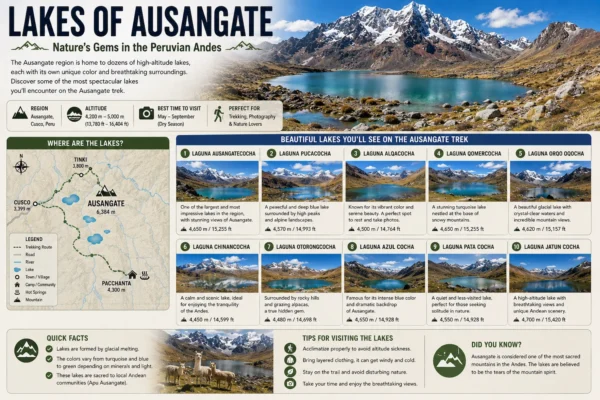
Lakes of Ausangate The Lakes of Ausangate are among the most spectacular natural features…
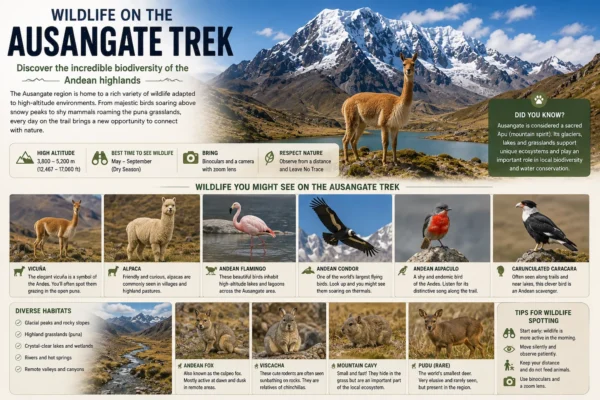
Wildlife on the Ausangate Trek
Wildlife on the Ausangate Trek The wildlife on the Ausangate Trek is adapted to…
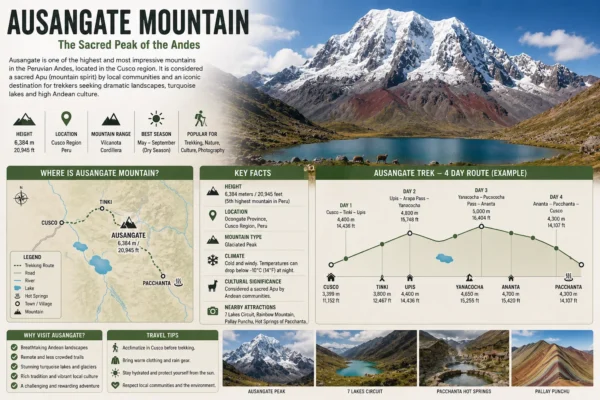
Ausangate Mountain Ausangate Mountain is one of the highest and most important mountains in…
Related Tours