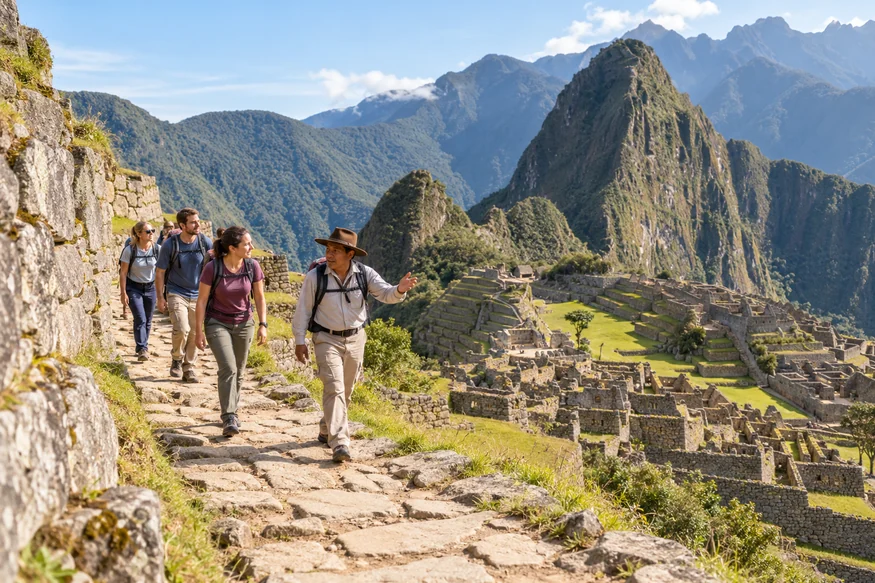

Machu Picchu has many stairs, but there is no single stair count that applies to every visitor. The sanctuary is built across a steep mountain ridge, and each ticket follows a different one-way route. Standard circuits combine irregular stone steps, sloping paths and level sections, while Huayna Picchu and Machu Picchu Mountain add much steeper and longer climbs.
For most active travelers, the stairs are manageable when approached slowly with suitable shoes. They become more challenging for anyone with knee pain, reduced balance, limited mobility or discomfort on uneven terrain. Rain can also make the original stone slippery.
Quick answer: expect repeated stairways with uneven height and depth. There are generally no modern handrails, and descending can be harder than climbing. Choose your circuit carefully and do not add a mountain route unless you are comfortable with sustained stairs.
What Are the Stairs at Machu Picchu Like?
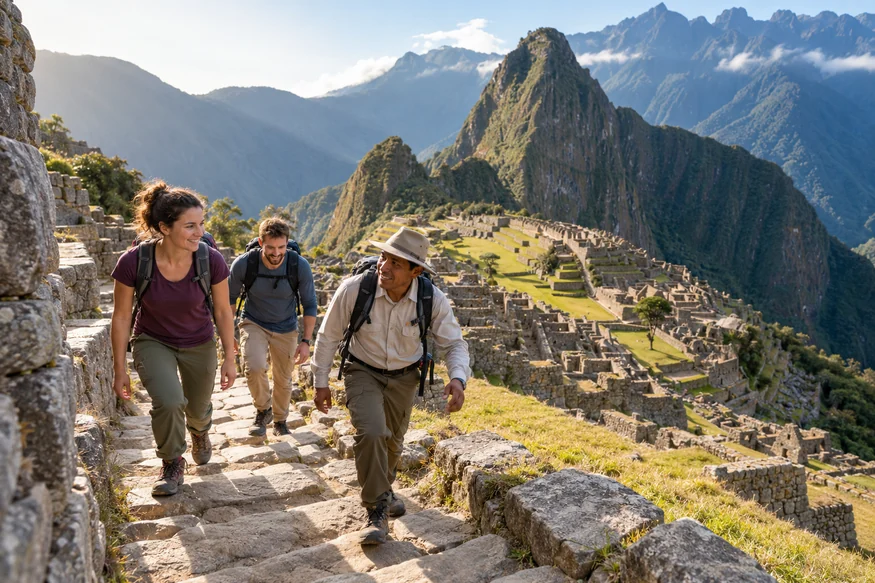
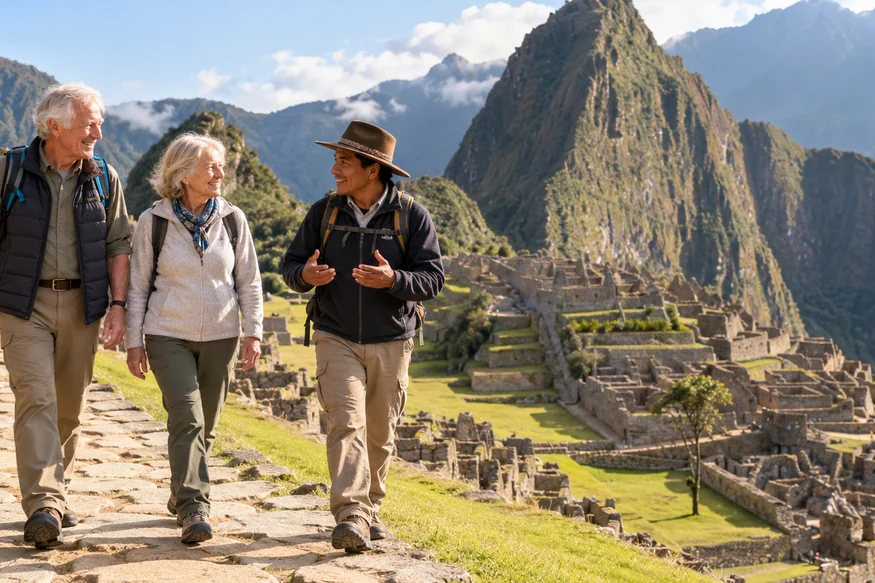
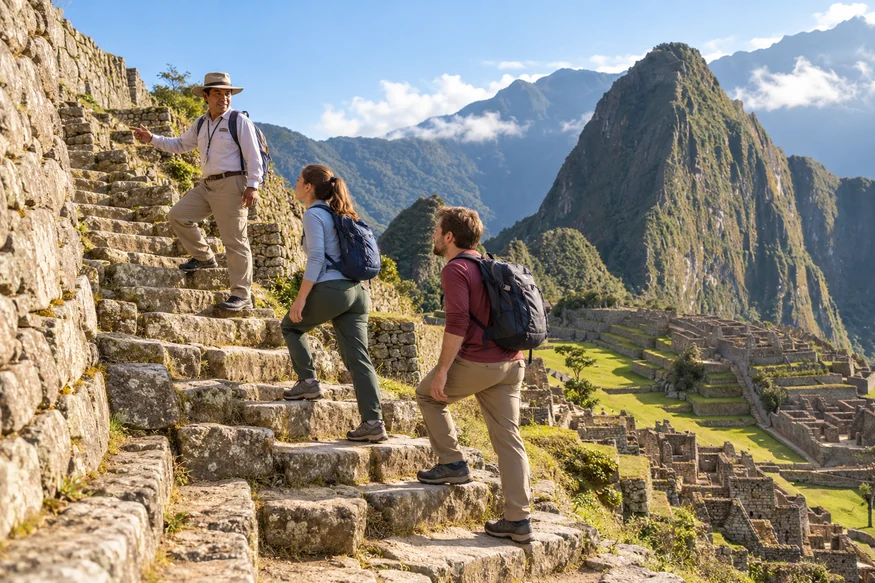
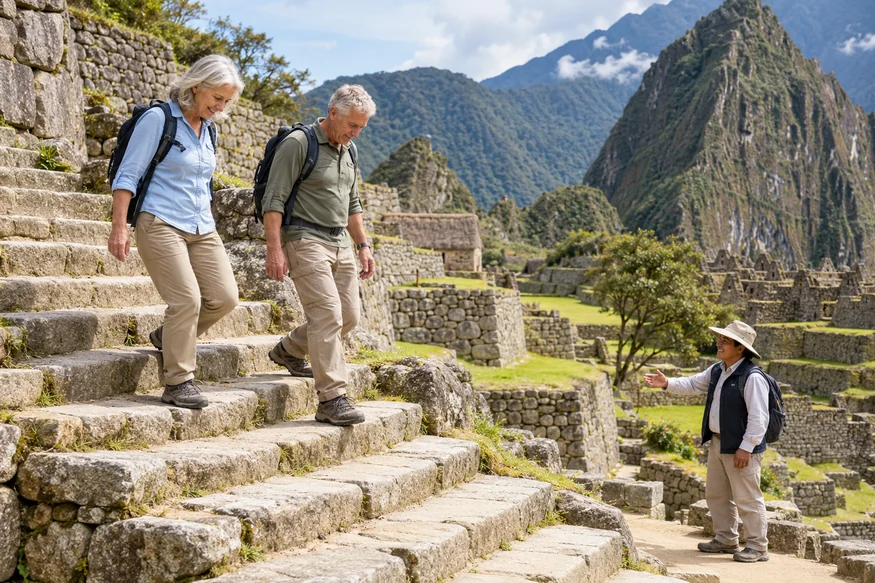
Machu Picchu stairs are part of the original Inca landscape rather than a modern visitor installation. Some steps are broad and shallow; others are narrow, worn or higher than expected. The surface can tilt, and the edge of one step may not align perfectly with the next.
You will move between agricultural terraces, ceremonial areas, residential sectors and viewpoints. Short staircases appear throughout the route, so the challenge is cumulative. One flight may feel easy, but repeated climbing and descending over two hours can tire calves, knees and stabilizing muscles.
Unlike a building staircase, you should not expect consistent dimensions, continuous railings or places to sit at every level. This is why normal city-walking ability does not always predict comfort at Machu Picchu.
How Many Stairs Are There at Machu Picchu?
No official universal stair count is published for the current visitor system. Machu Picchu has three circuits containing ten routes, and those routes do not cover the same terrain. A number quoted without naming the exact ticket may refer to a standard citadel route, a mountain climb or an older circuit that is no longer organized in the same way.
The official Machu Picchu circuits and routes page provides the current maps. Use those maps to understand where a route climbs and which sectors it reaches, but do not expect a map to show the exact effort of every stairway.
For practical planning, ask a better question: can you repeatedly climb and descend irregular steps without a handrail for the duration of your chosen route? Our article on how much walking there is at Machu Picchu explains the time commitment, while this guide focuses on the character of the steps.
Which Circuits Have the Most Stairs?
| Route type | Stair expectation | Best suited to |
|---|---|---|
| Panoramic routes | Climb toward elevated terraces and viewpoints, followed by descent | Visitors prioritizing the classic high-angle view |
| Classic routes | Repeated steps through a wider portion of the citadel | First-time visitors comfortable with moderate stairs |
| Lower royalty route | Generally less ascent than the upper panoramic experience, but not step-free | Travelers seeking a lower-sector archaeological route |
| Huayna Picchu | Steep, exposed and sustained mountain stairs | Fit hikers comfortable with heights |
| Machu Picchu Mountain | Long stair-based ascent requiring endurance | Travelers who want a substantial uphill hike |
No route should be described as completely flat. Even options focused on the lower archaeological sector include original stone, changes in level and steps. Review our complete guide to Machu Picchu circuits before buying a ticket.
Going Up vs Going Down the Stone Steps
Climbing increases breathing and muscular effort, but descending often places more stress on knees and demands greater balance. Travelers who feel strong going uphill can be surprised by the return down irregular steps.
When descending, shorten your stride, place your foot deliberately and keep enough distance from the person ahead. Do not rush because another group is behind you. Move to the rhythm permitted by the route and follow staff or guide instructions in narrow sections.
A guide can point out difficult transitions before you reach them and help the group maintain a safe pace. However, a guide cannot create handrails, change the circuit or guarantee physical assistance. Your ticket should match your actual ability.
Are the Stairs Slippery When It Rains?
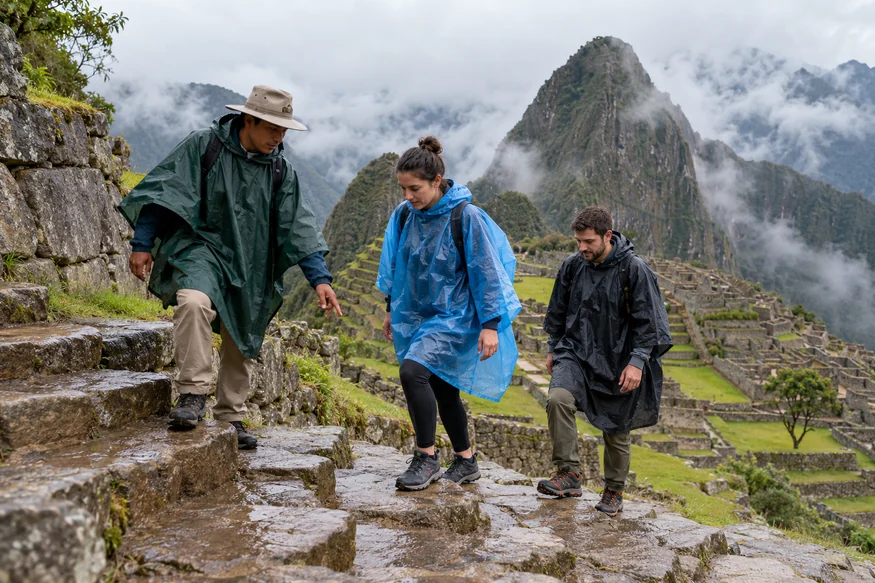
They can be. Rain darkens and smooths the stone surface, while water may collect in worn areas. The safest response is not to avoid every wet day—Machu Picchu operates in a humid mountain environment—but to slow down and use shoes with reliable grip.
Wear a fitted rain jacket or poncho that keeps your hands free. Umbrellas are prohibited by the official rules and would be impractical on narrow stairs. Avoid clothing that hangs around your feet or blocks your view of the next step.
Rain intensity can vary quickly. Our guide to Machu Picchu weather explains the seasonal patterns, but conditions on your exact visit should determine your pace.
Best Shoes for Machu Picchu Stairs
Choose broken-in walking, trail or light hiking shoes with soft rubber soles and visible tread. Heavy mountaineering boots are unnecessary for most standard circuits, but smooth fashion sneakers, hard soles and heels are poor choices.
The official Machu Picchu code of conduct prohibits heels and hard-soled shoes. It also restricts oversized bags and several items that can obstruct movement. Carry a compact daypack so your balance is not pulled backward on steep steps.
Test footwear before traveling. New shoes can create blisters, and loose footwear can shift when descending. Our Machu Picchu packing list covers shoes, clothing layers, rain protection and bag limits.
Can You Use Walking Poles or a Cane?
Do not assume ordinary trekking poles are allowed. The current public code lists walking sticks among prohibited items. Older regulations described limited exceptions for people with an evident physical need using a rubber tip, but entrance staff have authority and procedures may change.
If a cane or mobility aid is medically necessary, contact the official administration before travel and obtain current written guidance. Tell your tour operator before tickets are purchased. Arriving with unverified equipment can create a serious problem at the entrance.
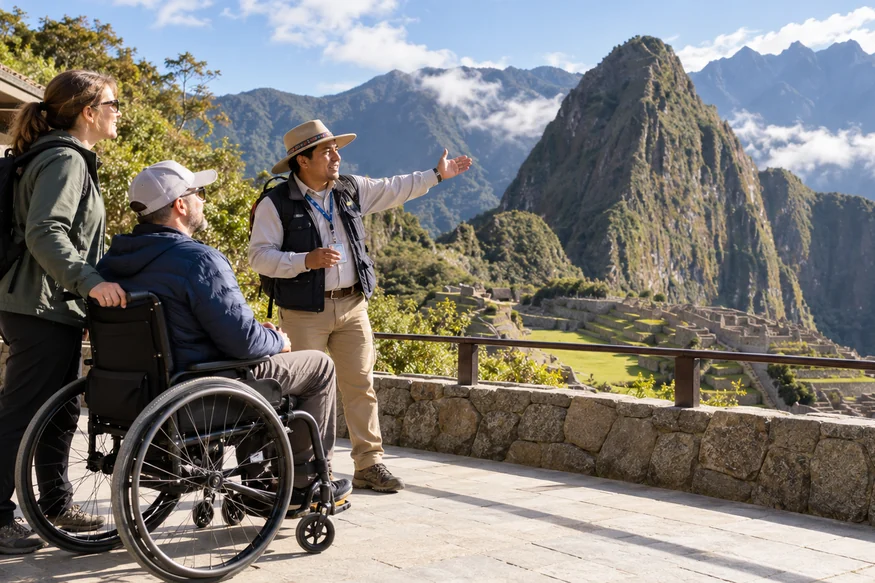
A mobility aid also does not make every route appropriate. Travelers who require substantial support should read our detailed guide to Machu Picchu accessibility.
Machu Picchu Stairs With Knee or Balance Problems
Knee discomfort often appears during descent. Balance limitations become more important when step height changes or the surface is wet. Prepare honestly: a person may be able to walk for two hours on level ground but still struggle with repeated stone stairs.
- Practice controlled stair climbing and descending before the trip.
- Use a handrail during training, but do not assume one will exist at the site.
- Build leg, hip and core strength with exercises appropriate to your health.
- Avoid a mountain add-on if ordinary stairs already cause pain.
- Choose a slower itinerary and reduce walking before the entrance.
- Discuss ongoing pain, recent surgery or instability with a qualified clinician.
For a broader assessment, see how difficult Machu Picchu is. That guide considers altitude, total time on your feet and overall fitness as well as stairs.
Stairs for Seniors, Children and Families
Many active seniors manage standard circuits comfortably. The deciding factors are current fitness, balance, knee condition and stair confidence rather than age alone. Our Machu Picchu guide for seniors explains acclimatization, pacing and itinerary choices.
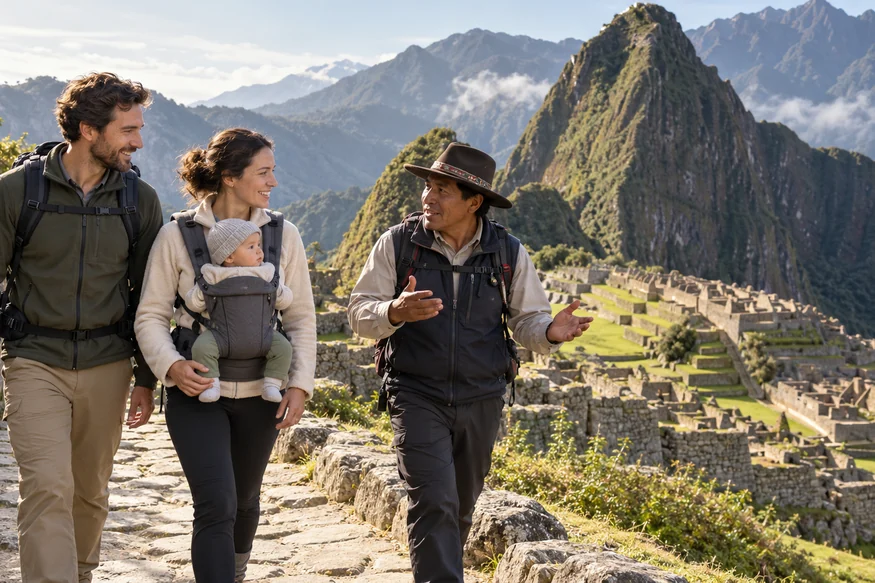
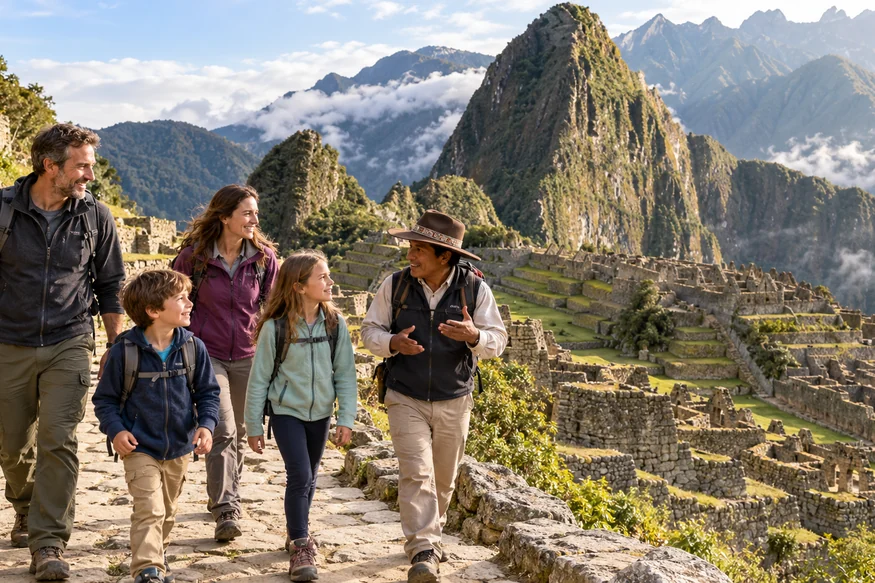
Children should stay close to an adult and avoid running. The stone edges and narrow transitions require attention even when a child has plenty of energy. Parents can read our guides to Machu Picchu with kids and Machu Picchu with a baby. Strollers are prohibited, and a baby carrier changes balance on stairs.
A private guide can help families move without pressure from a larger group, but adults remain responsible for children and their own safe movement.
How to Prepare for the Stairs
- Practice real stairs. Include both ascent and descent rather than relying only on flat walking.
- Increase gradually. Build consistency over several weeks instead of doing one exhausting session.
- Train balance safely. Use professional guidance if you have instability or previous falls.
- Break in your shoes. Confirm grip and comfort on longer walks.
- Pack lightly. Keep weight centered and both hands available.
- Acclimatize. Altitude can make stair climbing feel harder; read about Machu Picchu elevation.
- Choose the ticket first. Do not reserve Huayna Picchu or Machu Picchu Mountain only because they sound famous.
Choose a Tour That Matches Your Stair Ability
Tell your operator how you handle irregular stairs before the entrance ticket is selected. Useful information includes how many consecutive steps you manage, whether descending causes pain, whether you need a handrail and how long you can remain on your feet.
Active travelers may enjoy a Machu Picchu day trip from Cusco. Visitors who want more rest before the stairs may prefer the 2-day Machu Picchu tour, which allows an overnight stay in Aguas Calientes.
A private itinerary improves pacing and communication but cannot alter the protected route. The goal is to choose the experience you can enjoy—not the ticket with the most demanding name.
Plan a Machu Picchu Visit That Fits Your Legs
Share any knee, balance or stair concerns with our local team before tickets are secured. We will help you compare realistic tour formats and avoid adding a mountain climb that does not fit your pace.
Frequently Asked Questions About Machu Picchu Stairs
Does Machu Picchu have a lot of stairs?
Yes. All standard routes involve changes in level and irregular stone steps, although the amount of climbing varies. Mountain routes add substantially more stairs.
How many steps are at Machu Picchu?
There is no single official count for the current visitor system. Different tickets follow different routes, so any number without a named route can be misleading.
Are there handrails?
Do not expect modern handrails throughout the sanctuary. Visitors need sufficient balance for original stone paths and stairs.
Which Machu Picchu route has fewer stairs?
Lower-sector routes generally avoid some of the ascent required for upper panoramic viewpoints, but they are not flat or step-free. Confirm the current map and discuss your ability before booking.
Are Machu Picchu stairs dangerous?
They require attention because they are uneven and can become slippery. Most prepared visitors manage them safely by wearing proper shoes, moving slowly and following the established route.
Can you visit Machu Picchu with bad knees?
It depends on the severity of your condition and your ability to descend irregular steps. Seek medical advice, choose a suitable route and do not rely on there being handrails or seating.
Are Huayna Picchu stairs part of every visit?
No. Huayna Picchu requires a specific ticket and is an optional steep mountain route. You can experience Machu Picchu without climbing it.
Visitor routes and regulations can change. Review the current official map and code of conduct before purchasing tickets or bringing a mobility aid.