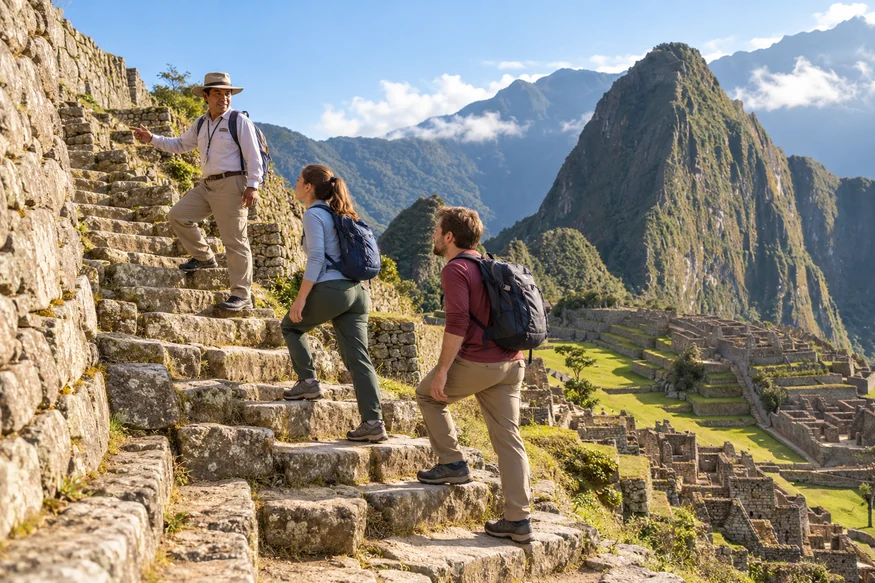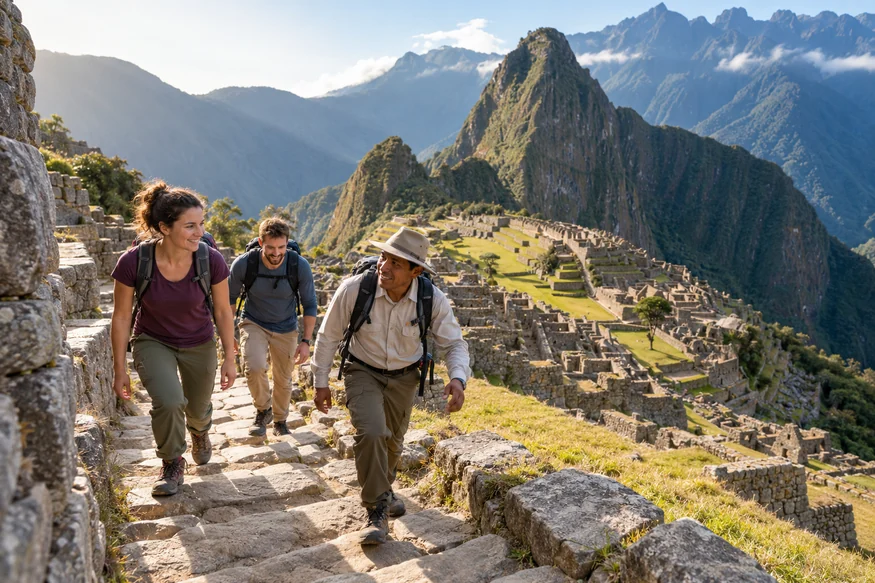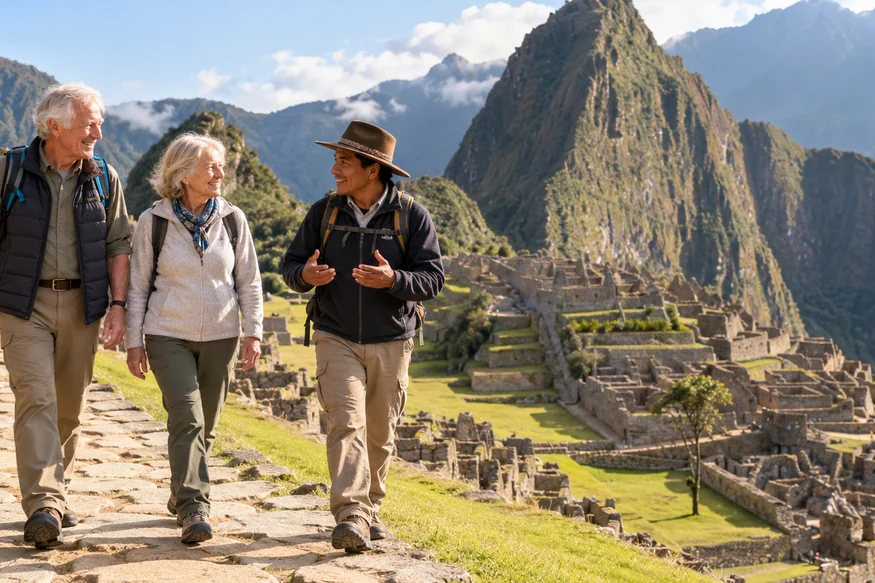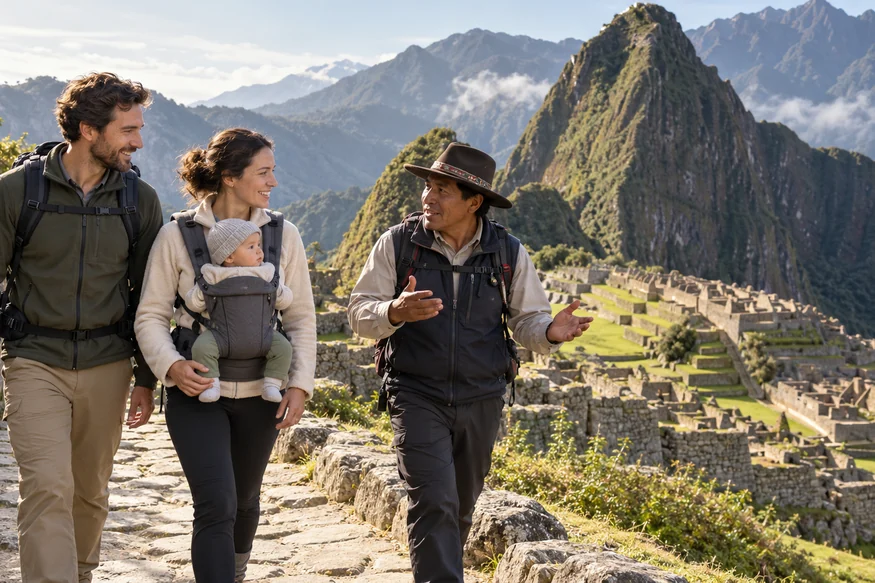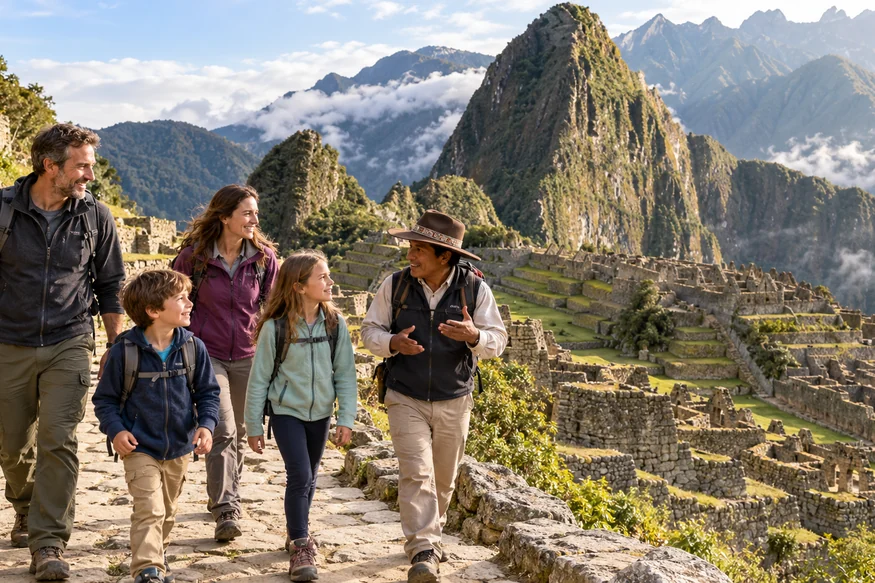
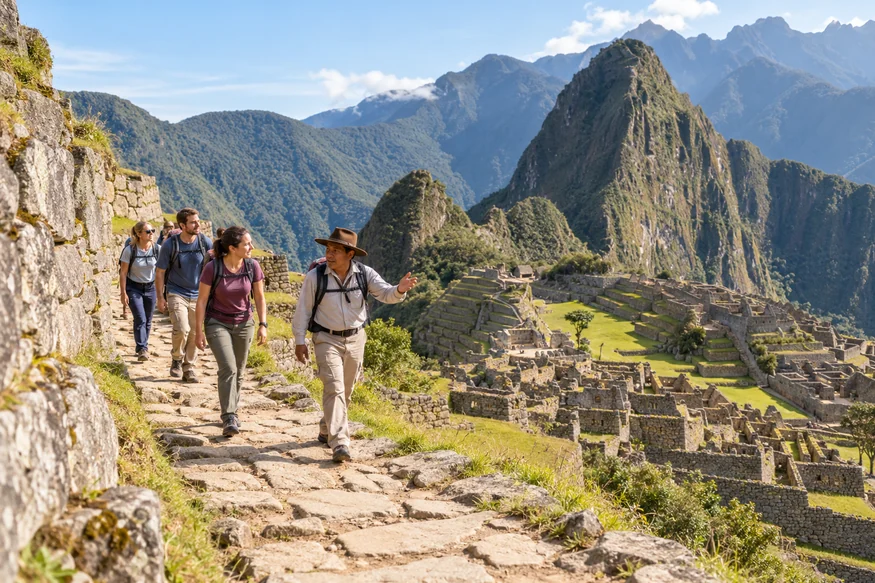

How much walking is there at Machu Picchu? For a standard visit, plan on roughly two to two and a half hours inside the archaeological site, combining walking, standing, listening to your guide and stopping at viewpoints. You will not walk continuously for that entire period, but you will spend most of it on your feet. The route includes uneven stone paths, slopes and repeated stairs rather than a flat promenade.
There is no single official distance that applies to every visitor. Machu Picchu currently has three main circuits containing ten routes, and each follows a different section of the sanctuary. Your ticket, pace, photo stops and whether you add a mountain hike all change the amount of walking.
Quick answer: allow 1.5–2.5 hours of walking and standing for most standard circuits. Routes with the Inca Bridge, Intipunku, Huayna Picchu, Huchuy Picchu, the Great Cavern or Machu Picchu Mountain involve additional trail time and can turn the visit into a half-day physical activity.
How Long Do You Walk Inside Machu Picchu?
Most standard tickets allow a maximum stay of two hours and thirty minutes. This is not the same as two and a half hours of continuous walking. A guided visit normally alternates between movement and interpretation: you climb a set of steps, pause to understand a temple or terrace, continue through a narrow sector and stop again at an explanation area.
A brisk visitor may complete a permitted route sooner, while a group moving carefully may use most of the available time. You cannot treat the sanctuary like an open park where you wander indefinitely. Routes are directional, re-entry is generally not permitted, and visitors must follow the path connected to their ticket.
The official Machu Picchu circuits and routes page links to the current maps. Review the exact route—not only the circuit number—because the route determines the viewpoints, archaeological sectors and additional trails included.
Machu Picchu Walking Time by Circuit
| Route type | Published maximum stay | Walking expectation |
|---|---|---|
| Panoramic Route 1-B | 2 h 30 min | Upper viewpoints, ascent and descent; much of the visit is on foot |
| Classic Routes 2-A and 2-B | 2 h 30 min | A broad citadel visit with stone paths, stairs and explanation stops |
| Royalty Route 3-B | 2 h 30 min | Lower-sector focus; still involves uneven ground and steps |
| Inca Bridge Route 1-D | 3 h | Adds an out-and-back trail and is offered only in the applicable season |
| Huayna Picchu Route 3-A | 6 h | Includes a steep mountain climb in addition to the archaeological route |
| Machu Picchu Mountain Route 1-A | 7 h | A sustained mountain ascent that requires substantially more walking |
These are maximum permitted times shown on official route maps, not promises that every traveler will need the full period. Seasonal routes may be unavailable outside designated dates, and operating conditions can change. Always confirm the ticket details before paying.
Why There Is No Reliable Universal Distance
Travelers often want a precise answer in kilometers or miles. The problem is that published numbers on travel websites may refer to different things: the main archaeological loop, a mountain add-on, the walking trail from Aguas Calientes, or the entire travel day. Comparing them as if they describe the same visit is misleading.
The official maps prioritize route lines, maximum stay and permitted sectors rather than publishing one universal walking distance. Pace also varies because stone steps require more concentration than a level sidewalk. Two visitors can follow the same route and experience it very differently.
For planning, time on your feet and terrain are more useful than a questionable kilometer figure. Ask yourself whether you can comfortably walk and stand for two hours, manage repeated uneven steps and continue after the train and bus transfers. Our guide to Machu Picchu difficulty explains the physical demands in more detail.
How Much of the Visit Is Standing?
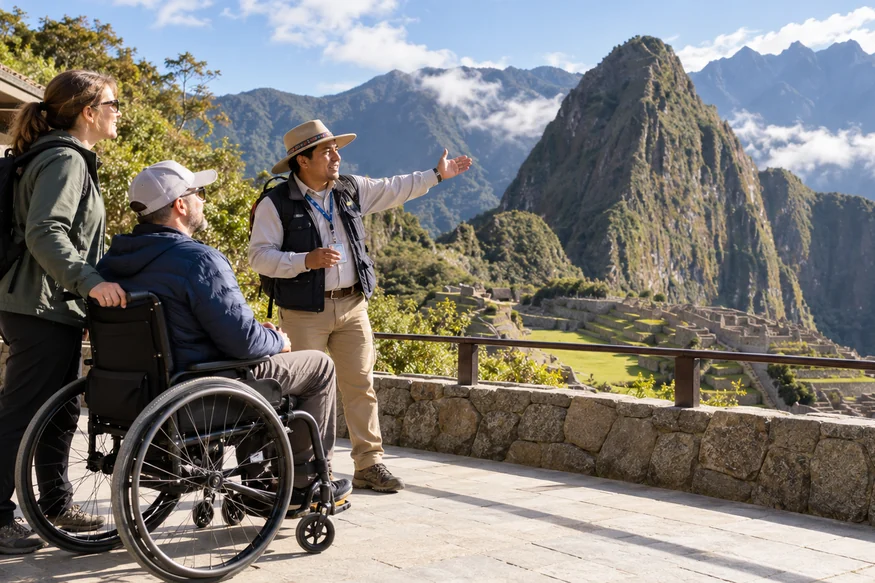
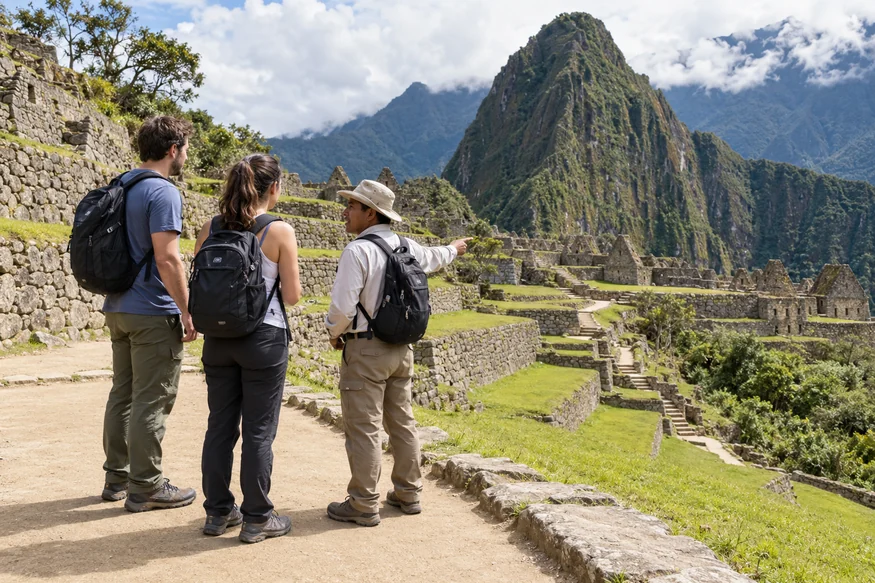
Even when you are not moving, you are usually standing. Your guide may stop in designated explanation areas, at a viewpoint or near an archaeological feature. Seating is limited, and visitors cannot sit or lean on protected stone walls. Portable chairs are restricted by the official code of conduct.
This distinction matters for travelers who can walk a reasonable distance but find prolonged standing difficult. A two-hour route may feel harder than a longer city walk with benches and cafés. Choose a sustainable pace from the beginning rather than using all your energy to reach the first viewpoint quickly.
If you require substantial mobility support, read our guide to Machu Picchu accessibility. The original stone environment is not fully step-free, and assistance must be evaluated before tickets are purchased.
Walking Before You Enter Machu Picchu
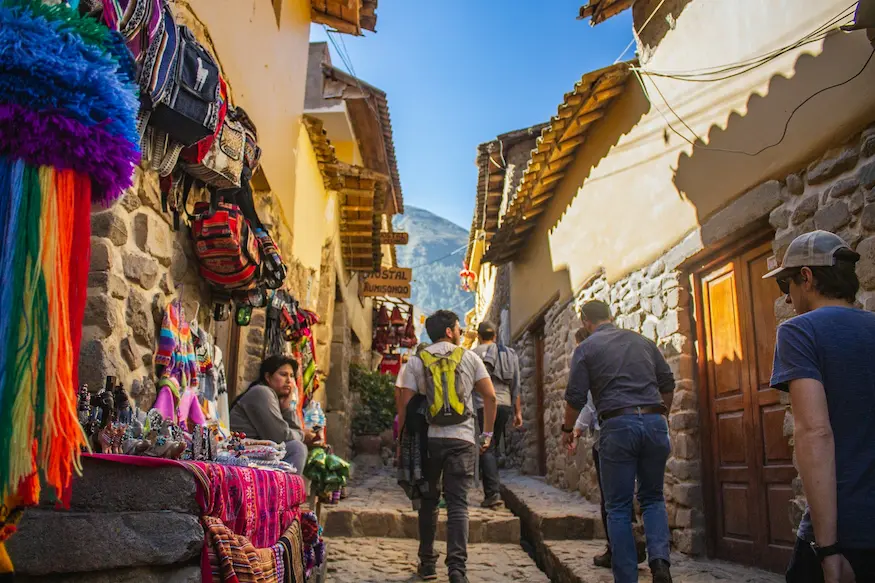
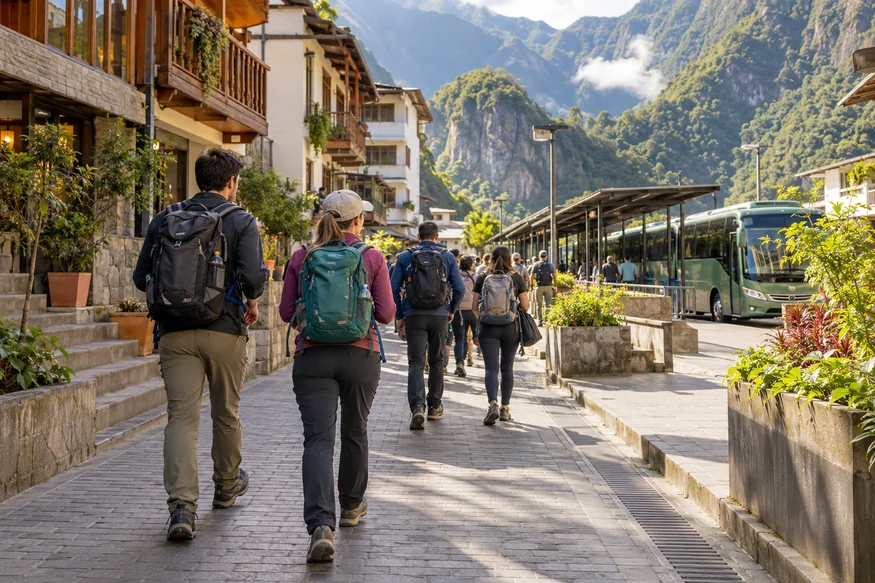
The archaeological route is only part of the day. Travelers also walk through train stations, accommodation, Aguas Calientes and transport queues. These distances may be short individually, but they accumulate—especially during a day trip from Cusco.
- Departure station: allow for the walk from your vehicle to the platform and any stairs or ramps at the station.
- Aguas Calientes: the town is pedestrian-oriented and includes slopes, bridges and busy paved streets.
- Bus departure area: you may walk from the station or hotel and stand in a queue before boarding.
- Sanctuary entrance: there can be another period of standing while documents and tickets are checked.
- Return journey: remember that your legs still need to manage the route back through town and the station.
Our guide from Aguas Calientes to Machu Picchu explains the final transport stage. Select a conveniently located hotel if reducing extra walking is important.
Bus or Hike from Aguas Calientes?
Most visitors take the shuttle bus up the Hiram Bingham road. This preserves energy for the archaeological circuit and is the sensible choice for a typical day visit. Walking from Aguas Calientes to the entrance is a separate uphill effort involving the road approach and a long staircase through humid forest.
Do not confuse the hike to the gate with walking inside Machu Picchu. If you climb from town and then complete a circuit, you are combining two physical activities. You must also decide how you will return. Travelers choosing the hike should allow adequate time, carry only permitted essentials and avoid arriving exhausted for their scheduled entrance.
For most first-time visitors, the bus provides a better balance: save your legs for the site you traveled to see. Confirm the current departure procedure and allow enough time for the queue before your scheduled entrance.
How Mountain Tickets Change the Walking
Huayna Picchu and Machu Picchu Mountain are not minor detours. They add sustained climbing and descending to the archaeological visit. The longer maximum stay printed on their official route maps reflects the additional mountain section.
Huayna Picchu is known for steep and exposed sections. Machu Picchu Mountain generally involves a longer ascent. Both require more fitness than a standard circuit, and neither is necessary to enjoy the famous citadel. Huchuy Picchu, Intipunku, the Inca Bridge and the Great Cavern also add walking in different ways and may be seasonal.
Select a mountain route because you genuinely want the hike, not because it appears to offer “more Machu Picchu.” A standard circuit already involves enough walking for many travelers.
How Much Walking Is Suitable for Seniors and Families?
Age does not determine walking capacity. Active seniors who regularly use stairs may be comfortable on a standard route, while a younger traveler with knee pain or poor balance may struggle. Our Machu Picchu guide for seniors covers pacing, recovery and itinerary design.
Families should remember that children may tire from the total travel day rather than the site alone. Use a realistic route, keep the schedule simple and prepare for weather changes. Parents can review our guides to Machu Picchu with kids and Machu Picchu with a baby.
If anyone in the group has a strict walking limit, describe it in functional terms before booking: maximum minutes on uneven ground, ability to climb and descend steps, balance needs, and tolerance for standing. This is more useful than saying only “slow walker.”
How to Prepare for the Walking
- Build regular walking into your routine. Consistency matters more than speed.
- Practice stairs in both directions. Descending can be harder on knees and balance.
- Use broken-in shoes with rubber grip. Original stone can be slippery when wet.
- Pack light. A heavy bag turns every step into extra work.
- Acclimatize before the visit. Machu Picchu is lower than Cusco but still at elevation.
- Protect yourself from rain and sun. Weather affects pace and fatigue.
- Choose the route before building the day. Do not add a mountain climb automatically.
Check our Machu Picchu packing list for footwear, layers and bag limits. For altitude preparation, see our guide to Machu Picchu elevation.
Day Trip or Overnight Stay?
A day trip is efficient, but the walking sits inside a long chain of early transfers, stations, queues and the return to Cusco. Travelers with good stamina often handle it well. Those who want a calmer morning or need to protect their energy may benefit from sleeping in Aguas Calientes.
Our Machu Picchu day trip from Cusco works well for visitors who prefer a compact itinerary. The 2-day Machu Picchu tour spreads the transport across two days and reduces time pressure before entry.
A private itinerary can also match the train, hotel and guiding pace to your group. It cannot change the official route or permit re-entry, but it can remove unnecessary rushing.
Plan the Walking Around Your Real Pace
Tell our local team how long you are comfortable walking, whether stairs are difficult and if you prefer a day trip or overnight stay. We will help you compare suitable Machu Picchu tours before tickets are secured.
Frequently Asked Questions About Walking at Machu Picchu
How many hours do you walk at Machu Picchu?
Most standard visits involve around 1.5–2.5 hours of walking and standing, including explanation and photo stops. Mountain routes require additional time and effort.
How many miles do you walk at Machu Picchu?
There is no single reliable mileage because tickets follow different routes and official maps emphasize permitted paths and maximum stay rather than one universal distance. Plan by time, terrain and stair ability.
Do you walk continuously?
No. A guided visit alternates between walking and stops for interpretation. However, seating is limited, so most stops still involve standing.
Can you see Machu Picchu without much walking?
Every route requires some walking on uneven terrain. Certain lower-sector routes may reduce climbing, but no standard archaeological visit should be described as flat or step-free.
Is the walk at Machu Picchu hard?
For most active visitors, a standard circuit is moderately demanding. The uneven surface, stairs, weather and standing matter more than speed. Mountain routes are significantly harder.
Should you take the bus from Aguas Calientes?
Most visitors should take the shuttle bus to preserve energy for the archaeological site. Hiking from town adds a separate uphill climb before your ticketed route begins.
Can you stop and rest?
You can pause in appropriate areas while following staff instructions, but benches and seating are limited. Visitors cannot sit or lean on protected archaeological structures.
Routes, seasonal availability and permitted times can change. Check the current official map for the exact ticket you intend to purchase.