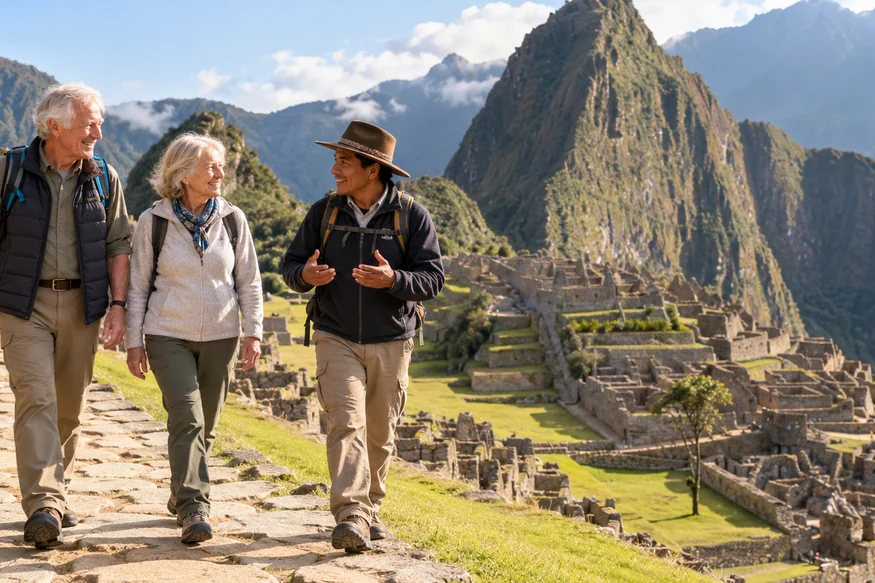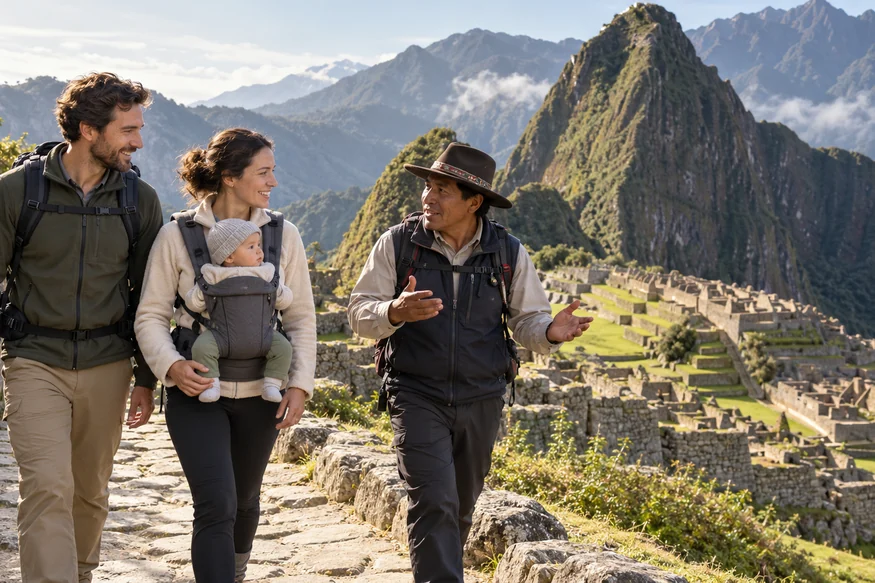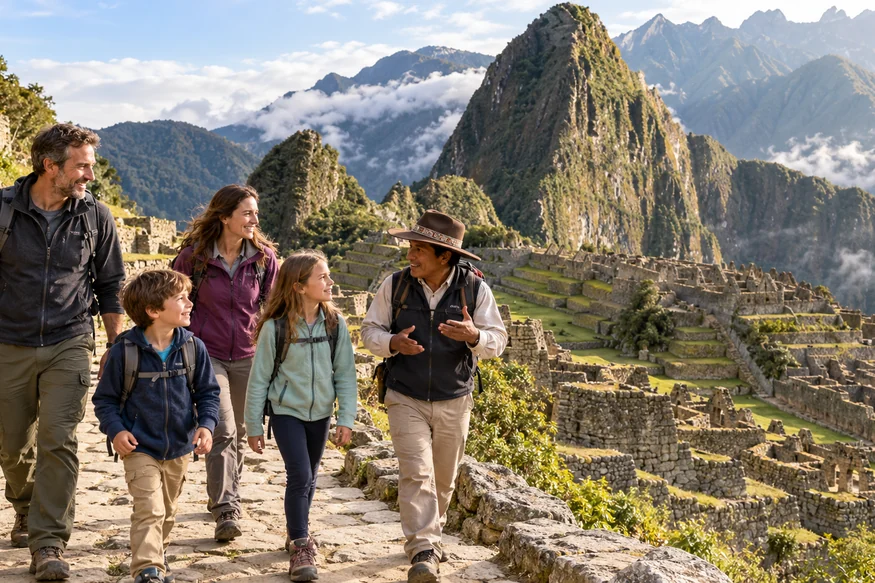
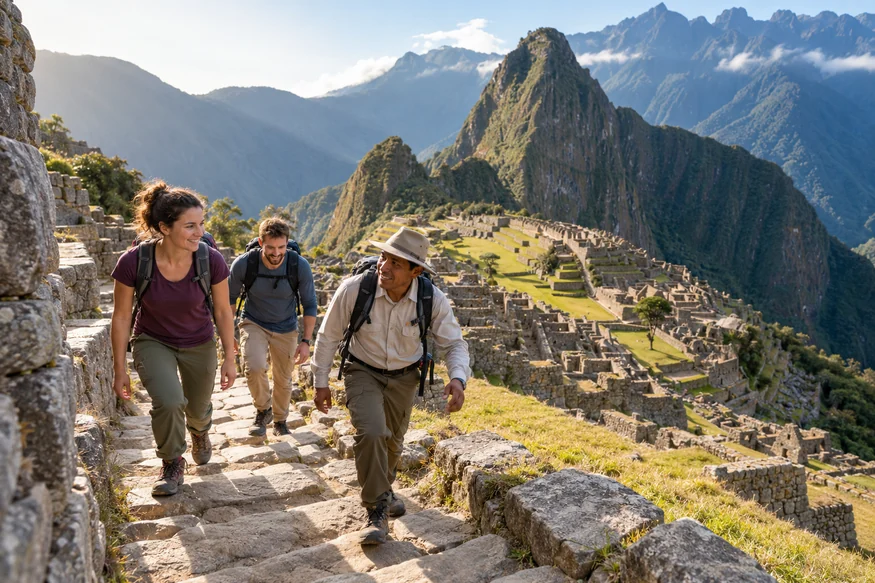

How difficult is Machu Picchu? For most travelers with average fitness, a standard visit is moderately demanding rather than an extreme hike. You do not need to be an athlete, but you should expect uneven stone paths, repeated stairways, slopes, limited places to sit and several hours of movement at altitude. The experience becomes more challenging when rain, heat, crowds, fatigue or the wrong circuit are added.
The answer also depends on what you mean by “visiting Machu Picchu.” Walking through one of the archaeological circuits is very different from climbing Machu Picchu Mountain or Huayna Picchu. A traveler comfortable on irregular stairs may find the main site manageable, while someone with balance problems or significant mobility limitations may face serious barriers.
Quick answer: the standard Machu Picchu visit is usually moderate for an active traveler, but it is not a flat walk. Mountain routes are considerably harder and require stronger fitness, comfort with heights and more time.
Machu Picchu Difficulty at a Glance
| Factor | Typical challenge | Why it matters |
|---|---|---|
| Terrain | Moderate | Original stone is uneven and can be slippery when wet |
| Stairs | Moderate to demanding | Routes contain repeated ascents and descents without modern handrails |
| Altitude | Usually manageable | Breathing and recovery may feel harder, especially after time in lower areas |
| Time on your feet | Moderate | Standing, waiting and transfers add to the site walk |
| Mountain add-ons | Demanding to strenuous | Steeper trails and exposure require more strength and confidence |
These ratings are only a planning guide. Weather, age, injuries, altitude response and the selected ticket can move the difficulty up or down. The official Machu Picchu circuit system currently organizes visits into three main circuits containing ten routes, so the name printed on your ticket has a direct effect on the physical experience.
Why Machu Picchu Feels Harder Than an Ordinary Walk
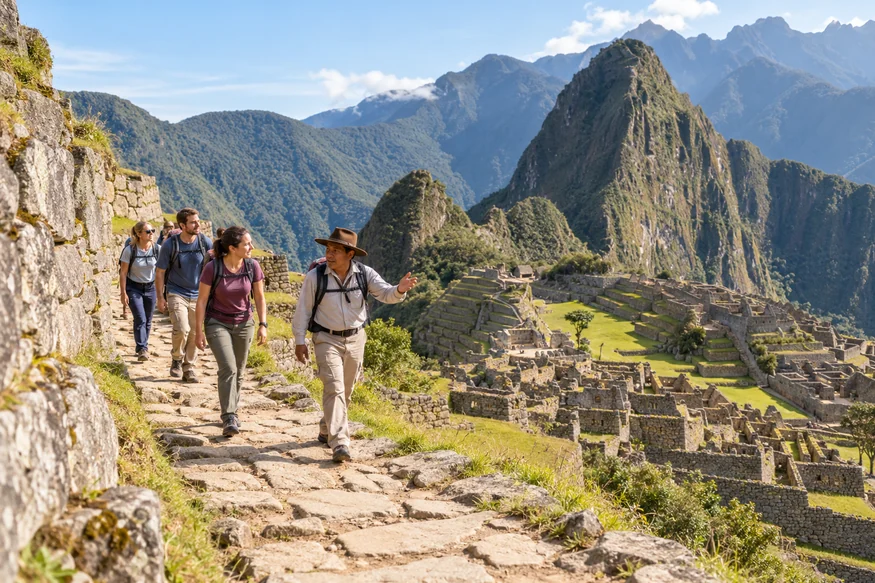
Machu Picchu is an archaeological site built across a mountain ridge, not a modern attraction with level floors. Many surfaces are original or conservation-sensitive. Step heights vary, stones can tilt, and narrow areas require attention to foot placement. You are also moving through a one-way route, which means turning back or changing to an easier section may not be possible.
The challenge is cumulative. A traveler may manage each staircase comfortably but become tired after the train, bus queue, entrance wait, guided visit and return journey are combined. Sun exposure increases effort; rain makes stone slick; humidity can make the air feel heavier. Our guide to Machu Picchu weather explains how conditions vary throughout the year.
There are also relatively few opportunities to sit during the archaeological circuit. Visitors should expect to remain on their feet and continue with the established flow. This is why a realistic pace and a suitable ticket matter more than trying to see every possible sector.
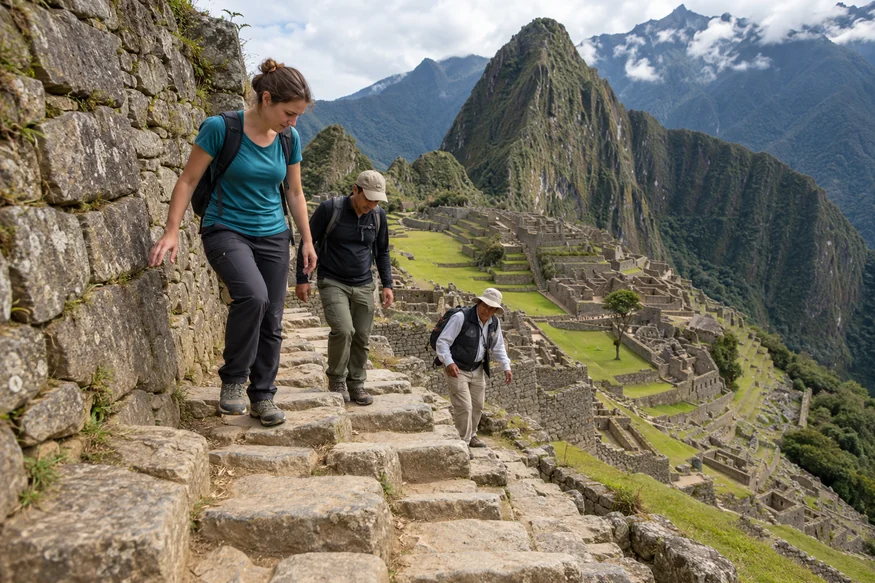
How Difficult Are the Stairs at Machu Picchu?
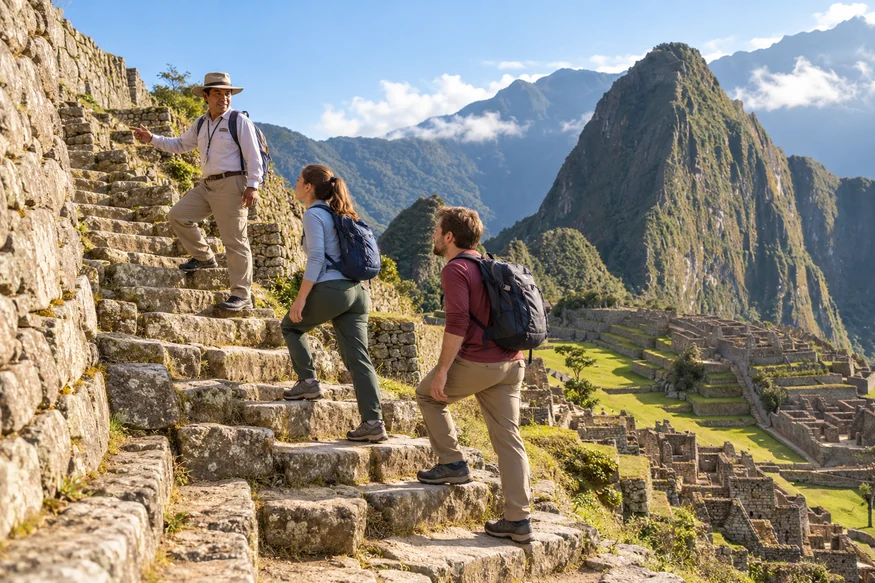
The stairs are one of the main physical challenges. They are not uniform like stairs in a hotel: some are shallow, others are higher, and many have worn or irregular edges. Handrails are not consistently available. Travelers with knee pain, reduced balance or a fear of falling often find descending harder than climbing.
Move slowly, keep enough space from the person ahead and place your entire foot whenever possible. Shoes with flexible, grippy rubber soles are far more useful than hard-soled footwear. The official code of conduct prohibits shoes with hard soles or heels and also restricts walking sticks, so do not assume you can bring ordinary trekking poles. If a mobility aid is medically necessary, confirm the current rule before travel.
This broad difficulty guide does not attempt to assign one exact stair count to the entire sanctuary because the routes differ. The practical question is whether you can repeatedly climb and descend irregular steps without a continuous handrail.
Does the Altitude Make Machu Picchu Difficult?
Machu Picchu lies at approximately 2,430 meters above sea level. It is lower than Cusco, but the altitude can still make exertion feel harder, particularly for travelers arriving from sea level or those who have not acclimatized. Shortness of breath during stairs does not automatically mean a serious problem, yet symptoms should never be ignored.
Spend time acclimatizing in the region, climb at a pace that allows conversation and follow medical advice appropriate to your health. Hydration, sleep and avoiding an overloaded day also help. Read our complete guide to Machu Picchu elevation before building your itinerary.
Travelers with heart, respiratory or other medical conditions should discuss the trip with a qualified clinician. A blog cannot determine personal fitness or guarantee that a route will be safe for a specific visitor.
Which Machu Picchu Circuit Is the Easiest?
There is no universally “easy” circuit. The current official structure includes panoramic routes, classic routes and royalty routes, plus mountain or seasonal alternatives. Some prioritize elevated viewpoints, while others focus more on the lower archaeological sector. A shorter route can still contain challenging steps, and a scenic route may involve more ascent than its map suggests.
Start with our explanation of the Machu Picchu circuits, then check the latest official maps before purchasing. Consider the route’s terrain, maximum visit time, seasonal availability and whether its principal viewpoint or archaeological areas match your priorities.
Do not buy a mountain ticket simply because it sounds more complete. Machu Picchu Mountain and Huayna Picchu are separate physical challenges and are not necessary for a rewarding first visit. The classic citadel experience is already memorable.
Standard Visit vs Mountain Hikes
A standard archaeological circuit involves walking and stairs, but it should not be confused with a mountain climb. Mountain add-ons require sustained ascent, steeper paths and greater confidence on exposed terrain. They also leave less energy for the rest of the day.
- Standard archaeological circuit: usually suitable for travelers with average fitness who are comfortable on irregular steps.
- Machu Picchu Mountain: a longer uphill challenge that rewards endurance and steady pacing.
- Huayna Picchu: a steeper, more exposed climb that can feel intense for travelers uncomfortable with heights.
- Seasonal extended routes: difficulty varies and should be checked against the current official map.
If the main purpose of your trip is the citadel, choose the route that lets you enjoy it without arriving exhausted. Extra elevation is an optional adventure, not a requirement.
Who May Find Machu Picchu Difficult?
The visit may be more demanding for people who rarely walk, have ongoing knee or hip pain, struggle with balance, recover slowly after stairs or become anxious near steep terrain. It can also be difficult for anyone who arrives tired, dehydrated or poorly acclimatized—even if they normally exercise.
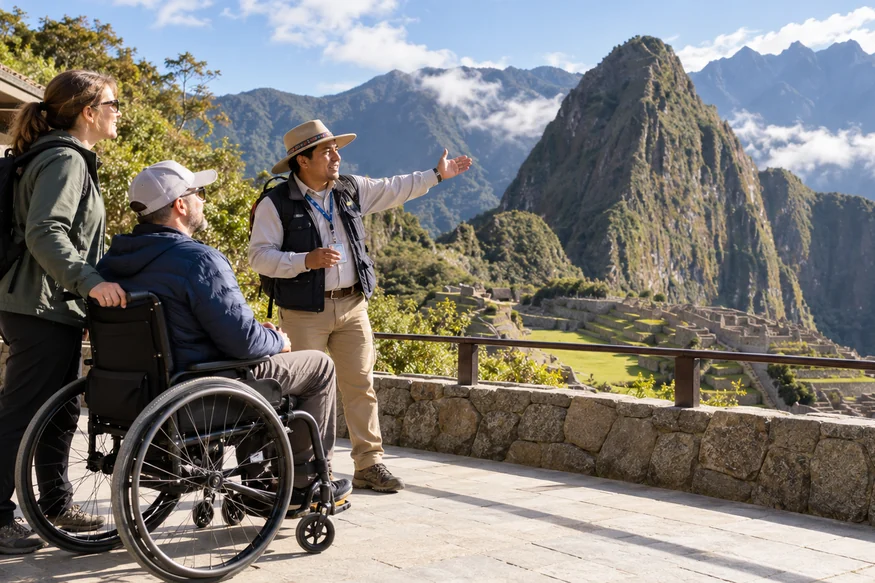
Age alone is not a reliable measure. Many older adults visit comfortably when the pace and circuit are appropriate. Our Machu Picchu guide for seniors focuses on comfort, timing and recovery. Travelers who use a wheelchair or need substantial mobility support should instead read our honest guide to Machu Picchu accessibility, because the protected site is not fully step-free.
Families should evaluate children individually. A child who enjoys long walks may handle the route better than an inactive adult, but supervision is essential around stairs and narrow paths. See our practical advice for visiting Machu Picchu with kids.
How to Prepare Physically for Machu Picchu
You do not need specialized mountaineering training for a standard visit. Consistent walking and basic stair practice are more useful. Begin several weeks before travel if your usual routine is sedentary, increasing gradually rather than attempting one exhausting workout.
- Walk regularly. Build comfort with sustained movement rather than focusing only on speed.
- Practice stairs. Include both climbing and controlled descending.
- Train balance. Safe single-leg balance and uneven-surface walking can improve confidence.
- Strengthen legs and hips. Simple, appropriate exercises can make repeated steps easier.
- Test your footwear. Never make Machu Picchu the first long outing in new shoes.
- Allow acclimatization time. Do not schedule the most demanding route immediately after reaching the Andes.
Training should match your health and experience. Stop if an exercise causes pain and obtain professional guidance when necessary.
What to Wear and Carry for an Easier Visit
Good equipment cannot remove the stairs, but it can prevent avoidable discomfort. Wear grippy walking shoes, light layers and rain protection that leaves your hands free. The weather can change quickly between sun, cloud and showers.
Carry only what you need in a compact daypack. Oversized bags are prohibited, and extra weight makes every staircase harder. Our Machu Picchu packing and clothing guide explains suitable footwear, layers and rain protection. The official Machu Picchu code of conduct also restricts food, umbrellas, portable seats, walking sticks and several photography accessories.
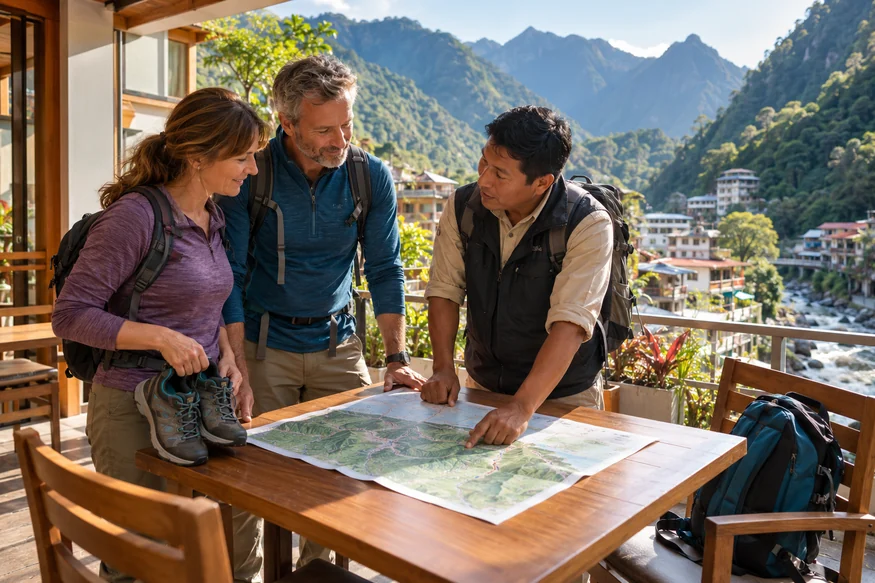
A guide can help you maintain a sensible pace and understand what lies ahead. If you are deciding between independent planning and guided support, read whether you need a guide for Machu Picchu.
Make the Journey Easier With the Right Itinerary
The site visit is only one part of the day. Transfers between Cusco, the Sacred Valley, the train, Aguas Calientes and the shuttle bus can produce more fatigue than expected. A very early departure followed by a same-day return is efficient, but it creates a long schedule.
Active travelers may be comfortable with a Machu Picchu day trip from Cusco. Those who want more rest and fewer rushed connections can consider a 2-day Machu Picchu tour. A private itinerary offers more control over pacing, train selection and communication, although all visitors must still follow the circuit rules.
Tell your tour operator about knee problems, limited stair capacity, altitude concerns or a preferred walking pace before tickets are purchased. The best tour is not the one that includes the most; it is the one you can experience with confidence.
Choose a Machu Picchu Tour That Fits Your Pace
Share your fitness level, previous hiking experience and any mobility concerns with our local team. We will help you compare realistic tour formats and plan the journey before committing to a circuit.
Frequently Asked Questions About Machu Picchu Difficulty
Do you need to be fit to visit Machu Picchu?
You do not need athletic fitness for most standard circuits, but basic walking endurance, balance and comfort on irregular stairs are important. Mountain routes require a higher level of fitness.
Is Machu Picchu difficult for beginners?
A beginner who walks regularly and chooses an appropriate standard route can usually manage the visit. Prepare with walking and stairs, acclimatize, wear suitable shoes and avoid adding a mountain climb unless you are ready.
Is Machu Picchu a lot of walking?
Expect several hours involving walking, standing and stairs, although the exact experience depends on the route and pace. The entire travel day also includes stations, queues and transfers.
Are there many stairs at Machu Picchu?
Yes. Stone stairs are a defining feature of the site, but their amount and steepness vary between routes. They are uneven and generally do not have modern handrails.
Can you rest inside Machu Picchu?
Resting opportunities are limited and visitors must keep to the established route. Plan a sustainable pace rather than assuming frequent seating will be available.
Is Machu Picchu Mountain harder than Huayna Picchu?
They are difficult in different ways. Machu Picchu Mountain generally involves a longer ascent, while Huayna Picchu is steeper and more exposed. Neither is required for the main citadel experience.
Can seniors visit Machu Picchu?
Many seniors can visit successfully when they are comfortable on stairs and choose appropriate pacing. Health, balance and current ability matter more than age alone.
Visitor routes, availability and regulations can change. Review the current official circuit map and code of conduct before purchasing tickets.