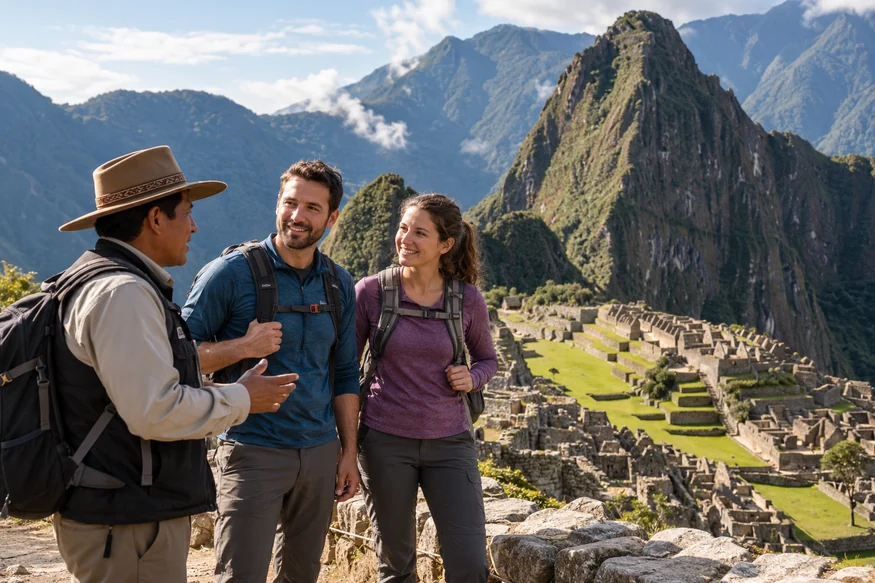

Altitude sickness at Machu Picchu is possible, but the risk is often misunderstood. The archaeological sanctuary stands at about 2,430 meters (7,970 feet), while Cusco—where many travelers begin—is considerably higher at roughly 3,350 meters (11,000 feet). For that reason, some visitors first notice a headache, nausea or unusual fatigue in Cusco before they ever reach Machu Picchu.
Your response to altitude depends more on how quickly you ascend and where you sleep than on age, fitness or enthusiasm. A carefully paced itinerary can reduce risk, but no plan can guarantee that symptoms will not occur. This guide explains what to watch for, how to acclimatize and when to seek urgent help.
Quick answer: Machu Picchu is lower than Cusco, yet visitors can still develop altitude illness during the wider trip. Ascend gradually when possible, keep the first days easy and never continue higher when symptoms are worsening. Confusion, inability to walk straight or breathlessness at rest requires immediate medical help and descent.
Can You Get Altitude Sickness at Machu Picchu?
Yes. Altitude illness can occur above 2,500 meters in some people, and Machu Picchu sits close to that threshold. Individual susceptibility varies, and being young or physically fit does not provide reliable protection. A traveler who exercised regularly at home can still feel unwell after flying rapidly from sea level to the Andes.
However, the location of symptoms matters. The official Machu Picchu site places the citadel at 2,430 meters, while the CDC Peru guidance lists Cusco at about 3,339 meters. If your itinerary begins with a flight to Cusco, your highest sleeping altitude may come before the Machu Picchu visit.
Read our guide to Machu Picchu elevation for a geographic comparison. This article focuses specifically on illness, prevention and decisions when symptoms appear.
Altitude Sickness vs Normal Travel Fatigue
The most common form is acute mountain sickness (AMS). According to the CDC Yellow Book, headache is the central symptom and is usually accompanied by one or more problems such as nausea, reduced appetite, dizziness or fatigue. Symptoms often begin 2–12 hours after reaching a higher altitude, frequently during or after the first night.
Travel fatigue, dehydration, a stomach infection, lack of sleep and other illnesses can feel similar. Do not assume that every headache is caused by altitude, but do not dismiss a new headache with nausea or dizziness after a rapid ascent. Tell your guide or travel companion promptly and monitor whether symptoms improve, remain stable or worsen.
| Situation | Possible signs | Appropriate response |
|---|---|---|
| Mild possible AMS | Headache with nausea, dizziness, fatigue or reduced appetite | Stop ascending, reduce activity, inform someone and seek qualified advice |
| Symptoms worsening at the same altitude | Increasing headache, vomiting or declining ability to function | Descend and obtain medical assessment |
| Medical emergency | Confusion, severe drowsiness, inability to walk straight, breathlessness at rest, chest tightness or a worsening cough | Arrange immediate descent, oxygen when available and emergency medical care |
This table is a planning aid, not a diagnosis. Serious altitude illness can progress quickly. When in doubt—especially if breathing or neurological symptoms appear—treat the situation as urgent.
Emergency Warning Signs You Must Not Ignore
Severe high-altitude illness can affect the brain or lungs. High-altitude cerebral edema (HACE) can cause confusion, abnormal behavior, extreme drowsiness or loss of coordination. A simple practical warning sign is being unable to walk heel-to-toe in a straight line, although only a clinician can diagnose the condition.
High-altitude pulmonary edema (HAPE) may cause breathlessness at rest, chest tightness, cough and a marked reduction in exercise ability. Lips or skin may appear blue or gray. These are not symptoms to “sleep off” or push through to preserve a tour reservation.
- Do not continue to a higher sleeping altitude.
- Notify your guide, hotel or travel companion immediately.
- Arrange descent and emergency medical evaluation.
- Use supplemental oxygen when available while definitive help is organized.
- Never leave a confused or unsteady person alone.
The CDC’s high-altitude travel advice emphasizes immediate descent and medical care for severe symptoms. A ticket, train time or hotel booking is never more important than breathing and neurological safety.
How to Prevent Altitude Sickness Before Machu Picchu
Gradual ascent is the most effective prevention. Your body needs time to adjust to lower oxygen availability, and there is no fitness routine that can replace acclimatization. When your schedule allows, avoid going directly from sea level into strenuous activity at a high sleeping altitude.
- Keep the first 24–48 hours gentle. Walk slowly, rest and avoid turning your arrival day into a demanding city tour.
- Increase sleeping altitude gradually. A lower first night in the Sacred Valley can be helpful for some itineraries, although it does not eliminate risk.
- Avoid alcohol at first. It can worsen sleep and make it harder to interpret symptoms.
- Eat normally and drink sensibly. Regular meals and adequate fluids support travel, but excessive water does not prevent altitude illness and can be harmful.
- Do not ascend with symptoms. Resting at the same altitude is appropriate only for mild, stable symptoms; worsening symptoms require descent.
- Sleep well and reduce unnecessary exertion. Save steep hikes and intense workouts until you know how your body is responding.
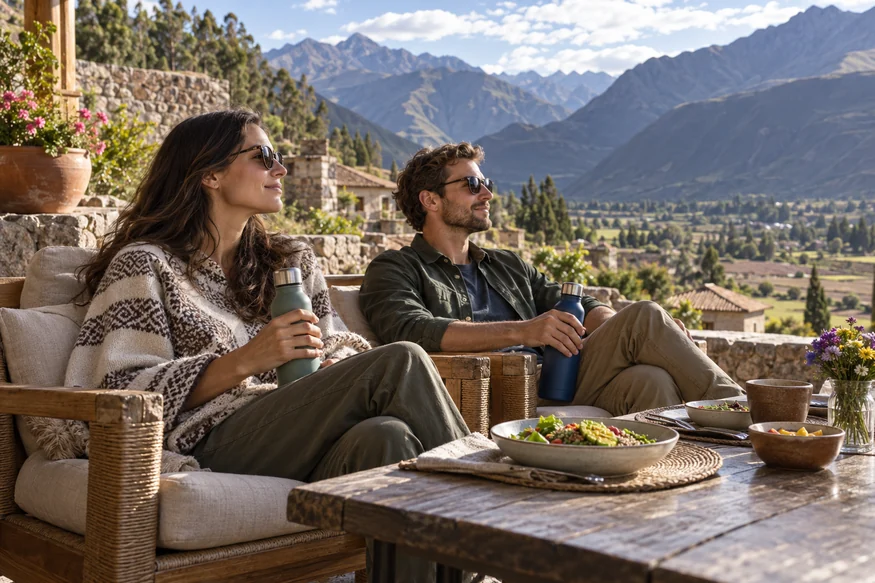
Should You Stay in Cusco, the Sacred Valley or Aguas Calientes First?
There is no single arrangement that fits every traveler, but sleeping altitude deserves attention. Cusco is higher than Machu Picchu. The Sacred Valley generally offers lower sleeping elevations than central Cusco, while Aguas Calientes sits below the sanctuary and removes the need to complete the long rail journey on the same morning as your entrance.
A first night in the Sacred Valley can make the transition gentler after arriving from Lima. A 2-day Machu Picchu tour with an overnight stay in Aguas Calientes can also create a calmer visit than a very early same-day departure. Neither option guarantees protection, and travelers must still respond appropriately to symptoms.
A Machu Picchu day trip from Cusco can work well for healthy, acclimatized travelers. If you have just landed at altitude, adding long transfers, stairs and a fixed train schedule may feel more demanding. Review how difficult Machu Picchu is and how much walking the visit involves before choosing.
Medication: Speak With a Clinician Before Travel
Acetazolamide is a prescription medicine that can speed acclimatization and may be recommended for certain travelers. It is not a substitute for gradual ascent, symptom monitoring or descent when illness becomes worse. Suitability depends on your medical history, other medicines and itinerary.
Discuss prevention with a travel-medicine clinician before departure rather than borrowing tablets or waiting until symptoms are severe. This article intentionally does not provide a personal dose. A clinician can explain timing, side effects and whether an alternative is appropriate.
Coca tea and coca leaves have cultural significance in the Andes, but they should not replace proven prevention or medical care. Do not rely on any drink, supplement or “oxygen” product to make it safe to continue ascending with worsening symptoms.
What to Do if Symptoms Begin During Your Trip
Stop and communicate early. Mild symptoms are easier to manage when your guide and companions know about them. Continuing in silence can place you farther from transport or assistance.
- Stop ascending. Do not travel to a higher sleeping altitude while symptoms are present.
- Reduce exertion. Sit, rest and avoid forcing yourself through stairs or a mountain add-on.
- Tell someone. Inform your guide, hotel and travel companion; do not isolate yourself.
- Seek medical advice. Especially when symptoms are persistent, unclear or accompanied by another health condition.
- Descend if symptoms worsen. Descent is the decisive action when a person deteriorates at the same altitude.
- Call for emergency help for red flags. Confusion, poor coordination or breathing difficulty at rest needs immediate action.
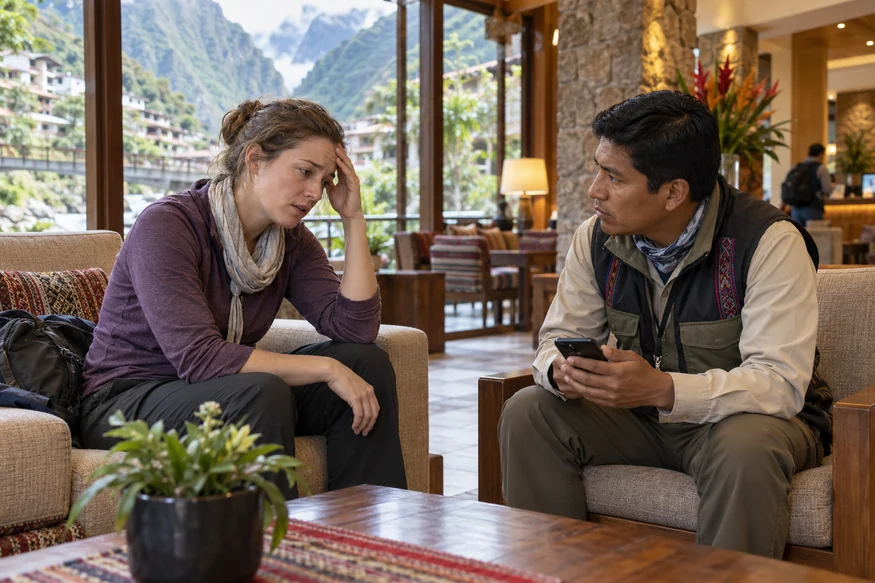
Who Should Get Medical Advice Before Visiting?
Anyone with a previous serious altitude illness should discuss the new itinerary with an altitude-experienced clinician. Travelers with heart or lung disease, sleep apnea, sickle cell disease or trait, pregnancy, recent surgery or an unstable medical condition also need individualized advice.
Age alone does not reliably predict altitude sickness, but the overall plan must consider mobility, medication and emergency access. Families can consult our guides to Machu Picchu for seniors, Machu Picchu with kids and Machu Picchu with a baby.
Altitude is only one part of risk. Uneven terrain, sun, rain, gastrointestinal illness and underlying conditions can produce overlapping symptoms. Our Machu Picchu safety guide covers the broader picture.
Plan a More Comfortable Machu Picchu Itinerary
Good planning reduces avoidable pressure. Build breathing room into arrival days, choose the sleeping altitude deliberately and avoid stacking a strenuous hike immediately after flying to Cusco. Pack prescribed medicine in your personal bag and include practical layers, sun protection and footwear from our Machu Picchu packing list.
Tell your operator about pacing concerns before tickets and trains are secured. A local team can organize a more gradual route, private guiding or an overnight stay, but medical decisions must remain with qualified clinicians.
Build a Machu Picchu Trip Around Your Pace
Share your arrival city, available days and preferred activity level with our local team. We can compare a direct day trip with a slower overnight itinerary and help you avoid packing too much exertion into your first days at altitude.
Frequently Asked Questions
Is Machu Picchu high enough for altitude sickness?
Yes, symptoms are possible at about 2,430 meters, especially after a rapid ascent. Many itineraries also include higher Cusco, where travelers may notice symptoms first.
Is Cusco higher than Machu Picchu?
Yes. Cusco is roughly 3,350 meters above sea level, about 900 meters higher than Machu Picchu. Sleeping location and the speed of ascent influence acclimatization.
How long should I acclimatize before Machu Picchu?
There is no universal number of days. The CDC recommends gradual ascent and avoiding strenuous activity during the first 48 hours at high altitude. Your route, sleeping elevation and medical history matter.
Does being fit prevent altitude sickness?
No. Physical fitness does not reliably predict who will develop altitude illness. Fitness can help with stairs and walking, but acclimatization remains essential.
Should I go down if I have a headache?
A mild, stable headache requires stopping further ascent, rest and monitoring. If symptoms worsen at the same altitude, descent is necessary. Confusion, poor coordination or breathlessness at rest is an emergency.
Can I take altitude medicine?
A clinician may prescribe acetazolamide for some travelers. Obtain personalized advice before travel and do not use medicine as permission to ignore worsening symptoms.
This article provides general travel information and is not medical advice. Consult a qualified clinician for personal recommendations. In an emergency, seek immediate local medical assistance and descend when safe transport is available.