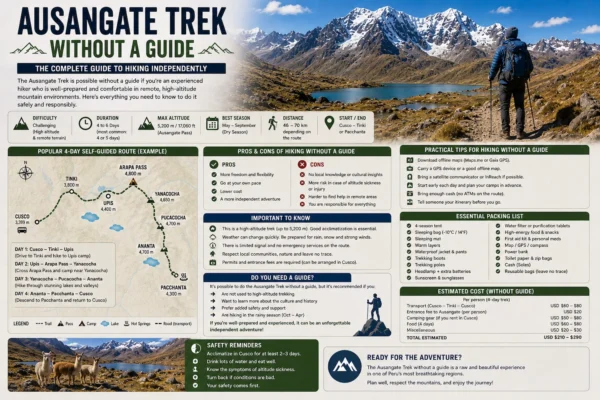
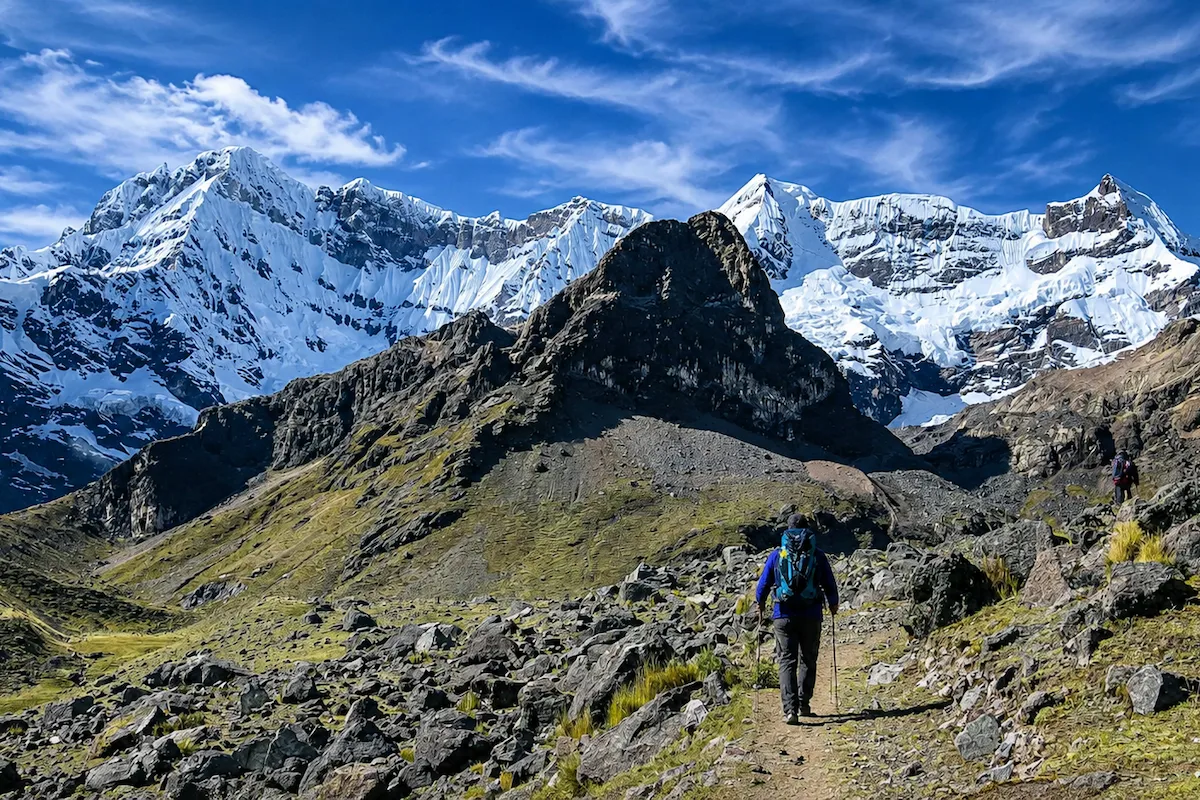

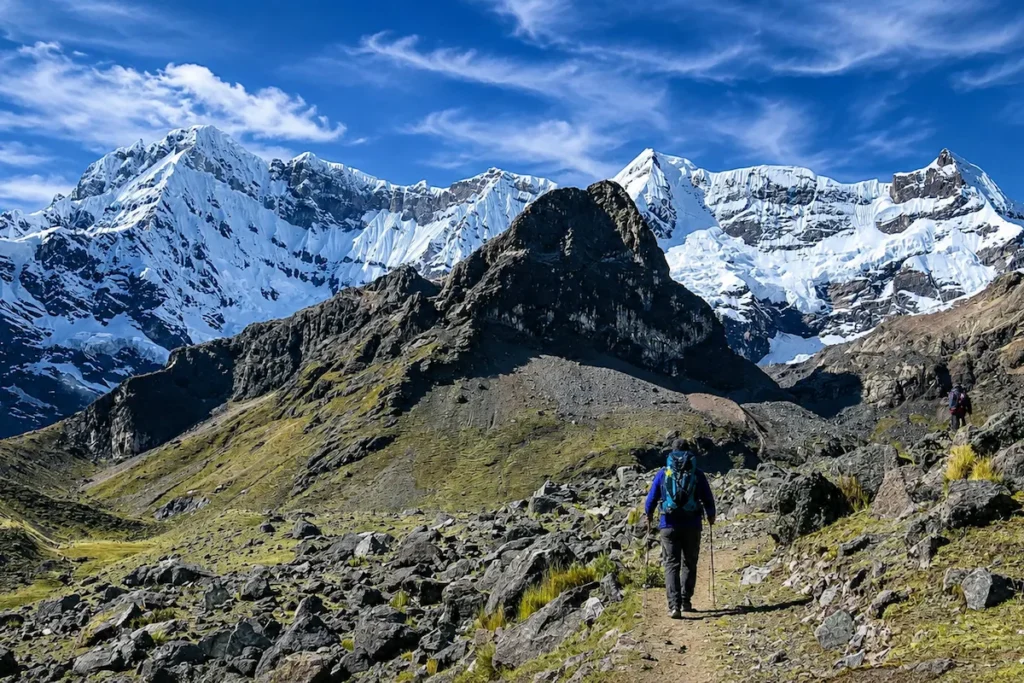
The Ausangate Trek altitude is one of the most important factors to consider before hiking this spectacular route in the Peruvian Andes. Unlike many treks around Cusco that reach one high mountain pass and then descend, much of the Ausangate route remains above 4,000 meters (13,123 feet).
Depending on the itinerary, trekkers may cross mountain passes above 5,000 meters (16,404 feet) while sleeping at campsites located at elevations that would already be considered extremely high on many other trekking routes.
Understanding these elevations and allowing enough time to acclimatize can make a major difference in your experience.
How High Is the Ausangate Trek?
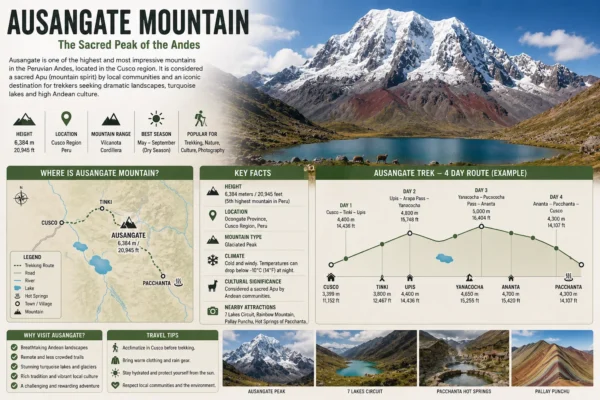
Most of the Ausangate Trek takes place between approximately 4,000 and 5,200 meters (13,123–17,060 feet) above sea level.
The exact elevations vary because there are several versions of the route, including four-, five-, and six-day itineraries.
A typical trek includes:
| Section | Approximate Altitude |
|---|---|
| Cusco | 3,400 m / 11,155 ft |
| Tinki | 3,800 m / 12,467 ft |
| Upis | 4,400 m / 14,436 ft |
| High camps | 4,300–4,700 m / 14,108–15,420 ft |
| Mountain passes | 4,700–5,200 m / 15,420–17,060 ft |
| Highest sections | Above 5,000 m / 16,404 ft |
These elevations are approximate and can change according to the specific itinerary and campsites used.
What Is the Highest Point of the Ausangate Trek?
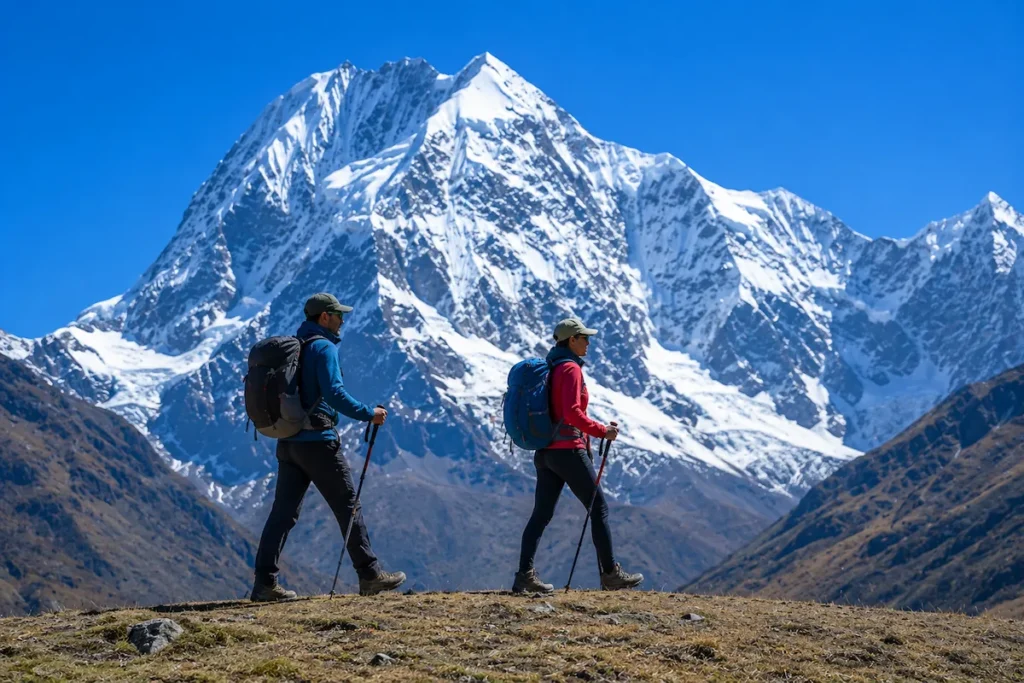
The highest point depends on the route.
On many classic Ausangate Trek itineraries, the highest pass reaches approximately 5,000 to 5,200 meters (16,404–17,060 feet).
Some routes cross passes such as Palomani Pass, which is commonly one of the highest points of the trek.
At this elevation, the reduced oxygen makes even relatively short climbs physically demanding.
The important thing to understand is that reaching the highest pass is not the only altitude challenge. Trekkers spend several consecutive days at elevations above 4,000 meters.
Ausangate Trek Altitude by Day
The exact altitude profile varies between trekking companies and routes, but a typical multi-day Ausangate itinerary gradually moves through increasingly high terrain.
Day 1: Cusco – Tinki – Upis
The journey begins in Cusco at approximately 3,400 m (11,155 ft) before traveling toward the Ausangate region.
Tinki sits at approximately 3,800 meters, while the route toward Upis climbs above 4,000 meters.
The first day introduces trekkers to the high-Andean environment and provides the first indication of how their bodies are responding to the elevation.
Day 2: Upis – High Mountain Passes
The second day typically enters considerably higher terrain.
Depending on the itinerary, trekkers may cross passes approaching or exceeding 4,700–4,800 meters (15,420–15,748 feet).
At these elevations, maintaining a slow and consistent pace becomes increasingly important.
Day 3: High Andes – Highest Pass
For many itineraries, this is one of the highest days of the trek.
Some routes cross passes above 5,000 meters (16,404 feet), with the highest sections approaching approximately 5,200 meters.
These are usually among the most physically demanding sections of the route.
Day 4: High Valleys and Lagoons
Although the trail may descend from the highest passes, much of the route can still remain above 4,000 meters.
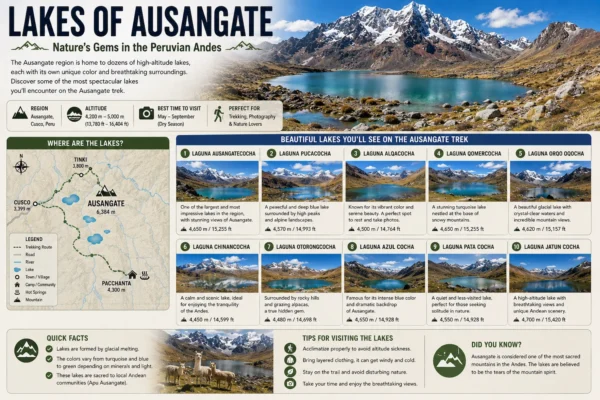
Trekkers continue through high-Andean valleys, glacial landscapes, and mountain lakes.
Day 5: Pacchanta – Return to Cusco
Many five-day itineraries finish around the Pacchanta area before returning toward Cusco.
The descent to lower elevations usually makes walking and breathing noticeably easier.
Why Is Altitude Important on the Ausangate Trek?
At higher elevations, atmospheric pressure decreases and your body receives less oxygen with each breath.
This means your body must work harder during physical activity.
You may notice:
-
Faster breathing
-
Increased heart rate
-
Reduced hiking speed
-
Shortness of breath
-
Fatigue
-
Headaches
-
Difficulty sleeping
These effects can occur even in travelers with excellent physical fitness.
This is why altitude should be treated separately from physical conditioning. Being able to run long distances at sea level does not necessarily mean your body will immediately perform well above 4,500 meters.
How Much of the Ausangate Trek Is Above 4,000 Meters?
A significant portion of the classic route takes place above 4,000 meters (13,123 feet).
This is one of the main differences between Ausangate and several other treks around Cusco.
Rather than reaching one high pass and quickly descending, Ausangate keeps trekkers in the high Andes for several consecutive days.
This sustained exposure is also one of the reasons the Ausangate Trek difficulty is generally considered challenging.
Sleeping at High Altitude
The altitude of the campsites is just as important as the altitude reached during the day.
Depending on the itinerary, campsites can be located approximately 4,300–4,700 meters (14,108–15,420 feet) above sea level.
Sleeping at these elevations can feel different from hiking during the day.
Some travelers notice:
-
Lighter or interrupted sleep
-
Faster breathing
-
Cold nighttime temperatures
-
Increased thirst
-
Reduced appetite
Proper acclimatization before the trek becomes particularly important because your body remains at high elevation overnight rather than descending to Cusco after each hiking day.
Ausangate Trek Altitude Sickness
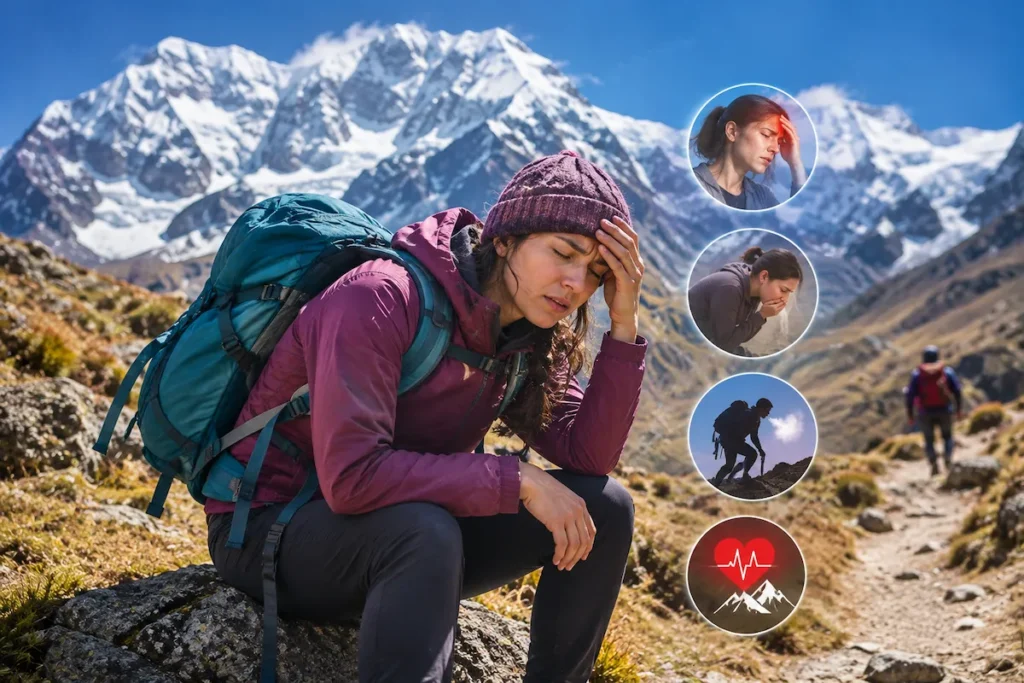
Altitude sickness can affect anyone traveling quickly to high elevations.
Mild symptoms may include:
-
Headache
-
Nausea
-
Dizziness
-
Fatigue
-
Loss of appetite
-
Difficulty sleeping
Symptoms should not simply be ignored if they become stronger.
Trekkers should communicate how they feel to their guide and avoid continuing to higher elevations when symptoms are becoming significantly worse.
Severe altitude illness requires descending and seeking appropriate medical assistance.
How Many Days Should You Acclimatize Before Ausangate?
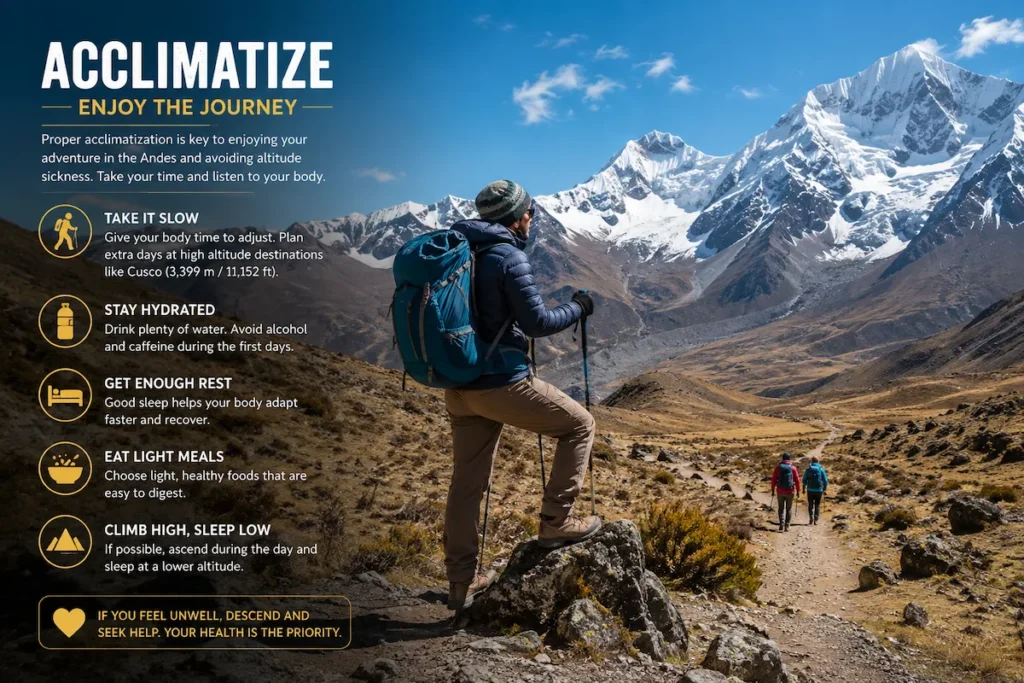
Travelers arriving from low elevations should generally spend at least 2–3 days acclimatizing around Cusco before beginning the Ausangate Trek.
Some people may benefit from additional time.
Cusco itself sits at approximately 3,400 meters (11,155 feet), providing an opportunity for your body to begin adjusting before reaching the much higher Ausangate region.
During your acclimatization days, short walks and gradual exposure to elevation can be useful.
The goal is not to exhaust yourself before the trek but to give your body time to adapt.
How to Prepare for the Altitude
There is no way to completely eliminate the effects of high altitude, but several practical measures can make the transition easier.
Arrive in Cusco Early
Avoid arriving from sea level and beginning Ausangate the following morning.
Allow several days for acclimatization whenever possible.
Walk Slowly
Your normal hiking pace at low elevation may not be appropriate above 4,500 meters.
A slow and consistent pace helps reduce unnecessary physical exertion.
Stay Hydrated
The high-Andean environment can be very dry, and physical activity increases fluid requirements.
Drink water regularly throughout the day.
Eat Regularly
Maintaining energy intake is important during consecutive trekking days, even if altitude temporarily reduces your appetite.
Avoid Overexertion
Trying to keep up with faster hikers can make high-altitude trekking unnecessarily difficult.
Ausangate is not a race.
Does Physical Fitness Prevent Altitude Sickness?
No.
Good cardiovascular fitness can make the physical demands of hiking easier, but it does not guarantee protection from altitude sickness.
A very fit traveler who ascends rapidly can experience altitude symptoms, while another traveler with average fitness may acclimatize well.
The way your body responds to elevation is highly individual.
For this reason, acclimatization and a gradual ascent are just as important as physical preparation.
Ausangate Trek Altitude vs Salkantay Trek
Ausangate generally involves more sustained exposure to high elevation than the classic Salkantay Trek.
| Factor | Ausangate Trek | Salkantay Trek |
|---|---|---|
| Starting region | Around 3,800–4,400 m | Lower elevations depending on route |
| Highest sections | Above 5,000 m on some routes | Around 4,630 m |
| Time above 4,000 m | Several sections/days | More concentrated |
| High-altitude camps | Common | Less sustained |
| Main altitude challenge | Prolonged exposure | Major high pass |
Salkantay reaches a significant high point before eventually descending toward warmer and lower valleys.
Ausangate remains in high-Andean terrain for considerably longer.
Travelers deciding between these routes can compare the complete Ausangate Trek vs Salkantay Trek experience, including altitude, difficulty, scenery, and daily hiking demands.
Ausangate Trek Altitude vs Inca Trail
The Classic Inca Trail reaches its highest point at Dead Woman’s Pass at approximately 4,215 meters (13,829 feet).
Ausangate reaches considerably higher elevations, with several sections approaching or exceeding 5,000 meters.
The Inca Trail presents its own physical challenges, particularly its numerous stone staircases and elevation changes, but Ausangate exposes trekkers to extreme altitude for longer periods.
Our Ausangate Trek vs Inca Trail comparison explains how the two routes differ in difficulty, elevation, landscapes, and overall trekking experience.
Is Ausangate Too High for Beginners?
Not necessarily.
First-time multi-day trekkers can complete Ausangate, but they should take the altitude seriously.
Beginners should ideally:
-
Arrive in Cusco several days early
-
Have reasonable cardiovascular fitness
-
Complete some training hikes beforehand
-
Maintain a slow pace
-
Stay hydrated
-
Choose an appropriate itinerary
-
Pay attention to altitude symptoms
Previous trekking experience is helpful, but good acclimatization can be even more important.
Frequently Asked Questions About Ausangate Trek Altitude
What is the altitude of the Ausangate Trek?
Most of the route takes place at approximately 4,000–5,200 meters (13,123–17,060 feet), depending on the itinerary.
What is the highest point of the Ausangate Trek?
The highest passes on some classic routes reach approximately 5,000–5,200 meters (16,404–17,060 feet).
Is Ausangate higher than the Inca Trail?
Yes. The highest point of the Classic Inca Trail is approximately 4,215 meters, while Ausangate routes can exceed 5,000 meters.
Is Ausangate higher than Salkantay?
Yes. The classic Salkantay Pass is approximately 4,630 meters, while some Ausangate routes cross passes above 5,000 meters.
Can you get altitude sickness on the Ausangate Trek?
Yes. Because much of the trek takes place above 4,000 meters, altitude sickness is a genuine concern. Proper acclimatization and gradual ascent are important.
How long should I stay in Cusco before Ausangate?
Spending at least 2–3 days acclimatizing before the trek is generally recommended for travelers arriving from low elevation.
Do you need oxygen on the Ausangate Trek?
Supplemental oxygen is not normally required by properly acclimatized trekkers completing standard routes, although organized trekking teams may carry emergency oxygen as a safety measure.
Final Thoughts
The Ausangate Trek altitude is one of the defining characteristics of the route.
Much of the journey takes place above 4,000 meters, campsites are located at elevations that can exceed 4,500 meters, and some itineraries cross mountain passes above 5,000 meters.
These elevations make Ausangate considerably different from a typical mountain hike.
However, high altitude does not automatically make the trek inaccessible. Travelers who arrive in Cusco early, acclimatize properly, maintain a steady pace, and prepare physically can significantly improve their experience.
If you are still deciding whether the physical demands are suitable for you, our guide to Ausangate Trek Difficulty explains how altitude combines with terrain, weather, daily hiking time, and fitness requirements.