
Machu Picchu Elevation: How High Is Machu Picchu?
Machu Picchu sits at approximately 2,430 meters (7,970 feet) above sea level.
That sounds high, and it is. But there is something that surprises many travelers: Machu Picchu is actually much lower than Cusco.
Cusco sits at around 3,400 meters (11,150 feet), which means you descend almost 1,000 meters as you travel toward Machu Picchu.
The numbers can become confusing because Machu Picchu, Aguas Calientes, Huayna Picchu, and Machu Picchu Mountain are all at different elevations.
Here is what you need to know before your visit.
What Is the Elevation of Machu Picchu?
The archaeological site of Machu Picchu is located at approximately 2,430 meters above sea level, or 7,970 feet above sea level
This is the elevation commonly used when referring to Machu Picchu.
However, the archaeological complex covers uneven mountain terrain, so your exact elevation changes slightly as you walk through different sectors, terraces, stairways, and viewpoints.
You should therefore think of 2,430 meters as the general elevation of the site rather than the altitude of every point inside it.
Machu Picchu Elevation in Feet and Meters
Here is the basic number to remember:
| Measurement | Machu Picchu Elevation |
|---|---|
| Meters | 2,430 m |
| Feet | 7,970 ft |
For comparison, several places you may visit during the same trip are considerably higher.
| Place | Approx. Elevation |
|---|---|
| Aguas Calientes | 2,040 m / 6,690 ft |
| Machu Picchu | 2,430 m / 7,970 ft |
| Huayna Picchu | 2,693 m / 8,835 ft |
| Machu Picchu Mountain | 3,082 m / 10,112 ft |
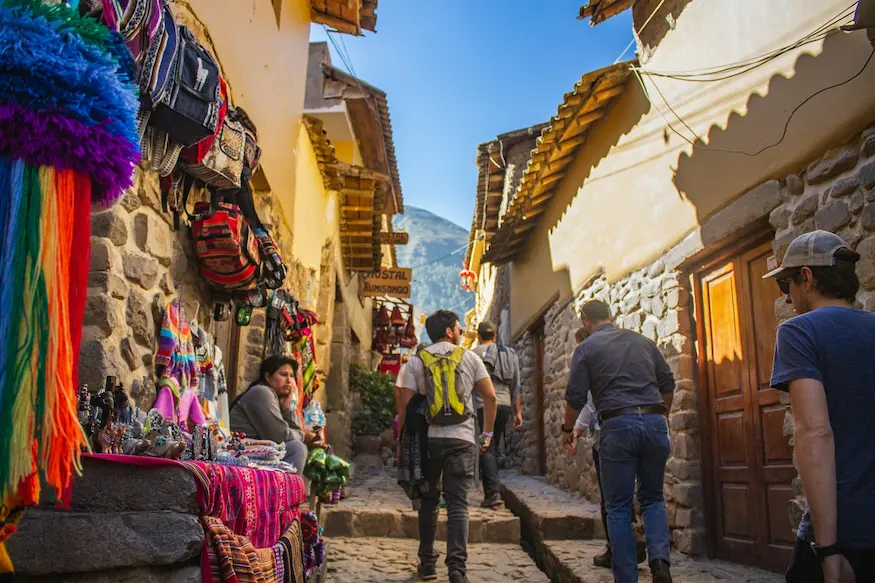
| Ollantaytambo | 2,792 m / 9,160 ft |
| Cusco | 3,400 m / 11,150 ft |
The difference between these places explains why your experience with altitude can change considerably during a Machu Picchu trip.
Is Machu Picchu Higher Than Cusco?
No.
Cusco is almost 1,000 meters higher than Machu Picchu.
Cusco sits at approximately 3,400 meters (11,150 feet), while Machu Picchu is around 2,430 meters (7,970 feet).
That is a difference of roughly 970 meters (3,180 feet).
This surprises many visitors because Machu Picchu looks incredibly high in photographs.
The ruins are surrounded by steep mountains and deep valleys, which creates a strong sense of height. But elevation above sea level and how high a place looks from the surrounding terrain are not the same thing.
If you have already spent time in Cusco, you actually descend to reach Machu Picchu.
Why Does Machu Picchu Look So High?
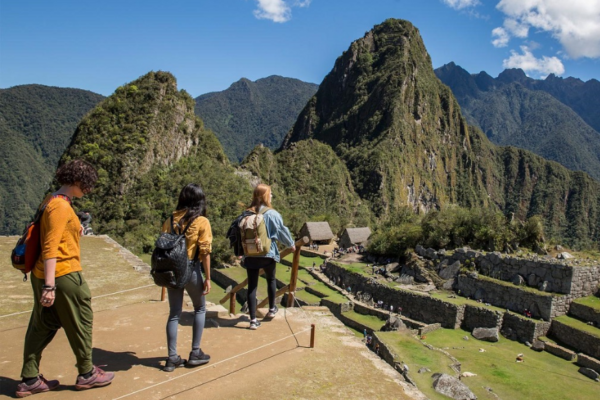
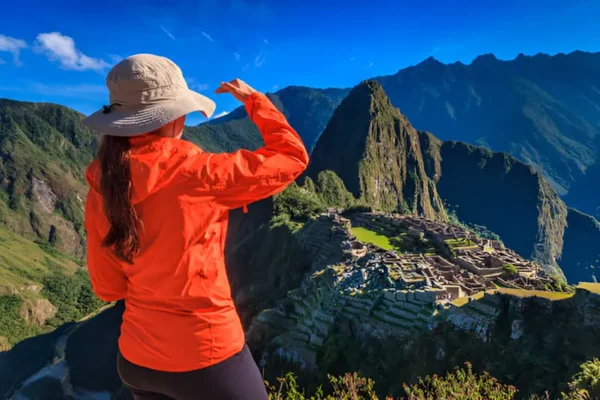
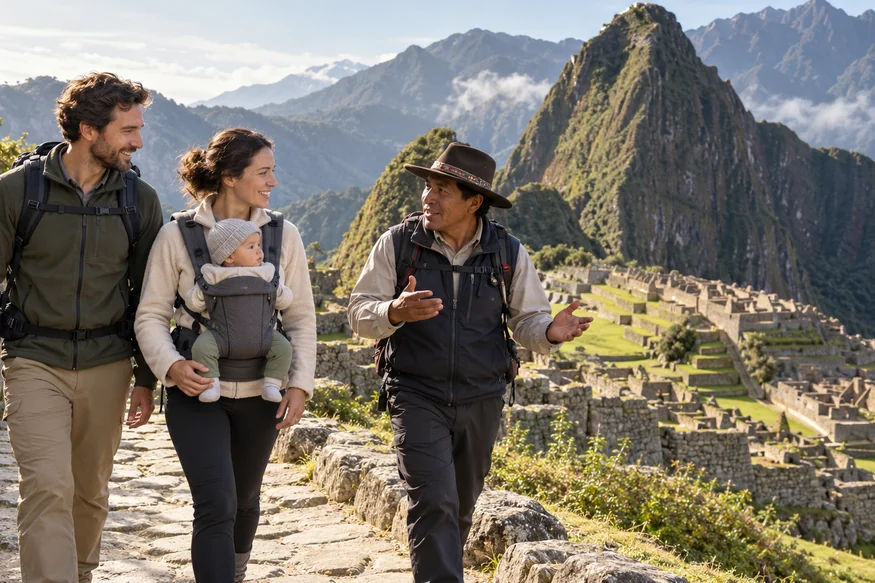
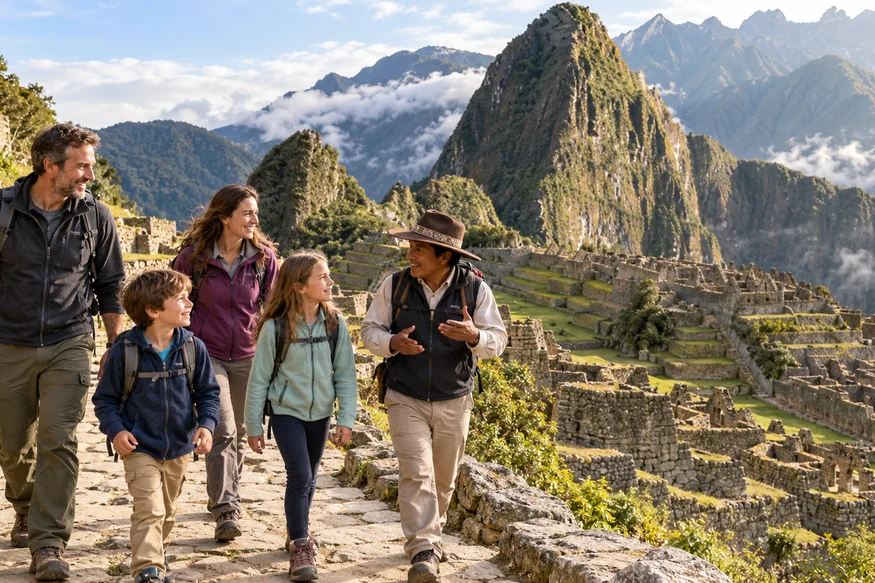
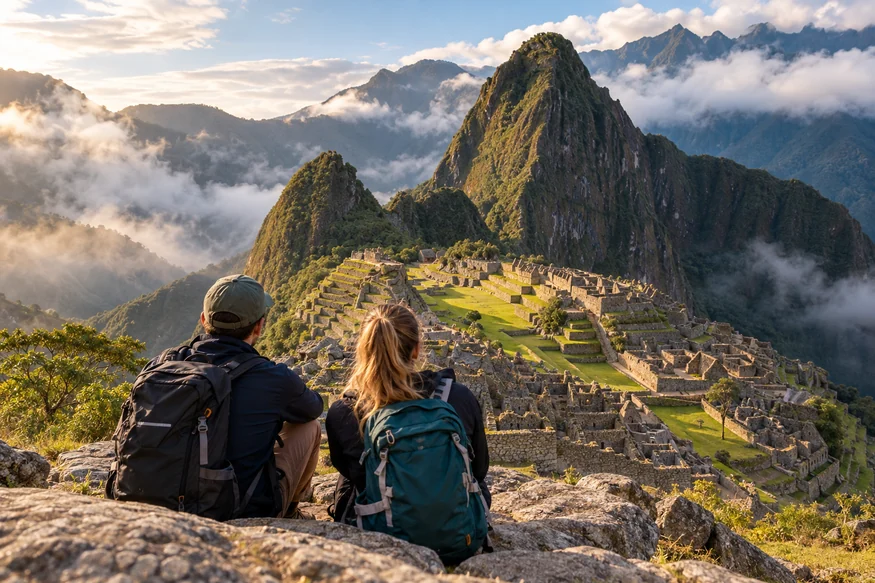
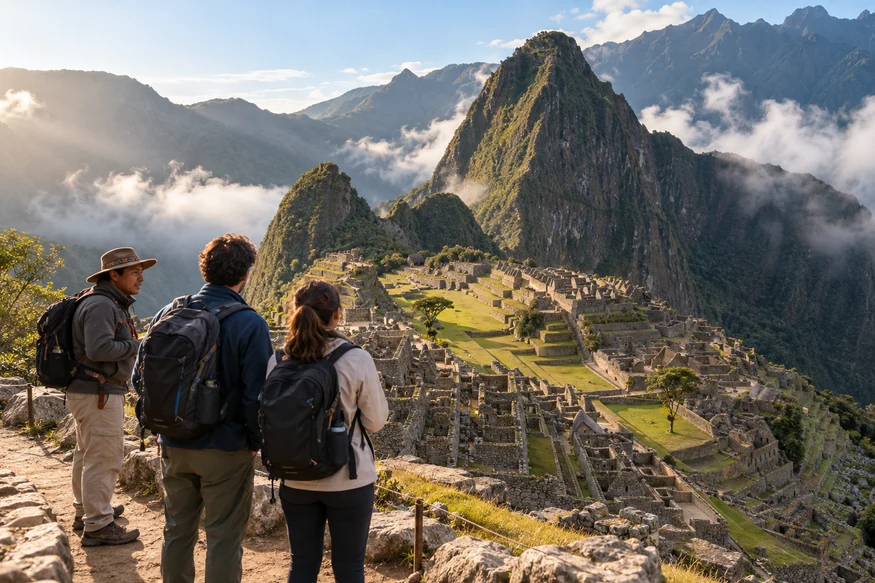
Look at a classic photograph of Machu Picchu, and it seems as if the ruins are sitting at the top of the Andes.
The landscape creates that impression.
Machu Picchu occupies a narrow mountain ridge above the Urubamba River. The valley drops sharply below the archaeological site, while steep mountains rise around it.
This dramatic difference between the ridge and the river makes Machu Picchu feel much higher than its actual elevation suggests.
The surrounding vegetation also changes the appearance of the landscape.
Machu Picchu lies in a greener and more humid part of the Andes than Cusco, close to the transition toward the Amazon basin.
If you want to understand this geography more clearly, our guide to where Machu Picchu is located explains its position within the Cusco region and Urubamba Valley.
What Is the Elevation of Aguas Calientes?
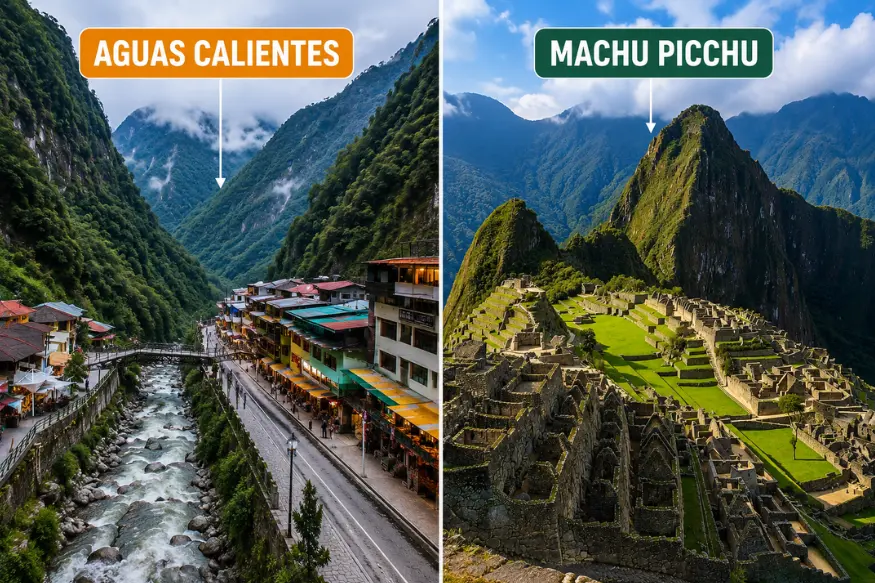
Aguas Calientes, also known as Machupicchu Pueblo, sits at approximately 2,040 meters (6,690 feet) above sea level.
That makes the town about 390 meters (1,280 feet) lower than the archaeological site.
This difference is easy to understand once you see the landscape.
Aguas Calientes sits beside the Urubamba River at the bottom of the valley, while Machu Picchu is located on the ridge above.
Visitors traveling by train arrive in Aguas Calientes first and then continue uphill to the archaeological entrance.
The road between the town and Machu Picchu climbs through a series of switchbacks.
What Is the Elevation of Huayna Picchu?
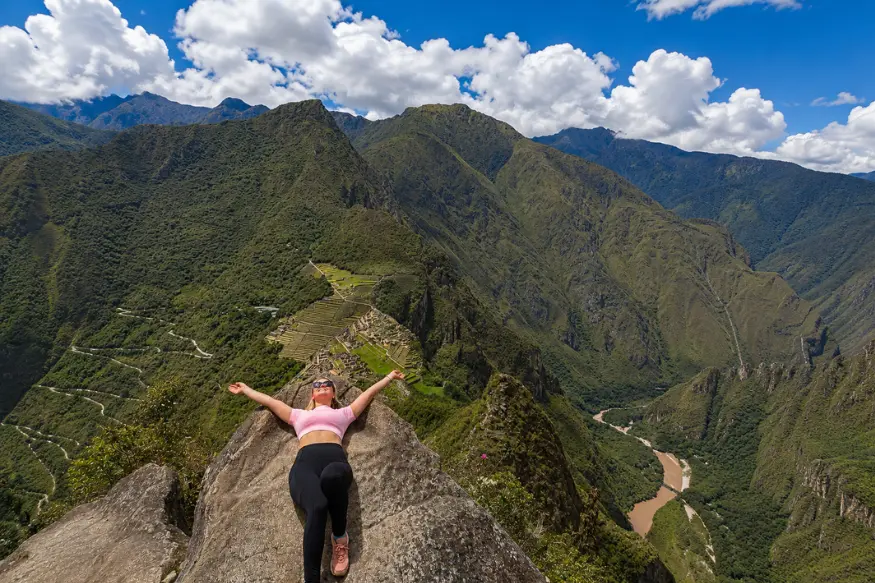
Huayna Picchu reaches approximately 2,693 meters (8,835 feet) above sea level.
That places its summit around 260 meters higher than the main archaeological site.
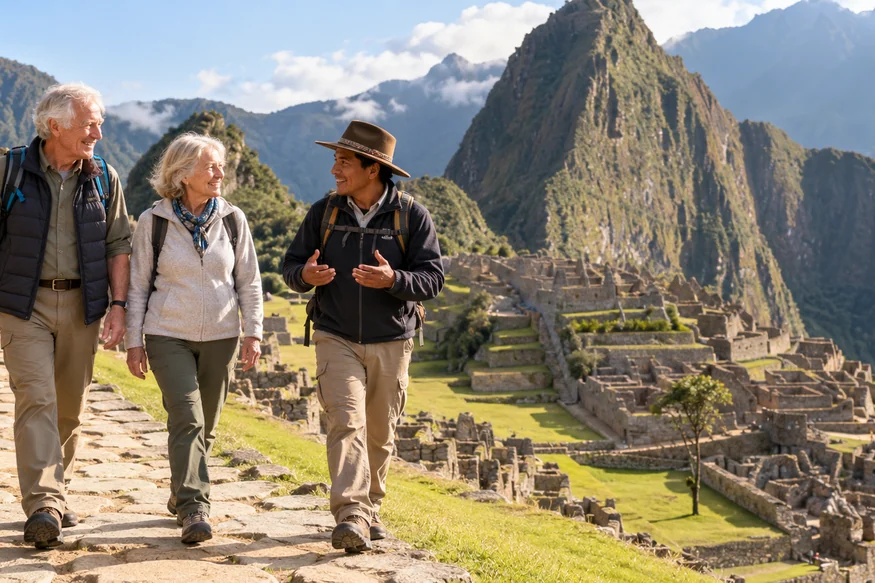
Huayna Picchu is the steep mountain that appears directly behind the ruins in most classic photographs of Machu Picchu.
The climb is relatively short but steep, with many stone steps.
Because you begin from inside the Machu Picchu complex, you are not climbing all 2,693 meters from sea level. You are gaining only the elevation between the archaeological site and the summit.
What Is the Elevation of Machu Picchu Mountain?
Machu Picchu Mountain reaches approximately 3,082 meters (10,112 feet) above sea level.
This makes it considerably higher than both the archaeological site and Huayna Picchu.
The elevation difference is important if you are deciding which mountain to hike.
Machu Picchu Mountain generally involves a longer climb and greater elevation gain, while Huayna Picchu is lower but has steeper sections.
Our Huayna Picchu vs Machu Picchu Mountain comparison looks at the two hikes separately, including their trails, difficulty, views, and overall experience.
Machu Picchu vs Huayna Picchu Elevation
The names can be confusing, so here is the difference:
| Location | Elevation | Difference from Machu Picchu |
|---|---|---|
| Machu Picchu archaeological site | 2,430 m / 7,970 ft | — |
| Huayna Picchu | 2,693 m / 8,835 ft | +263 m / +865 ft |
| Machu Picchu Mountain | 3,082 m / 10,112 ft | +652 m / +2,142 ft |
This also explains why Machu Picchu Mountain should not be confused with the archaeological site itself.
They share a name, but they are not the same place.
Is Altitude a Problem at Machu Picchu?
Machu Picchu is high enough for you to notice the elevation, especially if you have recently arrived from somewhere near sea level.
However, many travelers find the altitude easier to manage at Machu Picchu than in Cusco because the archaeological site is almost 1,000 meters lower.
You may still notice that climbing long stairways requires more effort than expected.
Machu Picchu contains many stone steps, uneven paths, and changes in elevation within the archaeological complex.
Your experience will also depend on where you were before arriving.
Someone who has already spent several days in Cusco or the Sacred Valley may experience the elevation differently from someone who reaches the region very quickly from sea level.
Do You Need to Acclimatize for Machu Picchu?
If your trip includes Cusco before Machu Picchu, acclimatization is usually more relevant to your time in Cusco, because Cusco is considerably higher.
Many itineraries actually move from higher elevations toward lower ones.
For example:
Cusco: 3,400 m
↓
Ollantaytambo: 2,792 m
↓
Aguas Calientes: 2,040 m
↓
Machu Picchu: 2,430 m
So although you climb from Aguas Calientes to the archaeological site, you are still well below the elevation of Cusco.
Giving yourself time to adjust after arriving in the Andes can make walking and climbing stairs more comfortable throughout the trip.
How Much Climbing Is There Inside Machu Picchu?
The elevation of the archaeological site does not mean you stay at one level during your visit.
Machu Picchu was built on sloping terrain.
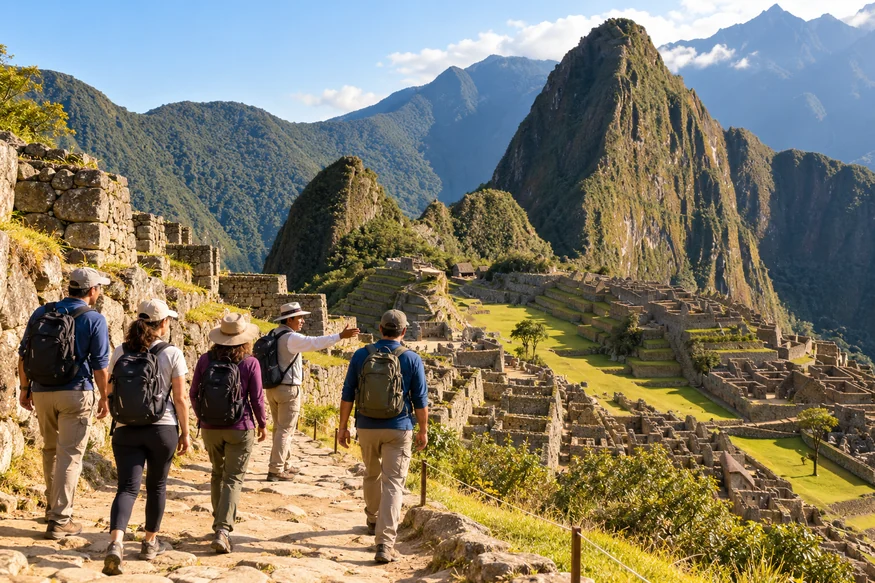
You will encounter stone stairways, terraces, ramps, narrow paths, and uphill sections as you move through the site.
How much climbing you do depends partly on your assigned circuit.
Some routes involve more elevation change than others, particularly those that include additional mountain hikes or higher viewpoints.
This is why two people visiting Machu Picchu at the same elevation can have very different physical experiences.
One may follow a relatively moderate circuit through the archaeological area, while another may combine the visit with hundreds of additional meters of climbing.
Why Did the Incas Build Machu Picchu at This Elevation?
The Incas were used to living and building across very different elevations in the Andes.
Machu Picchu’s location gave them access to a landscape between the high Andes and lower tropical valleys.
The climate was warmer than Cusco, water was available, and the surrounding mountains formed part of an important Andean landscape.
The Incas also knew how to build on steep terrain.
Terraces stabilized slopes, drainage systems managed heavy rainfall, and stairways connected different levels of the settlement.
The result was a complex that adapted to the mountain rather than simply sitting on top of it.
Our Machu Picchu history guide explores how the Incas developed the site and why this mountain landscape mattered to them.
Machu Picchu Elevation Compared with Other Places in Peru
If Machu Picchu is part of a longer Peru trip, these comparisons can help put its elevation into perspective:
| Destination | Approx. Elevation |
|---|---|
| Lima | Near sea level |
| Aguas Calientes | 2,040 m / 6,690 ft |
| Machu Picchu | 2,430 m / 7,970 ft |
| Ollantaytambo | 2,792 m / 9,160 ft |
| Machu Picchu Mountain | 3,082 m / 10,112 ft |
| Cusco | 3,400 m / 11,150 ft |
| Rainbow Mountain | 5,036 m / 16,522 ft |
This gives Machu Picchu an interesting position within a typical Peru itinerary.
It is certainly at altitude, but it is far from being one of the highest destinations travelers commonly visit around Cusco.
What the Elevation Feels Like When You Visit
The number 2,430 meters tells you how high Machu Picchu is above sea level, but it does not completely describe what being there feels like.
The steep valley below, the mountains rising around you, and the constant changes in terrain make the site feel much higher.
At the same time, travelers arriving from Cusco may notice that the air feels easier than it did in the city.
That contrast is one of the unusual things about visiting Machu Picchu.
You travel deeper into the mountains, yet you actually descend in elevation.
And once you understand the geography, the numbers begin to make much more sense.
Related Articles
Machu Picchu Ticket Prices Machu Picchu ticket prices depend on the route you choose…
How to Buy Machu Picchu Tickets
How to Buy Machu Picchu Tickets: Step-by-Step Guide Buying Machu Picchu tickets is simple…
Machu Picchu Tickets Buying your Machu Picchu tickets is one of the most important…
Machu Picchu Elevation: How High Is Machu Picchu? Taking the train to Machu Picchu…
Aguas Calientes to Machu Picchu
Machu Picchu Elevation: How High Is Machu Picchu? Once you arrive in Aguas Calientes,…
Related Tours