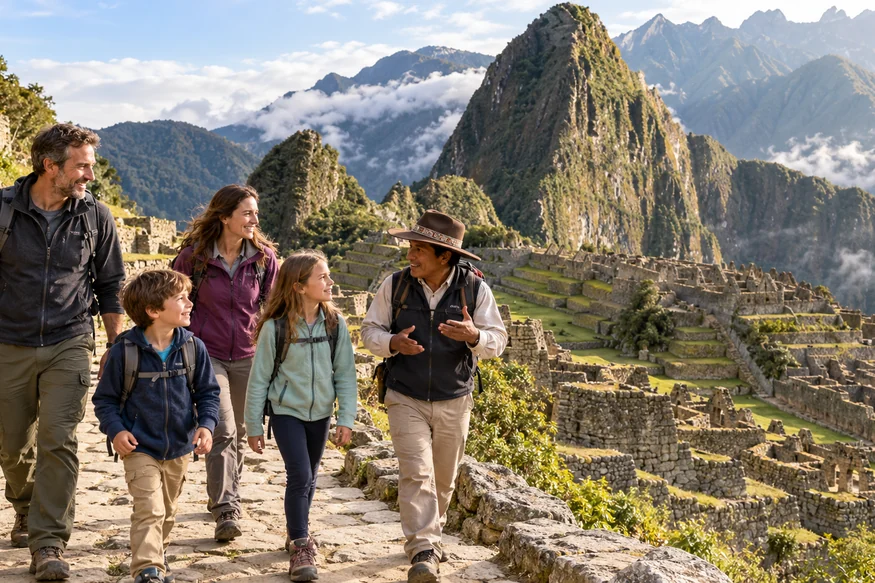

Visiting Machu Picchu with kids can be one of the most memorable family adventures in South America. The citadel feels like a real-life storybook: stone temples, cloud-covered peaks, llamas and mysterious engineering all compete for a child’s attention. The key is not to make children follow an adult itinerary. It is to build a calmer day around their energy, curiosity and comfort.
For most families, success comes down to four decisions: allowing time to adjust to the Andes, choosing a manageable circuit, avoiding an exhausting same-day schedule when possible and booking transport well in advance. This guide explains how to do each one and how to choose a Machu Picchu tour that works for your family.
Is Machu Picchu Good for Kids?
Yes. Machu Picchu can be excellent for children who are comfortable walking, can follow instructions near steps and drop-offs, and enjoy learning through stories. There is no single perfect age. A steady seven-year-old may handle the visit better than an older child who dislikes stairs, while a curious teenager may want far more detail from the guide.
The experience is active rather than passive. Families walk over uneven stone, climb steps, wait in transport lines and follow a one-way route. That makes preparation more important than age alone.
| Family question | Practical answer |
|---|---|
| Can children visit? | Yes, provided the route and pace match their ability. |
| Is a stroller useful? | No. Strollers are prohibited and the stone paths are not stroller-friendly. |
| Is one day enough? | It can be, but an overnight stay usually gives younger children a gentler schedule. |
| Do families need a guide? | A private guide makes pacing, storytelling and logistics much easier. |
| What is the biggest challenge? | The long travel day and stairs, not the archaeological site alone. |
What Is the Best Age to Visit Machu Picchu?
School-age children often get the most from Machu Picchu because they can walk independently and understand stories about Inca life. Children from roughly six to twelve may enjoy looking for llamas, terraces, temples and stone details, especially when a guide turns the visit into a conversation instead of a lecture.
There is no need to wait for a child to become a teenager, but parents should honestly assess stamina and behavior. Can your child walk for a couple of hours with breaks? Can they stay close on narrow passages? Will they cope with an early start, changing weather and limited snack opportunities inside the site? Those answers matter more than a number on a birthday cake.
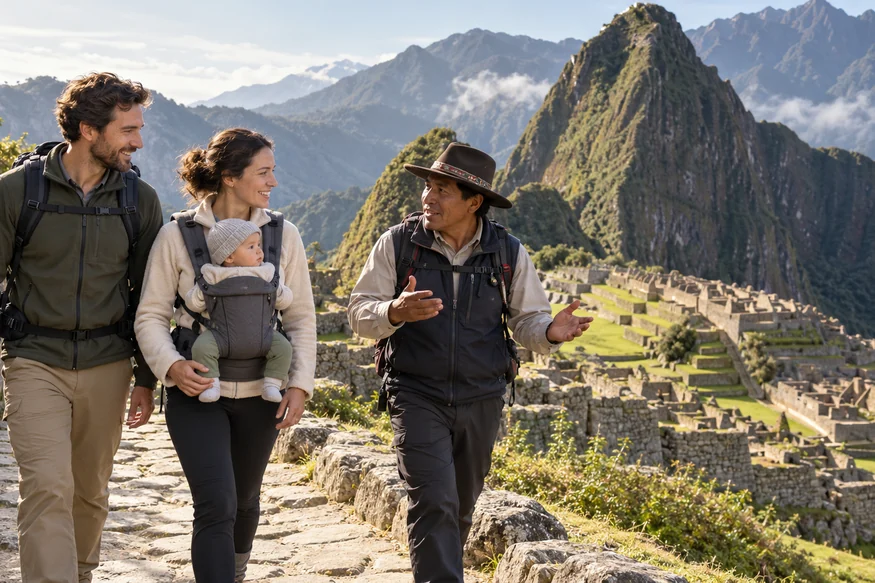
Families traveling with infants or toddlers need a different level of planning because carriers, naps and feeding shape the entire day. We will cover that situation separately in our dedicated baby guide rather than treating it as a footnote here.
One-Day Trip or Overnight Stay?
A Machu Picchu day trip from Cusco is possible for active families with older children. It is efficient and keeps the itinerary compact, but it also involves a very early departure, road transport, a train, a bus and the guided visit before returning to Cusco. The day is exciting, yet long.
For younger children, first-time visitors or families that dislike rushed connections, the two-day Machu Picchu tour is usually the more comfortable choice. Sleeping in Aguas Calientes separates the train journey from the main visit. Children arrive at the citadel with more energy, and parents have more flexibility for meals, rest and unexpected delays.
Choose one day when your family is comfortable with long travel days and has limited time. Choose two days when the quality of the experience matters more than saving a night. A premium option such as the Machu Picchu Deluxe Tour can also reduce logistical friction for families who want a more personalized journey.
Choose the Right Machu Picchu Circuit
Your entrance ticket is tied to a specific route and entry time. Circuits can differ in viewpoints, steps, archaeological areas and physical demand, and availability changes as tickets sell out. Read our guide to Machu Picchu circuits before purchasing rather than assuming every ticket provides the same visit.
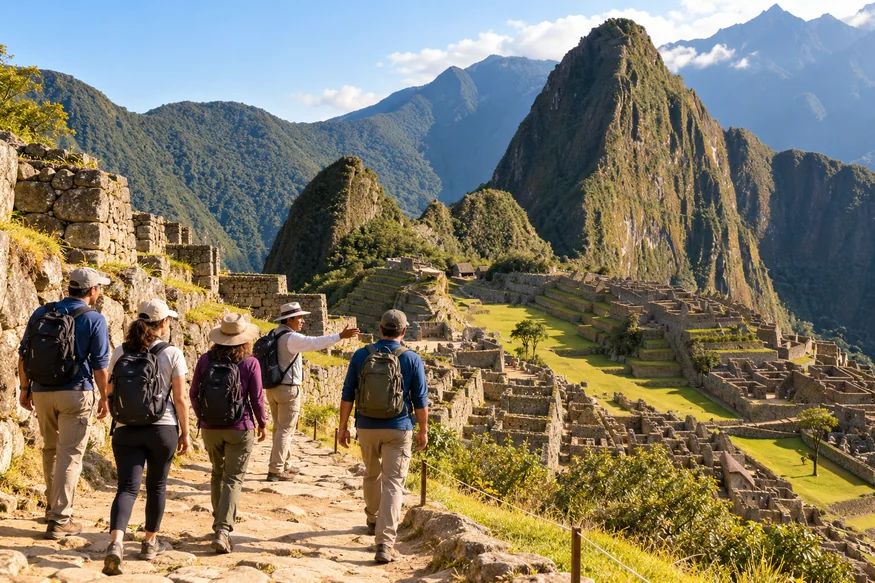
For a family trip, the best circuit is not necessarily the longest. A route with a classic view and a coherent introduction to the citadel may create a better memory than an ambitious option that leaves children tired before the most interesting explanations. Tell your operator the children’s ages, walking experience and any mobility concerns before tickets are secured. Once purchased, entry details can be difficult to change.
Mountain add-ons require extra judgment. Steep climbs should never be added simply because they are famous. They need separate tickets, additional time and enough stamina for the archaeological visit that follows. For many families, the citadel alone provides a complete and rewarding first experience.
Train, Bus and Timing with Children
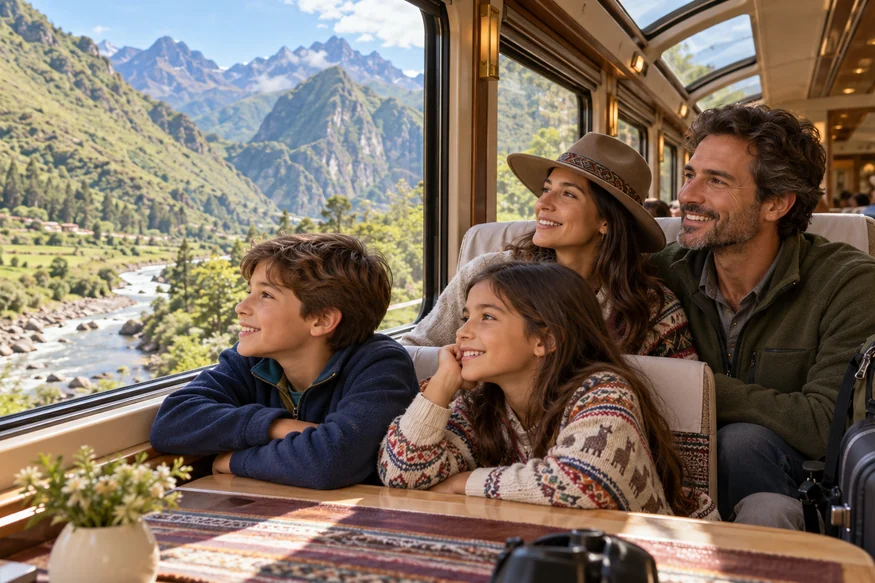
The route to Machu Picchu is part of the family experience. Most visitors combine a transfer, the train to Machu Picchu and the shuttle bus from Aguas Calientes. Keep tickets and identification together, arrive early enough to avoid a stressful sprint and explain each stage to children so the day feels like an adventure rather than a series of queues.
Pack entertainment that works without internet for the longer transfer: a small notebook, downloaded audio, a card game or a child-friendly book about the Incas. On the train, encourage children to watch how the landscape changes from high Andean valleys to cloud forest. The journey offers an easy geography lesson before the archaeology begins.
In Aguas Calientes, use the restroom before joining the bus line and again before entering if necessary. Our guide to traveling from Aguas Calientes to Machu Picchu explains the final section. Build a buffer into every connection; a relaxed parent usually means a relaxed child.
Altitude and Family Health
Machu Picchu sits lower than Cusco, but most family itineraries pass through higher Andean locations. Altitude can affect adults and children, and symptoms should not be dismissed as tiredness or bad behavior. Allow time to acclimatize, keep the first days gentle, encourage regular fluids and avoid turning sightseeing into a race.
Learn the basics in our Machu Picchu elevation guide. The CDC guidance for travelers to Peru with children is also useful when discussing altitude, vaccines and individual health needs with your child’s clinician. Seek professional medical advice before travel if a child has a heart, lung or other relevant condition.
Weather and What Children Should Wear
Machu Picchu’s weather can move from cool mist to strong sun and rain in the same visit. Dress children in light layers that can be added or removed without unpacking the entire bag. A breathable base layer, warm mid-layer and light waterproof shell are more adaptable than one heavy coat.
Closed walking shoes with reliable grip are essential. Add a sun hat, sunscreen and a light poncho or rain jacket. Avoid an umbrella because it is not permitted inside the archaeological site. Our detailed Machu Picchu weather guide helps families understand seasonal patterns without pretending the mountain will follow a perfect forecast.
What to Pack for Machu Picchu with Kids
Pack light enough that an adult can carry the essentials if a child gets tired. Large bags are not allowed; official visitor rules limit bags to 40 × 35 × 20 centimeters. A compact daypack is the practical choice.
- Passports or the identification used for every ticket
- Entrance, train and bus confirmations stored offline
- Refillable water in a secure bottle
- Sun hats, sunscreen and sunglasses
- Light waterproof layers
- Any personal medication
- A small notebook or simple activity for travel time
- A compact change of clothes for younger children, left with luggage when possible
Food cannot be consumed inside the citadel, so give children a proper meal or snack before entering and plan the next meal for after the visit. Check our complete Machu Picchu packing list, but resist packing for every imaginable situation. Less weight makes the steps easier.
Safety Rules Parents Should Know
Machu Picchu is a controlled visitor site, but its stone surfaces, staircases and mountain setting require attention. Keep children within arm’s reach near edges and steps. Walk rather than run, follow the signed route and never allow climbing, sitting or leaning on archaeological walls.
According to the official Machu Picchu code of conduct, strollers, large bags, food, umbrellas, selfie sticks and several other items are prohibited. Read the rules before packing. They protect both visitors and the site.
Photography should never interrupt supervision. Take turns: one adult watches the children while the other frames the photo. For wider travel considerations, see Is Machu Picchu Safe? and our overview of the Machu Picchu rules.
How to Keep Kids Engaged at Machu Picchu
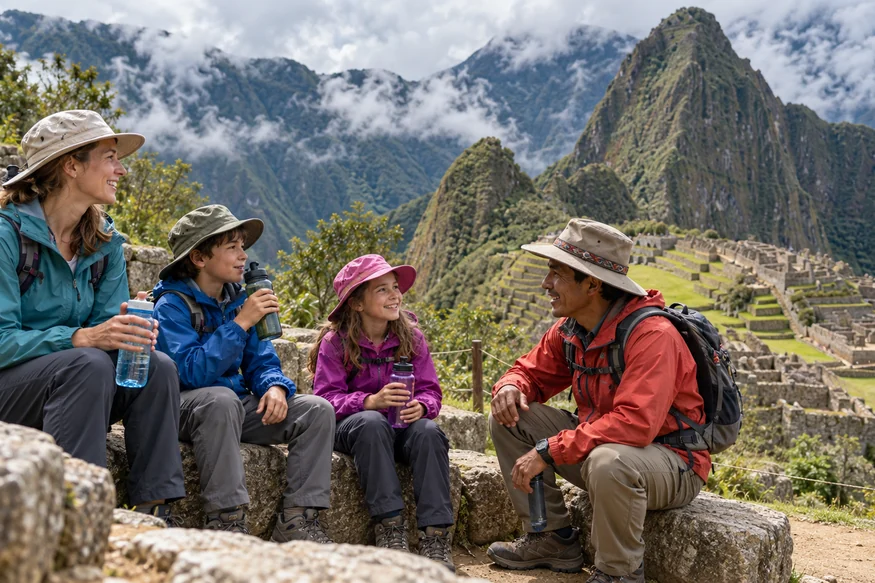
Children remember stories better than dates. Before the trip, introduce a few questions: How did the Incas move enormous stones? Why were terraces built on a mountain? How did water reach the city? During the tour, let children look for evidence and ask the guide for clues.
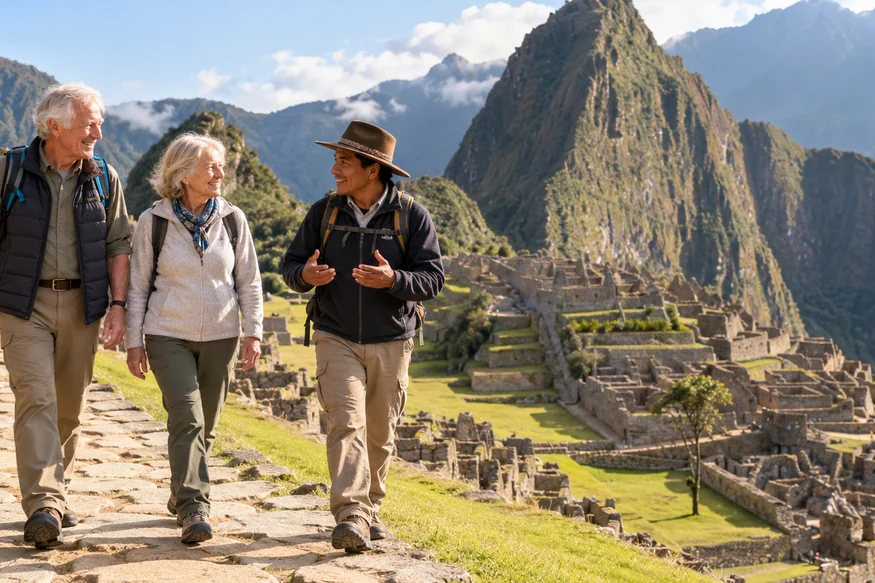
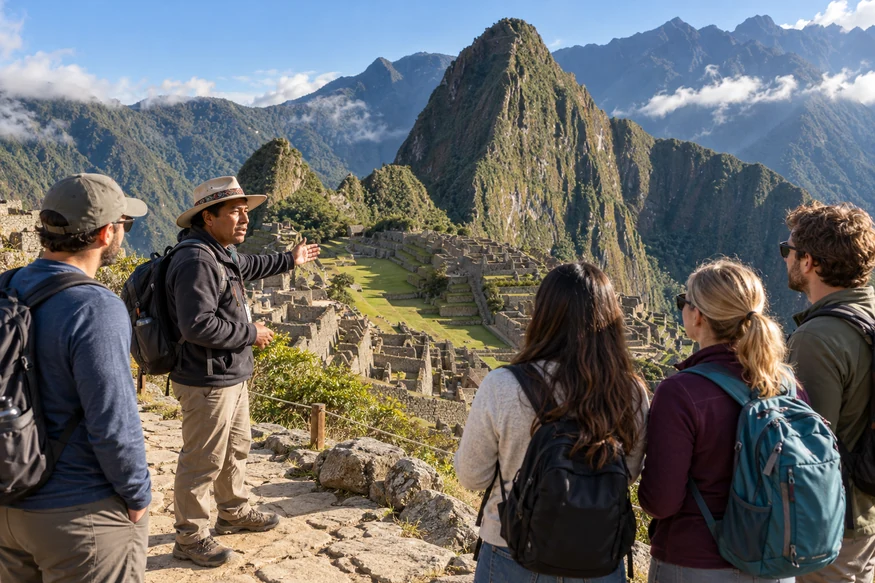
A good private guide can adjust the explanation in real time. Younger children may enjoy finding water channels, llamas and different stone shapes. Older children can discuss astronomy, engineering, Spanish conquest and the continuing importance of Quechua culture. Give each child a small role—map reader, photographer or wildlife spotter—to make the visit participatory.
Do not demand attention every minute. Quietly watching clouds move across the mountains is part of the experience. Schedule short pauses where permitted, celebrate effort and leave while the day still feels special.
Why a Private Family Tour Makes a Difference
A fixed group has to maintain one pace. A private tour can slow down for a careful child, shorten an explanation when attention fades and spend longer on a question that sparks genuine curiosity. It also gives parents one knowledgeable person coordinating transfers, tickets and timing.
That support is particularly valuable when availability is limited and entrance times must align with train and bus schedules. Big Foot Machu Picchu designs private experiences around real travelers, not an imaginary average visitor. Share the ages of your children, your preferred comfort level and how much time you have; our team can recommend the right itinerary before you commit.
Frequently Asked Questions
Can children walk all of Machu Picchu?
Many school-age children can complete a suitable circuit, but routes include uneven stone and stairs. Choose the route based on the child’s stamina and allow a patient pace.
Are strollers allowed at Machu Picchu?
No. The official code of conduct prohibits baby strollers, and the terrain would make them impractical. Families with very young children should plan around an appropriate carrier and obtain advice specific to their situation.
Is Machu Picchu difficult for kids?
The citadel can be manageable; the bigger challenge is often the complete travel day. Early departures, transfers and queues can drain energy before the guided visit begins. An overnight stay reduces that pressure.
Can children bring snacks inside?
Food is prohibited inside the archaeological site. Plan a meal or snack before entry, respect the scheduled entry time and eat again after leaving.
Do children need their own Machu Picchu ticket?
Every traveler needs the correct admission arrangement and identification. Age-based rules and discounts can change, so confirm current requirements before purchase and make sure the name and document match.
Should families hire a guide?
Yes, especially for a first visit. Beyond interpreting the site, a good guide helps families choose a realistic pace and turns complex history into memorable stories. Read more about whether you need a guide at Machu Picchu.
Plan a Family Adventure They Will Remember
Machu Picchu with kids works best when the day has breathing room. Choose a realistic route, prepare for changing weather, respect the official rules and prioritize curiosity over covering every possible viewpoint. The reward is more than a family photograph: it is a shared adventure children can understand, retell and remember.
If you want help matching tickets, trains and pacing to your family, explore our private Machu Picchu tours or contact Big Foot Machu Picchu. Tell us who is traveling and what would make the day comfortable. We will help you choose an itinerary that lets the whole family experience the wonder of the Inca citadel.