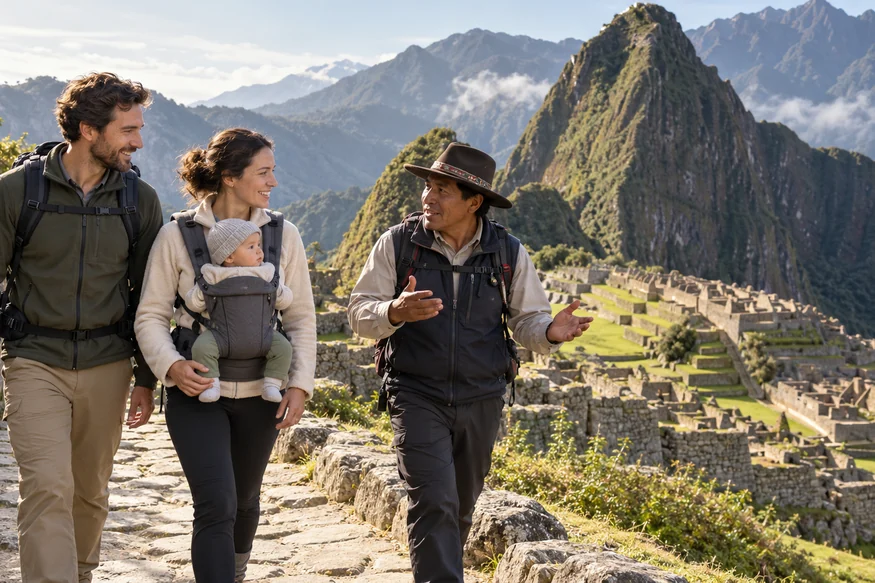

Visiting Machu Picchu with a baby is possible, but it should be planned as a slow family journey rather than an ambitious sightseeing challenge. The citadel has uneven stone paths, stairs, changing weather and a one-way visitor system. Reaching it also requires several stages of transport. With medical guidance, a suitable baby carrier and a flexible itinerary, many parents can experience this remarkable place without turning the day into an endurance test.
The most important decision is not which photograph you want. It is how to protect your baby’s routine while keeping the adults steady and unhurried. This guide explains the practical choices, from altitude and transport to feeding, diapers, tickets and the Machu Picchu tour format that gives a young family the most breathing room.
Can You Visit Machu Picchu with a Baby?
Yes, parents can visit Machu Picchu with an infant. However, “allowed” and “right for your family” are different questions. A baby cannot describe a headache, dizziness or discomfort clearly, and parents must carry the child over irregular terrain while managing sun, rain, naps and feeding.
Before committing, consider your baby’s health, age, temperament and experience in a carrier. Think about how both parents cope with disrupted sleep and long travel days. Discuss the itinerary and altitude with your child’s pediatrician or travel-health clinician, especially if the baby was born prematurely or has a heart, lung or other medical condition.
| Key question | Family-friendly approach |
|---|---|
| Can we use a stroller? | No. Baby strollers are prohibited inside Machu Picchu. |
| How should we carry the baby? | Use a supportive carrier you have already practiced with. |
| One day or two? | An overnight stay usually creates a calmer schedule. |
| What about altitude? | Discuss the complete route with a medical professional before travel. |
| Should we book a private guide? | Yes. Flexible pacing is especially valuable with an infant. |
Talk to Your Pediatrician About Altitude
Machu Picchu is lower than Cusco, yet most itineraries include time at higher elevations before or after the visit. That complete journey matters. The CDC traveler guidance for Peru identifies altitude illness as a consideration and recommends discussing prevention and treatment with a doctor.
Do not assume that a quiet or sleepy baby is simply adjusting to a new routine. Infants cannot report symptoms the way adults can. Ask your clinician what changes should prompt you to stop, seek care or move to a lower elevation, and identify suitable medical facilities before leaving home. This article provides trip-planning information, not individual medical advice.
A gentler route can reduce unnecessary stress. Some families spend time in the Sacred Valley before sleeping in Cusco because the valley is lower, but the best sequence depends on the wider itinerary and medical advice. Our Machu Picchu elevation guide explains how the main destinations compare.
Why Two Days Usually Work Better Than One
A same-day journey from Cusco combines an early pickup, road transfer, train, shuttle bus, guided circuit and the complete return trip. That can be manageable for independent adults, but an infant introduces feeds, diaper changes, naps and unpredictable pauses.
For most parents, a two-day Machu Picchu tour is the more forgiving option. Traveling to Aguas Calientes on the first day separates the train journey from the archaeological visit. The family can check in, organize the baby bag, eat properly and sleep before visiting the citadel the following day.
One day may still suit experienced traveling families with a healthy baby and a carefully coordinated private itinerary. If time is limited, compare the logistics of a Machu Picchu day trip from Cusco with an overnight stay before booking. The shortest itinerary on paper is not always the easiest in practice.
Strollers Are Not Allowed: Choose the Carrier Carefully
The official Machu Picchu code of conduct specifically prohibits baby strollers. The terrain also includes stone steps and narrow passages where a stroller would be impractical. A properly fitted baby carrier is therefore essential.
Use a carrier that is appropriate for your baby’s age and size, and follow the manufacturer’s positioning instructions. The baby’s face and airway should remain visible and unobstructed. Practice on stairs and longer walks at home while carrying the actual daypack you expect to use. Machu Picchu should not be the first full outing with new equipment.
Parents should agree in advance who carries the baby and who handles the daypack, documents and photographs. Switch only in a wide, permitted area where both adults can stand securely. A carrier does not remove the risk of wet stone or fatigue; the carrier must walk slowly and keep both hands available when balance requires it.
Choose a Manageable Circuit
Machu Picchu tickets are tied to a specific circuit and entry time. Routes vary in their number of steps, viewpoints and archaeological sectors. With a baby, the most famous or longest option is not automatically the best.
Review our Machu Picchu circuits guide and tell your tour operator that you will be carrying an infant before tickets are purchased. Ask for a route that provides a meaningful view of the citadel without adding a demanding mountain climb. Your guide must still follow the designated one-way route, so “flexible” means adapting the pace within the rules, not leaving or reversing the circuit.
Avoid adding Huayna Picchu or another steep hike simply to complete a checklist. Carrying a baby changes balance and increases the consequences of a slip. A calm guided visit to the citadel is already a complete family experience.
Train Travel with an Infant
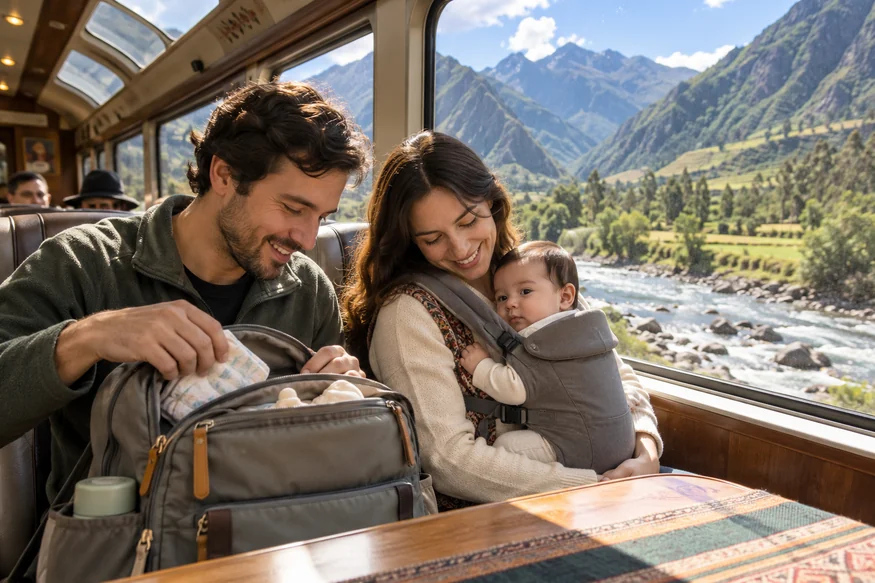
The train to Machu Picchu can be the easiest part of the journey when seats and connections are organized in advance. Keep the baby comfortably secured while boarding, and place tickets, identification and one essential-care pouch where an adult can reach them without unpacking everything.
Infant fares and seating conditions depend on the operator and service. For example, the current PeruRail family policy explains when an infant may travel on a parent’s seat and when a separate seat requires a child ticket. Policies can change, so confirm the exact terms for your chosen train before payment.
Train luggage allowances are limited. A large suitcase filled with baby supplies may not travel beside you. Use station or hotel storage for the main luggage and bring only what the family needs for the overnight stay and visit. Pack enough essentials for a delay, but keep the bag small enough to manage while one adult carries the baby.
From Aguas Calientes to the Entrance
Take the shuttle bus rather than walking up the steep road with an infant. The bus reduces heat, effort and time before the actual visit. Our guide from Aguas Calientes to Machu Picchu explains this final connection.
Leave the hotel with extra time for a diaper change and unexpected queues. Use the restroom and complete feeding before entering whenever possible. Once inside, the family must continue along its assigned route, and stopping options are limited. A private guide can coordinate the entry without pressuring parents to rush.
Feeding and Diaper Changes
The official rules prohibit bringing food and kitchenware into the archaeological site. Parents should clarify in advance how those rules apply to the baby’s necessary feeding supplies and should follow the instructions given by authorized staff. Do not assume that normal picnic items will be accepted because they are for a family.
Feed the baby shortly before entry and again after leaving if that fits the baby’s routine. Carry only the essential amount required for the visit, store it securely and never leave waste behind. Parents using formula should plan safe water and preparation with their pediatrician before travel rather than improvising at the entrance.
Change the baby before boarding the shuttle and before entering the site. Bring diapers, wipes, sealable disposal bags and a compact changing mat, but expect to use proper facilities outside the archaeological circuit. Pack a spare outfit for the baby and a lightweight top for the carrying parent.
Weather, Sun and Rain Protection
Conditions can change quickly between mist, rain and strong sun. Dress the baby in light layers that can be adjusted without completely removing the carrier. Use a breathable rain cover designed for the carrier rather than an umbrella, which is prohibited inside the site.
Shade is limited on portions of the circuit. A soft sun hat and suitable protective clothing help, but ask your pediatrician what sun protection is appropriate for your baby’s age. Monitor warmth and ventilation inside the carrier; the adult’s body heat can make the baby warmer than the surrounding air suggests.
Check the Machu Picchu weather guide when planning, then prepare for variation rather than trusting a single hourly forecast. If stone becomes wet, slow down and shorten expectations.
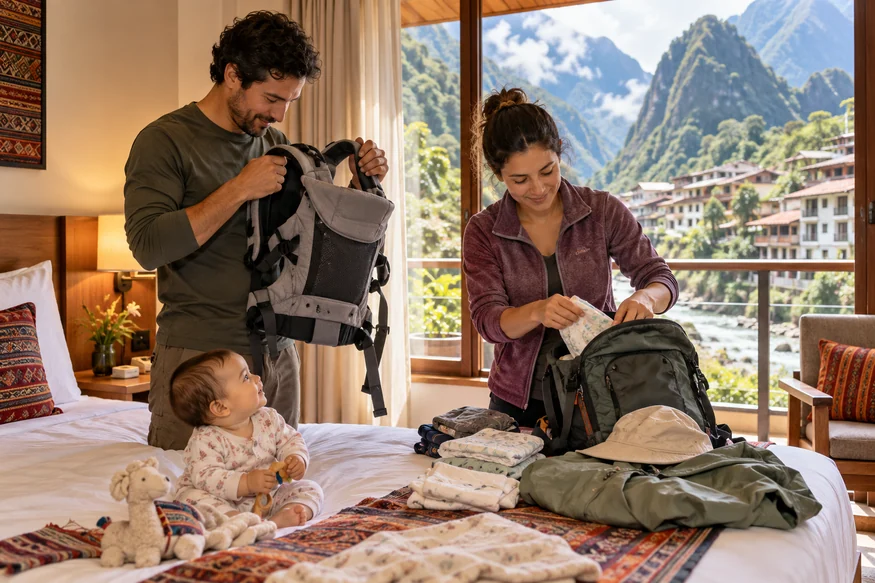
What to Pack for Machu Picchu with a Baby
The site’s official bag limit is 40 × 35 × 20 centimeters, and train operators also apply their own luggage rules. Divide responsibilities so that one adult carries the baby while the other manages a compact daypack.
- Passports or the identification used for all reservations
- Entrance, train and bus confirmations saved offline
- A familiar, correctly fitted baby carrier
- Essential diapers, wipes and sealable disposal bags
- A compact changing mat
- One spare baby outfit and an extra parent layer
- Light rain and sun protection appropriate for the baby’s age
- Necessary feeding supplies confirmed with the operator
- Any prescribed medication and basic care items advised by your clinician
Do not attach loose accessories that can catch on stone or brush. Skip bulky toys and bring one quiet comfort item for the train or hotel instead. For the general adult essentials, consult our Machu Picchu packing list.
Safety Habits Inside Machu Picchu
The adult carrying the baby should concentrate on footing rather than photography. Let the second adult take photos, handle documents and communicate with the guide. Keep the baby’s hands away from stonework and never sit, climb or lean on archaeological structures.
Walk rather than rush, especially on descending steps. Use footwear with reliable grip and keep the carrier straps checked. If the carrying parent becomes tired, tell the guide early and pause only where permitted. Our broader article Is Machu Picchu Safe? covers stone paths, weather and transport in more detail.
Travel insurance should cover the whole family and the activities in the itinerary. Save local medical contacts and know how you would return to a lower elevation or reach care. Preparation is not pessimistic; it allows parents to enjoy the visit with more confidence.
When Should a Family Postpone the Visit?
Postponing can be the responsible choice if the baby is unwell, the pediatrician advises against the itinerary, severe weather affects transport or a parent is too exhausted to carry the child securely. A nonrefundable reservation should never outweigh health and safety.
You may also decide that this trip will be more enjoyable when the child is older. Our guide to Machu Picchu with kids explains how the experience changes once children can walk and engage with the history. There is no failure in choosing the stage that suits your family.
Why a Private Tour Helps Parents
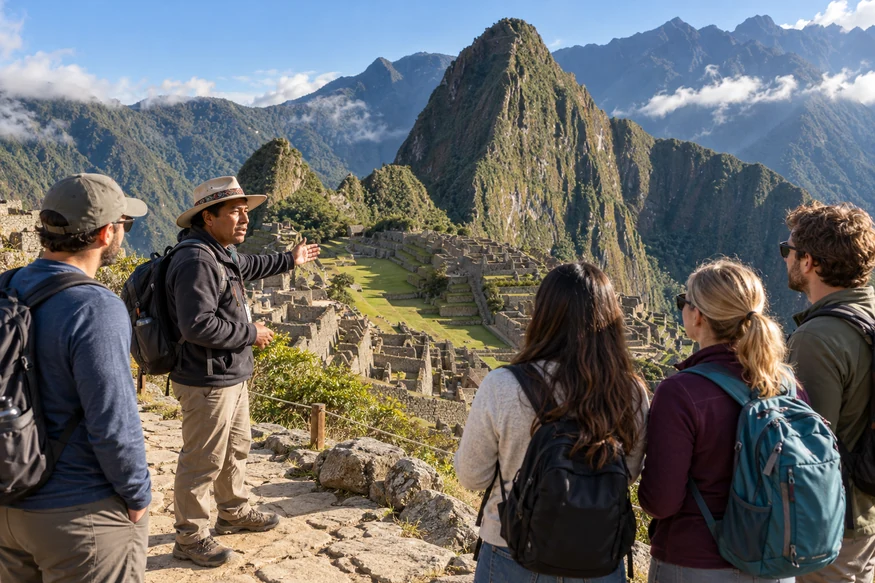
A private tour cannot change the official route or entry rules, but it can remove many avoidable pressures. Transfers can be coordinated around the chosen train, explanations can be delivered in shorter sections and the guide can maintain a calmer pace.
Parents should share the baby’s age, travel experience, carrier plan and accommodation needs before booking. A comfortable option such as the Machu Picchu Deluxe Tour may suit families wanting more personal coordination, while the two-day itinerary remains the strongest starting point for those prioritizing rest.
Frequently Asked Questions
Are babies allowed at Machu Picchu?
Babies can visit with their parents, but the family must follow the assigned circuit and all site rules. Parents should obtain medical advice and select an itinerary appropriate for carrying an infant.
Can I take a stroller into Machu Picchu?
No. Baby strollers are explicitly prohibited by the official code of conduct. Use an age-appropriate carrier that you have already tested.
Does a baby need a Machu Picchu ticket?
Admission and identification rules can change. Confirm the baby’s exact ticket requirements on the official government platform or through your tour operator before purchasing the family’s transport.
Does a baby need a train ticket?
It depends on the train operator, service and whether the baby occupies a separate seat. Check the current infant policy for the exact train you intend to book.
Is a one-day trip suitable with a baby?
It may work for experienced traveling families, but it creates a long sequence of road, rail, bus and walking. An overnight stay in Aguas Calientes generally provides more room for feeding, sleep and changes.
Can we change diapers inside the citadel?
Parents should use proper facilities before entering and after leaving. Do not depend on finding an appropriate changing space along the one-way archaeological circuit.
Plan the Journey Around Your Baby
Machu Picchu with a baby can become a meaningful family memory when expectations are realistic. Obtain medical guidance, choose a familiar carrier, sleep in Aguas Calientes when possible and build time around the baby’s routine. A shorter, peaceful visit is more valuable than a stressful attempt to see every viewpoint.
If you want help coordinating the right circuit, train and pace, explore our private Machu Picchu tours or contact Big Foot Machu Picchu. Tell us that you are traveling with an infant before booking, and our local team will help you evaluate the most comfortable itinerary for your family.