
Most people know the basic story of Machu Picchu: the Incas built it high in the Andes, the site was abandoned, and Hiram Bingham brought it to the world’s attention in 1911.
But that version leaves out some of the most interesting parts of its history.
Machu Picchu was never completely forgotten. Local people knew about the ruins long before Bingham arrived. We also still do not know with complete certainty why the Incas built it or exactly how they used every part of the site.
What we do know gives us a fascinating look at the Inca world.
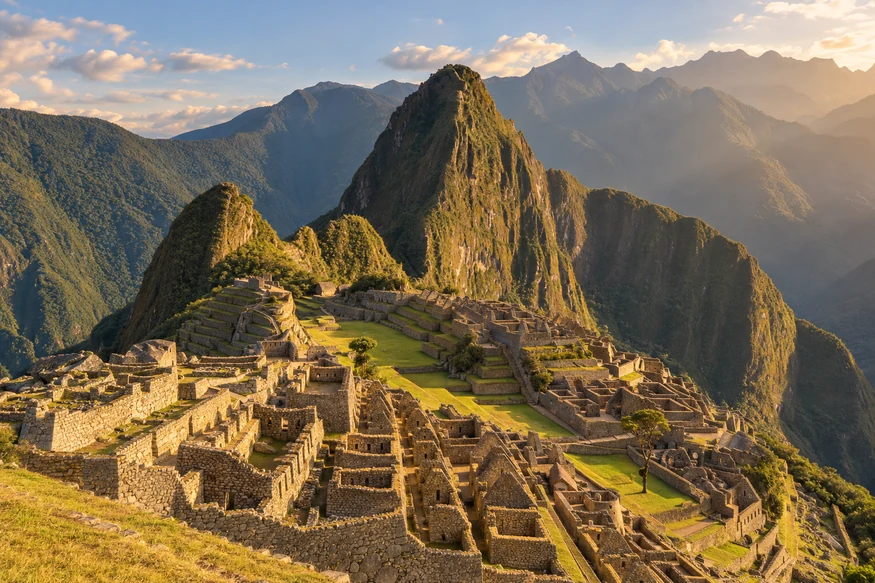
Machu Picchu was built during one of the most powerful periods of the Inca Empire. Its terraces, temples, homes, water channels, and stone paths were all part of a place where people lived, worked, worshipped, and moved through the mountains.
And once you understand that history, Machu Picchu starts to look very different.
When Was Machu Picchu Built?
Machu Picchu was built in the 15th century, during the expansion of the Inca Empire.
Most historians and archaeologists associate its construction with Pachacuti Inca Yupanqui, the ruler who greatly expanded Inca territory and helped transform Cusco into the center of what became Tawantinsuyu, the Inca Empire.
This means Machu Picchu was actually a relatively new place when the Spanish arrived in the Andes.
It had probably existed for less than a century before the conquest began in the 1530s.
For the people living during that period, Machu Picchu was not an ancient monument. It was part of their world.
Who Built Machu Picchu?
Machu Picchu was built by the Incas, most likely using workers brought together through the labor system that supported major projects across the empire.
Building here was not easy.
The Incas were working on a narrow mountain ridge with steep slopes, heavy seasonal rain, and limited flat ground. Before they could think about temples or houses, they had to make the mountain suitable for construction.
They created terraces, retaining walls, foundations, stairways, drainage systems, water channels, residential areas, and ceremonial spaces.
A lot of the work that made Machu Picchu possible is easy to miss today.
Visitors naturally focus on the beautiful stone walls, but the foundations and drainage underneath them were just as important. Without those systems, centuries of rain and erosion could have caused far more damage to the site.
The Incas were not simply good stoneworkers. They understood how to build on difficult mountain terrain.
Why Was Machu Picchu Built?
This is one of the questions historians are still trying to answer.
The Incas did not leave behind a written document saying exactly why Machu Picchu was built, so much of what we know comes from archaeology and from studying the layout of the site.
One of the most widely accepted ideas is that Machu Picchu was a royal estate associated with Pachacuti.
That does not necessarily mean Pachacuti lived here throughout the year.
It may have been a place used by the ruler and members of the Inca elite during certain periods, while a permanent population of workers and attendants maintained the estate.
Machu Picchu also seems to have had more than one function.
There are residential areas where people lived, terraces connected with agriculture, carefully built ceremonial spaces, plazas, water fountains, storage areas, and buildings that appear to have been important for religious activities.
So describing Machu Picchu simply as a city, temple, palace, or fortress does not really tell the whole story.
It was probably a combination of several of these functions, all connected to the political and religious world of the Incas.
Why Did the Incas Choose This Location?
Machu Picchu sits at about 2,430 meters (7,970 feet) above sea level, on a mountain ridge overlooking the Urubamba River.
At first, it may seem like a strange place to build such an important site. The terrain is steep, the mountains are rugged, and reaching the area would have required considerable effort.
But for the Incas, this location had several advantages.
Machu Picchu was connected to the Inca road network and stood between the high Andes and the warmer valleys that lead toward the Amazon.
The surrounding mountains were also important in Andean culture. Mountains, water, the sun, and the agricultural cycle were closely connected to Inca beliefs and daily life.
You can still see this relationship when you visit Machu Picchu.
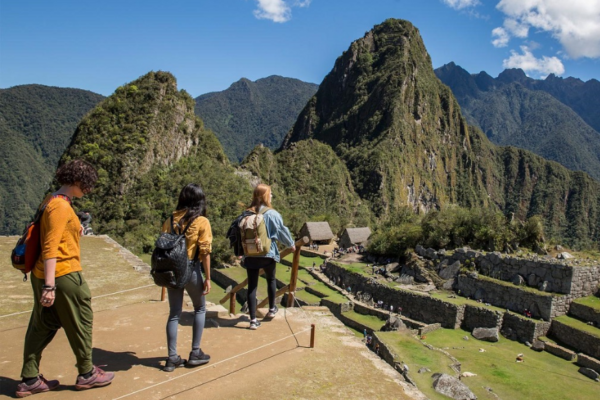
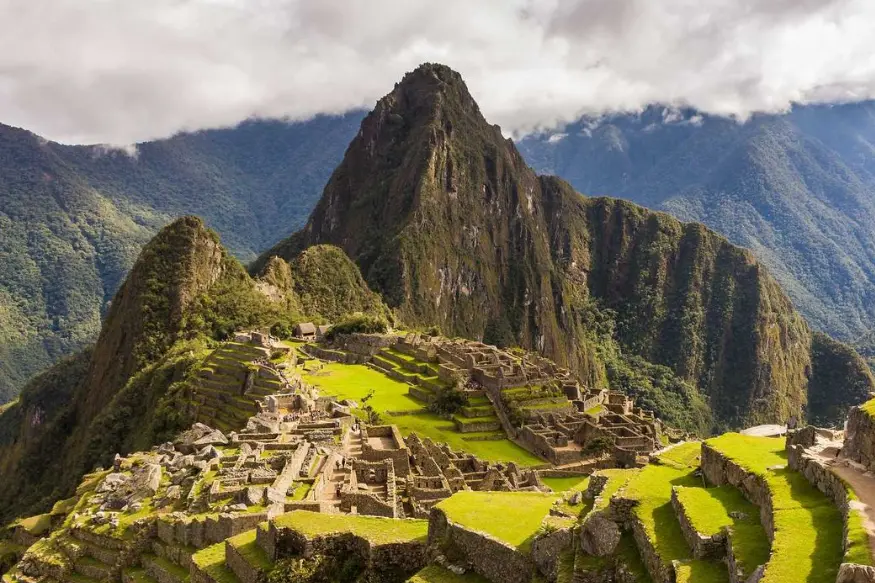
The Incas adapted their buildings to the mountain instead of trying to completely change its shape. Terraces follow the slopes, stairways climb naturally through the site, and many structures were built around existing rock formations.
This is one of the reasons Machu Picchu feels so different from other archaeological sites.
The mountain is not just where Machu Picchu was built. It is part of Machu Picchu itself.
How Was Machu Picchu Built?
One of the most impressive things about Machu Picchu is that the Incas built it without the machinery we would expect on a major construction project today.
There were no trucks bringing materials up the mountain and no modern cranes lifting large stones into position.
Instead, the work depended on human labor, stoneworking skills, ropes, ramps, simple tools, and techniques the Incas had developed over generations.
They also used what the mountain gave them.
Much of the granite needed for construction was already available around Machu Picchu. Builders could quarry and shape local stone instead of transporting every block over long distances.
You can still see areas where large pieces of granite appear to emerge naturally from the ground and become part of the surrounding architecture.
Inca Stonework
Walk through Machu Picchu and you will quickly notice that the walls are not all built in the same way.
Some structures have large stones that were carefully shaped and fitted together with remarkable precision. Others were built using smaller stones and simpler techniques.
There was a reason for this difference.
Buildings with an important ceremonial or elite function generally received more refined stonework, while everyday structures could be built more simply.
This gives us clues about how different parts of Machu Picchu were used.
The finest walls were not only strong. Their quality also showed that the building itself was important.
Agricultural Terraces
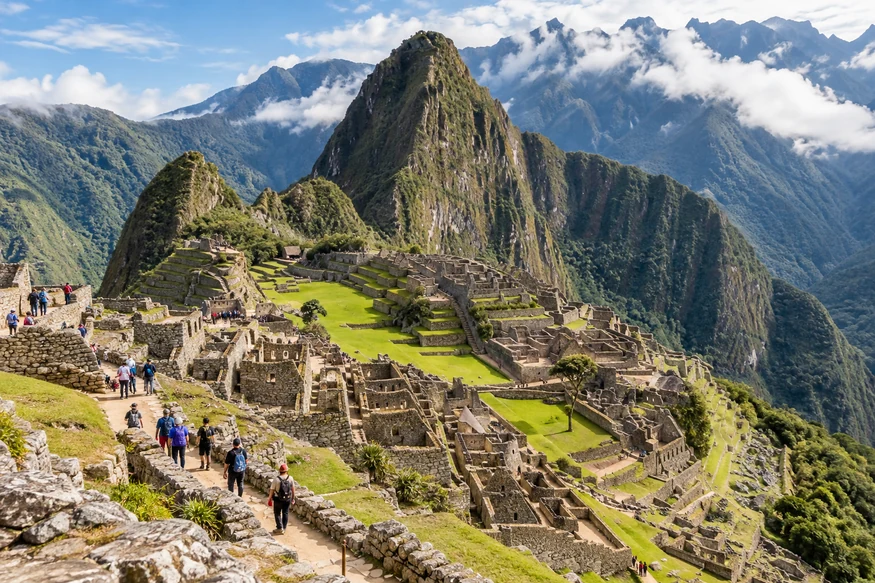
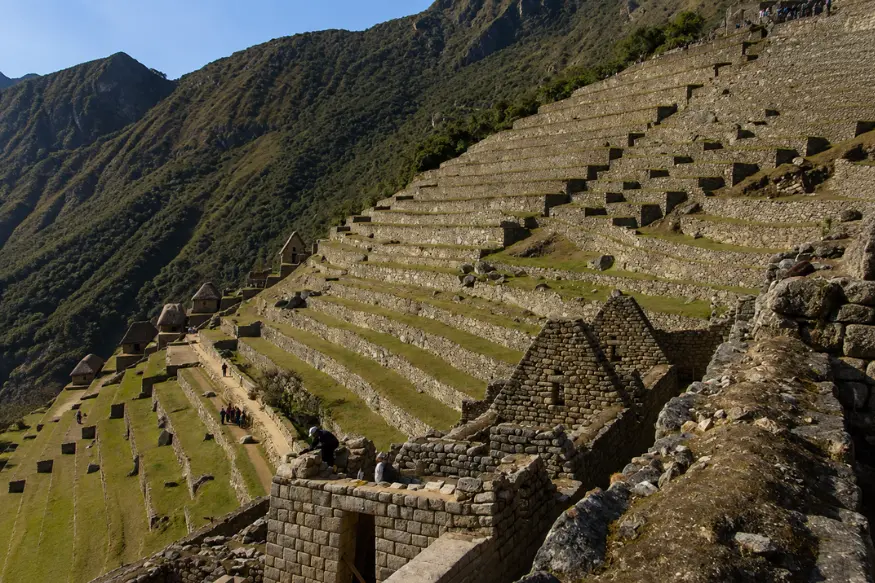
The terraces are one of the first things you notice when looking across Machu Picchu.
They are beautiful, but they were not created just for appearance.
Some provided land where crops could be grown, while others helped control water, reduce erosion, and support the steep slopes around the settlement.
This was especially important in a place that receives substantial rainfall.
The terraces helped the Incas turn a difficult mountain environment into a place where people could actually live and work.
Water and Drainage
Water was another challenge the Incas had to solve.
Machu Picchu receives plenty of rain, but the people living there also needed a reliable supply of fresh water.
The Incas built channels and a series of fountains that carried water through parts of the settlement.
At the same time, they had to prevent heavy rain from collecting around buildings and weakening the ground.
That is why drainage was such an important part of the construction.
Much of it is hidden beneath the surface, which makes it easy to overlook. But it is one of the main reasons so much of Machu Picchu has survived.
The famous stone walls could not have lasted this long without good foundations and careful water management.
What Was Life Like at Machu Picchu?
It is easy to visit Machu Picchu today and think of it as a collection of ruins.
Five centuries ago, it was a very different place.
People lived here.
There would have been workers maintaining terraces, people preparing food, religious specialists carrying out ceremonies, and others taking care of buildings and supplying the estate.
People also traveled between Machu Picchu and other parts of the region using the Inca road system.
Try to picture the site without buses, entrance gates, marked circuits, or hundreds of visitors taking photographs.
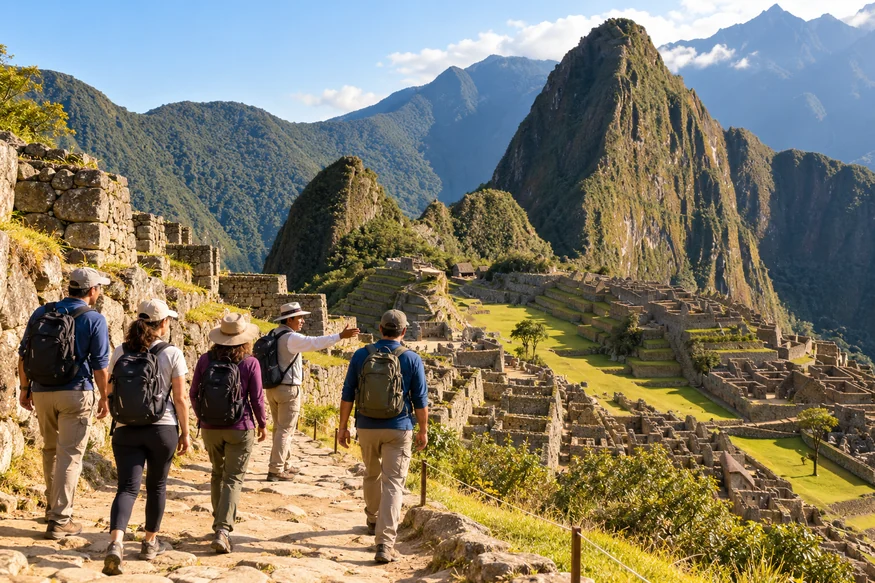
Instead, people would have walked along the same stone paths and stairways you see today. Water flowed through the channels. Food was prepared in residential areas. Workers tended the terraces above the Urubamba Valley.
The buildings we now call ruins were once homes, workplaces, ceremonial spaces, and part of everyday life.
That is an important thing to remember when walking through Machu Picchu.
Important Structures at Machu Picchu
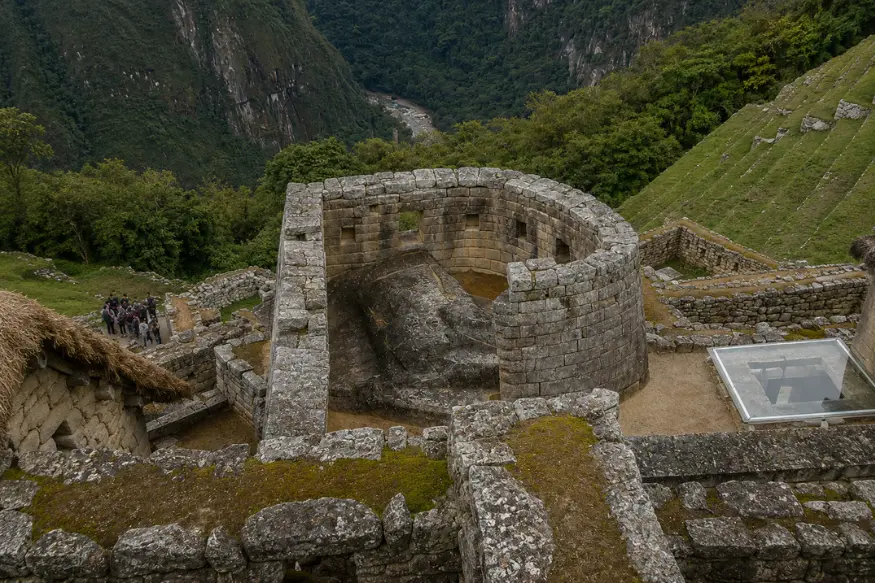
Some buildings at Machu Picchu stand out because of their location, design, and quality of stonework.
They also give us useful clues about what mattered to the people who lived here.
Temple of the Sun
The Temple of the Sun is easy to recognize because of its curved stone wall.
Its masonry is noticeably more refined than many ordinary buildings around the site, which suggests that this was an important space.
The temple is generally connected with ceremonial activities and observations of the sun.
Its design is another example of how Inca builders combined architecture with natural features of the mountain.
Intihuatana
The Intihuatana is one of the best-known carved stones at Machu Picchu.
Its exact purpose is still debated, so it is better not to describe it as a simple astronomical instrument.
What is clear is that it occupied an important ceremonial position and had a strong relationship with the surrounding landscape.
Standing near it also gives you a better sense of how carefully the Incas chose the location of important spaces within Machu Picchu.
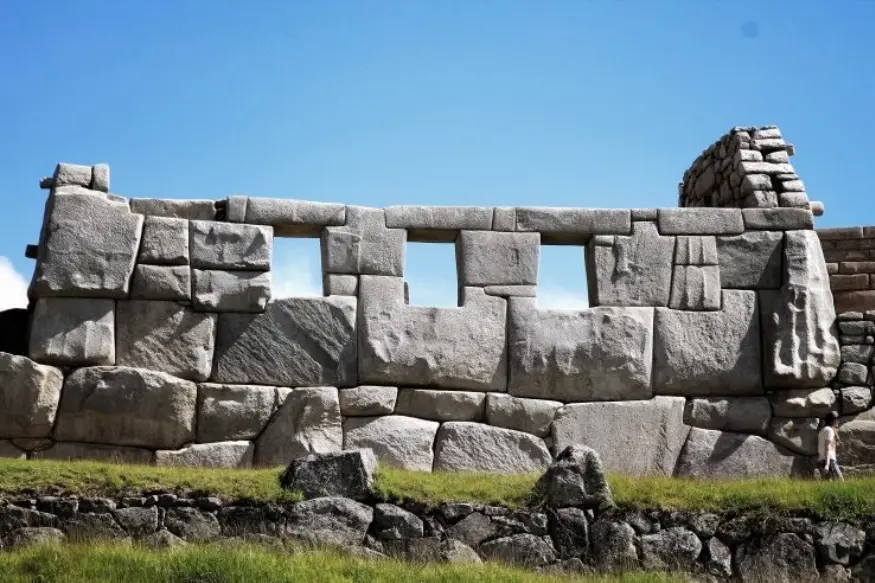
Temple of the Three Windows
The Temple of the Three Windows is another important ceremonial structure.
Its three large trapezoidal openings look out toward the surrounding mountains, while the carefully worked stones show the level of effort that went into its construction.
It forms part of one of the most important ceremonial areas of Machu Picchu.
Residential Areas
The temples usually receive the most attention, but the residential areas tell another side of the story.
These were spaces connected with everyday life.
They remind us that Machu Picchu was not built only for ceremonies. People had to sleep, prepare food, work, store supplies, and carry out ordinary daily activities here.
Looking at these simpler buildings makes it easier to imagine Machu Picchu as a living settlement rather than just an archaeological monument.
What Happened to Machu Picchu During the Spanish Conquest?
The Spanish entered the Inca Empire in the 1530s, setting off a period of enormous change throughout the Andes.
Machu Picchu does not appear to have suffered the same direct destruction seen at some other Inca sites.
There is no clear evidence that the Spanish established a major settlement at Machu Picchu itself.
But the effects of the conquest reached far beyond the places where Spanish forces were physically present.
The Inca political system began to collapse. Communities were reorganized, traditional labor networks changed, and diseases introduced after European contact caused severe population losses.
Machu Picchu depended on that larger Inca system.
Once the political and economic structure supporting it disappeared, maintaining an estate in such a remote mountain location would have become much more difficult.
Why Was Machu Picchu Abandoned?
We do not know the exact year when Machu Picchu was abandoned.
It probably did not happen overnight.
There is no strong evidence of a single attack or disaster that suddenly forced everyone to leave.
A gradual decline makes more sense.
The Spanish conquest had changed the political system that supported Machu Picchu, while disease and population loss affected communities throughout the Andes.
If Machu Picchu had been closely connected with Pachacuti and the Inca elite, it would also have lost much of its original purpose after the empire collapsed.
Eventually, the site stopped functioning as an active Inca settlement.
Vegetation slowly covered buildings, paths, and terraces.
But that does not mean everyone forgot where Machu Picchu was.
Was Machu Picchu Really a Lost City?
You have probably heard Machu Picchu called the “Lost City of the Incas.”
It is a great nickname for books and documentaries, but historically it can be misleading.
Machu Picchu was not completely lost.
People living in the area knew about the ruins before Hiram Bingham arrived. Local families were farming nearby, and local residents helped Bingham reach the site in 1911.
So Machu Picchu was not an unknown city suddenly discovered by an explorer.
What it lacked was international attention.
That changed dramatically with Hiram Bingham.
Hiram Bingham and Machu Picchu in 1911
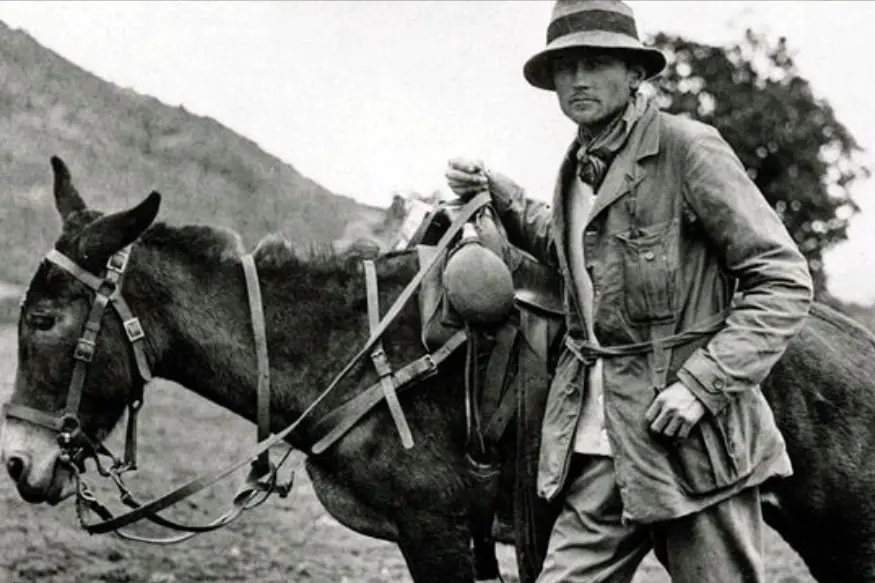
On July 24, 1911, American historian and explorer Hiram Bingham reached Machu Picchu.
But Machu Picchu was not actually what he had set out to find.
Bingham was interested in locating important Inca sites connected with the final years of resistance against Spanish rule.
With help from local people, he was led to the ruins of Machu Picchu.
Much of the site was covered by vegetation at the time, but its existence was already known in the area.
Bingham understood that the ruins were important.
His later expeditions, photographs, publications, and academic connections introduced Machu Picchu to audiences far beyond Peru.
This is why saying that Bingham “discovered Machu Picchu” does not tell the full story.
A better way to describe what happened is that his expeditions brought Machu Picchu to international attention.
Machu Picchu and Vilcabamba
There is another interesting part of Bingham’s story.
He was searching for Vilcabamba, the final major refuge used by the Incas who continued resisting Spanish rule after the fall of Cusco.
For a time, Bingham believed Machu Picchu could be the place he was looking for.
Later research showed otherwise.
Historical and archaeological evidence eventually linked the historical Vilcabamba with Espíritu Pampa, located deeper in the region.
Machu Picchu and Vilcabamba are two different archaeological sites.
This confusion is useful because it shows that our understanding of Machu Picchu did not appear all at once in 1911.
Researchers have continued studying and reinterpreting the site for more than a century.
Machu Picchu and the Inca Road System
From the classic viewpoint, Machu Picchu can look completely isolated.
During the Inca period, it was not.
The Incas created a huge network of roads connecting Cusco with settlements, agricultural areas, administrative centers, religious sites, and distant parts of Tawantinsuyu.
Machu Picchu was connected to this network.
Some sections of those ancient routes still survive, including the route travelers now know as the Inca Trail to Machu Picchu.
Walking the Inca Trail gives you a very different perspective on the site.
Before reaching Machu Picchu, you pass mountains, stone roads, archaeological sites, high passes, valleys, and cloud forest.
By the time you arrive, it becomes much easier to understand that Machu Picchu was not standing alone in the mountains.
It belonged to a much larger network of people, roads, settlements, and sacred landscapes.
How Did Machu Picchu Become Famous?
After Bingham’s expeditions, photographs of Machu Picchu began reaching international audiences.
Archaeologists continued studying the ruins, while books, magazines, and later documentaries introduced the site to more people.
Tourism developed gradually during the 20th century.
Rail connections made the region easier to reach, and the town now known as Aguas Calientes grew into the main access point for visitors heading to Machu Picchu.
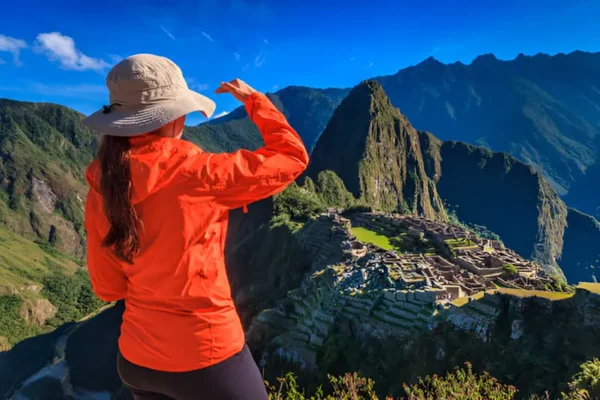
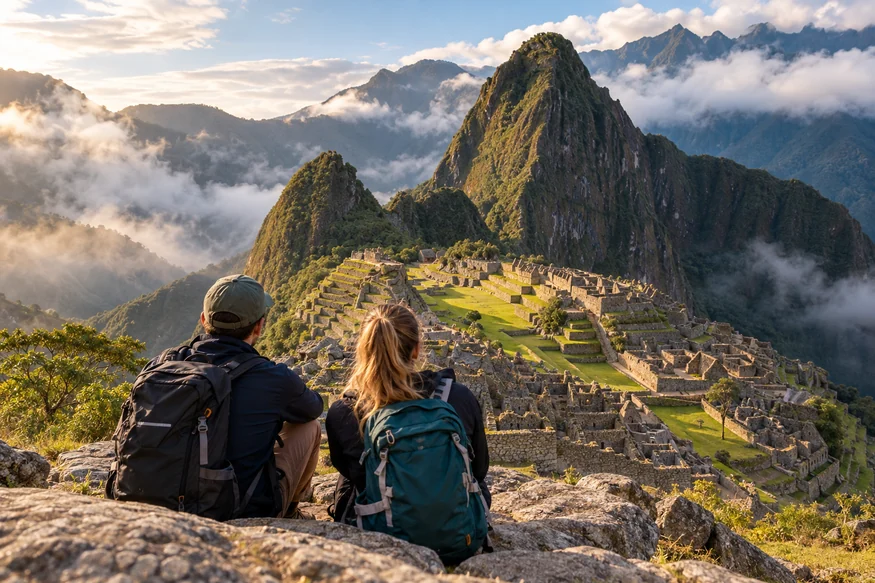
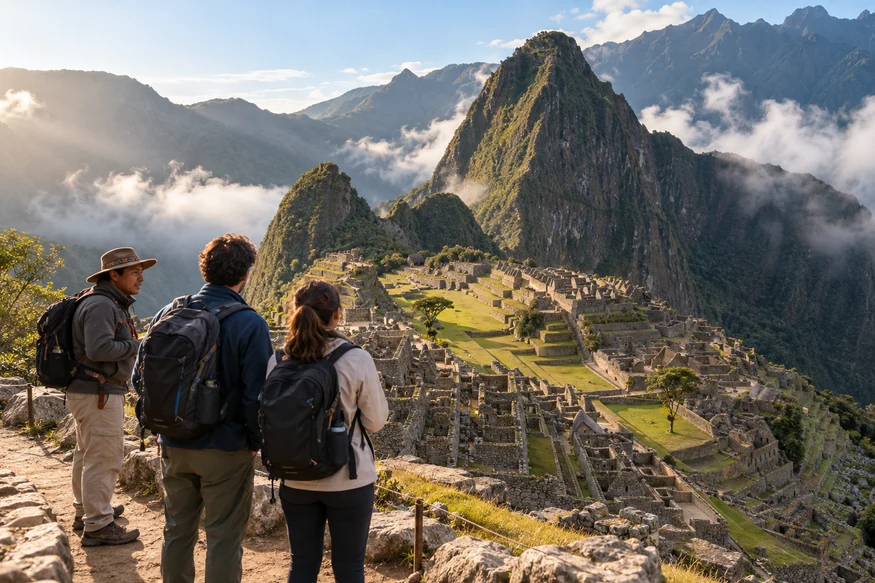
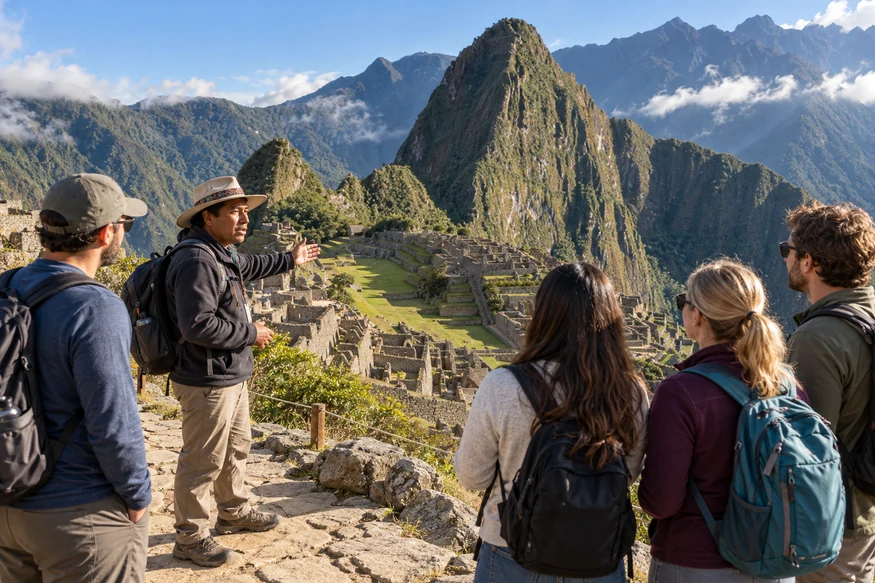
Over time, the famous view of the ruins with Huayna Picchu rising behind them became one of the most recognizable images of Peru.
Today, millions of people around the world know what Machu Picchu looks like even if they have never visited South America.
Machu Picchu and UNESCO
In 1983, the Historic Sanctuary of Machu Picchu was added to the UNESCO World Heritage List.
The protected area is important for more than its Inca ruins.
Machu Picchu sits in a remarkable environment where the Andes descend toward the Amazon basin. Mountains, forests, rivers, and archaeological remains all form part of the sanctuary.
This matters because the natural landscape is closely connected with the history of Machu Picchu.
Those mountains you see behind the ruins are not simply a beautiful background for photographs.
They help explain why the Incas chose this place and how they designed it.
Preserving Machu Picchu Today
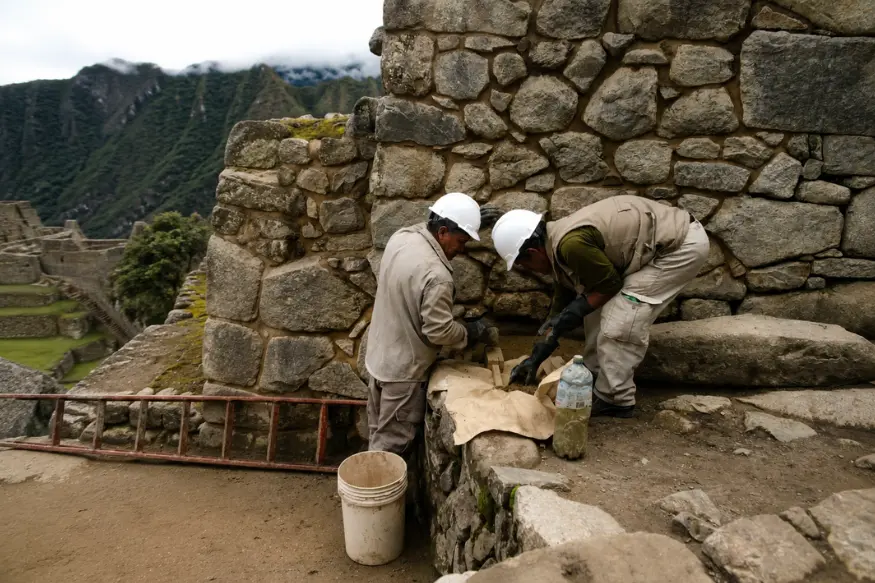
Machu Picchu may have survived for more than five centuries, but preserving it is an ongoing job.
Rain, humidity, vegetation, erosion, and the constant movement of visitors can all affect the archaeological site. Because of this, specialists regularly monitor the stone walls, terraces, drainage systems, and other structures.
The goal is not to rebuild Machu Picchu or make it look new. Conservation work focuses on protecting the original structures and preventing further damage whenever possible.
This is especially important because many of the systems created by the Incas still play a role in keeping the site stable. Terraces continue to help control the slopes, while drainage channels move water away from vulnerable areas.
For visitors, much of this work goes unnoticed. But preserving Machu Picchu today is part of the same story that began more than 500 years ago.
Why Is Machu Picchu Historically Important?
Machu Picchu gives us the chance to see many parts of Inca life in one place.
You can see how the Incas worked stone, managed water, built on steep slopes, created agricultural terraces, organized residential spaces, and constructed places for ceremonies.
You can also see how closely their architecture was connected with the landscape.
The Incas did not flatten the entire mountain and build a city on top of it.
They worked with what was already there.
Terraces follow the slopes. Stairways climb between different levels of the ridge. Buildings sit beside natural rocks. Water moves through carefully planned channels.
That is one of the most impressive things about Machu Picchu.
It is not just a collection of well-preserved Inca buildings. It shows how the Incas learned to live and build in one of the most difficult landscapes in the Andes.
Seeing Machu Picchu Differently
Knowing the history changes the way you experience Machu Picchu.
When you walk beside the terraces, they are no longer just part of the famous view. You can see how they helped the Incas manage a steep and rainy mountain.
When you notice the difference between a simple wall and the carefully fitted stones of a ceremonial building, you begin to understand how different spaces were valued.
Even the small water channels running through the site start to make sense once you realize that people actually depended on them.
And then there are the mountains.
They surrounded the people who lived here just as they surround visitors today.
That is perhaps the most important thing to understand about Machu Picchu history.
Machu Picchu was never just a group of stone buildings placed on top of a mountain. The roads, terraces, water, buildings, people, and surrounding landscape were all connected.
More than five centuries later, you can still see that connection when you walk through the site.
If you are planning to experience the site yourself, understanding the best time to visit Machu Picchu can also help you choose between clearer weather, fewer visitors, and the greener landscapes of the rainy season.