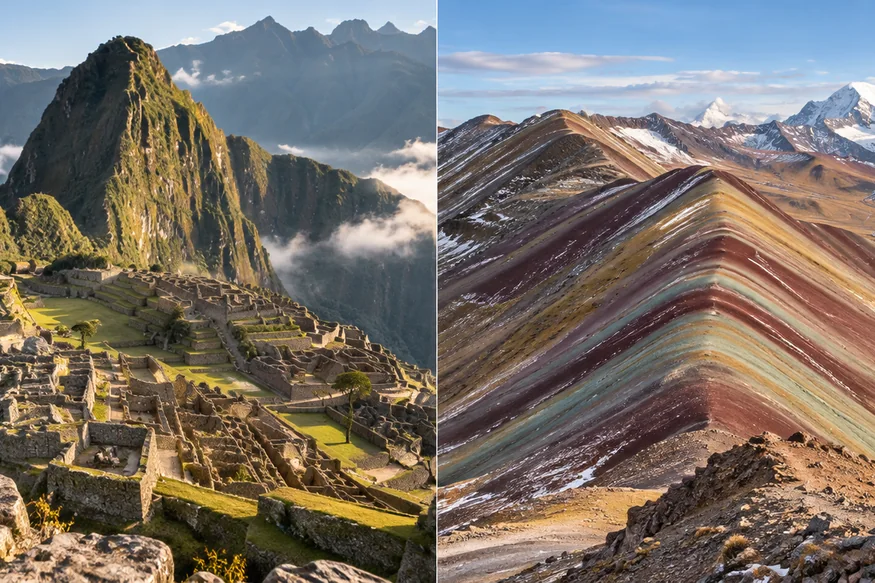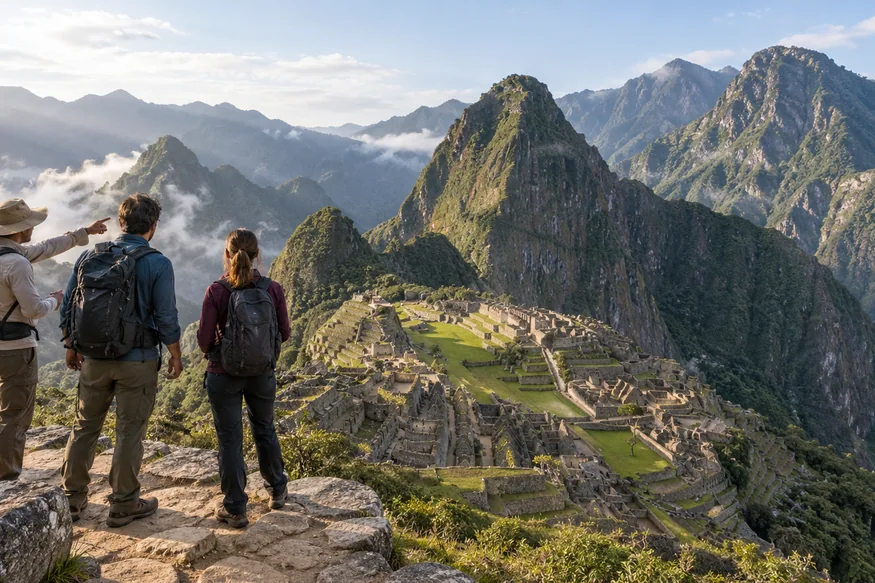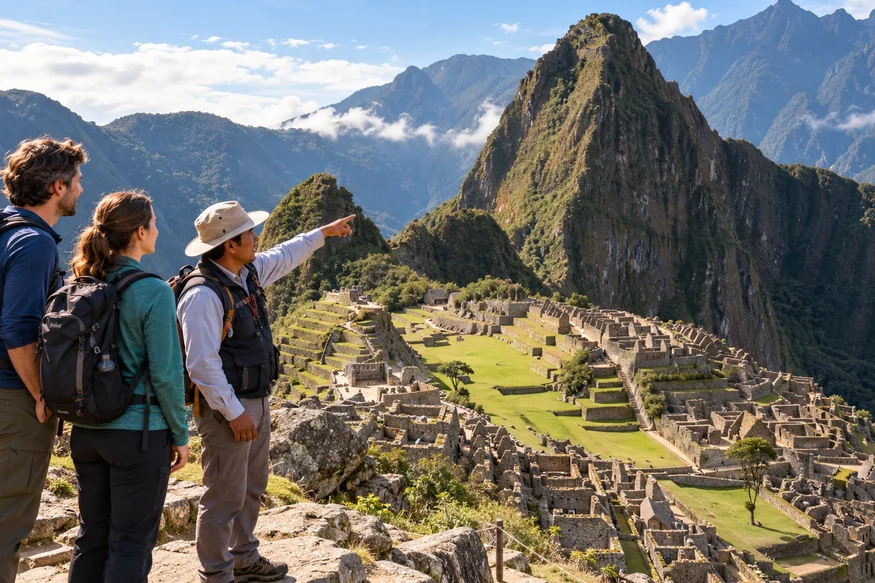
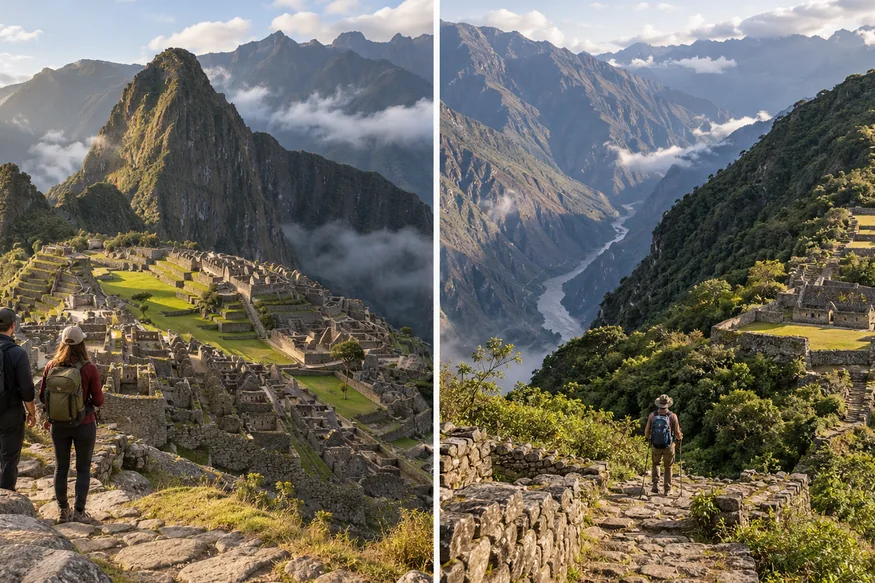

Machu Picchu and Choquequirao are monumental Inca sites hidden among the mountains of southern Peru, but visiting them requires completely different levels of time, effort and planning. Machu Picchu is reached by train, bus or a regulated trek and explored through a timed circuit. Choquequirao remains a remote trekking destination reached on foot through the Apurímac canyon.
If this is your first trip to Peru and you have limited time, Machu Picchu is the clear priority. Choose Choquequirao when the multi-day hike, changing ecosystems and relative solitude are central to the experience—not merely as a way to see “another Machu Picchu.”
Quick answer: choose Machu Picchu for accessible world-class archaeology and a carefully organized visit. Choose Choquequirao for a strenuous expedition where the journey matters as much as the ruins. Fit travelers with enough time can visit both, but they should treat them as distinct experiences.
Machu Picchu vs Choquequirao at a Glance
| Comparison | Machu Picchu | Choquequirao |
|---|---|---|
| Access | Train and shuttle bus, or a regulated trek | Multi-day hiking route through steep mountain terrain |
| Time needed | One day minimum; two days is more relaxed | Usually four or more days for the round trip |
| Difficulty | Moderate walking and stone stairs | Strenuous descents, climbs and consecutive hiking days |
| Visitor experience | Structured, timed and relatively busy | Remote, slower and much less visited |
| Archaeological visit | Defined one-way circuit with major restored sectors | Expansive sectors encountered after a demanding approach |
| Best for | Most first-time visitors | Experienced hikers seeking an expedition |
The Essential Difference: A Visit vs an Expedition
Machu Picchu is a destination you travel to and explore. The logistics may be complex, but trains and buses make the sanctuary accessible to a wide range of visitors. Once inside, the experience follows a controlled circuit through selected viewpoints and archaeological areas.
Choquequirao is inseparable from the journey on foot. The usual approach descends into the Apurímac canyon and climbs steeply toward the archaeological park. Camps, weather, trail conditions, meals and recovery become part of the experience. Reaching the site is an achievement, not merely a transfer.
This distinction should guide the decision. Travelers who mainly want archaeology should prioritize Machu Picchu. Travelers who want a demanding trek culminating in archaeology may find Choquequirao more personally rewarding.
What Visiting Machu Picchu Is Really Like
Most visitors reach Machu Picchu by train to Aguas Calientes and shuttle bus to the entrance. Tickets are tied to a date, time and official route. The circuit determines which terraces, temples, residences and panoramic viewpoints you can see.
The visit is physically active but concentrated. Original stone steps, uneven paths and limited seating require attention, yet the excursion does not demand several days of wilderness hiking. A knowledgeable guide helps connect the fine masonry, water system and sacred landscape into a coherent story.
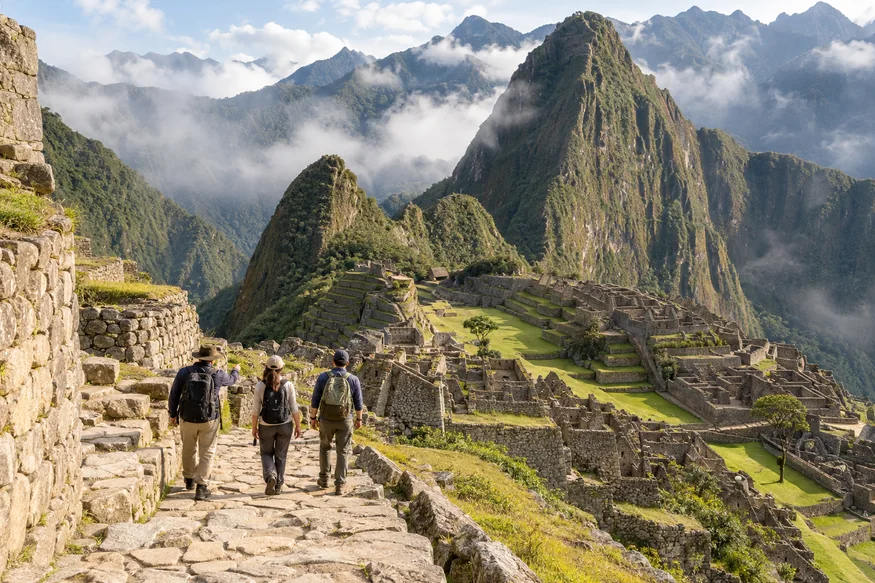
Review the Machu Picchu circuits, ticket requirements and walking difficulty before selecting the experience.
What Trekking to Choquequirao Is Really Like
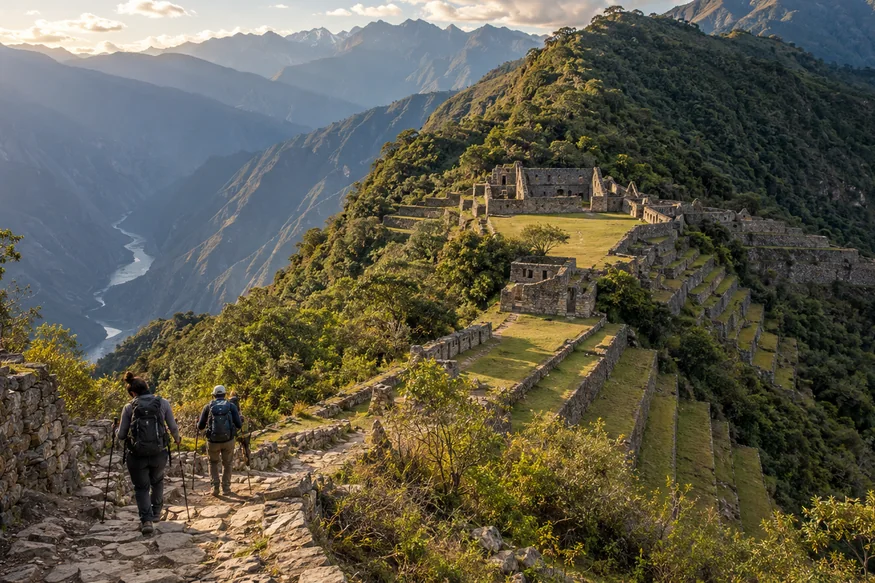
Choquequirao lies on a remote ridge above the Apurímac canyon. The most familiar trekking approach begins near Cachora and Capuliyoc, followed by a major descent toward the river and a sustained climb through small settlements toward the archaeological site.
Daily elevation change matters more than the site’s altitude alone. Hikers descend thousands of vertical feet, cross hot lower slopes and climb back into cooler cloud-forest conditions. The return repeats much of that effort in reverse. Heat, insects, rain and limited shade can be as significant as altitude.
At the archaeological park, terraces, ceremonial areas, plazas and distinctive llama figures built into the hillside unfold across a large landscape. Some sectors require additional descending and climbing even after reaching camp. The reward is time and space to absorb a site that receives far fewer visitors than Machu Picchu.
Which Site Is More Difficult to Reach?
Choquequirao is far more difficult. Machu Picchu can be reached without a multi-day trek, while Choquequirao currently requires substantial hiking on steep mountain trails. The official cultural authority notes that the conditions and distance prevent accessible entry for visitors with disabilities.
A standard Choquequirao itinerary is not simply a longer version of the walk inside Machu Picchu. It involves consecutive hiking days, camping or basic lodgings, carrying a daypack and recovering after major descents and climbs. Strong knees and downhill control are as important as cardiovascular fitness.
Horses or mules may carry equipment on permitted sections, but they do not remove the need to hike safely. Travelers should train on hills, break in footwear and choose an itinerary with realistic daily distances.
Which Has Better Archaeology?
Machu Picchu presents the more immediately refined and comprehensible archaeological experience. Fine stonework, urban organization, ceremonial spaces and agricultural terraces are concentrated within a celebrated mountain setting. Decades of conservation and interpretation help visitors understand its importance.
Choquequirao feels broader and more exploratory. Its sectors spread across ridges and slopes, with restored areas standing beside landscapes still shaped by ongoing research and conservation. The famous terrace figures and remote plan distinguish it from Machu Picchu.
Calling Choquequirao the “sister of Machu Picchu” is convenient but incomplete. Both belong to the Inca world, yet their architecture, access, historical roles and visitor experiences deserve to be understood on their own terms.
Which Has Better Scenery?
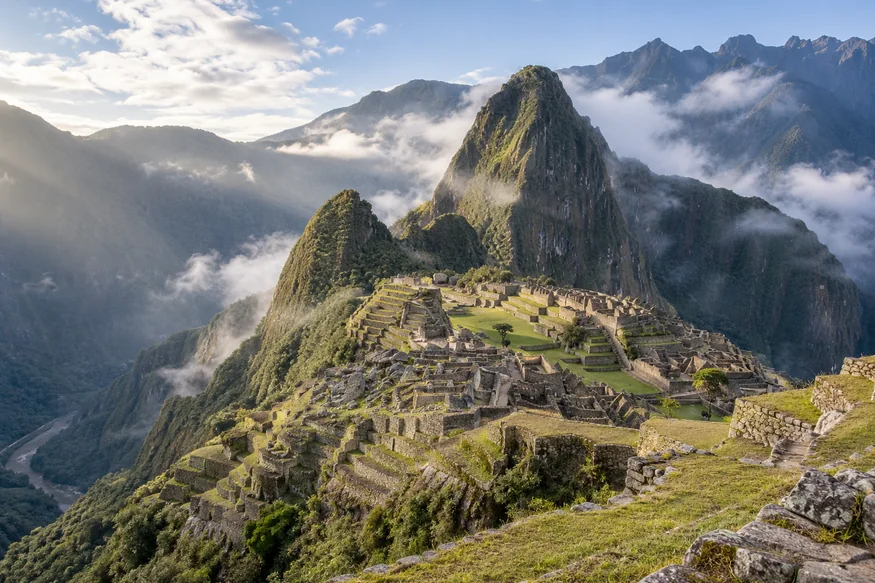
Machu Picchu has the iconic composition: geometric terraces and stone buildings framed by steep green peaks. Cloud rising from the Urubamba canyon creates a dramatic transition between Andes and upper Amazon forest.
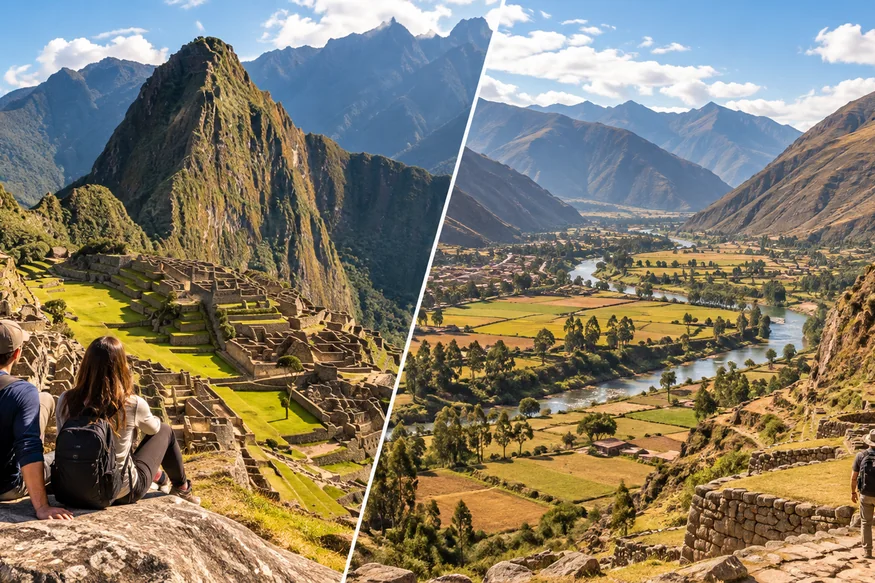
Choquequirao offers the more expansive journey. The trail reveals the Apurímac canyon, distant Vilcabamba peaks, dry lower slopes and humid forest around the archaeological ridge. Scenery changes over several days rather than during one controlled visit.
Choose Machu Picchu for one unforgettable panorama. Choose Choquequirao for a landscape narrative that develops with every descent, campsite and climb.
Crowds and Atmosphere
Machu Picchu is Peru’s most famous archaeological destination. Timed entries and circuit rules manage demand, but popular viewpoints and buses can still feel busy. Selecting the right entrance time helps, although no ticket guarantees solitude.
Choquequirao receives far fewer visitors because access requires a multi-day trek. Camps and trail sections may still be shared with other groups, yet the archaeological park generally feels quieter and more spacious.
Fewer people do not automatically make Choquequirao better. Solitude is earned through physical effort, reduced comfort and more exposure to changing trail conditions. See our guide to Machu Picchu crowd levels when planning the busier site.
How Much Time Do You Need?
Machu Picchu requires at least one long day from Cusco or the Sacred Valley. Two days allow an overnight in Aguas Calientes, a calmer entrance and more flexibility around train schedules.
Choquequirao normally requires four or more days for a round trip, depending on the access route, group pace and time reserved at the ruins. Shorter itineraries demand aggressive hiking and leave little margin for weather or recovery.
Do not select the shortest itinerary simply to fit a calendar. A balanced plan protects time at the archaeological site—the reason for undertaking the trek in the first place.
Which Trip Costs More?
A Machu Picchu day trip can be expensive because it combines limited entrance tickets, train travel, buses, transfers and professional guiding. The total depends heavily on train category and whether the service is private or shared.
Choquequirao does not depend on premium trains, but a safe multi-day trek requires transport, guiding, food, camping logistics and often support staff or pack animals. Because the service runs for several days in a remote area, the overall tour can cost more than a standard Machu Picchu visit.
Compare what is included rather than only the headline price. Guide experience, emergency planning, staff treatment, equipment quality and realistic pacing matter on a remote trek.
Weather and Trail Conditions
Machu Picchu operates within a controlled sanctuary, although heavy rain can affect visibility, stone surfaces and transport. Visitors should carry permitted rain protection and shoes with reliable grip.
Choquequirao access is more vulnerable to seasonal rain, landslides, trail maintenance and bridge conditions. Authorities may close and reopen routes when safety requires it. Never assume an itinerary published months earlier confirms current access.
A responsible operator should check official notices shortly before departure and adjust or cancel when conditions are unsafe. The article remains intentionally evergreen: current route status must always be verified.
Who Should Choose Machu Picchu?
- First-time visitors with limited days in Peru.
- Travelers whose main interest is Inca history and architecture.
- People who want major archaeology without a wilderness expedition.
- Families and mixed-ability groups able to manage stone stairs.
- Visitors who prefer established transport and hotel comfort.
A Machu Picchu Day Trip from Cusco coordinates the essential transport and guided visit. The two-day tour provides a less compressed alternative.
Who Should Choose Choquequirao?
- Experienced hikers comfortable with steep consecutive days.
- Travelers who value solitude and remote landscapes.
- Visitors with enough time for a genuine expedition.
- People prepared for camping, insects and basic trail conditions.
- Repeat Peru travelers seeking archaeology beyond the classic route.
Compare the pacing of the Choquequirao Trek 4 Days with the additional margin offered by the Choquequirao Trek 5 Days. The right choice depends on fitness and desired time at the site.
Can You Visit Both on the Same Trip?
Yes, but allow recovery time. Machu Picchu and Choquequirao are not practical back-to-back day tours. A traveler combining them should reserve Machu Picchu tickets in advance, complete the remote trek with a flexible safety mindset and include rest between demanding segments.
Some extended expeditions connect Choquequirao with the wider Vilcabamba region and eventually approach Machu Picchu, but these are serious multi-day routes rather than shortcuts. Choose them only with an experienced operator and suitable preparation.
Our Recommendation
For a first visit to Peru, choose Machu Picchu. Its cultural significance, accessibility and concentrated architecture make it the essential experience for most travelers.
Choose Choquequirao when you actively want the trek. Its quiet ruins are rewarding because of the effort and changing landscape that precede them. If the journey sounds like an obstacle rather than an attraction, Machu Picchu will provide the better trip.
Choose the Inca Experience That Fits You
Tell our local team how many days you have, your trekking background and the level of comfort you expect. We can coordinate a Machu Picchu circuit or help assess whether a Choquequirao expedition matches your fitness and travel style.
Frequently Asked Questions
Is Choquequirao the same as Machu Picchu?
No. They are separate Inca archaeological sites in different mountain settings, with distinct architecture, access routes and visitor experiences.
Is Choquequirao bigger than Machu Picchu?
Choquequirao’s archaeological sectors spread across a very large landscape, but simple size comparisons can be misleading because excavation, conservation and visitor access differ between the sites.
Can you reach Choquequirao without hiking?
Current visitor access requires substantial hiking. Infrastructure projects have been proposed, but travelers should plan according to the officially operating route rather than future transport plans.
How many days does Choquequirao take?
Most round-trip itineraries require at least four days. More time provides a safer pace and a fuller archaeological visit.
Which is better for first-time visitors?
Machu Picchu is better for most first-time visitors because it delivers exceptional archaeology with established transport and requires fewer days.
Is Choquequirao harder than the Inca Trail?
Choquequirao is often experienced as more demanding because of the deep descent and sustained climb through the Apurímac canyon. Exact difficulty depends on the chosen routes, duration and conditions.
Do I need a guide for Choquequirao?
A professional guide and organized logistics are strongly recommended for navigation, interpretation, camps, food and response to changing trail conditions.
Access routes, opening conditions and safety restrictions can change. Check current notices from the Peruvian cultural authorities and confirm trail status with your operator before departure.