
Machu Picchu Weather: Climate, Temperature & Rain
The weather in Machu Picchu can change faster than many travelers expect.
You may arrive in the morning with mist covering the mountains, see blue sky an hour later, and get a short rain shower in the afternoon. That does not necessarily mean you chose the wrong month. It is simply part of being in a humid mountain environment.
Temperatures remain fairly mild throughout the year. The bigger seasonal difference is rain.
The wettest period is generally from November to March, while the months from May to September tend to be much drier.
If you are planning your visit, understanding these two seasons is more useful than simply looking for the warmest month.
What Is the Weather Like at Machu Picchu?
Machu Picchu has a mild, humid mountain climate.
Average monthly maximum temperatures usually stay around 19–22°C (66–72°F), while average minimum temperatures generally range from 8–12°C (46–54°F).
That means temperatures do not change dramatically throughout the year.
Rainfall does.
Machu Picchu receives considerably more rain during the austral summer, especially around January and February. Conditions become much drier during June, July, and August.
Humidity is also high, which explains the green vegetation covering the mountains around the archaeological site.
Machu Picchu Temperature
If you are expecting freezing mountain weather because Machu Picchu is in the Andes, you may be surprised.
Machu Picchu is generally warmer than Cusco.
A useful temperature range is
| Time | Typical Temperature |
|---|---|
| Daytime | Around 19–22°C / 66–72°F |
| Night and early morning | Around 8–12°C / 46–54°F |
| Sunny periods | Can feel warmer because of direct sun |
| Rainy or cloudy periods | Can feel noticeably cooler |
These are averages, not a forecast for a particular day.
Sunshine, clouds, wind, and rain can make the temperature feel very different even when the actual number has barely changed.
This is why light layers work better than one heavy jacket.
Does It Rain a Lot at Machu Picchu?
Yes, rain is a normal part of the climate around Machu Picchu.
But it is not equally common throughout the year.
The wetter period generally runs from November through March, while June through August are among the driest months.
February is usually one of the wettest months of the year.
That does not mean it rains continuously throughout February, nor does it mean you are guaranteed sunshine in July.
Weather in the mountains does not work that neatly.
You can visit during the rainy season and have several hours of sunshine. You can also visit during the dry season and encounter clouds or a short shower.
The seasons are better understood as changes in probability, not guarantees.
Machu Picchu Rainy Season
The Machu Picchu rainy season generally runs from November through March.
January and February tend to receive the most rain.
During this period, the mountains become intensely green, and clouds frequently move through the valley.
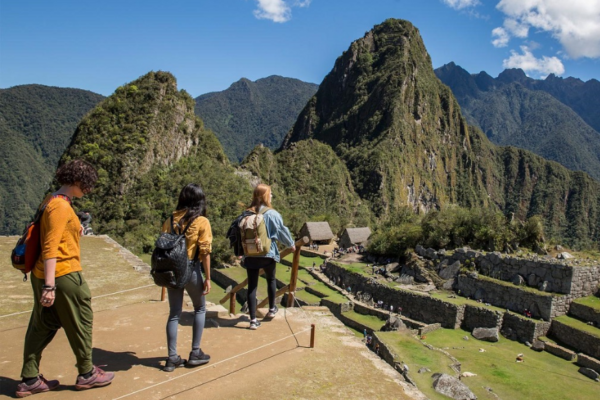
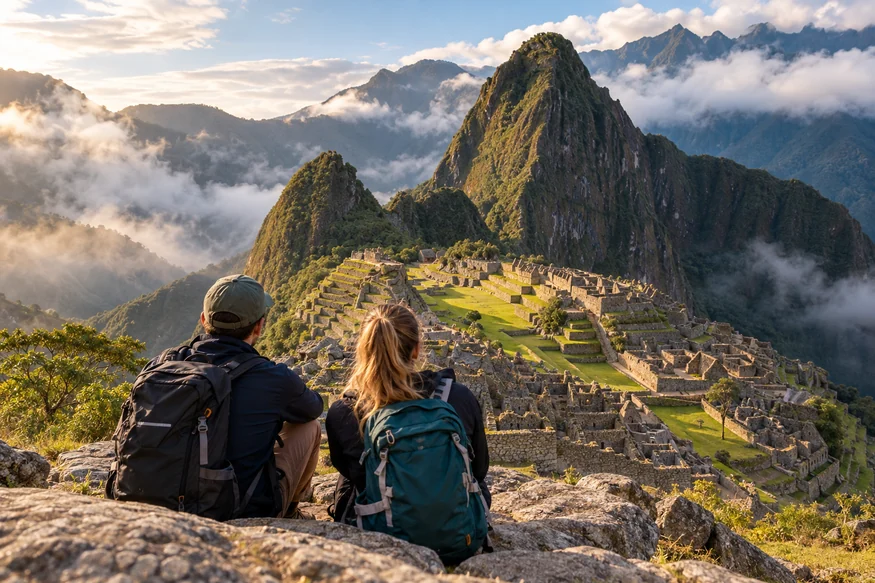
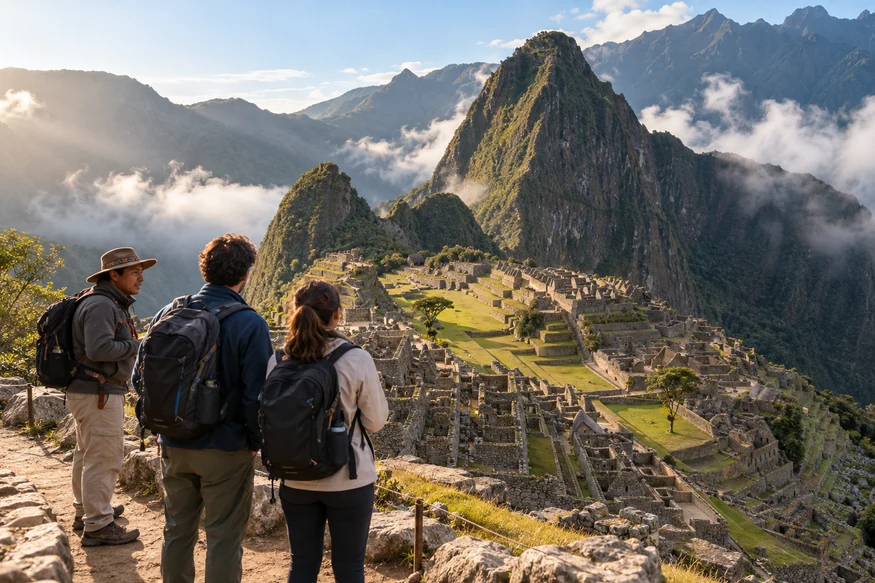
Some mornings begin with mist covering Huayna Picchu before the clouds gradually lift. Other days may start clear and become rainy later.
There are advantages to visiting during this period.
The landscape is lush, waterfalls and streams carry more water, and some periods can feel less crowded than the busiest dry-season months.
The tradeoff is unpredictability.
You should expect wet paths, higher humidity, occasional reduced visibility, and a greater chance of needing your rain jacket.
We will cover these differences in much more detail in our Machu Picchu in the Rainy Season guide.
Machu Picchu Dry Season
The Machu Picchu dry season generally runs from May through September.
June, July, and August are usually among the driest months.
You have a better chance of finding clear conditions during this period, especially compared with the heart of the rainy season.
But dry does not necessarily mean warm.
Early mornings can feel cool, particularly when you arrive before the sun reaches the archaeological site.
Once the sun appears, conditions usually become much more comfortable.
This period is popular for a reason, but good weather also attracts more travelers.
Our future Machu Picchu in the Dry Season guide will look specifically at what you gain and what you give up by traveling during these months.
Why Does Machu Picchu Have This Climate?
The answer becomes much easier to understand once you know where Machu Picchu is located.
Machu Picchu lies in the Cusco region on a mountain ridge above the Urubamba River.
This is an interesting part of Peru because the high Andes begin descending toward warmer and more humid environments connected with the Amazon basin.
Moisture moving through these valleys contributes to frequent clouds, high humidity, and rainfall.
That is also why the mountains around Machu Picchu are so green compared with some of the drier landscapes around Cusco.
Its location is not simply responsible for the famous view. It helps create the weather visitors experience throughout the year.
How Does Elevation Affect Machu Picchu Weather?
Machu Picchu sits at approximately 2,430 meters (7,970 feet) above sea level.
That is high, but it is considerably lower than Cusco.
Cusco sits at roughly 3,400 meters, which helps explain why its mornings and nights can feel much colder.
If you want to compare the archaeological site with Cusco, Aguas Calientes, Huayna Picchu, and Machu Picchu Mountain, our complete guide to Machu Picchu elevation breaks down the differences in both feet and meters.
Elevation also explains something that surprises many travelers.
You travel deeper into the Andes to reach Machu Picchu, yet you actually descend considerably from Cusco.
That lower elevation, combined with the humid environment, gives Machu Picchu its milder and greener climate.
Machu Picchu Weather vs Cusco Weather
Do not use the weather in Cusco as your forecast for Machu Picchu.
The two destinations are connected, but their conditions can feel very different.
| Machu Picchu | Cusco | |
|---|---|---|
| Elevation | 2,430 m / 7,970 ft | Approx. 3,400 m / 11,150 ft |
| General climate | Mild and humid | Cooler highland climate |
| Vegetation | Dense and green | More open Andean landscape |
| Humidity | Higher | Generally lower |
| Early mornings | Cool | Often considerably colder |
You could leave Cusco wearing a jacket in the early morning and find warmer, more humid conditions once you reach the Machu Picchu area.
This is why checking the forecast for the archaeological area itself is more useful than relying only on the weather in Cusco.
What Is Machu Picchu Weather Like in the Morning?
Morning conditions can vary considerably.
Some visitors arrive at a completely clear view of the ruins and Huayna Picchu.
Others arrive in thick mist.
If that happens to you, do not immediately assume the view is lost for the day.
Clouds often move through the valley.
Huayna Picchu can disappear behind mist and become visible again surprisingly quickly.
During the dry season, early mornings may also feel cooler than expected. Once direct sunlight reaches the site, the temperature can change noticeably.
This is another reason layers are useful.
Is Machu Picchu Always Cloudy?
No.
The misty photographs of Machu Picchu are famous, but the site is not permanently covered in clouds.
Clouds are more common during the wetter months, while the dry season generally provides a better chance of clear conditions.
Even then, there are no guarantees.
Machu Picchu sits in a humid mountain environment, so clouds can appear at any time of year.
And sometimes they actually improve the experience.
Watching the mountains slowly emerge from the mist can be just as impressive as arriving at a completely clear sky.
Machu Picchu Weather by Month
Here is a simple overview of what the year generally looks like:
| Month | General Conditions |
|---|---|
| January | Wet, humid, and very green |
| February | One of the rainiest months |
| March | Rainy, with conditions gradually beginning to change |
| April | Transition toward the dry season |
| May | Drier with more frequent clear periods |
| June | Dry with cool mornings |
| July | Dry, often clear and cool early in the day |
| August | Generally dry with good chances of clear conditions |
| September | Mostly dry with rainfall gradually increasing |
| October | Transition toward wetter conditions |
| November | Increasing rain and greener landscapes |
| December | Wet, humid, and lush |
This table should be used as a general guide rather than a daily prediction.
Weather can vary considerably within the same month.
That is why our Machu Picchu by Month guide will compare the entire year before linking to individual guides from January through December.
When Is the Best Weather at Machu Picchu?
If your main goal is reducing the chance of rain, May through September is generally the safer period.
But that does not automatically make those months the best choice for everyone.
Clearer conditions come with other factors, including greater visitor demand during parts of the dry season.
The rainy months have their own advantages. The landscape is greener, clouds can create beautiful views, and travel conditions can feel different from the busiest periods of the year.
Choosing the right month therefore involves more than weather alone.
Our Best Time to Visit Machu Picchu guide will compare weather with crowds, seasonal conditions, and the overall experience.
Why Is Machu Picchu So Green?
Rainfall is only part of the explanation.
Machu Picchu sits in an environment where altitude, humidity, mountains, river valleys, and vegetation all interact.
The slopes surrounding the archaeological site receive enough moisture to support dense mountain forest.
This vegetation becomes particularly lush during the rainy months.
It also helps explain why photographs of Machu Picchu can look completely different depending on when they were taken.
A clear August morning and a misty February afternoon can almost look like two different places.
Even the name Machu Picchu is connected with this mountainous geography. Our guide to what Machu Picchu means explains the Quechua origin of the name and why it is commonly translated as “Old Mountain” or “Old Peak.”
Can Rain Ruin a Visit to Machu Picchu?
Not necessarily.
A short shower is very different from an entire day of heavy rain.
Many rainy-season days include changing conditions rather than continuous rainfall.
The bigger issue can be visibility.
Low clouds may temporarily hide Huayna Picchu or some of the surrounding mountains.
But again, conditions can change.
If mist covers the view when you arrive, it may move away later.
The best approach is to arrive prepared rather than expecting perfect weather.
A lightweight waterproof jacket can make the difference between continuing your visit comfortably and spending the entire time worrying about the rain.
Does Machu Picchu Close When It Rains?
Normal rainfall does not automatically close Machu Picchu.
The archaeological site receives visitors during both the rainy and dry seasons.
You should therefore be prepared to visit in wet conditions if rain occurs on your scheduled date.
Specific trails or areas can be affected when authorities identify safety concerns, so current official information always matters more than general seasonal advice.
For most visitors, ordinary rain simply means adjusting clothing, walking more carefully, and protecting anything that should stay dry.
What Should You Wear for Machu Picchu Weather?
Think in layers.
You do not want to dress only for the cool morning because conditions may become warm once the sun appears.
At the same time, walking around in only a T-shirt leaves you exposed if clouds and rain move in.
Useful clothing includes:
-
Lightweight waterproof jacket
-
Breathable shirt
-
Comfortable pants
-
Walking or hiking shoes with good grip
-
Hat or cap
-
Sun protection
-
Light extra layer for cooler mornings
You also do not need to carry half your suitcase into the archaeological site.
The goal is to stay comfortable while remaining prepared for changing conditions.
We will go into this in more detail in What to Wear to Machu Picchu and our Machu Picchu Packing List.
Did Machu Picchu’s Weather Affect How the Incas Built It?
Yes, and this is where weather becomes part of the story rather than simply something visitors need to prepare for.
Building on a steep and rainy mountain ridge required careful water management.
The Incas constructed terraces, drainage systems, channels, and foundations that helped move water through the settlement and stabilize the slopes.
Those systems were essential in an environment where heavy seasonal rainfall could otherwise damage buildings and weaken the ground.
Understanding the history of Machu Picchu makes this even more interesting because many of the features visitors admire today were also practical solutions to living in this mountain environment.
The terraces were not simply beautiful.
The drainage was not an afterthought.
Weather was something the Incas had to understand from the beginning.
How to Check Machu Picchu Weather Before Your Visit
Check the forecast shortly before your visit, but treat it as guidance rather than a promise.
Mountain forecasts can change quickly.
A rain symbol does not always mean continuous rain from morning until evening. It may represent showers during only part of the day.
Likewise, a sunny forecast does not guarantee that clouds will stay away.
The most useful approach is simple:
Know the season, check the latest forecast, and prepare for both sun and rain.
That gives you much more flexibility than trying to find a day with a supposedly perfect forecast.
What to Expect from Machu Picchu Weather
There is no single version of Machu Picchu weather.
You might see sunshine, clouds, mist, and rain during the same visit.
The temperatures remain relatively mild throughout the year, while rainfall changes much more noticeably between seasons.
If you prefer a greater chance of dry and clear conditions, the dry season is generally more reliable.
If you do not mind some rain and want to see the mountains at their greenest, the wetter months offer a very different experience.
Neither season guarantees perfect weather.
That unpredictability is simply part of visiting Machu Picchu.
Related Articles
Machu Picchu Ticket Prices Machu Picchu ticket prices depend on the route you choose…
How to Buy Machu Picchu Tickets
How to Buy Machu Picchu Tickets: Step-by-Step Guide Buying Machu Picchu tickets is simple…
Machu Picchu Tickets Buying your Machu Picchu tickets is one of the most important…
Machu Picchu Elevation: How High Is Machu Picchu? Taking the train to Machu Picchu…
Aguas Calientes to Machu Picchu
Machu Picchu Elevation: How High Is Machu Picchu? Once you arrive in Aguas Calientes,…
Related Tours