
Ausangate Trek in March
The Ausangate Trek in March takes place near the end of the main rainy season in the Peruvian Andes. Rain is still common, trails can remain muddy, and clouds may limit mountain views, but conditions gradually begin to change as the region moves toward the drier months.
March also keeps many of the advantages of the wet season. The valleys around the Ausangate Trek remain intensely green, streams carry plenty of water, and the trail is generally quieter than during the main trekking season.
For travelers who do not mind some rain, March can be an interesting middle ground. It is still important to prepare for wet weather, but conditions may become more favorable as the month progresses.
What Is the Ausangate Trek Like in March?
March is a transitional month around Ausangate.
The rainy season is not over, so you should still expect rain, clouds, wet trails, and changing weather. At the same time, the landscape remains green, and there can be longer periods of clearer weather as the month progresses.
Conditions can vary considerably from one week to another. Early March may feel similar to February after periods of heavy rainfall, while later in the month it can begin to show signs of the approaching dry season.
This matters when planning a multi-day route such as the Ausangate Trek 5 Days. Several days are spent above 4,000 meters, where weather can change much faster than in Cusco and wet conditions can make high passes and descents more demanding.
March is therefore not a completely dry-weather alternative, but it can offer a good compromise for experienced hikers who want greener landscapes and quieter trails.
Ausangate Weather in March
March remains a wet month, particularly during the first part of the month. However, the overall pattern gradually begins shifting away from the peak rainy-season conditions of January and February.
You should prepare for a mixture of rain, clouds, mist, and occasional clear periods.
| Weather Condition | What to Expect |
|---|---|
| Rainfall | Frequent rain is still possible. |
| Cloud Cover | Cloudy periods remain common |
| Clear Weather | Sunny breaks and clearer periods can occur. |
| High Passes | Mist, wind, hail, and poor visibility remain possible. |
| Trail Conditions | Wet and muddy sections are common. |
| Landscape | Valleys remain green after the summer rains. |
| Late March | Conditions may begin improving as the dry season approaches. |
Do not assume that late March will automatically be dry. Weather in the Andes varies from year to year, and several days of heavy rainfall can quickly change conditions on the trail.
Temperatures on the Ausangate Trek in March
March is still part of the warmer season in Peru, but altitude has a much greater influence on temperatures along the Ausangate route.
Most trekking takes place above 4,000 meters (13,123 feet), with some passes around or above 5,000 meters (16,404 feet).
| Time or Condition | Approx. Temperature | What to Expect |
| Daytime | 8°C to 15°C (46°F to 59°F) | Cool to mild while hiking |
| Rainy periods | 5°C to 10°C (41°F to 50°F) | Feels colder when wet |
| High passes | 0°C to 7°C (32°F to 45°F) | Cold and often windy |
| Early mornings | 0°C to 5°C (32°F to 41°F) | Cold at higher elevations |
| Nighttime | -5°C to 3°C (23°F to 37°F) | Cold to very cold at camp |
These are approximate ranges. Elevation, wind, rain, and cloud cover can make conditions feel significantly colder.
Even in March, warm layers and proper rain protection remain essential.
Trail Conditions in March
Trails can still be wet and muddy in March after several months of rainy-season weather. Conditions are usually more noticeable in valleys, wetlands, steep descents, and sections frequently used by horses and pack animals.
| Trail Condition | What to Expect |
|---|---|
| Mud | Common in valleys, wetlands, and heavily used sections |
| Slippery Rocks | Extra care may be needed on climbs and descents. |
| Wet Grass | Can make steep sections slippery |
| Standing Water | Possible after recent or prolonged rainfall |
| Soft Ground | Some sections may be waterlogged. |
| Streams | Water levels can remain higher after heavy rain. |
| High Passes | Clouds and mist may reduce visibility. |
Conditions can improve after several consecutive dry days, particularly later in March, but wet sections should still be expected.
Waterproof hiking boots with good traction are strongly recommended, and trekking poles can provide extra stability on muddy descents and uneven terrain.
How Difficult Is the Ausangate Trek in March?
The Ausangate Trek difficulty comes primarily from altitude, long hiking days, remote terrain, and high mountain passes. March weather can add another layer of difficulty.
Wet trails may slow your pace, while rain and poor visibility can make high-altitude sections more tiring. Conditions are generally more manageable after several dry days, but trekkers should not assume the trail will already resemble dry-season conditions.
Altitude remains the main challenge.
Some itineraries reach around or above 5,000 meters, so proper acclimatization is essential regardless of the month. Spending several days in Cusco or another high-altitude destination before departure can help your body adjust before reaching the highest passes.
March is still better suited to travelers who are prepared for high altitude and changing mountain weather.
Mountain Visibility in March
Mountain visibility in March is unpredictable, but clearer periods become increasingly possible as the rainy season begins to weaken.
Clouds and mist can still hide Ausangate and the surrounding peaks, particularly during unsettled weather. You may have a clear morning followed by clouds later in the day, or several cloudy hours followed by a sudden opening around the mountains.
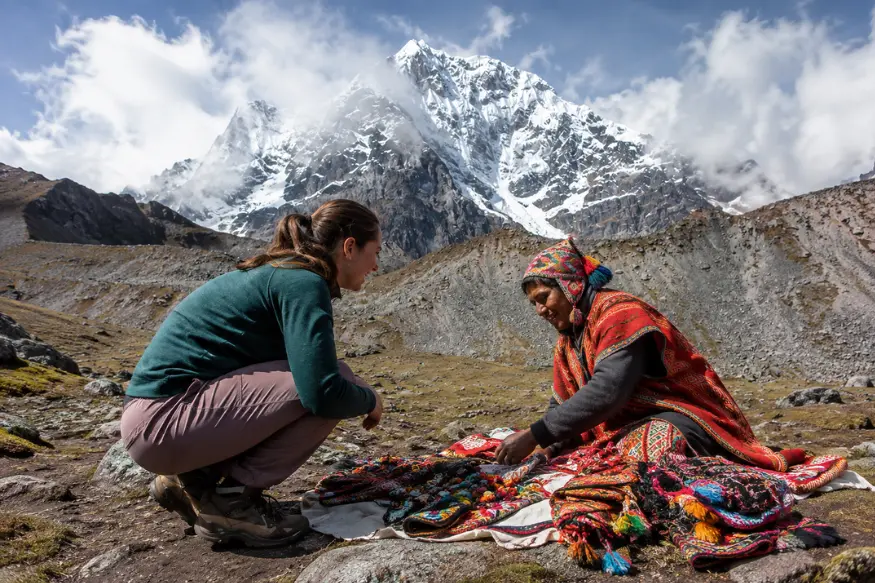
When conditions are clear, March can be particularly beautiful. The valleys remain green while Ausangate and its glaciers rise above the rainy-season landscape.
Travelers who want the highest probability of consistently clear mountain views should still consider the dry season, but March generally begins moving in a better direction than February.
What About Rainbow Mountain in March?
If Rainbow Mountain is included in your Ausangate itinerary, March weather can still affect both the trail and visibility.
Rain and mist may hide parts of the landscape, while wet ground can make the approach muddy and slippery. Hail or occasional snow is also possible at these elevations.
Clear periods can provide excellent views, particularly because the surrounding valleys are still green at this time of year.
However, if seeing Rainbow Mountain under clear skies is a major priority, March remains less predictable than the main dry-season months.
Advantages and Disadvantages of Ausangate in March
March sits between the wettest part of the year and the approaching dry season.
| Advantages | Disadvantages |
| Green mountain landscapes | Rain is still common. |
| Fewer trekkers | Trails may remain muddy. |
| Quieter camps and trails | Mountain visibility is unpredictable. |
| Possibility of improving weather | Conditions vary considerably. |
| More water in streams and wetlands | Wet sections can slow hiking. |
One of March’s main advantages is the balance between rainy-season scenery and the possibility of improving conditions.
Its main disadvantage is that the weather is still difficult to predict.
Is the Ausangate Trek Safe in March?
Ausangate can be trekked in March when local conditions are suitable, but recent rainfall matters more than the calendar alone.
After prolonged or heavy rain, trails can become waterlogged, streams may rise, and road access can occasionally be affected.
| What to Check | Why It Matters |
| Recent rainfall | Helps indicate how wet the trail may be |
| Trail conditions | Mud or erosion can affect certain sections. |
| Weather forecast | Useful for identifying periods of heavy rain or storms |
| Streams and rivers | Water levels can remain elevated after rain. |
| Road access | Wet-season conditions may affect transportation. |
| Local advice | Provides more recent information about the route |
Conditions around Ausangate can differ significantly from those in Cusco, so local information is especially valuable before departure.
If a section becomes unsafe because of weather, plans should remain flexible.
What to Pack for Ausangate in March
March requires preparation for rain, cold temperatures, and occasional clearer weather.
| Category | What to Bring | Why You Need It |
| Rain Protection | Waterproof jacket and pants | Rain is still common in March. |
| Footwear | Waterproof hiking boots with good traction | Trails may remain muddy and slippery. |
| Stability | Trekking poles | Helpful on wet descents and uneven terrain |
| Warm Layers | Base layers, fleece, and warm jacket | High-altitude temperatures remain cold. |
| Hands & Head | Warm hat and gloves | Useful at camps and high passes |
| Extra Clothing | Additional hiking socks | Important if footwear becomes wet |
| Backpack Protection | Rain cover and dry bags | Keeps essential equipment dry |
| Sun Protection | Sunglasses, hat, and sunscreen | UV exposure remains strong at altitude. |
| Essential Gear | Headlamp | Useful for camp and early departures |
Do not remove waterproof gear from your packing list simply because March is approaching the dry season. Keep sleeping clothes, electronics, documents, and at least one warm layer protected inside waterproof bags.
If you want a more detailed breakdown of what to bring, check our Ausangate Trek packing list, where we cover clothing, hiking gear, rain protection, personal essentials, and other items you may need for the trek.
February vs March: Which Is Better for Ausangate?
If you have a choice between the two months, March generally has an advantage because it moves closer to the end of the rainy season.
| Factor | February | March |
| Rainfall | Very high | High, gradually decreasing |
| Trail Conditions | Very wet and muddy | Wet, with potential improvement |
| Landscapes | Very green | Very green |
| Visibility | Frequently limited | Unpredictable but improving |
| Crowds | Very low | Low |
| Overall | Very challenging | Challenging but improving |
This does not mean every day in March will be better than February. A rainy week in March can still produce difficult conditions.
But if your schedule is flexible, particularly toward later March, the chances of improving conditions generally make it the more attractive of the two.
March vs April: Which Is Better for Ausangate?
March and April are both transition months, but April generally offers more stable trekking conditions as the dry season gets closer. March, on the other hand, usually keeps more of the lush scenery left by the rainy season.
| Factor | March | April |
|---|---|---|
| Rainfall | Still frequent | Lower and decreasing |
| Trail Conditions | Wet and muddy in sections | Generally drier and improving |
| Landscapes | Very green | Green, gradually becoming drier |
| Mountain Visibility | Unpredictable | Better chance of clear views |
| Crowds | Low | Low to moderate |
| Weather Stability | Variable | More stable |
| Overall | Good for green scenery and quieter trails | Better balance of weather and scenery |
If you prioritize lush landscapes and fewer trekkers, March can still be appealing. If you prefer drier trails, clearer mountain views, and more stable weather, April is generally the better choice.
Ausangate Trek Throughout the Year
Ausangate changes considerably throughout the year. The best month depends on whether you prioritize dry trails, green landscapes, clear mountain views, or fewer people.
| Month | Weather | Rainfall | Trail Conditions | Overall |
| Ausangate Trek in January | Wet and cloudy | High | Muddy | Challenging |
| Ausangate Trek in February | Very wet | Very high | Very muddy | Least favorable |
| Ausangate Trek in March | Rainy, improving | High | Wet but improving | Challenging |
| Ausangate Trek in April | Transitional | Moderate | Improving | Good |
| Ausangate Trek in May | Mostly dry | Low | Good | Excellent |
| Ausangate Trek in June | Dry and clear | Very low | Excellent | Excellent |
| Ausangate Trek in July | Dry and cold | Very low | Excellent | Excellent |
| Ausangate Trek in August | Dry and clear | Very low | Excellent | Excellent |
| Ausangate Trek in September | Mostly dry | Low | Good | Very good |
| Ausangate Trek in October | Transitional | Moderate | Generally good | Good |
| Ausangate Trek in November | Increasing rain | Moderate to high | Occasionally muddy | Fair |
| Ausangate Trek in December | Rainy | High | Wet and muddy | Challenging |
If your dates are flexible, comparing the best time to hike the Ausangate Trek can help you decide which month offers the conditions you prefer.
Is March a Good Time to Hike the Ausangate Trek?
March can be a good option for some travelers, but it is still not one of the most reliable months for weather.
Consider March if you:
- Want green mountain landscapes
- Prefer quieter trails
- Are comfortable hiking in occasional rain
- Have proper waterproof equipment
- Have previous trekking experience
- Can keep your itinerary flexible
Consider April, or the dry season, if you:
- Want a better chance of clear mountain views
- Prefer drier trails
- Have limited trekking experience
- Do not want to camp in wet conditions
- Have little flexibility in your itinerary
For travelers who can only visit during the rainy season, March is generally more attractive than February, particularly as the month progresses.
Frequently Asked Questions About Ausangate Trek in March
Can you hike the Ausangate Trek in March?
Yes, when current trail and weather conditions are suitable. March is near the end of the rainy season, but rain, mud, clouds, and wet trails should still be expected.
Does it rain a lot in Ausangate in March?
Rain is still common in March, although conditions gradually begin transitioning toward the drier months. Some days may have long dry periods, while others can remain wet and cloudy.
Is early or late March better?
Late March generally has a better chance of improving conditions as the rainy season begins to weaken. However, mountain weather varies from year to year, so this is not guaranteed.
Are the trails muddy in March?
They can be. Months of rainy-season precipitation leave some valleys and trail sections wet or muddy, especially after recent rainfall.
Can you see Ausangate Mountain in March?
Yes, but clouds and mist can still limit visibility. Clear periods become increasingly possible as conditions begin moving toward the dry season.
Is March good for beginners?
March is not the easiest month for a first high-altitude trek. Beginners who have flexible dates may find April or the dry-season months more comfortable.
Do I still need waterproof equipment in March?
Yes. A waterproof jacket, rain pants, waterproof boots, and protection for equipment should remain part of your packing list.
Is March better than February for Ausangate?
Generally, March offers a better chance of improving weather and trail conditions because it comes later in the rainy season. Current local conditions should still be checked before departure.
Is March or April better for Ausangate?
April generally offers more stable conditions and drier trails, while March tends to have greener scenery and fewer trekkers.
March can be a rewarding time to hike Ausangate if you are comfortable with some rain and do not need perfect weather every day. The mountains are still surrounded by green valleys, trails remain relatively quiet, and clearer periods become more likely as the rainy season begins to fade.
If your dates are flexible, April and the dry-season months offer more reliable conditions. But for travelers who want to experience Ausangate before the busiest trekking period begins, March can be a good option with the right preparation.
Related Articles
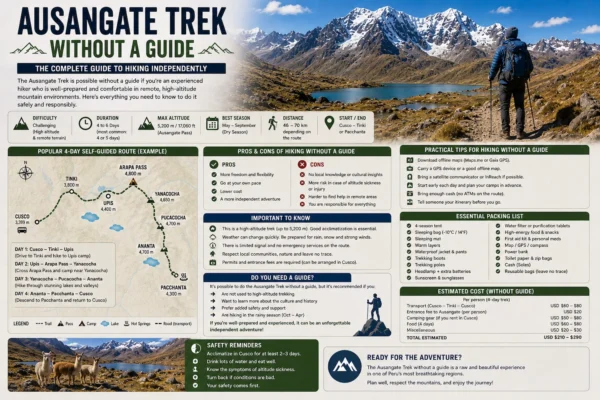
Ausangate Trek Without a Guide
Ausangate Trek Without a Guide Can you do the Ausangate Trek without a guide?…
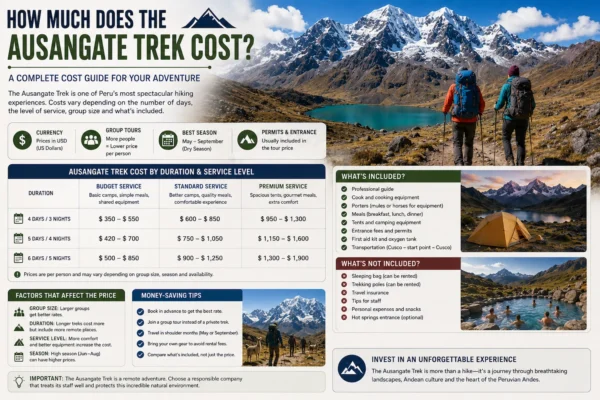
How Much Does the Ausangate Trek Cost?
How Much Does the Ausangate Trek Cost? The Ausangate Trek cost typically ranges from…
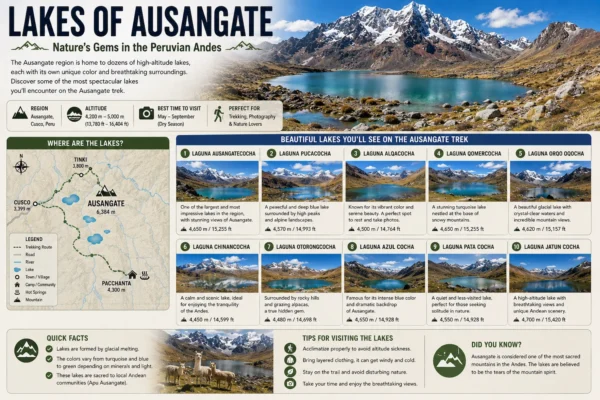
Lakes of Ausangate The Lakes of Ausangate are among the most spectacular natural features…
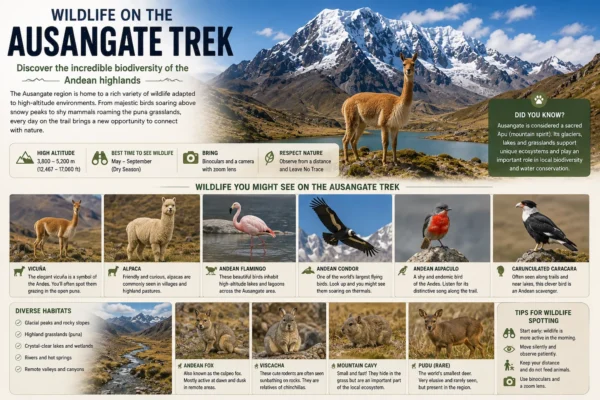
Wildlife on the Ausangate Trek
Wildlife on the Ausangate Trek The wildlife on the Ausangate Trek is adapted to…
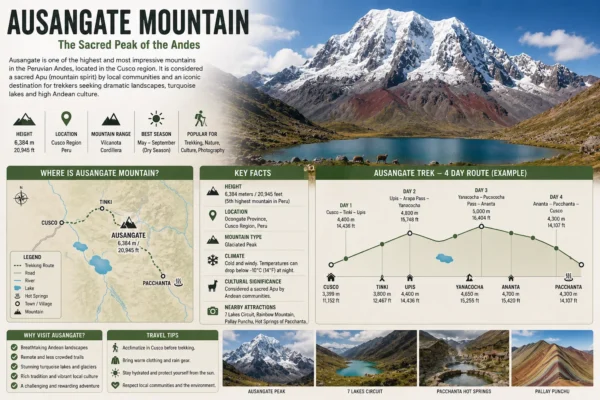
Ausangate Mountain Ausangate Mountain is one of the highest and most important mountains in…
Related Tours