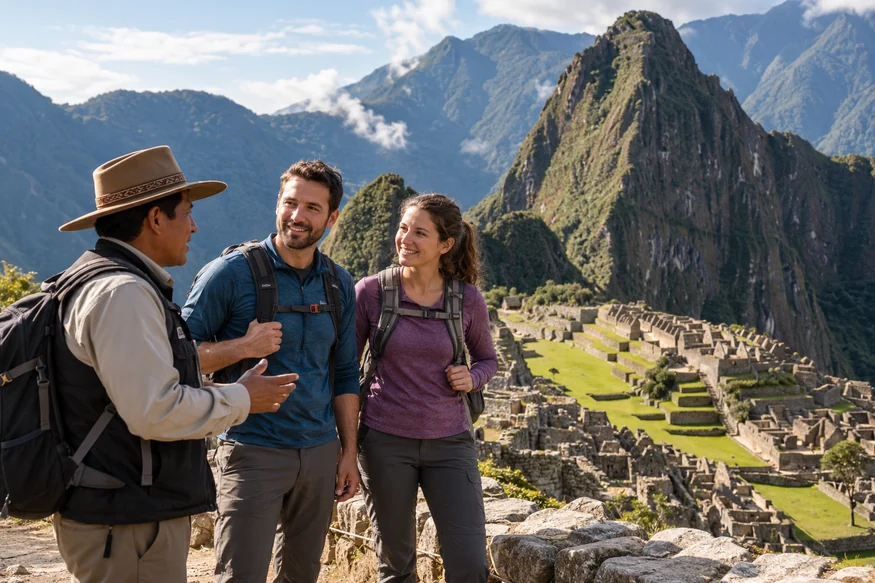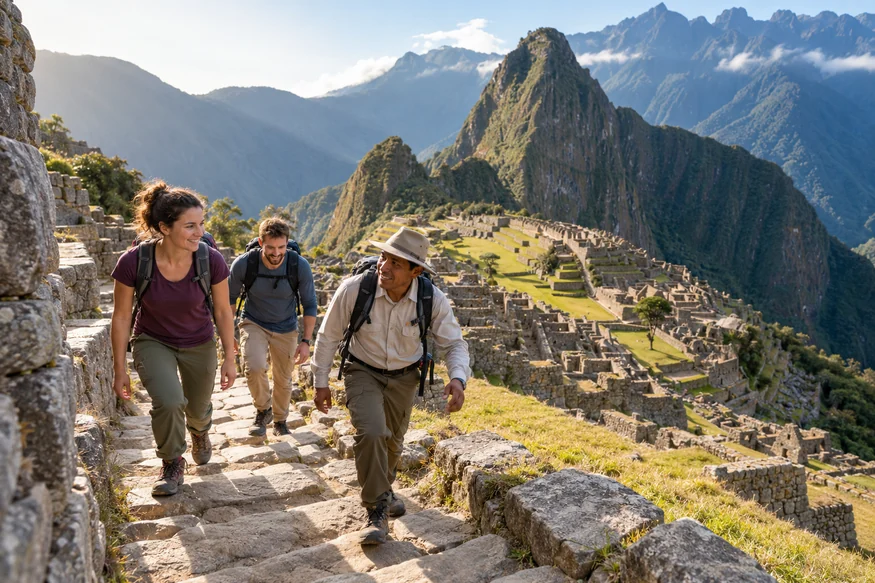
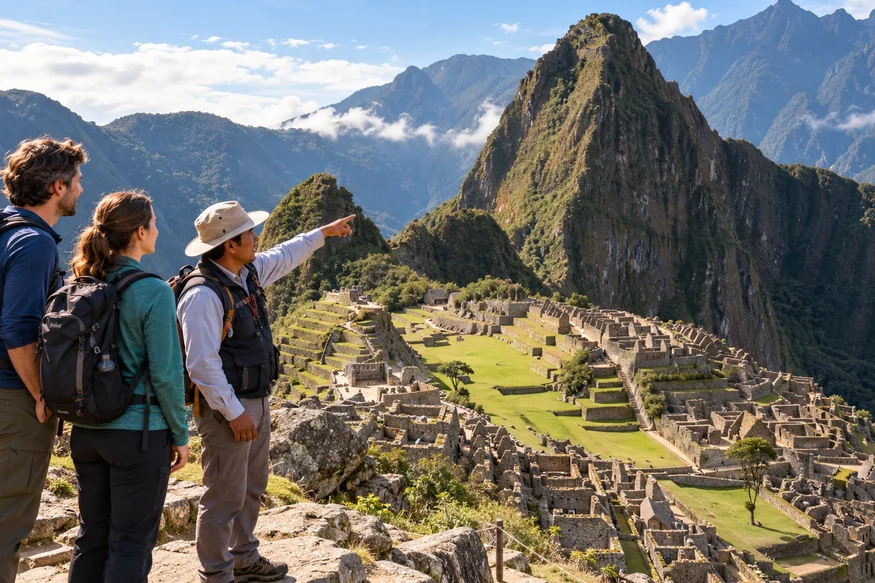

Machu Picchu and Huayna Picchu are not two competing archaeological sites. Machu Picchu is the entire Inca citadel and the essential experience. Huayna Picchu is the steep mountain that rises behind it in the famous postcard view, and climbing it is an optional extension that requires a specific ticket.
If this is your first visit, start by choosing the Machu Picchu circuit that gives you the archaeological experience and viewpoints you value most. Add Huayna Picchu only if you are comfortable with steep stone stairs, exposure, a sustained climb and a tightly controlled route.
Quick answer: choose a standard Machu Picchu route for the classic citadel, history and broader archaeological visit. Choose the Huayna Picchu ticket—currently Route 3-A—if the mountain climb itself is a priority and you accept that its lower-citadel route does not provide the same experience as every classic or panoramic circuit.
Machu Picchu vs Huayna Picchu: The Main Difference
Machu Picchu is the protected sanctuary containing terraces, temples, plazas, residences, water channels and mountain scenery. Every visitor enters the wider Machu Picchu complex, but the exact areas seen depend on the circuit printed on the ticket.
Huayna Picchu—also written Waynapicchu—is a separate peak inside the sanctuary. Its narrow trail begins beyond the lower archaeological sector and climbs through cloud forest to elevated terraces and archaeological remains near the summit. It is an active mountain hike rather than a substitute for seeing the citadel.
This distinction matters when purchasing. The official Machu Picchu circuits and routes system currently assigns Huayna Picchu to Circuit 3, Route 3-A. A regular Machu Picchu ticket does not automatically include access to that trail.
| Question | Machu Picchu citadel route | Huayna Picchu Route 3-A |
|---|---|---|
| Main purpose | Archaeology, history and classic scenery | Steep mountain adventure and elevated views |
| Terrain | Uneven paths, terraces and repeated stone steps | Sustained ascent, narrow stairs and exposed sections |
| Ticket | Choose among the available citadel or panoramic routes | Specific Route 3-A ticket required |
| Best for | Almost every first-time visitor | Fit hikers comfortable with heights and steep stairs |
| Classic postcard view | Available on selected panoramic and classic routes | Not the same upper-terrace viewpoint; the mountain provides a different aerial perspective |
What the Standard Machu Picchu Experience Includes
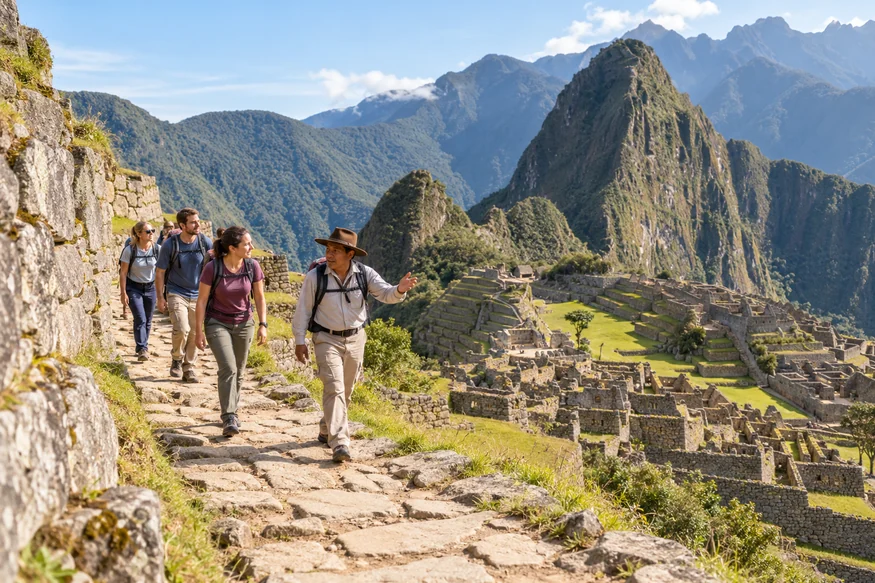
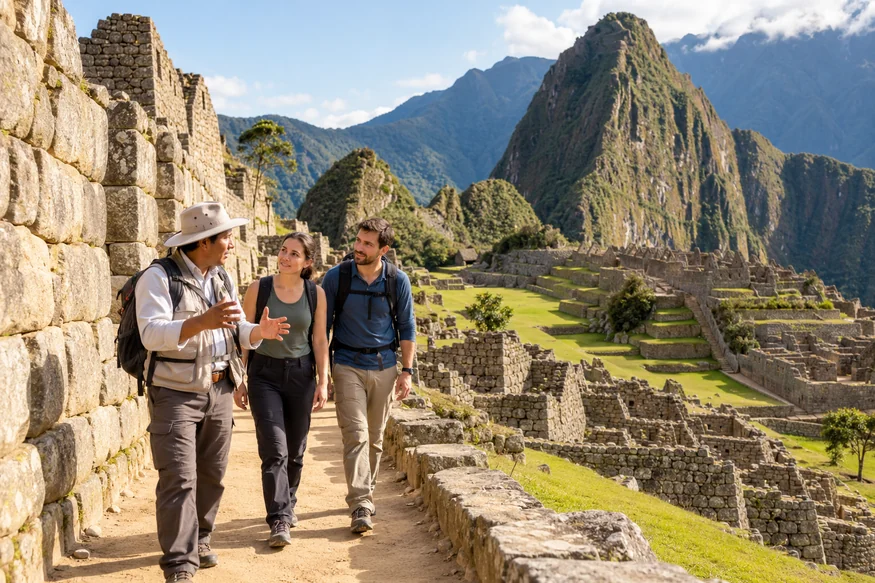
A standard visit follows one of several one-way routes. Some emphasize the upper terraces and panoramic viewpoint; others move more deeply through temples, residential areas and the lower archaeological sector. There is no single path called “the normal ticket,” so the route matters as much as the entrance time.
For a first visit, many travelers prioritize a circuit that balances the recognizable view with meaningful access to the ruins. Our guide to Machu Picchu circuits explains how the official route system changes what you see.
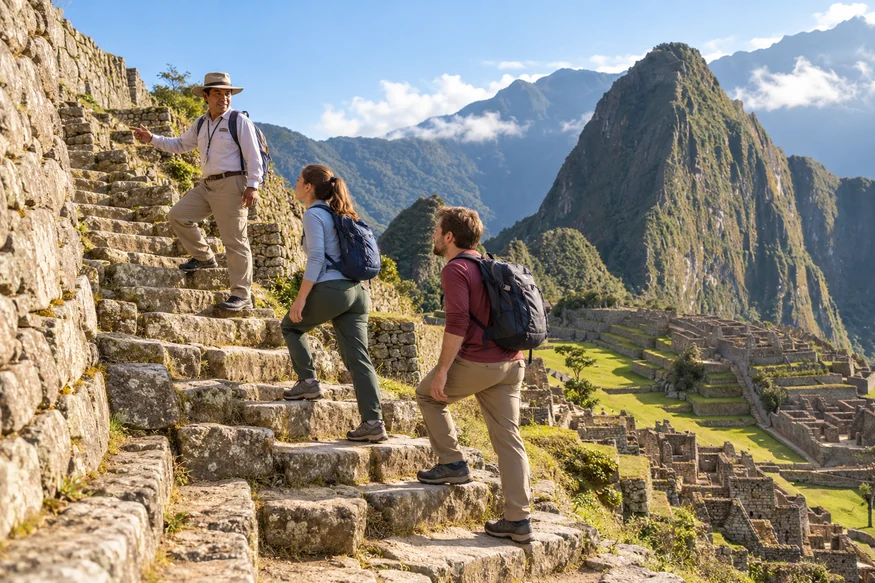
The citadel still involves climbing and descending. Original steps are uneven, seating is limited and most areas do not have modern handrails. Read about Machu Picchu stairs and how much walking to expect before assuming the standard experience is effortless.
What Climbing Huayna Picchu Is Really Like
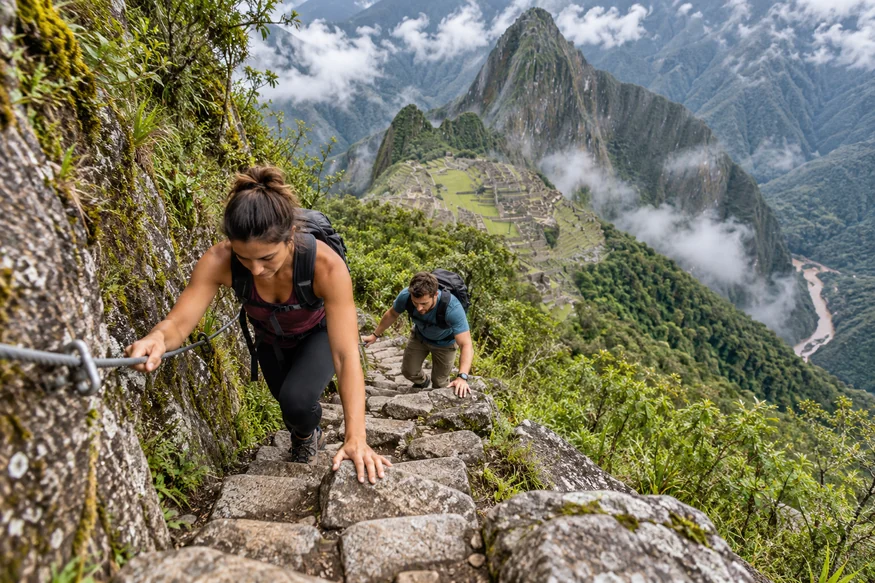
Huayna Picchu begins as a forested mountain path and becomes progressively steeper. The route includes irregular stone stairs, tight turns and sections where fixed cables provide additional support. Near the upper portion, the terrain can feel exposed, particularly when cloud or rain affects visibility.
The reward is a dramatic angle over the citadel and the Urubamba River canyon. You are looking down toward Machu Picchu rather than standing in front of the classic postcard composition. The climb also contains archaeological terraces and structures, which make it more than a simple lookout.
Travelers should be honest about vertigo, knee comfort and balance. Going down can be more demanding than climbing because the steep steps require controlled movement. If ordinary stone stairs already feel difficult, the standard citadel is likely the more enjoyable choice.
Which One Has the Better View?
The answer depends on the photograph you imagine. Selected Machu Picchu routes reach elevated terraces where the ruins spread below with Huayna Picchu forming the iconic background. That is the image most travelers recognize before arriving in Peru.
Huayna Picchu offers a more unusual aerial view. From above, the citadel appears compact against the surrounding ridges and river canyon. It feels adventurous and rewarding, but it is not a replacement for the classic viewpoint.
If your priority is the famous panorama, choose the appropriate panoramic or classic route first. If you have already seen that view—or deliberately prefer a challenging hike—Huayna Picchu can add a memorable second perspective.
Which Is More Difficult?
Huayna Picchu is considerably more physically demanding than a standard citadel route. Both experiences include altitude, stone steps and uneven surfaces, but Huayna Picchu concentrates more elevation gain into a steep mountain trail.
Good candidates can climb stairs continuously, descend with control and remain calm near exposed edges. Fitness helps, but confidence and balance matter just as much. Rain increases the need for careful foot placement.
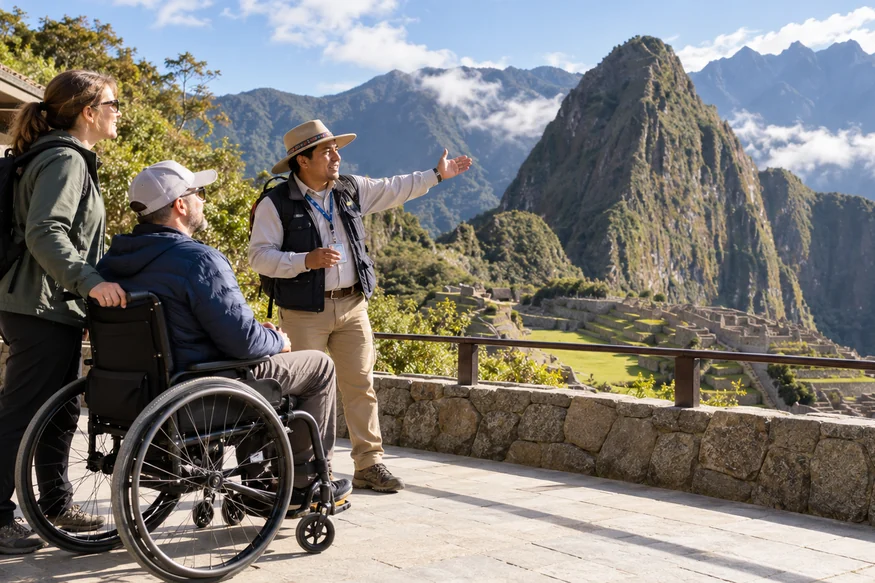
The broader citadel is more accessible to a wider range of visitors, although it is not flat or step-free. Travelers with knee, cardiac, respiratory or balance concerns should seek personal medical advice and choose their circuit carefully. See our detailed guides to Machu Picchu difficulty, accessibility and altitude sickness.
Do You Need Separate Tickets?
You need a ticket that specifically names Route 3-A: Huayna Picchu Mountain. Access cannot normally be added after entering with a different circuit, and availability is limited. Do not purchase a general Machu Picchu route and assume you can decide at the mountain checkpoint.
The Route 3-A ticket combines the mountain with selected areas of Circuit 3, the Royalty Circuit. It does not grant unrestricted access to all other routes. If you want a classic or panoramic circuit as well, you may need another ticket and a carefully coordinated entry time.
Rules, entry groups and availability can change. Check the official route map and authorized ticket platform before paying. Our guides to Machu Picchu tickets and how to buy them explain the purchasing process.
Can You Visit Both on the Same Day?
Yes, the Huayna Picchu ticket already includes a defined lower-citadel route, so the mountain and part of Machu Picchu are experienced in one visit. The more important question is whether that exact combination includes the viewpoints and archaeological sectors you want.
Some travelers reserve Route 3-A and a separate circuit to obtain both the mountain climb and a broader or more panoramic citadel experience. This demands correct timing, separate availability and enough energy. It should be arranged before travel rather than improvised at the entrance.
A local operator can coordinate trains, buses and entry windows, but cannot override the route printed on a ticket. If you are making a same-day journey from Cusco, the schedule is already long; avoid adding a second entrance unless the logistics genuinely work.
Who Should Choose Machu Picchu Without Huayna Picchu?
- First-time visitors who mainly want the iconic view and Inca history.
- Travelers uncomfortable with heights or narrow mountain stairs.
- Anyone with knee pain, reduced balance or limited stair endurance.
- Families whose members cannot safely manage the mountain route.
- Photographers prioritizing the classic citadel-and-peak composition.
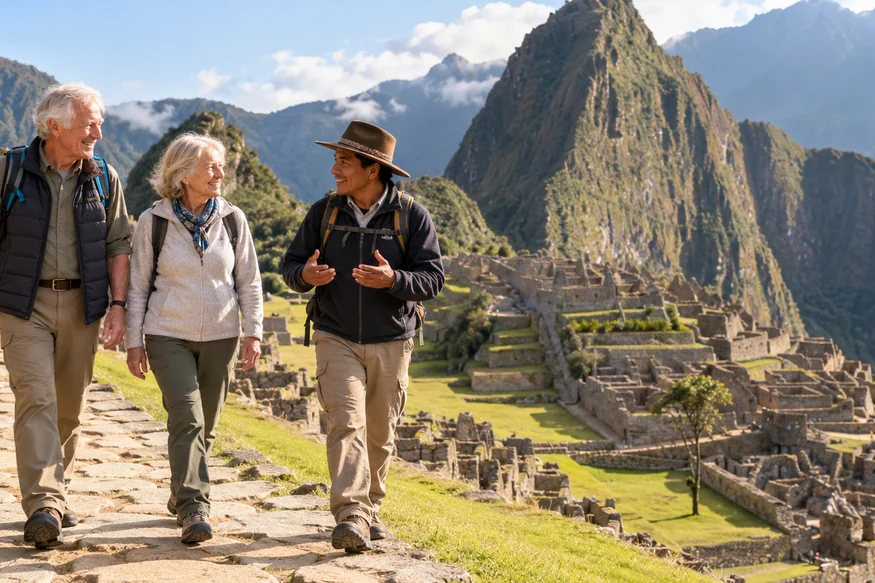
- Visitors who prefer a calmer guided archaeological experience.
Skipping Huayna Picchu does not mean receiving an incomplete Machu Picchu experience. The citadel is the destination; the mountain is an optional adventure.
Who Should Choose Huayna Picchu?
- Active travelers who enjoy steep, concentrated climbs.
- Visitors comfortable with exposure and narrow stone steps.
- People seeking an aerial view rather than only the postcard viewpoint.
- Repeat visitors looking for a different perspective.
- Travelers willing to book early and organize the correct route.
Read our dedicated Huayna Picchu Mountain guide before committing. If the climb sounds too exposed, compare it with Machu Picchu Mountain, which is longer but generally wider and less abrupt.
Weather, Crowds and What to Carry
Dry stone is easier to manage than wet stone, but mountain weather changes quickly. Use broken-in shoes with reliable grip, carry a compact permitted daypack and keep both hands available. Umbrellas, trekking poles and large bags are restricted under the official code of conduct.
Cloud can hide the view temporarily, while strong sun increases heat and fatigue. Check our Machu Picchu weather guide and packing list. For entry-time expectations, see Machu Picchu crowd levels.
Our Recommendation for First-Time Visitors
Protect the core experience first. Choose a route that delivers the Machu Picchu view and archaeology you would regret missing. Add Huayna Picchu only when you genuinely want the climb—not because its name appears on a list of attractions.
For many travelers, a well-guided citadel circuit is the better first visit. Fit hikers with sufficient time may combine Route 3-A with another entrance, while repeat visitors can make Huayna Picchu the centerpiece of a new experience.
Choose the Right Machu Picchu Ticket Before It Sells Out
Tell our local team whether your priority is the classic viewpoint, deeper archaeology or the Huayna Picchu climb. We will help match the route to your fitness, train schedule and preferred experience before tickets are secured.
Frequently Asked Questions
Are Machu Picchu and Huayna Picchu the same place?
No. Machu Picchu is the archaeological sanctuary. Huayna Picchu is the steep mountain behind the citadel and requires a specific route ticket.
Can you see Machu Picchu without climbing Huayna Picchu?
Absolutely. Most visitors explore Machu Picchu without climbing Huayna Picchu. The mountain is an optional addition, not a required part of the main visit.
Does a Machu Picchu ticket include Huayna Picchu?
Only a ticket specifically naming Route 3-A includes the Huayna Picchu trail. Other circuit tickets do not provide access to the mountain checkpoint.
Is Huayna Picchu dangerous?
The official route is controlled, but it contains steep, narrow and exposed terrain. Visitors must follow staff instructions, move carefully and choose it only when their fitness and comfort with heights are suitable.
Which has the classic Machu Picchu photo?
Selected panoramic and classic citadel routes provide the recognizable view of the ruins with Huayna Picchu behind them. The summit of Huayna Picchu gives a different aerial view looking down.
Is Huayna Picchu worth it?
It is worth it for travelers who enjoy steep hikes and want an unusual perspective. It is not necessary for a complete first visit, and it should not replace the citadel route you most want to experience.
Routes, regulations and availability can change. Confirm current details through the official Machu Picchu platform before purchasing tickets.