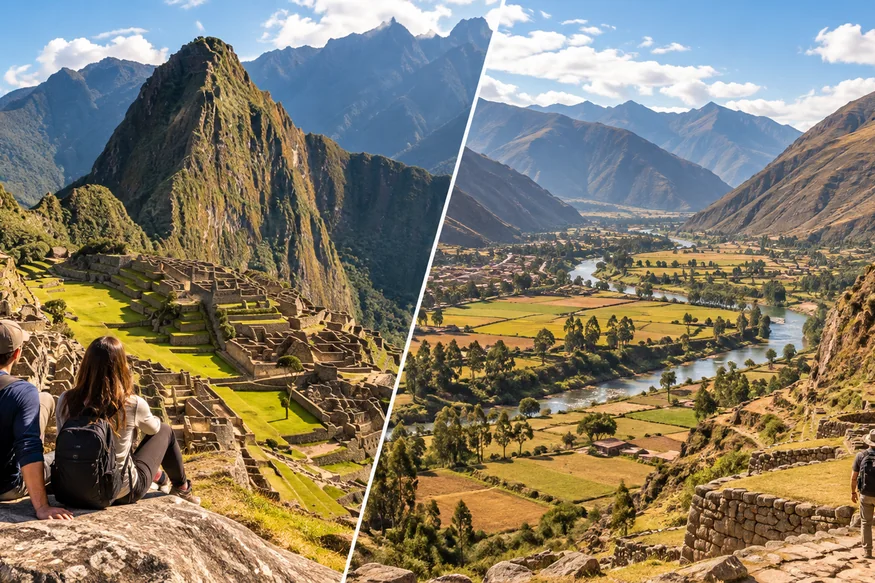

Machu Picchu and the Sacred Valley are closely connected, but they are not the same destination. Machu Picchu is one extraordinary Inca sanctuary reached through a timed, carefully planned visit. The Sacred Valley is a broad cultural region containing towns, farms, markets and several archaeological sites, including Pisac, Ollantaytambo, Chinchero, Moray and Maras.
If you can visit only one, Machu Picchu is usually the priority for a first trip to Peru. If you want a slower and more varied introduction to Inca history, contemporary Andean life and rural landscapes, the Sacred Valley may be more enjoyable. Ideally, visit both: the valley provides context that makes Machu Picchu more meaningful.
Quick answer: choose Machu Picchu for the iconic archaeological experience. Choose the Sacred Valley for variety, living culture, villages and a more flexible day. Combine them when possible, using the valley as the natural route between Cusco and Machu Picchu.
Machu Picchu vs Sacred Valley at a Glance
| Comparison | Machu Picchu | Sacred Valley |
|---|---|---|
| What it is | A protected Inca sanctuary and archaeological city | A large inhabited valley with multiple towns and sites |
| Main appeal | Iconic architecture, history and mountain setting | Archaeology, landscapes, markets, agriculture and culture |
| Planning | Timed circuit, train and bus reservations | Flexible road itinerary with selected stops |
| Pace | Structured and one-way | Customizable and spread across a full region |
| Physical effort | Repeated stone stairs and uneven paths | Varies by site; can be tailored to the group |
| Best for | A singular, world-famous cultural landmark | A broader understanding of the Andean region |
The Main Difference: One Sanctuary vs an Entire Region
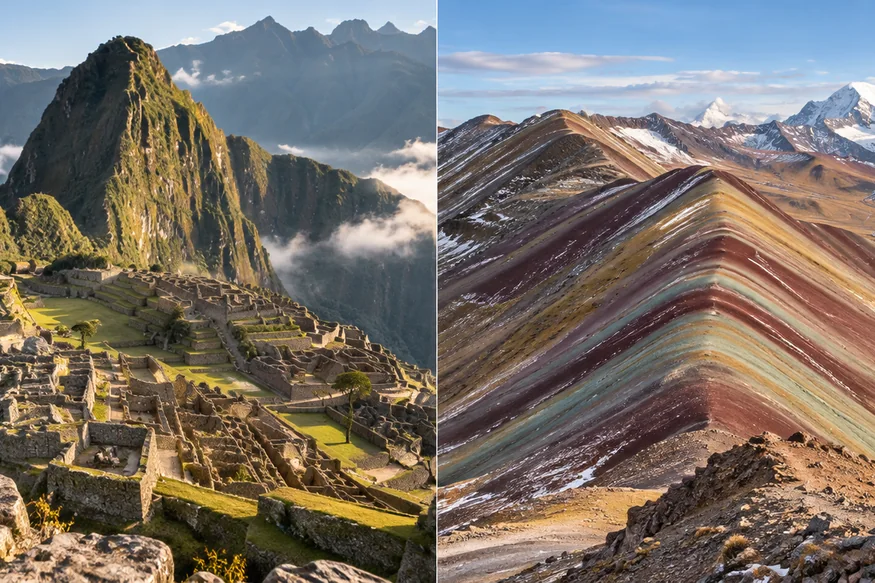
Machu Picchu is concentrated. Within a controlled route, visitors encounter terraces, temples, residences, water channels and mountain views that reveal sophisticated Inca planning. UNESCO describes it as an exceptional cultural and natural landscape at the meeting point of the Andes and the Amazon basin.
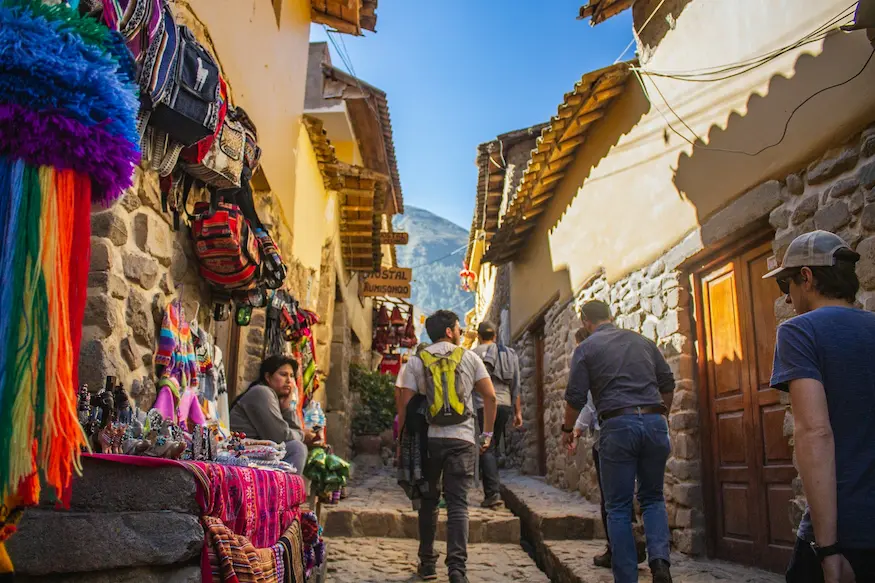
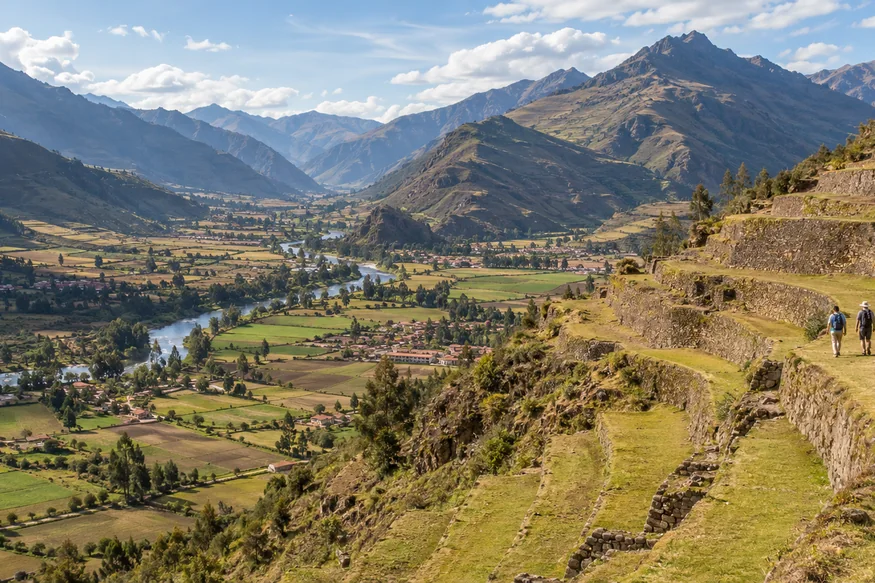
The Sacred Valley is expansive. It follows the Vilcanota-Urubamba River through fertile agricultural land and historic communities. Pisac and Ollantaytambo preserve major archaeological parks; Chinchero connects weaving traditions with Inca and colonial history; Moray and Maras add agricultural engineering and salt production to the story.
Comparing the two is therefore not like comparing two ruins. It is a choice between an intense encounter with one masterwork and a varied journey through the wider world that supported the Inca state.
What Visiting Machu Picchu Is Really Like
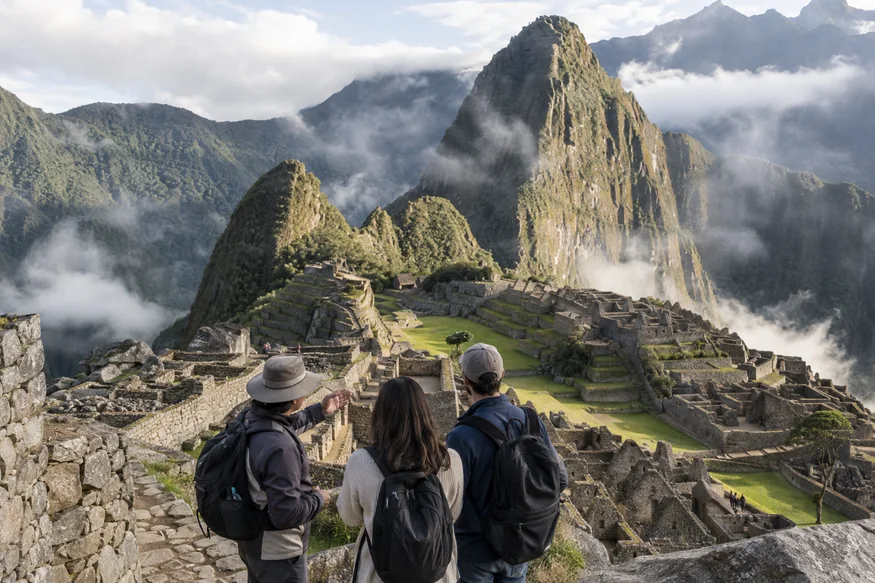
Machu Picchu requires precision. You reserve a date, entrance time and circuit, then coordinate the train to Aguas Calientes and the shuttle bus to the sanctuary. The ticket controls which viewpoints and archaeological sectors you can visit, and routes are generally one-way.
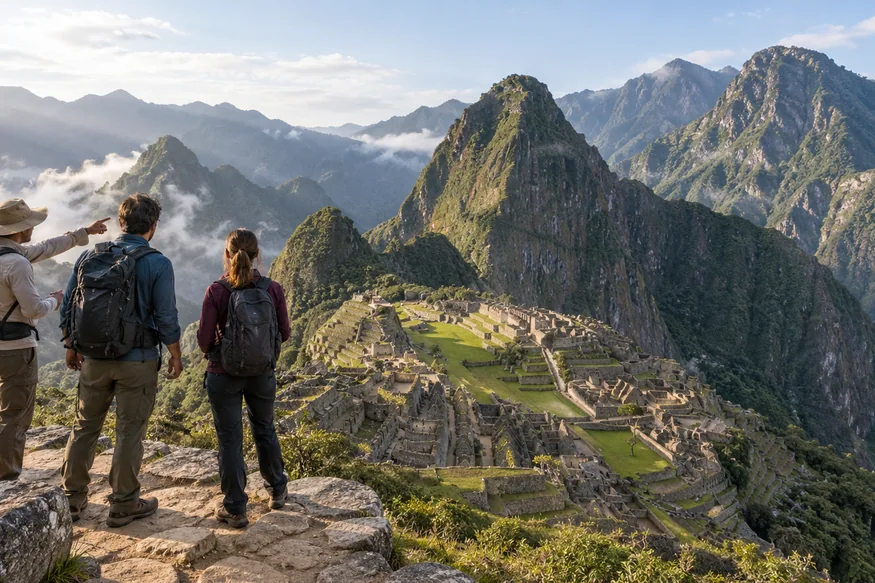
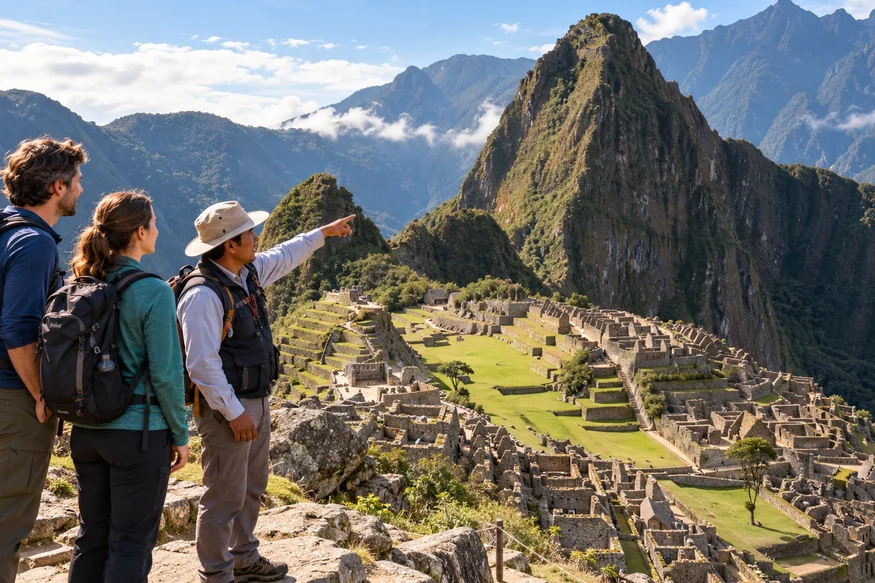
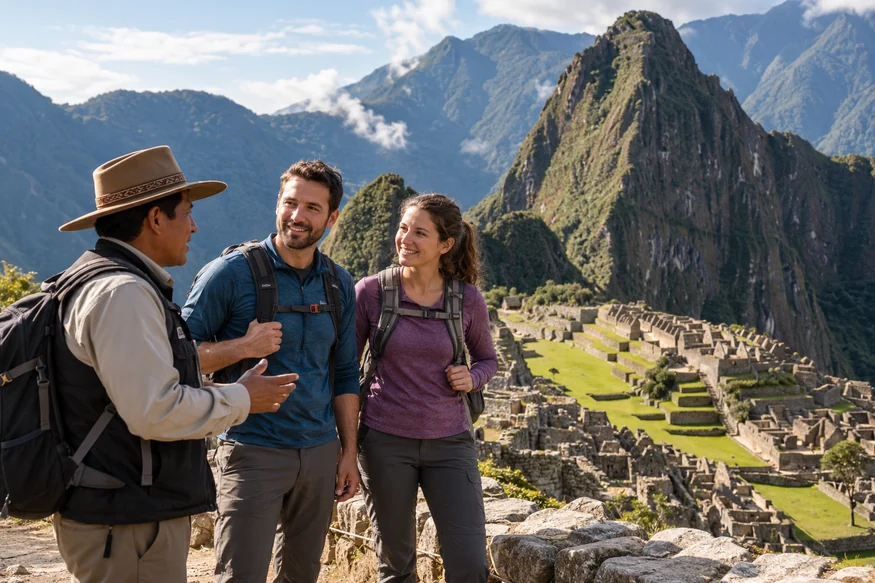
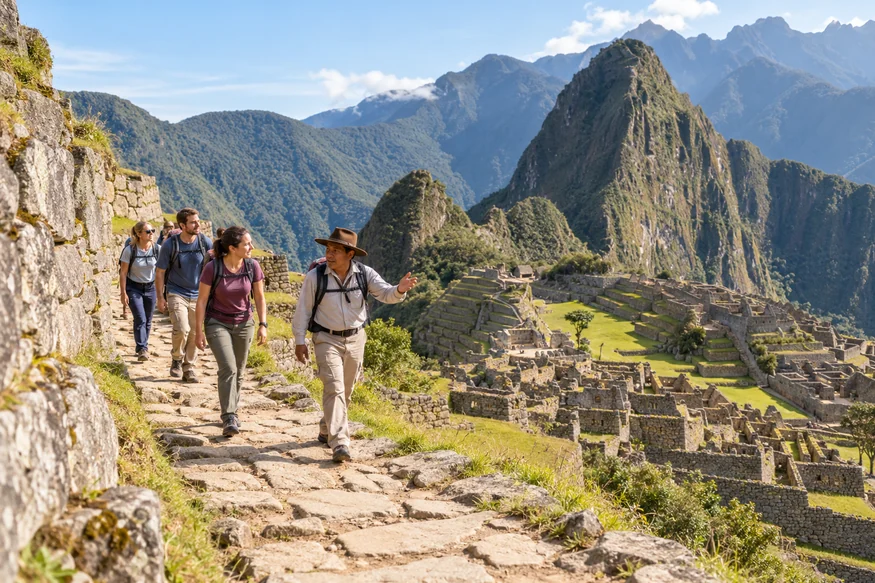
Once inside, the experience is immersive but focused. A guide can explain how stonework, water management, astronomy and sacred geography shaped the city. The forested peaks and shifting cloud make the natural setting part of the architecture rather than a simple background.
Before choosing a ticket, review our guides to Machu Picchu circuits, entrance tickets and train travel.
What Visiting the Sacred Valley Is Really Like
A Sacred Valley day is a road journey with several possible stops. A classic route may include the terraces and hilltop remains of Pisac, the valley floor around Urubamba and the fortress-temple complex of Ollantaytambo. Other itineraries emphasize Chinchero, Moray and the salt pans of Maras.
The experience changes throughout the day. You may move from a panoramic viewpoint to a market, climb archaeological terraces, meet textile artisans and eat lunch beside cultivated fields. Modern communities are not separate from the history; they show how the valley remains inhabited and productive.
Trying to include every attraction in a single day creates a rushed checklist. A better tour selects a coherent route and leaves time to understand the places rather than photographing them from the vehicle.
Which Destination Has Better Archaeology?
Machu Picchu has the stronger single archaeological experience. Its monumental setting, fine masonry and integrated urban plan create a level of coherence that is difficult to match. It deserves time, context and a circuit chosen for your interests.
The Sacred Valley offers greater variety. Pisac demonstrates agricultural terracing and settlement planning across a mountainside. Ollantaytambo combines ceremonial construction with a living town whose streets still preserve Inca foundations. Moray presents a very different arrangement of circular terraces.
Choose Machu Picchu for depth in one exceptional place. Choose the Sacred Valley to compare how the Incas adapted architecture and agriculture to several landscapes.
Which Has Better Scenery?
Machu Picchu has the more dramatic and instantly recognizable composition: stone terraces suspended between steep, forested mountains above the Urubamba canyon. Cloud and sunlight can transform the view within minutes.
The Sacred Valley provides more visual diversity. Wide agricultural plains, the winding river, snow-capped peaks, high terraces and traditional villages unfold across many kilometers. The scenery feels open, inhabited and constantly changing.
Photographers seeking one iconic image may prefer Machu Picchu. Travelers who enjoy landscapes developing throughout a road journey may find the Sacred Valley equally rewarding.
Which Is More Difficult?
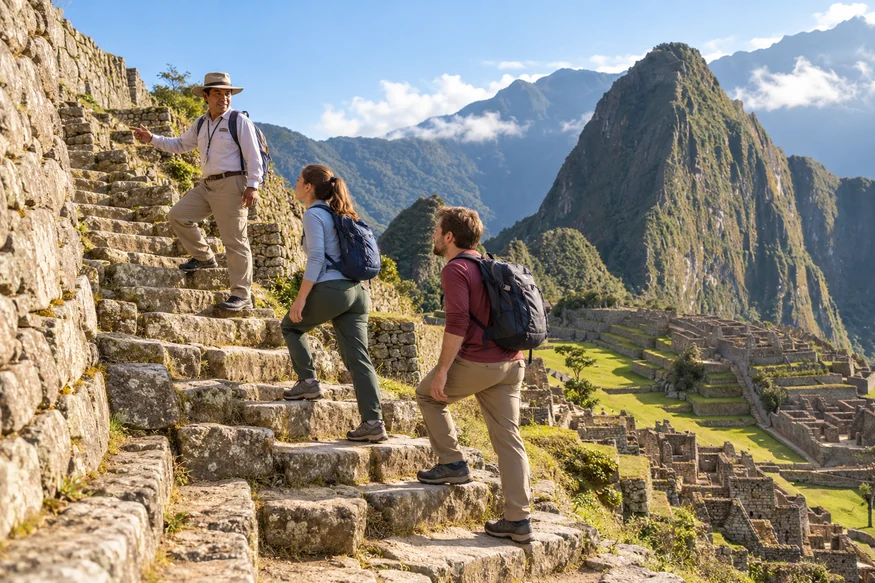
Machu Picchu is more consistently demanding because every circuit involves uneven stone and stairs, with limited opportunities to sit. The controlled route also gives visitors less freedom to shorten the experience once inside.
The Sacred Valley can be adapted. Pisac and Ollantaytambo include substantial climbing when explored fully, but drivers and guides can choose accessible viewpoints, shorter circuits and gentler stops. The official Ollantaytambo archaeological park, for example, provides a short, relatively level circuit near the entrance.
Neither destination is completely step-free. Travelers with knee, balance or mobility concerns should discuss exact routes before booking. Our guide to Machu Picchu difficulty explains the sanctuary’s physical demands.
Which Is Better for Altitude Acclimatization?
The Sacred Valley is often a comfortable first stop after arriving in Cusco because many valley towns lie lower than the city. A night near Urubamba or Ollantaytambo can support a gradual itinerary while placing you closer to the train route.
Machu Picchu itself stands at about 2,430 meters, lower than Cusco, but reaching it still involves travel, stairs and a tightly scheduled day. Sleeping in the valley does not guarantee immunity from altitude symptoms, yet it can reduce the pressure of immediately exploring at Cusco’s elevation.
Hydrate, rest and avoid treating the first day as a race. Read our altitude sickness guide and seek professional medical advice for personal risks.
Tickets and Planning Differences
Machu Picchu is the less flexible destination. Entry tickets are tied to a specific route, date and time, while train availability affects the entire itinerary. Popular circuits may sell out, so the archaeological ticket should be secured before nonrefundable transport whenever possible.
Sacred Valley archaeological sites use separate local admission arrangements, commonly connected with the Cusco Tourist Ticket. The valley covers a large area, making transport and route design more important than one entrance time. Maras salt mines also have their own admission structure.
Current prices, opening hours and access conditions can change. Confirm official information before travel rather than relying on an old list of inclusions.
How Much Time Do You Need?
Each destination deserves at least one day. A Machu Picchu day trip from Cusco is possible, but it is long and highly scheduled. Staying in Aguas Calientes or the Sacred Valley can create a calmer start.
A classic Sacred Valley tour also fills a day. Two days allow a more balanced division between Pisac and the eastern valley, then Chinchero, Maras, Moray and Ollantaytambo. Travelers interested in community experiences may want longer.
If you have two days total, combining the Sacred Valley with an overnight near Ollantaytambo and continuing to Machu Picchu is usually more efficient than returning to Cusco between them.
Can You Visit Machu Picchu and the Sacred Valley on the Same Day?
A meaningful visit to both should not be compressed into one day. Machu Picchu already requires fixed transport and entry times, while the Sacred Valley’s main attractions are spread along the road network.
You can travel through part of the valley on the way to Ollantaytambo, but passing through is not the same as exploring it. The better plan is a Sacred Valley tour followed by an overnight near the train station, then Machu Picchu the next day.
Who Should Choose Machu Picchu?
- First-time visitors with time for only one major excursion.
- Travelers seeking Peru’s most iconic archaeological experience.
- Visitors interested in fine Inca masonry and sacred landscapes.
- People comfortable following a timed, structured itinerary.
- Photographers prioritizing the classic citadel panorama.
A coordinated Machu Picchu Day Trip from Cusco handles the train, bus and guided visit. For more time around the destination, compare the Machu Picchu Tour 2 Days.
Who Should Choose the Sacred Valley?
- Travelers who prefer variety and a more flexible pace.
- Visitors interested in villages, markets and living traditions.
- Families or mixed-ability groups needing adaptable stops.
- People who enjoy agricultural landscapes and regional cuisine.
- Travelers using Ollantaytambo as the gateway to Machu Picchu.
The Full Day Sacred Valley Tour covers the classic corridor, while the Sacred Valley and Picnic Lunch offers a more atmospheric experience.
The Best Way to Combine Both
Begin in Cusco or the Sacred Valley, explore selected valley sites and stay overnight near Ollantaytambo. Continue by train to Aguas Calientes and visit Machu Picchu with the correct timed circuit. This route reduces backtracking and allows the historical story to unfold naturally.
The valley introduces Inca agriculture, transport networks, communities and regional power. Machu Picchu then becomes the culmination of that context rather than an isolated monument.
For a prepared itinerary, see the Sacred Valley and Machu Picchu Tour 2 Days. Travelers wanting another day for Cusco and Sacsayhuaman can compare the three-day journey.
Our Recommendation
If you can choose only one, prioritize Machu Picchu. Its global significance, preserved architecture and mountain setting make it the central experience for most first-time visitors.
If you have two or more days, do not treat the Sacred Valley as optional filler. It enriches Machu Picchu by revealing the agricultural, political and cultural landscape surrounding the famous sanctuary. Together they form a more complete story of the Inca world.
Connect the Sacred Valley with Machu Picchu
Tell our local team how many days you have, which archaeological sites interest you and the pace your group prefers. We can arrange a logical route through the valley and secure the Machu Picchu circuit that fits your trip.
Frequently Asked Questions
Is the Sacred Valley the same as Machu Picchu?
No. The Sacred Valley is a large inhabited region containing multiple towns and archaeological sites. Machu Picchu is a separate protected sanctuary reached beyond Ollantaytambo and Aguas Calientes.
Is Machu Picchu located in the Sacred Valley?
Machu Picchu belongs to the wider Urubamba province and river landscape, but tourism itineraries generally treat the sanctuary and the classic Sacred Valley corridor as distinct destinations.
Which should I visit first?
Visit the Sacred Valley first when logistics allow. It can support acclimatization, provide historical context and position you near the train departure from Ollantaytambo.
Is the Sacred Valley worth visiting if I am going to Machu Picchu?
Yes. Pisac, Ollantaytambo, Chinchero, Moray and local communities reveal aspects of Inca and contemporary Andean life that a single Machu Picchu circuit cannot cover.
Which destination is better for children?
The Sacred Valley is usually easier to adapt for children because stops and walking distances can be adjusted. Machu Picchu remains rewarding for families who select a suitable circuit and prepare for stairs.
Can I stay overnight in the Sacred Valley?
Yes. Urubamba, Yucay and Ollantaytambo provide lodging at different styles and budgets. Ollantaytambo is especially convenient for morning trains toward Machu Picchu.
How many days are ideal for both destinations?
Two days is the practical minimum, while three days provides a calmer pace and more flexibility. Add time if you want community experiences, Maras and Moray or a second Machu Picchu circuit.
Entrance rules, transport schedules and site conditions can change. Confirm current details through official sources and your operator before travel.