
Ausangate Trek in April
The Ausangate Trek in April takes place during one of the most interesting transition periods in the Peruvian Andes. The rainy season is coming to an end, rainfall becomes less frequent, and trails gradually begin to dry.
At the same time, the landscape around the Ausangate Trek is often still green from the previous months. This gives April an attractive combination: greener valleys than you would normally see later in the dry season, but increasingly better conditions for hiking.
Rain is still possible, especially earlier in the month, so April should not be treated as completely dry. However, for travelers looking for quieter trails, improving weather, and good mountain scenery, it can be an excellent time to consider Ausangate.
What Is the Ausangate Trek Like in April?
April marks the transition from the rainy season toward the dry season around Ausangate.
Compared with March, there is generally less rain, longer dry periods, and a better chance of seeing the high mountains without persistent cloud cover. Trails also begin to improve as the ground has more time to dry.
The landscape has not yet completely shifted to the drier colors seen later in the year. Valleys, wetlands, and mountain slopes can remain green, particularly during the first part of April.
These improving conditions can make a multi-day route such as the Ausangate Trek 5 Days particularly attractive. You still need to prepare for changing mountain weather, but hiking conditions are generally more favorable than during the wettest months.
April is therefore a good option for travelers who want to visit before the main dry-season period while still having a reasonable chance of favorable trekking conditions.
Ausangate Weather in April
April is a transition month, so weather can vary considerably.
Rainfall generally decreases compared with March, but showers are still possible. As the month progresses, longer periods of clear or partially clear weather become more common.
| Weather Condition | What to Expect |
|---|---|
| Rainfall | Moderate and generally decreasing |
| Cloud Cover | Still possible, especially after rain |
| Clear Weather | Increasingly common as the month progresses |
| High Passes | Cold, windy, and occasionally cloudy |
| Trail Conditions | Gradually becoming drier |
| Landscape | Green from the recent rainy season |
| Late April | Often closer to dry-season conditions |
April weather should still be treated as variable. A few dry days can improve trail conditions quickly, while a period of rain can make some sections muddy again.
For this reason, waterproof gear should remain part of your equipment even if the forecast looks favorable.
Temperatures on the Ausangate Trek in April
April may bring less rain, but Ausangate remains a cold high-altitude environment.
Most of the route lies above 4,000 meters (13,123 feet), while some mountain passes reach approximately 5,000 meters (16,404 feet) or higher.
| Time or Condition | Approx. Temperature | What to Expect |
|---|---|---|
| Daytime | 8°C to 15°C (46°F to 59°F) | Cool to mild while hiking |
| High Passes | 0°C to 8°C (32°F to 46°F) | Cold and often windy |
| Early Mornings | 0°C to 5°C (32°F to 41°F) | Cold at high elevations |
| Nighttime | -5°C to 3°C (23°F to 37°F) | Very cold at higher camps |
| Clear Nights | Around or below freezing | Frost is possible at altitude |
These ranges are approximate. Wind, elevation, cloud cover, and changing weather can make conditions feel considerably colder.
As April becomes drier, clear nights can also become colder. Warm layers and a suitable sleeping bag remain essential.
Trail Conditions in April
Trail conditions generally improve considerably during April.
After months of rainy-season weather, the ground begins to dry. However, muddy sections can remain in valleys, wetlands, shaded areas, and places frequently used by horses and pack animals.
| Trail Condition | What to Expect |
|---|---|
| Mud | Still possible, especially after recent rain |
| Main Trails | Gradually becoming firmer and drier |
| Wetlands | Soft or wet ground may remain. |
| Rocky Sections | Usually easier when conditions are dry |
| Streams | Water levels begin decreasing. |
| High Passes | Generally improving but exposed to wind and cold |
| Visibility | Better than during the main rainy season |
Early April can still have conditions similar to late March after periods of heavy rain.
Later April generally has a better chance of drier trails, although conditions vary from year to year.
Waterproof hiking boots with good traction are still recommended, and trekking poles remain useful on wet or steep sections.
How Difficult Is the Ausangate Trek in April?
The Ausangate Trek difficulty remains high regardless of the month.
Altitude is the main reason. Long hiking days, remote terrain, steep climbs, and mountain passes around 5,000 meters make Ausangate physically demanding even when trail conditions are good.
April does remove some of the difficulties associated with the peak rainy season. Less mud, better visibility, and fewer prolonged periods of rain generally make hiking more comfortable than in January, February, or March.
However, improved weather should not be confused with an easier altitude experience.
Trekkers should still spend several days acclimatizing in Cusco or another high-altitude area before beginning the route.
For properly acclimatized travelers with reasonable fitness, April can offer a more manageable introduction to Ausangate than the preceding rainy-season months.
Mountain Visibility in April
April generally offers better mountain visibility than March.
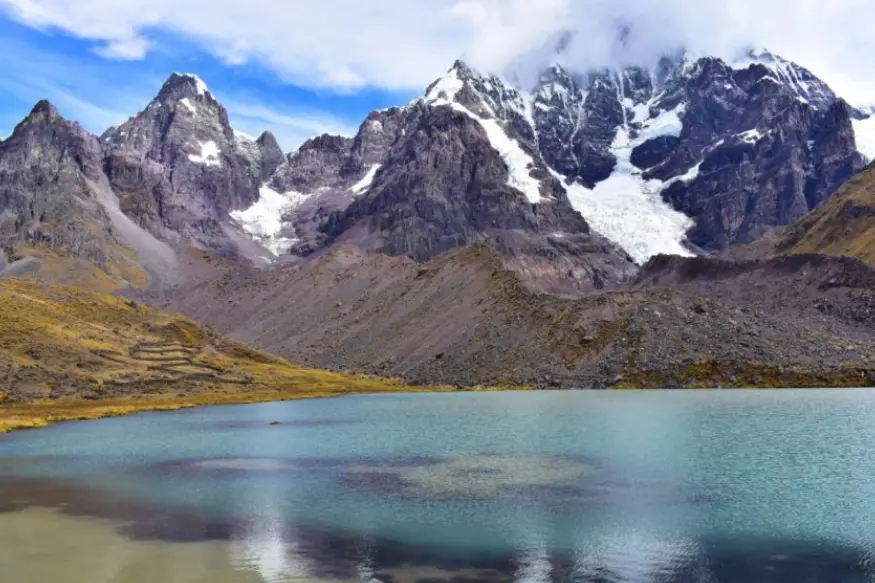
As rainfall and cloud cover decrease, clear views of Ausangate, glaciers, high-altitude lakes, and surrounding peaks become more frequent.
Clouds can still develop, particularly after rain or during unstable weather, so clear views are never guaranteed.
What makes April particularly attractive is the scenery left behind by the rainy season. When the weather clears, snow-covered mountains can appear above valleys that are still noticeably green.
This combination becomes less pronounced as the dry season progresses and the landscape gradually becomes drier.
What About Rainbow Mountain in April?
April can also provide improving conditions at Rainbow Mountain if it is included in your Ausangate itinerary.
Less rainfall generally means a firmer trail and a better chance of clear views than during the wettest months. Good sunlight can also make the mineral colors of the mountain appear more distinct.
However, Rainbow Mountain sits above 5,000 meters, so conditions can still change quickly. Clouds, wind, hail, or occasional snow remain possible.
If seeing Rainbow Mountain is an important part of your trip, April offers better odds than the main rainy-season months, but the dry season remains more reliable for consistently clear conditions.
Advantages and Disadvantages of Ausangate in April
April’s main attraction is the balance between improving weather and scenery that still retains characteristics of the rainy season.
| Advantages | Disadvantages |
|---|---|
| Less rain than previous months | Rain is still possible |
| Trails begin drying | Some muddy sections can remain |
| Green valleys and mountain slopes | Weather remains transitional |
| Improving mountain visibility | Cold nights at high camps |
| Relatively quiet trails | Conditions can vary between early and late April |
| Good photography conditions | Waterproof gear is still necessary |
April works particularly well for travelers who do not need perfectly predictable weather but would rather avoid the wetter conditions of January through March.
Is the Ausangate Trek Safe in April?
April generally brings better trail conditions, but Ausangate remains remote and high altitude.
Recent weather is still important. Several days of rain can affect trails and streams even if the overall monthly trend is becoming drier.
| What to Check | Why It Matters |
|---|---|
| Recent rainfall | Can determine whether trails remain muddy |
| Weather forecast | Helps identify incoming rain or storms |
| Trail conditions | Some sections may still be wet after the rainy season |
| High-pass conditions | Wind, cold, or poor visibility may affect exposed areas |
| Road access | Useful to confirm after periods of heavy rain |
| Local advice | Provides current information about conditions |
Do not base your decision entirely on the weather in Cusco. Conditions around Ausangate can be considerably different because of the altitude and mountain terrain.
What to Pack for Ausangate in April
April requires equipment for both lingering wet-season conditions and increasingly cold high-altitude nights.
| Category | What to Bring | Why You Need It |
|---|---|---|
| Rain Protection | Waterproof jacket and pants | Showers are still possible |
| Footwear | Waterproof hiking boots | Some trail sections may remain wet or muddy |
| Warm Layers | Base layers, fleece, insulated jacket | Temperatures drop quickly at altitude |
| Hands & Head | Warm hat and gloves | Important for mornings, camps, and high passes |
| Sleeping Gear | Warm sleeping bag | Nights can fall below freezing |
| Stability | Trekking poles | Useful on steep or wet sections |
| Sun Protection | Sunglasses, sunscreen, sun hat | UV exposure is strong at high altitude |
| Backpack Protection | Rain cover or dry bags | Keeps essential equipment dry |
| Essential Gear | Headlamp | Useful around camp and for early starts |
Do not leave rain protection behind just because April marks the transition toward the dry season. Conditions can still change quickly in the mountains.
If you want to see everything in more detail, our Ausangate Trek packing list covers clothing, footwear, sleeping equipment, rain protection, and other essentials for a multi-day trek.
March vs April: Which Is Better for Ausangate?
Both months can offer green landscapes and relatively quiet trails, but April generally has the advantage when it comes to weather.
| Factor | March | April |
|---|---|---|
| Rainfall | High | Moderate and decreasing |
| Trail Conditions | Wet and muddy in sections | Gradually becoming drier |
| Landscape | Very green | Still green |
| Mountain Visibility | Unpredictable | Improving |
| Crowds | Low | Low |
| Weather Stability | Variable | More stable |
| Overall | Challenging but improving | Good |
The Ausangate Trek in March may appeal more to travelers who prioritize very green landscapes and do not mind wetter conditions.
April is generally the better choice if you want drier trails and a better chance of clear mountain views without moving fully into the main dry season.
April vs May: Which Is Better for Ausangate?
May generally offers more reliable dry weather, but April has its own advantages.
| Factor | April | May |
|---|---|---|
| Rainfall | Moderate and decreasing | Low |
| Trail Conditions | Improving | Generally dry |
| Landscape | Green | Green to gradually drier |
| Mountain Visibility | Good and improving | Very good |
| Night Temperatures | Cold | Colder |
| Crowds | Low | Low to moderate |
| Weather Stability | Improving | More stable |
| Overall | Good balance | Excellent |
Choose April if greener scenery, fewer people, and shoulder-season conditions appeal to you.
Choose the Ausangate Trek in May if you would rather have a better chance of dry trails and stable weather, even if nights begin to get colder.
Ausangate Trek Throughout the Year
The experience around Ausangate changes significantly throughout the year. There is no single perfect month for every traveler; the best choice depends on whether you prioritize dry weather, green scenery, warmer nights, or quieter trails.
| Month | Weather | Rainfall | Trail Conditions | Overall |
|---|---|---|---|---|
| Ausangate Trek in January | Wet and cloudy | High | Muddy | Challenging |
| Ausangate Trek in February | Very wet | Very high | Very muddy | Least favorable |
| Ausangate Trek in March | Rainy, improving | High | Wet but improving | Challenging |
| Ausangate Trek in April | Transitional | Moderate | Improving | Good |
| Ausangate Trek in May | Mostly dry | Low | Good to dry | Excellent |
| Ausangate Trek in June | Dry and clear | Very low | Excellent | Excellent |
| Ausangate Trek in July | Dry and cold | Very low | Excellent | Excellent |
| Ausangate Trek in August | Dry and clear | Very low | Excellent | Excellent |
| Ausangate Trek in September | Mostly dry | Low | Good | Very good |
| Ausangate Trek in October | Transitional | Moderate | Generally good | Good |
| Ausangate Trek in November | Increasing rain | Moderate to high | Occasionally muddy | Fair |
| Ausangate Trek in December | Rainy | High | Wet and muddy | Challenging |
If your travel dates are flexible, our guide to the best time to hike the Ausangate Trek compares the seasons and conditions throughout the year in more detail.
Is April a Good Time to Hike the Ausangate Trek?
Yes. April can be a very good month for Ausangate, particularly for travelers who want to trek before the main dry season.
Consider April if you:
- Want green landscapes
- Prefer quieter trails
- Want better weather than the main rainy-season months
- Do not mind occasional rain
- Prefer improving trail conditions
- Want good opportunities for mountain photography
- Can remain flexible if the weather changes
May, or the main dry season, may be better if you:
- Want the highest chance of dry trails
- Prefer more predictable weather
- Want consistently clearer mountain views
- Have very little flexibility in your itinerary
April sits between two very different seasons, and that is precisely what makes it attractive. You can still see some of the green landscapes created by the rains without dealing with the same level of wet weather found earlier in the year.
Frequently Asked Questions About Ausangate Trek in April
Can you hike the Ausangate Trek in April?
Yes. April is generally a good month for the Ausangate Trek as rainfall decreases and trail conditions begin improving. Rain is still possible, particularly earlier in the month.
Does it rain a lot in Ausangate in April?
April usually receives less rain than March, but showers can still occur. Conditions tend to become drier as the month progresses.
Is early or late April better?
Late April generally has a better chance of drier and more stable conditions. Early April may retain greener scenery but can also have more wet-season weather.
Are the trails muddy in April?
Some sections can remain muddy, particularly after recent rain or in wetlands and shaded valleys. Overall, trails generally become progressively drier during April.
How cold is Ausangate in April?
Days can be cool or relatively comfortable while hiking, but mornings and nights are cold. Temperatures around high-altitude camps can approach or fall below freezing.
Can you see Ausangate Mountain in April?
Yes. Clear mountain views become more frequent as rainfall and cloud cover decrease, although visibility can still change quickly.
Is April good for beginners?
April provides better conditions than the wettest months, but Ausangate remains a demanding high-altitude trek. First-time trekkers still need good physical preparation and proper acclimatization.
Is March or April better for Ausangate?
April is generally better for drier trails and more stable weather. March tends to be wetter but can offer exceptionally green landscapes and fewer trekkers.
Is April or May better for Ausangate?
May generally provides drier and more predictable weather. April can be attractive for travelers who want greener scenery, fewer people, and improving conditions.
Do I need rain gear in April?
Yes. Even though rainfall decreases, a waterproof jacket and basic rain protection should remain part of your packing list.
So, Is April Worth It?
April is a strong choice if you want to experience Ausangate between the rainy and dry seasons. Trails are becoming drier, clear mountain views are more frequent, and much of the landscape can still retain the green colors left by the summer rains.
If completely dry weather is your priority, May or the main dry season is a safer choice. But if you value quieter trails, greener scenery, and increasingly favorable hiking conditions, April offers one of the most interesting balances of the year.
Related Articles
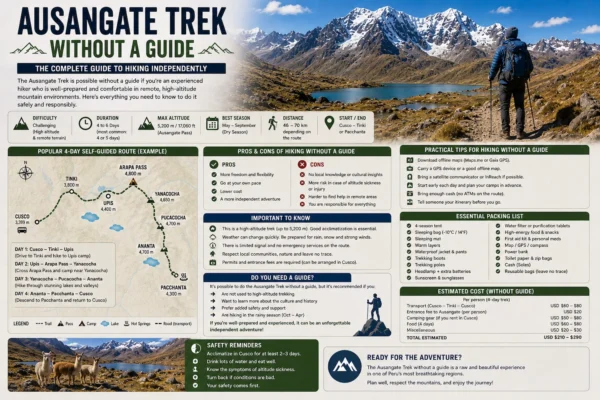
Ausangate Trek Without a Guide
Ausangate Trek Without a Guide Can you do the Ausangate Trek without a guide?…
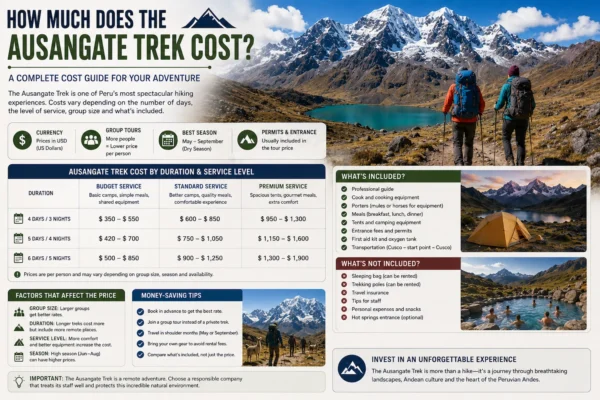
How Much Does the Ausangate Trek Cost?
How Much Does the Ausangate Trek Cost? The Ausangate Trek cost typically ranges from…
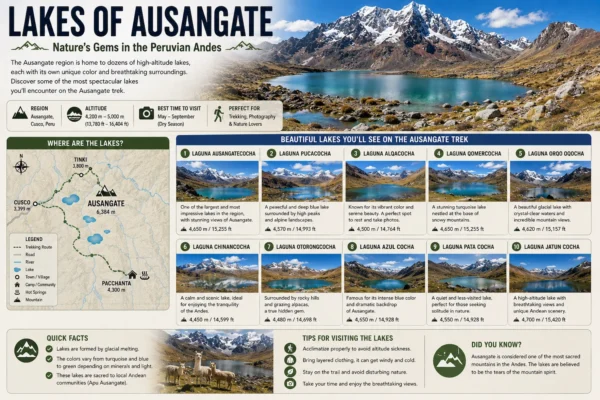
Lakes of Ausangate The Lakes of Ausangate are among the most spectacular natural features…
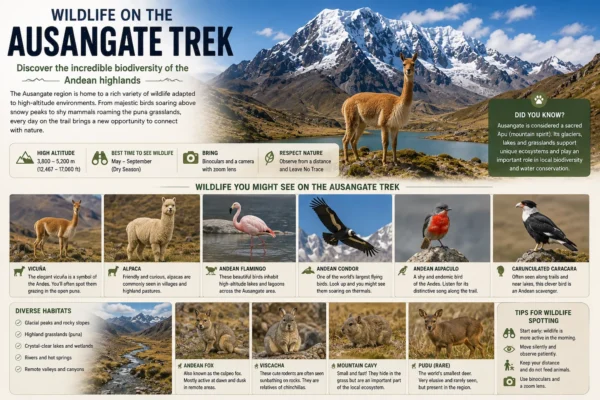
Wildlife on the Ausangate Trek
Wildlife on the Ausangate Trek The wildlife on the Ausangate Trek is adapted to…
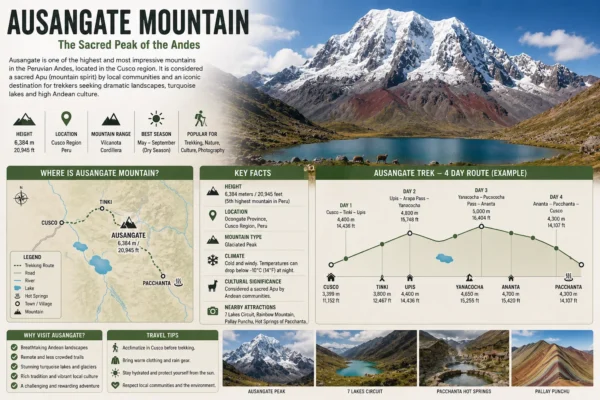
Ausangate Mountain Ausangate Mountain is one of the highest and most important mountains in…
Related Tours