
Ausangate Trek in May
The Ausangate Trek in May is one of the best options for travelers looking for dry trails, clearer mountain views, and fewer crowds than the busiest months of the season. By May, the rainy season has largely ended in the southern Peruvian Andes, although occasional showers can still occur.
The landscape around the Ausangate Trek often retains some of the green scenery left by the rainy season, while improving weather makes hiking conditions considerably more comfortable than earlier in the year.
May does bring colder nights, especially at camps above 4,000 meters. But for many trekkers, the combination of improving weather, good visibility, and relatively quiet trails makes it an excellent month to hike Ausangate.
What Is the Ausangate Trek Like in May?
May marks the beginning of the main dry-season period around Ausangate.
Rainfall decreases significantly, trails have more time to dry, and clearer skies become much more common. The surrounding valleys may still show some of the green colors left by the wet season, particularly earlier in the month.
This combination makes May particularly attractive for a multi-day route such as the Ausangate Trek 5 Days. Better trail conditions make the high passes and long hiking days more manageable, while clearer weather improves the chances of seeing Ausangate, glaciers, alpine lakes, and surrounding peaks.
The main change to prepare for is temperature.
As conditions become drier, nights and early mornings at high altitude can become noticeably colder.
Ausangate Weather in May
May is considerably drier than the rainy-season months. Long periods of clear or partially clear weather become more common, although mountain weather can still change quickly.
| Weather Condition | What to Expect |
|---|---|
| Rainfall | Low compared with the rainy season |
| Cloud Cover | Less frequent, with more clear periods |
| Mountain Views | Good chance of clear views |
| Trail Conditions | Generally dry and improving |
| High Passes | Cold and potentially windy |
| Daytime Weather | Often sunny or partially clear |
| Nighttime | Cold, especially at high camps |
An occasional shower is still possible, so rain protection should remain in your backpack.
The bigger concern in May is usually not prolonged rain but the difference between relatively comfortable daytime hiking conditions and cold nights at elevation.
Temperatures on the Ausangate Trek in May
May brings drier weather, but temperatures begin to fall as the Andes move toward the colder part of the year.
Most of the Ausangate route remains above 4,000 meters (13,123 feet), and several itineraries cross passes approaching or exceeding 5,000 meters (16,404 feet).
| Time or Condition | Approx. Temperature | What to Expect |
| Daytime | 8°C to 16°C (46°F to 61°F) | Comfortable when sunny and hiking |
| High Passes | 0°C to 8°C (32°F to 46°F) | Cold, especially with wind |
| Early Morning | -2°C to 5°C (28°F to 41°F) | Cold before sunrise |
| Nighttime | -7°C to 2°C (19°F to 36°F) | Very cold at higher camps |
| Clear Nights | Below freezing possible | Frost may develop at elevation. |
These temperatures are approximate and can vary considerably according to elevation, wind, cloud cover, and the specific campsite.
The strong daytime sun can also make conditions feel warmer while walking, so a layering system works better than relying on one heavy jacket.
Trail Conditions in May
One of the biggest advantages of trekking Ausangate in May is the improvement in trail conditions.
After the rainy season, the ground begins to dry, and many sections become easier to walk. Some muddy areas may remain early in the month, particularly in wetlands, valleys, and shaded sections.
| Trail Condition | What to Expect |
| Mud | Limited, but possible in wet or shaded areas |
| Main Trails | Generally firmer and drier |
| Rocky Sections | Usually easier to navigate when dry |
| Wetlands | Some soft or damp ground may remain. |
| Streams | Water levels are generally lower than during the rainy season. |
| High Passes | Mostly dry but exposed to cold and wind |
| Visibility | Generally much better than in rainy-season months |
Good hiking boots remain essential because the route is rocky and uneven even when completely dry.
Trekking poles are useful for steep climbs and descents but become less critical for mud than during January, February, or March.
How Difficult Is the Ausangate Trek in May?
Better weather does not make Ausangate an easy trek.
The Ausangate Trek difficulty still comes from altitude, long hiking days, remote terrain, and high mountain passes. Some itineraries reach approximately 5,000 meters or higher.
What May changes is the weather-related difficulty.
Drier trails and better visibility generally make walking more straightforward than during the rainy season. You are less likely to spend long periods hiking through mud or persistent rain.
Altitude, however, remains exactly as important.
Spending several days acclimatizing in Cusco or another high-altitude destination before starting the trek is strongly recommended.
May is suitable for well-prepared trekkers, including travelers attempting Ausangate for the first time, provided they have reasonable fitness, proper acclimatization, and appropriate equipment.
Mountain Visibility in May
May is a strong month for mountain views.
As cloud cover decreases, the chances of seeing the Ausangate massif, glaciers, surrounding peaks, and high-altitude lakes under clearer conditions improve considerably.
Mornings often provide some of the best opportunities for clear views, although mountain weather remains unpredictable and clouds can still develop.
May also offers an attractive visual transition.
Some valleys may retain green vegetation from the rainy season while the mountains begin experiencing the clearer skies associated with the dry season.
For travelers interested in landscape photography, this combination is one of the reasons May can be particularly appealing.
What About Rainbow Mountain in May?
May generally brings favorable conditions for visiting Rainbow Mountain if it is part of your Ausangate itinerary.
Lower rainfall means the trail is typically drier than during the wet season, while clearer skies improve the chances of seeing the mountain and surrounding landscape without heavy cloud or mist.
Good sunlight can also make the mineral colors more visible.
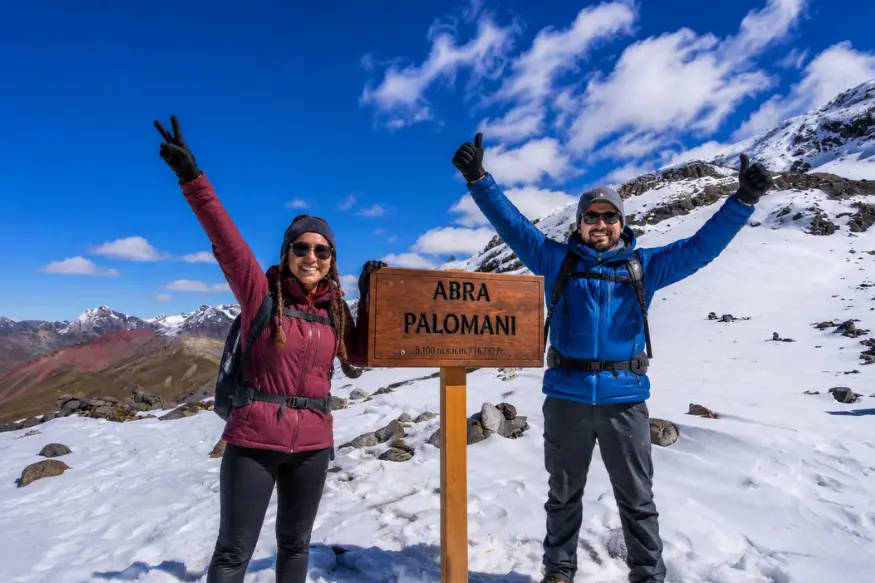
However, Rainbow Mountain sits at very high elevation, so cold temperatures, wind, and rapidly changing weather remain possible even on otherwise clear days.
Advantages and Disadvantages of Ausangate in May
May offers one of the better balances of weather, trail conditions, scenery, and visitor numbers.
| Advantages | Disadvantages |
| Much lower rainfall | Cold nights at high-altitude camps |
| Generally dry trails | Freezing temperatures are possible. |
| Better mountain visibility | Cold early mornings |
| Some remaining green scenery | Weather can still change at altitude. |
| Fewer trekkers than peak season | Strong sun and UV exposure |
| Good conditions for photography | Warm equipment is still essential. |
For many travelers, the advantages clearly outweigh the disadvantages.
The main preparation difference compared with the rainy season is that protection from cold becomes increasingly important.
Is the Ausangate Trek Safe in May?
May generally provides more favorable trekking conditions than the rainy-season months.
Drier trails, lower river levels, and better visibility reduce some weather-related difficulties. However, Ausangate remains a remote high-altitude trek, so good preparation is still necessary.
Before departure, check:
| What to Check | Why It Matters |
| Weather forecast | Mountain conditions can still change rapidly |
| Trail conditions | Useful after any recent rainfall |
| Night temperatures | Helps determine appropriate sleeping equipment |
| High-pass conditions | Wind and cold can affect exposed sections. |
| Local advice | Provides recent information about the route |
Altitude symptoms should always be taken seriously regardless of how good the weather appears.
What to Pack for Ausangate in May
Packing for May is less focused on persistent rain and more focused on managing cold mornings, freezing nights, strong sunlight, and changing high-altitude conditions.
| Category | What to Bring | Why You Need It |
| Warm Layers | Base layers, fleece, insulated jacket | Essential for cold mornings and evenings |
| Rain Protection | Lightweight waterproof jacket and pants | Occasional rain remains possible |
| Footwear | Sturdy hiking boots with good traction | Needed for rocky and uneven trails |
| Night Protection | Warm sleeping bag | Camps can fall below freezing. |
| Hands & Head | Warm hat and gloves | Important at high passes and camps |
| Sun Protection | Sunglasses, sunscreen, sun hat | UV radiation is strong at altitude. |
| Hydration | Reusable water bottles or hydration system | Dry weather and sun increase hydration needs. |
| Stability | Trekking poles | Helpful on long climbs and descents |
| Essential Gear | Headlamp | Useful for camp and early departures |
Do not completely remove waterproof gear just because May is part of the drier season. Mountain weather can still change unexpectedly.
If you want a complete breakdown of clothing, equipment, and personal essentials, our Ausangate Trek packing list explains what to carry for a multi-day trek in more detail.
April vs May: Which Is Better for Ausangate?
April and May can both be good months, but May generally provides more reliable dry-weather conditions.
| Factor | April | May |
| Rainfall | Moderate and decreasing | Low |
| Trail Conditions | Improving | Generally dry |
| Landscape | Very green | Green to gradually drier |
| Mountain Visibility | Improving | Generally good |
| Night Temperatures | Cold | Colder |
| Crowds | Low | Low to moderate |
| Weather Stability | Transitional | More stable |
| Overall | Good | Excellent |
April may appeal to travelers who prioritize greener landscapes and very quiet trails.
May is usually the stronger choice if you prioritize drier trails, clearer views, and more predictable trekking conditions.
May vs June: Which Is Better for Ausangate?
Both May and June are excellent months for the Ausangate Trek, but they offer slightly different conditions.
| Factor | May | June |
| Rainfall | Low | Very low |
| Trail Conditions | Generally dry | Dry |
| Landscape | Some remaining green scenery | Increasingly dry |
| Mountain Visibility | Very good | Excellent |
| Night Temperatures | Very cold | Very cold |
| Crowds | Low to moderate | Higher |
| Weather Stability | Very good | Excellent |
| Overall | Excellent balance | Excellent for dry weather |
May can be particularly attractive if you want good weather without immediately entering the busier part of the trekking season.
June generally offers even more reliable dry conditions but also colder nights and more visitors.
Ausangate Trek Throughout the Year
Conditions around Ausangate change significantly throughout the year. Comparing the months can help you choose between green landscapes, quieter trails, dry weather, and the best opportunities for clear mountain views.
| Month | Weather | Rainfall | Trail Conditions | Overall |
| Ausangate Trek in January | Wet and cloudy | High | Muddy | Challenging |
| Ausangate Trek in February | Very wet | Very high | Very muddy | Least favorable |
| Ausangate Trek in March | Rainy, improving | High | Wet but improving | Challenging |
| Ausangate Trek in April | Transitional | Moderate | Improving | Good |
| Ausangate Trek in May | Mostly dry | Low | Good to dry | Excellent |
| Ausangate Trek in June | Dry and clear | Very low | Excellent | Excellent |
| Ausangate Trek in July | Dry and cold | Very low | Excellent | Excellent |
| Ausangate Trek in August | Dry and clear | Very low | Excellent | Excellent |
| Ausangate Trek in September | Mostly dry | Low | Good | Very good |
| Ausangate Trek in October | Transitional | Moderate | Generally good | Good |
| Ausangate Trek in November | Increasing rain | Moderate to high | Occasionally muddy | Fair |
| Ausangate Trek in December | Rainy | High | Wet and muddy | Challenging |
If your dates are flexible, our guide to the best time to hike the Ausangate Trek compares the seasons in more detail.
Is May a Good Time to Hike the Ausangate Trek?
Yes. May is one of the best months to hike the Ausangate Trek for travelers looking for a combination of relatively dry weather, good trail conditions, clear mountain views, and fewer people than during the busiest part of the dry season.
May is particularly suitable if you:
- Prefer dry or mostly dry trails
- Want a good chance of clear mountain views
- Want to avoid peak-season crowds
- Enjoy landscape photography
- Are prepared for cold nights
- Have properly acclimatized before the trek
The main thing to prepare for is cold.
Clearer skies and drier conditions often mean colder nights at high-altitude camps, so a warm sleeping system and proper layers remain essential.
Frequently Asked Questions About Ausangate Trek in May
Can you hike the Ausangate Trek in May?
Yes. May is generally one of the better months for the Ausangate Trek because rainfall is much lower and trail conditions are typically drier than during the preceding rainy season.
Does it rain in Ausangate in May?
Rain is still possible, but May is considerably drier than January, February, or March. Trekkers should carry waterproof protection even when the forecast looks favorable.
How cold is Ausangate in May?
Days can feel comfortable while hiking in the sun, but temperatures drop considerably at night. High-altitude camps can experience temperatures around or below freezing.
Are the trails dry in May?
Trails are generally much drier by May, although wet or muddy sections can remain in valleys, wetlands, and shaded areas, particularly earlier in the month.
Can you see Ausangate Mountain in May?
May generally offers a good chance of clear views of Ausangate and the surrounding peaks because cloud cover and rainfall decrease significantly.
Is May good for first-time trekkers?
May provides better weather and trail conditions than the rainy-season months, making it a more suitable option for first-time Ausangate trekkers. The altitude and physical demands of the route still require good preparation and acclimatization.
Is April or May better for Ausangate?
May generally offers drier and more stable weather. April can provide greener landscapes and fewer visitors, but rainfall and wet trails are more likely.
Is May or June better for Ausangate?
Both are excellent. May usually offers a good combination of dry conditions, remaining green scenery, and fewer trekkers, while June tends to provide even more stable dry weather but colder nights and more visitors.
Do I need rain gear in May?
Yes. Rain is less common, but a waterproof jacket and basic rain protection should still be carried because mountain weather can change quickly.
So, Is May Worth It?
For most travelers, May is an excellent time to hike Ausangate.
The rainy season has largely faded, trails are becoming dry, mountain visibility improves, and some of the green scenery from the previous months can still remain. You also avoid some of the heavier visitor numbers associated with the middle of the dry season.
If you are prepared for cold nights and high altitude, May offers one of the best overall combinations of weather, scenery, and trail conditions on the Ausangate Trek.
Related Articles
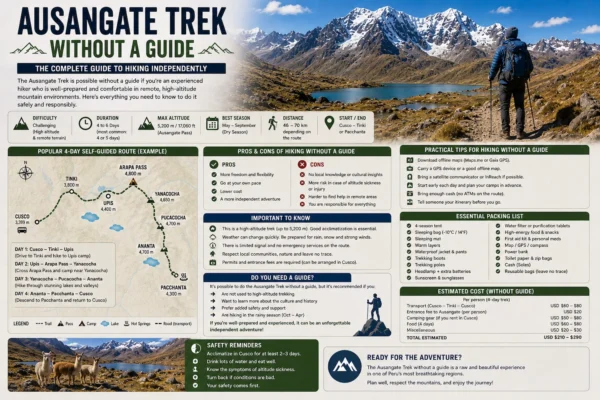
Ausangate Trek Without a Guide
Ausangate Trek Without a Guide Can you do the Ausangate Trek without a guide?…
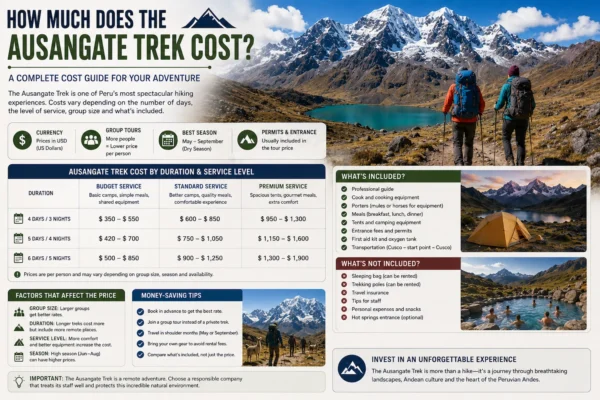
How Much Does the Ausangate Trek Cost?
How Much Does the Ausangate Trek Cost? The Ausangate Trek cost typically ranges from…
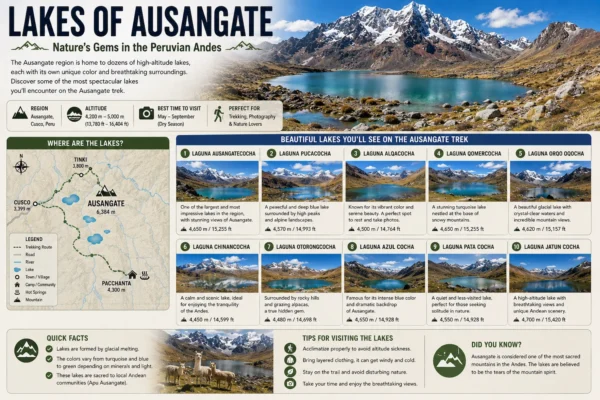
Lakes of Ausangate The Lakes of Ausangate are among the most spectacular natural features…
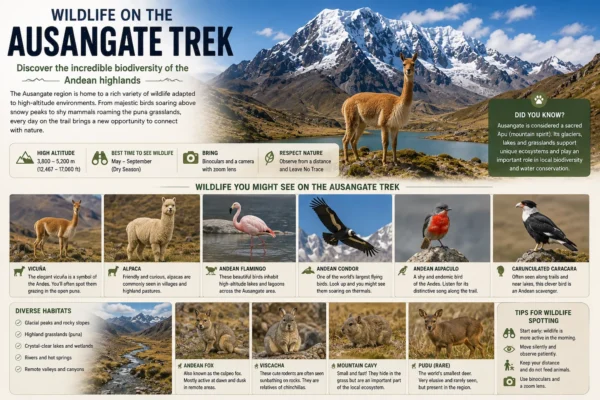
Wildlife on the Ausangate Trek
Wildlife on the Ausangate Trek The wildlife on the Ausangate Trek is adapted to…
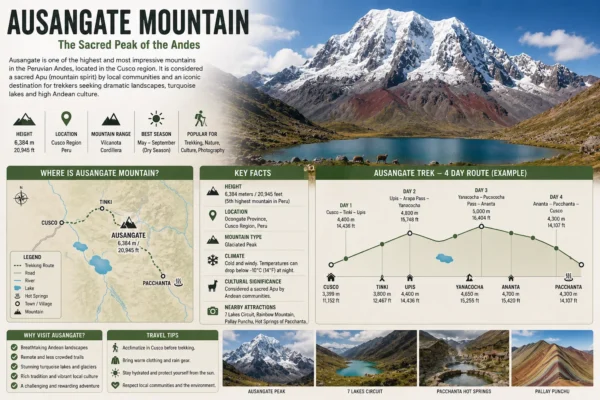
Ausangate Mountain Ausangate Mountain is one of the highest and most important mountains in…
Related Tours