
Ausangate Trek in November
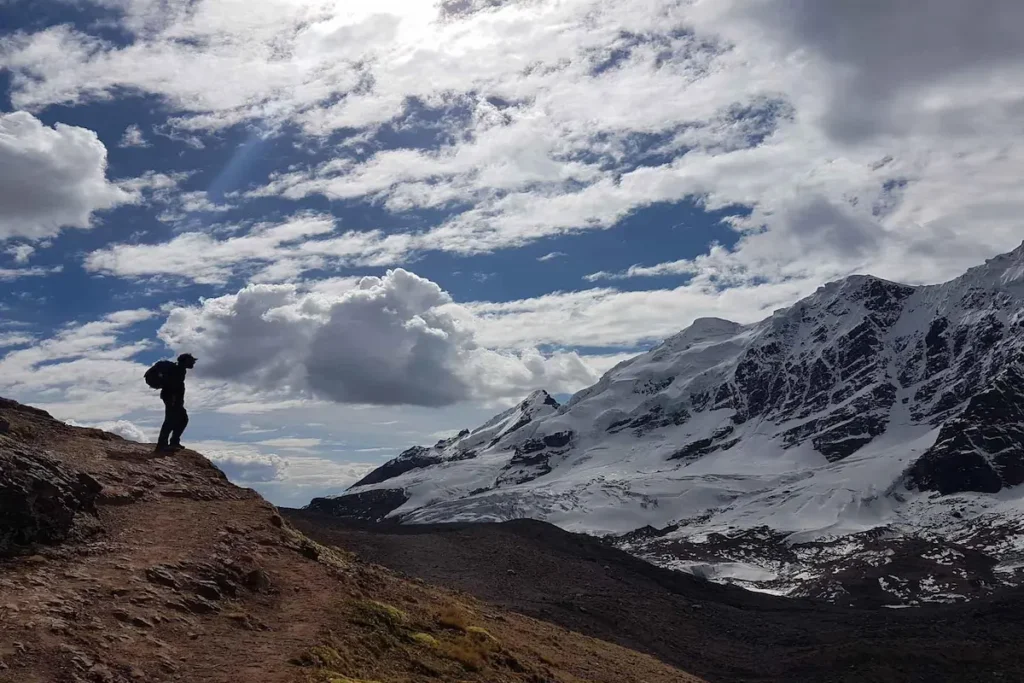
The Ausangate Trek in November is possible, but it comes with increasingly unpredictable weather. November is a transition month between the dry and rainy seasons in the Peruvian Andes, so hikers can experience clear mornings, clouds, rain, and occasional snow at higher elevations.
The advantage is that the trail is quieter and the landscapes begin turning greener. The downside is that conditions are less reliable than from May through September.
Is November a Good Time to Hike the Ausangate Trek?
November can be a good option for experienced hikers who don’t mind occasional rain and prefer fewer people on the trail.
It is generally more favorable than the wetter months of January and February, but less predictable than the main dry season.
| Factor | November Conditions |
|---|---|
| Season | Transition to rainy season |
| Rain | Moderate and increasing |
| Daytime temperatures | Around 5–16°C |
| Nights | Around 0°C or below at high camps |
| Trail conditions | Mostly manageable, increasingly wet |
| Crowds | Low |
| Mountain visibility | Good to variable |
| Landscape | Becoming greener |
| Difficulty | Challenging |
| Recommended? | Yes, with preparation |
Ausangate Weather in November
November marks the transition toward the rainy season around Cusco and the southern Peruvian Andes.
Rain becomes more frequent as the month progresses, but this does not necessarily mean constant rain.
A typical trekking day may begin with clear or partly cloudy skies before clouds develop later in the day.
Hikers should be prepared for:
-
Sunny periods
-
Afternoon rain
-
Cloudy conditions
-
Strong winds at mountain passes
-
Hail
-
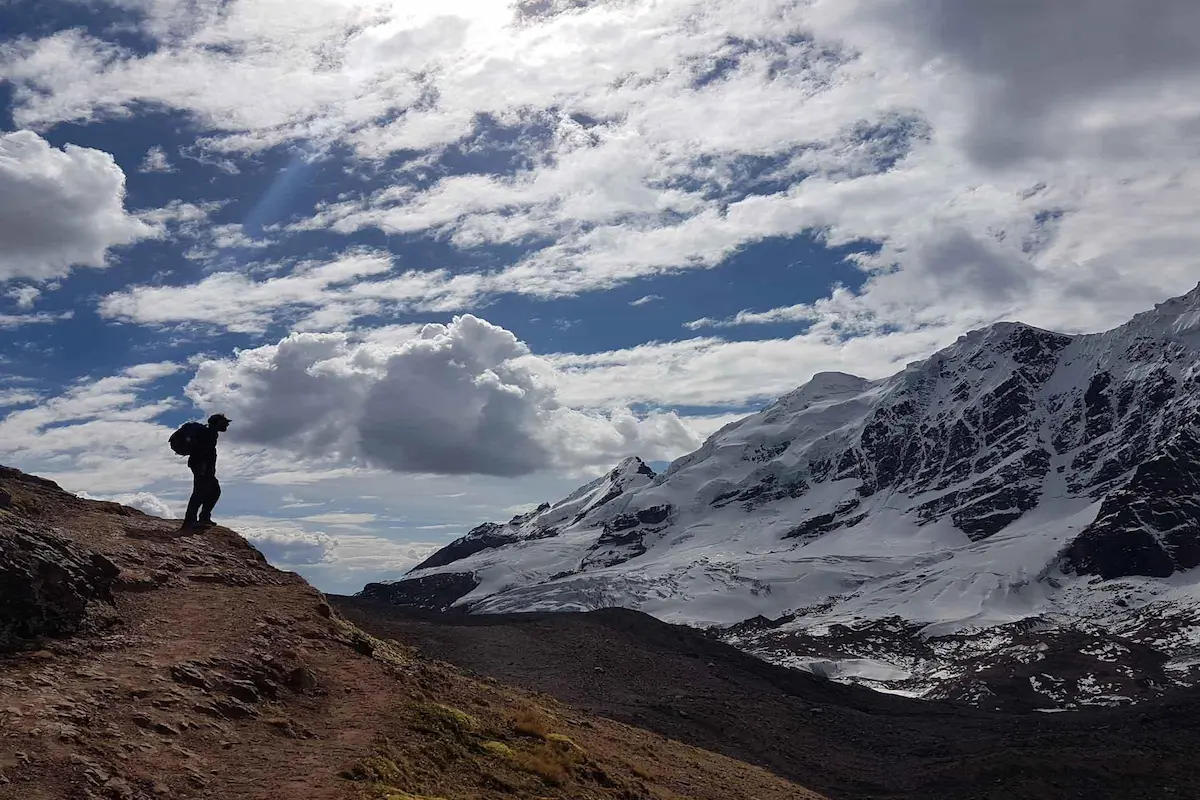
Occasional snow at high elevations
-
Rapid temperature changes
Weather at Ausangate is heavily influenced by altitude, so conditions can change quickly even when the forecast looks favorable.
For a broader seasonal comparison, see our Best Time to Hike the Ausangate Trail guide.
Ausangate Temperatures in November
Daytime temperatures along the Ausangate route can generally range from approximately 5°C to 16°C (41°F–61°F) depending on elevation and weather.
At night, temperatures around high-altitude camps can approach or fall below 0°C (32°F).
Direct sunlight can make daytime conditions feel surprisingly warm, while clouds and wind can cause temperatures to drop quickly.
A good layering system is therefore essential.
Does It Rain a Lot in November?
Rainfall increases during November, particularly toward the second half of the month.
However, November usually should not be treated the same as January or February, which fall deeper within the rainy season.
You may still experience several hours of clear weather during the day.
The important difference from the dry season is predictability. A sunny morning can quickly turn into rain, hail, fog, or even snow around the highest passes.
Early November vs Late November
Your experience can vary depending on when you travel.
| Early November | Late November |
|---|---|
| More dry-season influence | Stronger rainy-season influence |
| Better chance of clear periods | Rain generally becomes more frequent |
| Trails may be relatively dry | Mud becomes more likely |
| Good mountain visibility possible | More clouds may affect views |
| Low crowds | Low crowds |
This does not mean early November will always be dry or late November will always be wet. Mountain weather remains unpredictable.
Is the Ausangate Trek Safe in November?
Yes, the Ausangate Trek can be safely completed in November when weather and trail conditions are suitable.
However, hikers should take changing conditions seriously.
Rain can create muddy or slippery trails, while snow, hail, and fog can affect the highest sections of the trek.
The bigger challenge remains altitude.
Ausangate stays above 4,000 meters for much of the route and crosses passes above 5,000 meters. If you are concerned about elevation, read our Ausangate Trek Altitude guide before planning your trek.
November: High Season or Low Season?
November is generally considered part of the low trekking season.
The busiest months around Ausangate are usually June, July, and August because they offer some of the driest conditions of the year.
By November, visitor numbers have dropped considerably.
This makes November attractive for hikers who want a quieter experience without traveling during the wettest part of the rainy season.
Advantages of Hiking Ausangate in November
Fewer Hikers
One of November’s biggest advantages is the lower number of trekkers.
Campsites and trails generally feel considerably quieter than during the middle of the dry season.
Greener Landscapes
The first substantial rains begin transforming the high-Andean landscape.
Valleys and grasslands become greener compared with the dry conditions commonly seen around August and September.
Good Photography Opportunities
November can produce dramatic combinations of green valleys, snow-covered peaks, clouds, and changing light.
When skies clear, visibility can still be excellent.
Disadvantages of Hiking in November
The main disadvantage is unpredictable weather.
You should be prepared for:
-
Rain
-
Mud
-
Cloud cover
-
Wet equipment
-
Reduced visibility
-
Hail or snow at high elevations
-
Sudden weather changes
Travelers whose main priority is consistently clear mountain views should consider hiking during the dry season instead.
Ausangate Trek: November vs December
November generally offers a slightly better balance between weather and crowds than December.
| November | December |
|---|---|
| Transition season | Rainy season |
| Moderate/increasing rainfall | More frequent rainfall |
| Low crowds | Low crowds |
| Trails can be relatively dry | Mud is more common |
| Good visibility possible | More variable visibility |
| Green landscapes developing | Very green landscapes |
| Good with preparation | Possible with more caution |
If your trip falls near the end of the year, our Ausangate Trek in December guide explains what changes once the wetter season becomes more established.
What Should You Pack for Ausangate in November?
Prepare for both sunshine and rain.
Important equipment includes:
-
Waterproof hiking jacket
-
Rain pants or poncho
-
Waterproof or water-resistant hiking boots
-
Backpack rain cover
-
Warm base layers
-
Fleece or insulated jacket
-
Warm hat and gloves
-
Extra hiking socks
-
Dry bags
-
Sunscreen
-
Sunglasses
-
Sleeping bag suitable for freezing conditions
Don’t underestimate UV exposure simply because November has more clouds.
See our complete Ausangate Trek Packing List for a detailed equipment checklist.
Should Beginners Hike Ausangate in November?
November is possible for beginners who are physically prepared, properly acclimatized, and traveling with appropriate support, but it is not the easiest month for a first high-altitude trek.
Ausangate is challenging even during good weather because of its altitude and remote terrain.
Rain, mud, and changing weather add another difficulty.
Travelers with little trekking experience who have flexible dates may find May through September easier to manage.
For a better understanding of the physical challenge, see our Ausangate Trek Difficulty guide.
How Many Days Should You Acclimatize?
Plan at least 2–3 days of acclimatization around Cusco before starting the trek, particularly if you are arriving from near sea level.
Ausangate reaches significantly higher elevations than Cusco.
Some travelers may benefit from additional acclimatization or shorter hikes around Cusco before attempting the full circuit.
Do You Need a Guide in November?
Independent trekking is possible for experienced hikers, but November’s changing weather makes local knowledge particularly useful.
A guide can help evaluate weather, trail conditions, campsites, and potential itinerary adjustments.
Travelers who prefer an organized route can also consider our Ausangate Trek 5 Days, which explores the main landscapes around the Ausangate massif.
Ausangate Trek Month-by-Month
If your travel dates are flexible, compare November with the rest of the year:
| Month | Weather | Crowds | Overall |
|---|---|---|---|
| Ausangate Trek in January | Very wet | Very low | Difficult |
| Ausangate Trek in February | Very wet | Very low | Least recommended |
| Ausangate Trek in March | Wet | Low | Challenging |
| Ausangate Trek in April | Transition | Low | Good |
| Ausangate Trek in May | Dry | Moderate | Excellent |
| Ausangate Trek in June | Dry & cold | High | Excellent |
| Ausangate Trek in July | Dry & very cold | High | Excellent |
| Ausangate Trek in August | Dry & windy | High | Excellent |
| Ausangate Trek in September | Mostly dry | Moderate | Very good |
| Ausangate Trek in October | Transition | Low–moderate | Good |
| Ausangate Trek in November | Increasing rain | Low | Possible |
| Ausangate Trek in December | Wet | Low | Possible with caution |
For travelers comparing several months, our Best Time to Hike the Ausangate Trail guide provides a complete overview of the trekking seasons.
Can You See Rainbow Mountain in November?
Yes.
November can still provide excellent views of Rainbow Mountain, but clouds, rain, or fog can occasionally reduce visibility.
Early mornings generally provide the best opportunity for clearer conditions, although mountain weather cannot be guaranteed.
Is Ausangate Green in November?
Yes, particularly toward the middle and end of the month.
Increasing rainfall begins turning the grasslands and valleys green again after the long dry season.
This makes November an interesting transition period for photography: landscapes become greener while the heaviest rains of the season have generally not yet arrived.
Is November Better Than December for Ausangate?
For most hikers, November is generally preferable to December.
Both months have fewer visitors and greener scenery than the dry season, but rainfall usually becomes more established as the wet season progresses.
If you have a choice between the two, November—particularly earlier in the month—typically provides a better balance between lower crowds and manageable weather.
So, Should You Hike the Ausangate Trek in November?
Yes, November can be a good month to hike Ausangate if you are prepared for changing weather.
Choose November if you:
-
Want fewer hikers
-
Prefer greener landscapes
-
Don’t mind occasional rain
-
Have proper waterproof equipment
-
Can adapt to changing conditions
Consider the dry season if you:
-
Want the most reliable weather
-
Prioritize clear mountain views
-
Have limited trekking experience
-
Want drier trails
Overall, November is a reasonable shoulder-season choice for the Ausangate Trek. It offers quieter trails and increasingly green scenery, but you must accept a greater chance of rain and clouds than during May through September.
FAQs About Ausangate Trek in November
Can you hike Ausangate in November?
Yes. November is a transition month and the Ausangate Trek remains possible, although hikers should prepare for increasing rainfall and rapidly changing mountain weather.
Is November rainy in Ausangate?
Yes, rainfall increases during November as the region moves toward the rainy season. However, conditions are generally less consistently wet than during January and February.
Is Ausangate crowded in November?
No. November is generally a quiet month on the Ausangate Trek compared with the main trekking season from May through September.
Is November or October better for Ausangate?
October generally has a better chance of dry conditions, while November tends to offer greener landscapes and fewer hikers. Travelers prioritizing stable weather would usually favor October.
Is November or December better for Ausangate?
November is generally the better option because the rainy season becomes more established during December. Actual conditions vary from year to year.
What is the biggest risk in November?
Changing weather is the main seasonal concern. Rain can make trails muddy and slippery, while fog, hail, or snow can affect visibility and conditions around the highest mountain passes.
Related Articles
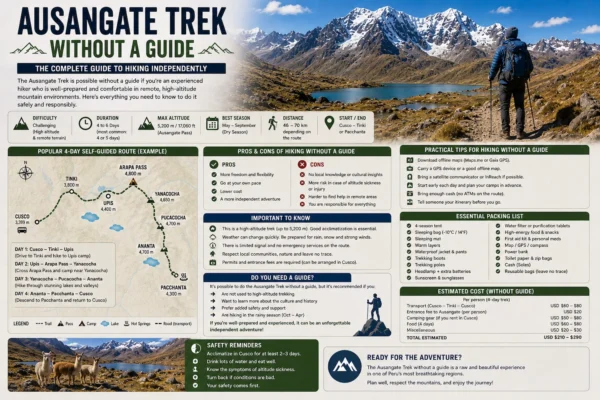
Ausangate Trek Without a Guide
Ausangate Trek Without a Guide Can you do the Ausangate Trek without a guide?…
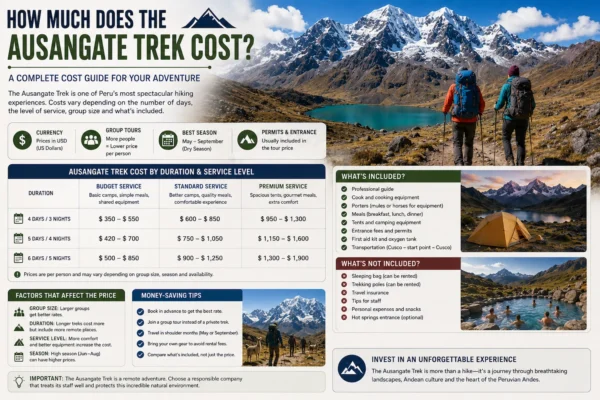
How Much Does the Ausangate Trek Cost?
How Much Does the Ausangate Trek Cost? The Ausangate Trek cost typically ranges from…
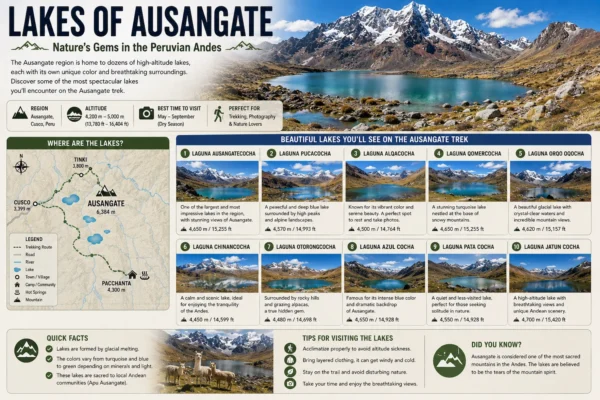
Lakes of Ausangate The Lakes of Ausangate are among the most spectacular natural features…
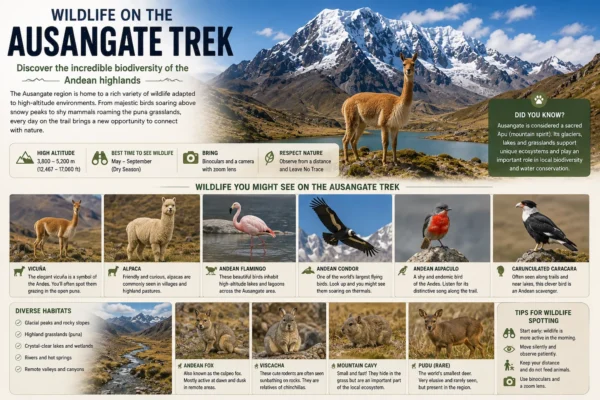
Wildlife on the Ausangate Trek
Wildlife on the Ausangate Trek The wildlife on the Ausangate Trek is adapted to…
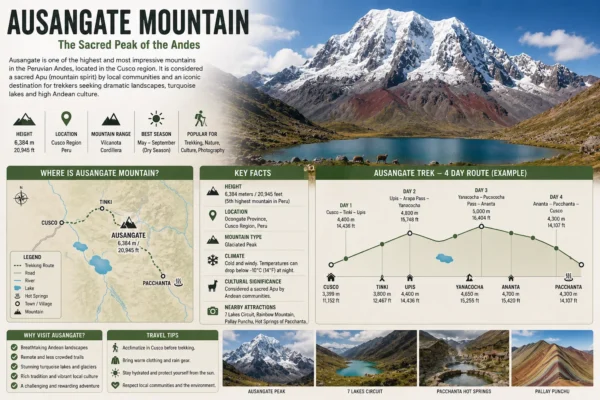
Ausangate Mountain Ausangate Mountain is one of the highest and most important mountains in…
Related Tours