
How to Prepare for the Ausangate Trek
Knowing how to prepare for the Ausangate Trek can make the difference between struggling through the route and genuinely enjoying one of Peru’s most spectacular high-altitude adventures.
Ausangate is not a technical mountaineering route, but it is physically demanding. Much of the trek takes place above 4,000 meters (13,123 feet), with mountain passes reaching approximately 5,000 meters (16,404 feet) or higher on some itineraries.
Preparation should therefore focus on three main areas: physical fitness, altitude acclimatization, and the ability to hike for several consecutive days.
You do not need to train like a professional athlete. You do, however, need to arrive prepared for long hiking days, steep mountain passes, cold conditions, and significantly less oxygen than you are accustomed to at lower elevations.
How Fit Do You Need to Be for the Ausangate Trek?
You should have a good general level of cardiovascular fitness and hiking endurance.
The Ausangate Trek does not require technical climbing skills, but depending on your itinerary, you may spend approximately 5–8 hours walking on some days.
The challenge comes from combining:
-
Long hiking days
-
High altitude
-
Uphill sections
-
Steep mountain passes
-
Uneven terrain
-
Consecutive days of walking
-
Cold mountain conditions
You should ideally be comfortable walking several hours before attempting the trek.
If a full-day hike currently leaves you completely exhausted, begin training well before traveling to Peru.
For a closer look at the physical demands of the route, our Ausangate Trek Difficulty guide explains what makes the trek challenging.
When Should You Start Training for Ausangate?
For most travelers, beginning approximately 6–8 weeks before the trek provides enough time to build a useful fitness base.
If you rarely exercise or hike, starting 8–12 weeks beforehand is even better.
Your training should become progressively more demanding rather than suddenly increasing your workload.
| Time Before Trek | Main Focus |
|---|---|
| 8–12 weeks | Build general fitness |
| 6–8 weeks | Increase cardio and leg strength |
| 4–6 weeks | Longer hikes and elevation gain |
| 2–4 weeks | Back-to-back hiking days |
| Final week | Reduce intensity and recover |
| In Cusco | Acclimatization |
Consistency is more important than extreme workouts.
Cardiovascular Training
Cardiovascular endurance is one of the most important areas to develop.
Good activities include:
-
Hiking
-
Running
-
Cycling
-
Swimming
-
Stair climbing
-
Incline treadmill walking
Aim for approximately 3–4 cardiovascular sessions per week, depending on your existing fitness level.
You do not need to run fast. Longer sessions at a sustainable pace are particularly useful because Ausangate requires endurance rather than short bursts of maximum effort.
Train on Hills Whenever Possible
Flat walking helps, but uphill hiking is considerably more useful.
The Ausangate Trek includes repeated ascents and descents, so your legs should become accustomed to elevation changes.
If you have access to hills or mountains, gradually increase:
-
Hiking distance
-
Elevation gain
-
Time on your feet
-
Difficulty of terrain
If you live somewhere flat, stairs or an inclined treadmill are good alternatives.
Strength Training for Ausangate
Strong legs can make long climbing and descending sections considerably more comfortable.
Focus primarily on:
Squats
Squats strengthen the quadriceps, glutes, and hips used during uphill hiking.
Lunges
Lunges help develop strength and stability while mimicking some of the movement patterns used on uneven terrain.
Step-Ups
Step-ups are particularly useful because they simulate climbing.
Use stairs, a stable bench, or a step platform.
Calf Raises
Strong calves help during prolonged uphill sections.
Core Exercises
Your core helps stabilize your body while walking over uneven terrain and carrying a daypack.
Planks and similar exercises are sufficient for most recreational hikers.
Two strength sessions per week can complement your cardiovascular training.
Practice Hiking with a Daypack
Do not complete all your training without carrying anything and then suddenly wear a backpack on the first day of Ausangate.
During training hikes, use a daypack containing approximately what you expect to carry on the trail.
This helps your shoulders, back, hips, and legs adjust to hiking with additional weight.
If you join an organized trek where horses carry the majority of your luggage, your personal daypack can remain relatively light.
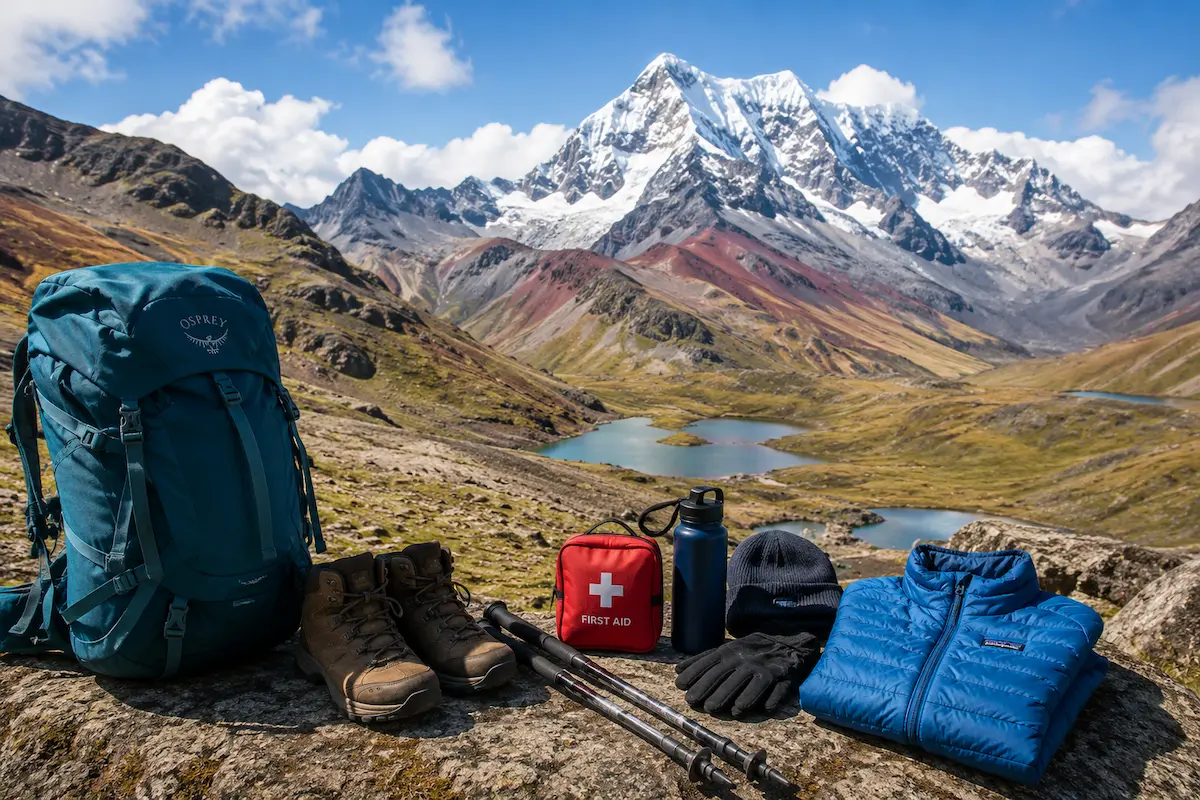
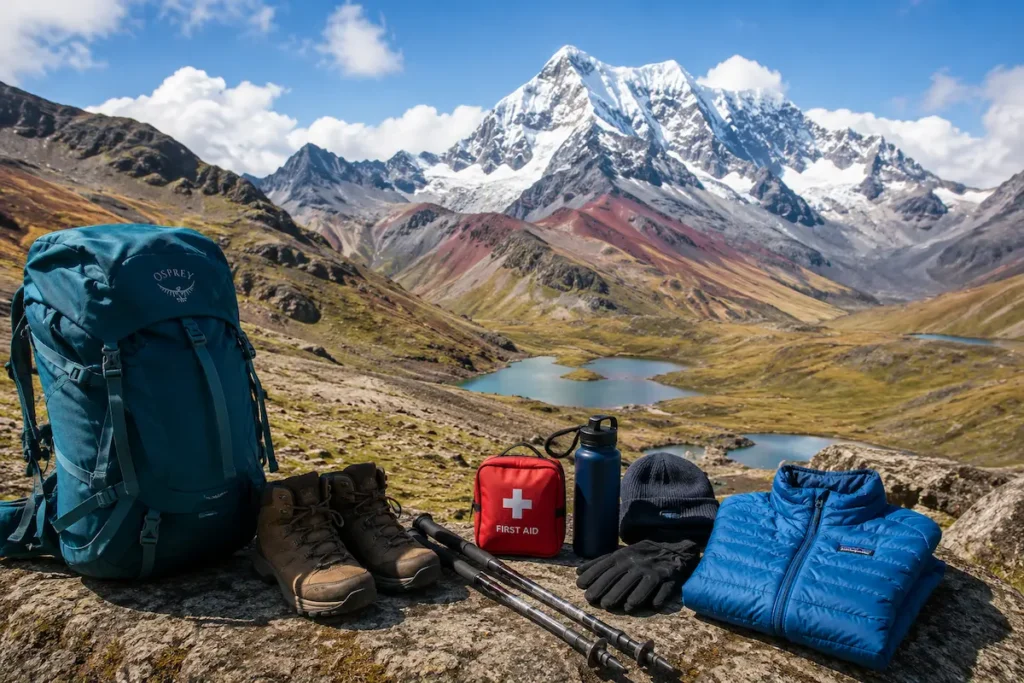
Our complete Ausangate Trek Packing List explains what should go in your daypack and what equipment you should prepare for the trek.
Do Back-to-Back Hiking Days
This is one of the most useful ways to prepare for a multi-day trek.
Ausangate is not challenging because of one isolated day. Your body must wake up and hike again after completing the previous day’s route.
As your departure approaches, try something like:
Saturday: 4–6 hour hike
Sunday: 2–4 hour hike
You do not need to do this every weekend.
The goal is simply to experience walking while your legs are still recovering from the previous day.
Practice Hiking on Uneven Terrain
Gym training cannot completely reproduce mountain conditions.
Whenever possible, hike on trails containing:
-
Rocks
-
Dirt
-
Hills
-
Uneven surfaces
-
Long descents
This helps improve balance and strengthens smaller stabilizing muscles that may not receive much attention during conventional gym exercises.
It is also a good opportunity to become comfortable using trekking poles.
Acclimatization Before the Ausangate Trek
Physical fitness cannot replace acclimatization.
This is one of the most important things to understand when preparing for Ausangate.
Cusco sits at approximately 3,400 meters (11,155 feet), while the Ausangate route climbs significantly higher.
Travelers arriving from low elevation should generally allow at least 2–3 days to acclimatize before beginning the trek.
If your schedule allows additional time, even better.
Suggested Acclimatization Plan
A simple approach could look like this:
Day 1 – Arrive in Cusco
Take things slowly.
Walk around the city, rest, eat normally, and allow your body to begin adjusting.
Avoid immediately attempting a demanding high-altitude hike.
Day 2 – Light Activity
Explore Cusco or complete a relatively easy walk.
The objective is gentle activity rather than exhausting yourself.
Day 3 – Acclimatization Activity
If you are feeling well, consider a moderate hike or excursion that exposes your body to additional elevation.
Day 4 – Begin Ausangate
By this point, you have given your body several days to begin adapting.
Some travelers may require more acclimatization time than others.
Why Altitude Matters So Much
The Ausangate Trek altitude is one of the biggest challenges of the route.
Much of the trail remains above 4,000 meters, and some mountain passes exceed 5,000 meters.
At these elevations, your body receives less oxygen with each breath.
You may notice:
-
Shortness of breath
-
Faster heart rate
-
Headaches
-
Reduced hiking speed
-
Fatigue
-
Difficulty sleeping
Even highly trained athletes can experience altitude problems.
Your fitness determines how efficiently you hike; it does not determine how well your body acclimatizes.
Learn to Walk Slowly
One of the easiest mistakes to make is beginning too quickly.
At high altitude, maintaining a steady pace is usually more effective than alternating between walking quickly and repeatedly stopping to recover.
On steep climbs:
short steps + slow pace + controlled breathing
will usually serve you better than trying to maintain your normal sea-level hiking speed.
Do not treat Ausangate as a race.
Stay Hydrated
High-altitude environments can increase fluid loss through breathing and physical activity.
Drink regularly throughout the day rather than waiting until you feel extremely thirsty.
Your trekking team should provide information about water availability along your specific route.
Avoid excessive alcohol during your acclimatization period, particularly immediately before beginning the trek.
Eat Enough Before and During the Trek
Multi-day hiking requires considerable energy.
During the days before departure, focus on normal balanced meals containing:
-
Carbohydrates
-
Protein
-
Fruits and vegetables
-
Adequate fluids
During the trek, carbohydrates are particularly useful because they provide accessible energy for long hiking days.
If your appetite decreases slightly at altitude, smaller meals and snacks may feel easier to manage.
Prepare for Cold Weather
Ausangate’s elevation means cold conditions should be expected even during Peru’s dry season.
Early mornings, evenings, campsites, and exposed mountain passes can become particularly cold.
Your preparation should include testing your clothing system before traveling.
A practical layering system is:
base layer → insulating layer → waterproof/windproof outer layer
Do not wait until you reach 4,500 meters to discover that your jacket is not warm enough.
Your Ausangate Trek Packing List covers clothing, footwear, sleeping equipment, trekking poles, daypacks, and other essential gear in more detail.
Break In Your Hiking Boots
Never save brand-new hiking boots for the trek.
Wear them during your training hikes.
This allows you to:
-
Identify pressure points
-
Test your hiking socks
-
Adjust the fit
-
Reduce the risk of blisters
-
Confirm they remain comfortable after several hours
The best hiking boots are not necessarily the most expensive ones. They are the ones that fit your feet properly and have already been tested.
Practice Using Trekking Poles
If you plan to use trekking poles on Ausangate, practice beforehand.
Poles can help with stability and reduce some of the stress placed on your knees during long descents.
They are particularly useful on:
-
Steep descents
-
Rocky terrain
-
Muddy sections
-
Uneven trails
Learning the correct length and rhythm before the trek makes them much more useful once you are in the mountains.
Prepare for Changing Weather
Mountain weather can change rapidly.
Even during the dry season, you should be prepared for cold temperatures, wind, strong sunlight, and occasional precipitation.
Conditions become more unpredictable during the wetter months.
Choosing the best time to hike the Ausangate Trek can improve your chances of encountering drier trails and clearer conditions, but there is no month when mountain weather is completely guaranteed.
Always prepare for conditions beyond the ideal forecast.
Mental Preparation Matters Too
Ausangate can test your patience as much as your legs.
There may be moments when you are:
-
Cold
-
Tired
-
Walking slowly
-
Climbing toward another pass
-
Far from modern facilities
Understanding this beforehand makes the experience easier to manage.
Instead of thinking about the entire day’s distance, focus on smaller sections:
the next pass → the next lake → lunch → camp.
The objective is consistent progress rather than speed.
Know What the Trek Actually Involves
Before booking, understand your itinerary.
Ask about:
-
Daily hiking distance
-
Hiking hours
-
Maximum altitude
-
Campsite elevations
-
Number of mountain passes
-
Luggage allowance
-
Sleeping equipment
-
Meals
-
Emergency procedures
Not every Ausangate itinerary follows exactly the same route.
A shorter itinerary can sometimes be more demanding because similar distances and elevation gains are compressed into fewer days.
Understanding the Ausangate Trek difficulty beforehand will help you choose an itinerary appropriate for your experience and fitness.
One Week Before the Trek
Your final week should not contain your hardest training sessions.
Reduce your training volume and allow your body to recover.
Focus on:
-
Light exercise
-
Good sleep
-
Hydration
-
Checking equipment
-
Organizing travel documents
You want to arrive in Peru rested rather than exhausted from training.
The Day Before Ausangate
Keep the day relatively easy.
Check:
-
Daypack
-
Hiking boots
-
Clothing layers
-
Waterproof gear
-
Water bottles
-
Trekking poles
-
Headlamp
-
Personal medication
-
Passport or identification
-
Electronics
Eat a normal meal, hydrate, and get as much rest as possible.
Avoid making major equipment changes at the last minute.
Common Preparation Mistakes
Arriving in Cusco the Day Before
This gives your body very little time to adapt before reaching even higher elevations.
Training Only in the Gym
Gym training helps, but hiking provides much more specific preparation.
Ignoring Descents
People often train for climbing but forget that long descents can be demanding on the knees and quadriceps.
Carrying Too Much
Unnecessary weight becomes considerably more noticeable at altitude.
Buying New Boots Immediately Before Traveling
Untested footwear can turn a manageable trek into several days of blisters and discomfort.
Assuming Fitness Prevents Altitude Sickness
It does not.
Acclimatization remains important regardless of fitness level.
Ausangate Trek Preparation Checklist
-
Begin training 6–8 weeks before departure
-
Build cardiovascular endurance
-
Strengthen legs and core
-
Practice uphill hiking
-
Complete longer weekend hikes
-
Try back-to-back hiking days
-
Train with your daypack
-
Break in hiking boots
-
Practice using trekking poles
-
Review your packing list
-
Spend at least 2–3 days acclimatizing
-
Understand your itinerary and maximum altitude
-
Reduce training during the final week
-
Arrive rested and hydrated
Frequently Asked Questions
How long should I train for the Ausangate Trek?
Around 6–8 weeks of consistent preparation is appropriate for many travelers with an existing basic fitness level. Beginners may benefit from starting 8–12 weeks before departure.
Do I need to be very fit for Ausangate?
You do not need elite fitness, but good cardiovascular endurance and strong legs are helpful. You should be comfortable hiking for several hours on consecutive days.
How many days should I acclimatize before Ausangate?
Travelers arriving from low elevation should generally allow at least 2–3 days in Cusco or at altitude before beginning the trek. Individual acclimatization varies.
Can beginners do the Ausangate Trek?
A well-prepared beginner can complete Ausangate, but it is a demanding choice for a first multi-day trek. Proper training, acclimatization, equipment, and an appropriate itinerary are particularly important.
Should I train with a backpack?
Yes. Training with the daypack you expect to use helps your shoulders, back, hips, and legs adjust to carrying weight while hiking.
Is altitude training necessary?
If you have access to mountains, training at elevation can be useful, but many travelers do not. Cardiovascular fitness can be developed at lower elevation; actual acclimatization should take place after arriving at altitude.
Is Ausangate technically difficult?
The standard trekking routes do not normally require technical climbing skills. The main challenges are altitude, long hiking days, mountain passes, cold conditions, and remote terrain.
Final Thoughts
Learning how to prepare for the Ausangate Trek is less about extreme training and more about preparing specifically for what the route demands.
Build cardiovascular endurance, strengthen your legs, hike regularly, practice consecutive walking days, and test your equipment before traveling.
Most importantly, give yourself enough time to acclimatize.
Ausangate’s combination of high altitude, remote terrain, mountain passes, and consecutive hiking days is what makes the route challenging. Proper preparation will not make every climb easy, but it can make the entire experience significantly more manageable.
Before heading into the mountains, review the Ausangate Trek Packing List, understand the Ausangate Trek altitude, and evaluate the Ausangate Trek difficulty so you know exactly what to expect.
Related Articles
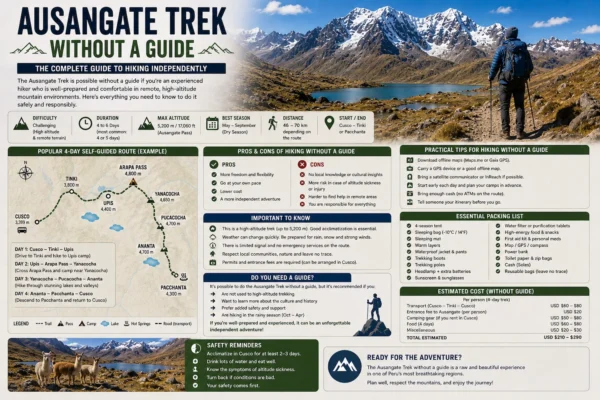
Ausangate Trek Without a Guide
Ausangate Trek Without a Guide Can you do the Ausangate Trek without a guide?…
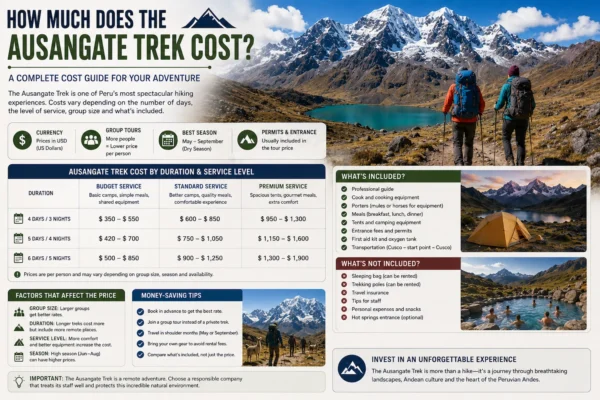
How Much Does the Ausangate Trek Cost?
How Much Does the Ausangate Trek Cost? The Ausangate Trek cost typically ranges from…
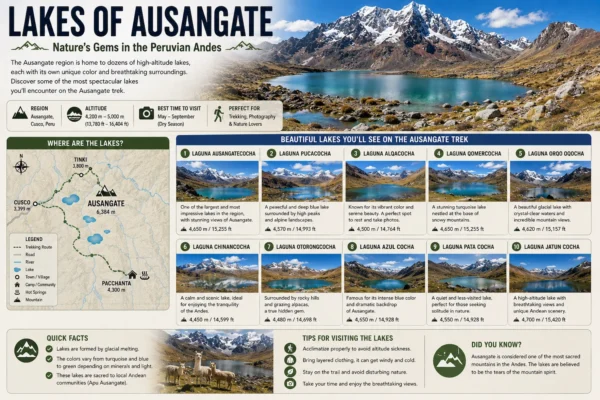
Lakes of Ausangate The Lakes of Ausangate are among the most spectacular natural features…
Wildlife on the Ausangate Trek
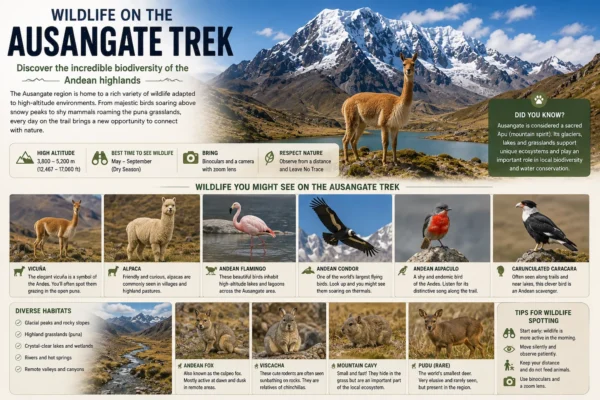
Wildlife on the Ausangate Trek The wildlife on the Ausangate Trek is adapted to…
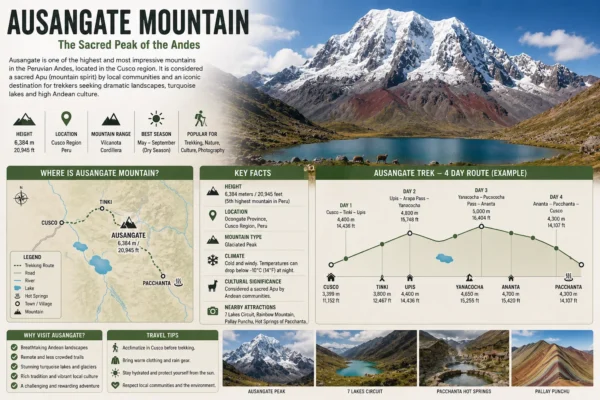
Ausangate Mountain Ausangate Mountain is one of the highest and most important mountains in…
Related Tours