
Cusco to Machu Picchu
Traveling from Cusco to Machu Picchu is not as simple as driving directly from one place to the other.
There is no road connecting Cusco with the entrance to Machu Picchu. For most travelers, the journey combines road transportation, train travel, and a final bus ride from Aguas Calientes to the archaeological site.
The most common route looks like this:
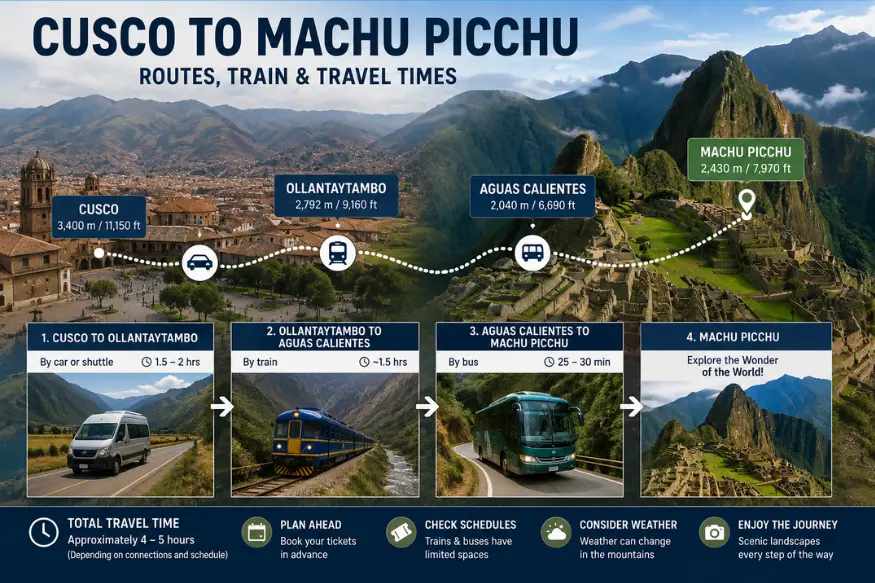
Cusco → Ollantaytambo → Aguas Calientes → Machu Picchu
But that is not your only option.
You can also take certain train services from stations closer to Cusco, hike the Inca Trail, or travel by road toward Hidroelectrica and continue to Aguas Calientes on foot.
Which route makes sense depends on your time, budget, train schedule, and how you want to experience the journey.
How Far Is Machu Picchu from Cusco?
Machu Picchu is approximately 75 km (47 miles) northwest of Cusco in a straight line.
That number can be misleading.
The Andes stand between the two destinations, and there is no direct highway connecting central Cusco with Machu Picchu.
This is why a journey between two places that look fairly close on a map can take several hours.
If you want to understand the geography first, our guide to where Machu Picchu is located explains its position relative to Cusco, the Sacred Valley, Aguas Calientes, and the Urubamba River.
How Do You Get from Cusco to Machu Picchu?
For most visitors, there are four practical ways to travel from Cusco to Machu Picchu:
| Route | Best For | Approximate Travel Style |
|---|---|---|
| Train via Ollantaytambo | Most travelers | Car/bus + train + final bus |
| Train from a Cusco-area station | Convenience | Transfer + train + final bus |
| Inca Trail | Hiking experience | Trek + arrival at Machu Picchu |
| Hidroelectrica route | Budget/flexible travelers | Long road journey + walking |
The train route is the easiest option for most first-time visitors.
But even within that option, there are several ways to organize the journey.
Cusco to Machu Picchu via Ollantaytambo
The route through Ollantaytambo is one of the most commonly used ways to reach Machu Picchu.
The journey has three main stages.
1. Cusco to Ollantaytambo
You first travel by road from Cusco to Ollantaytambo in the Sacred Valley.
Depending on traffic, pickup location, and route, the drive generally takes around 1 hour 30 minutes to 2 hours.
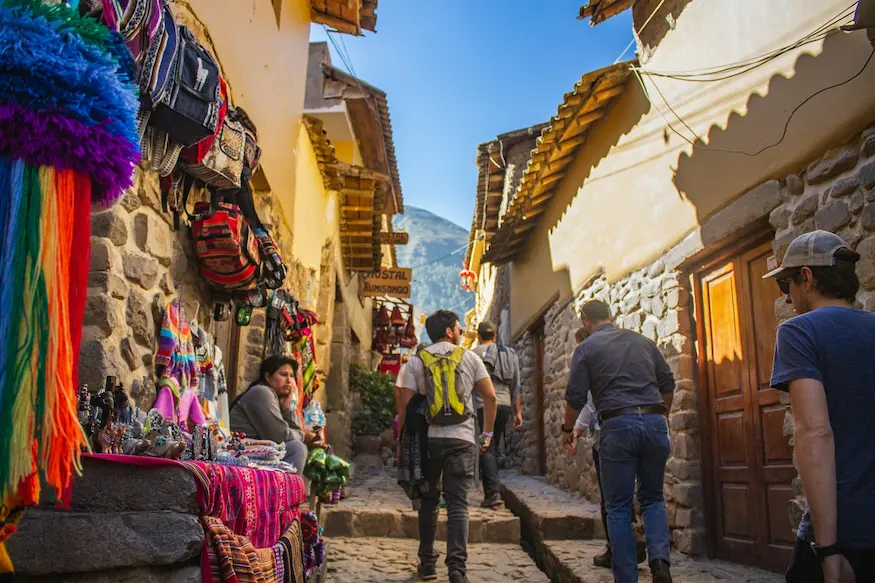
Ollantaytambo is not simply a transfer point.
It is an important Inca town and one of the main railway gateways to Machu Picchu.
2. Ollantaytambo to Aguas Calientes
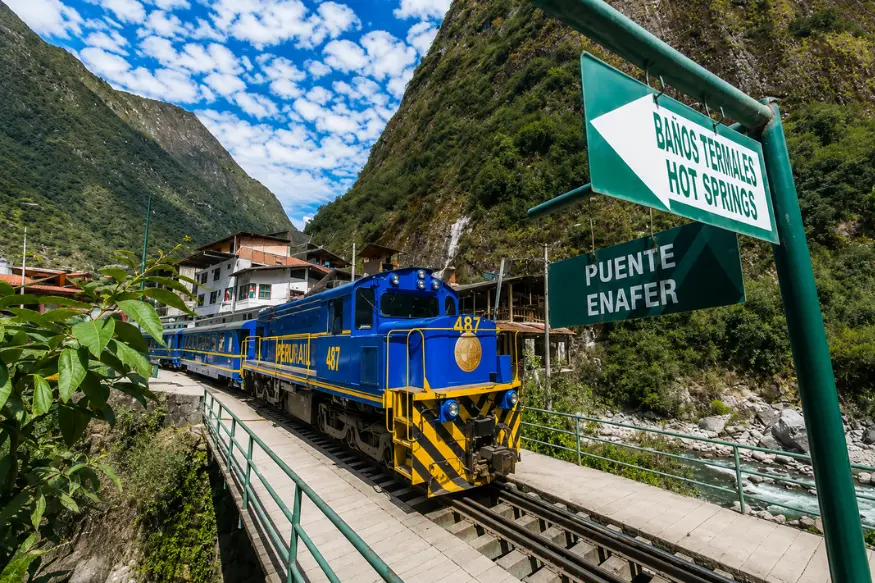
From Ollantaytambo, you board the train toward Aguas Calientes, also called Machupicchu Pueblo.
The train follows the Urubamba River as the valley becomes narrower and greener.
Travel time is generally around 1 hour 30 minutes, depending on the service.
3. Aguas Calientes to Machu Picchu
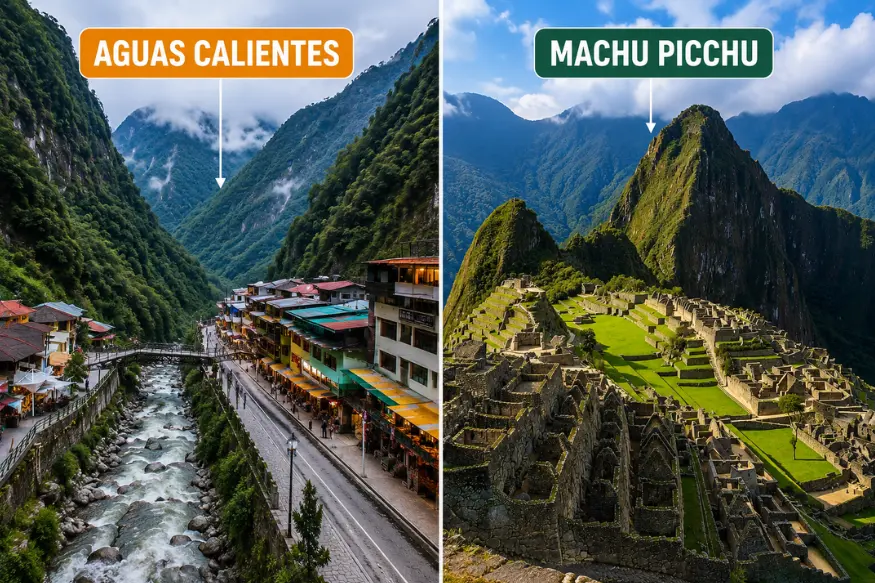
Aguas Calientes sits in the valley below the archaeological site.
From here, most travelers take the shuttle bus up the winding road to the entrance of Machu Picchu.
The ride generally takes around 25–30 minutes.
Walking uphill is also possible, although it requires considerably more effort.
How Long Does It Take to Get from Cusco to Machu Picchu?
For most travelers using the train, expect the complete journey to take approximately 4 to 5 hours, depending on connections.
It can be longer.
Your total time depends on:
- Where your train departs
- Road traffic
- Transfer times
- Train schedule
- Waiting time between connections
- Bus queues in Aguas Calientes
- Your Machu Picchu entrance time
This is why planning the connections matters.
A train journey that looks simple on paper can become stressful if you leave too little time between your road transfer, train departure, and Machu Picchu entrance.
Can You Visit Machu Picchu from Cusco in One Day?
Yes.
A Machu Picchu day trip from Cusco is possible and is one of the most common ways travelers visit the archaeological site.
But it is a long day.
You normally leave Cusco very early, travel toward the train station, take the train to Aguas Calientes, continue by bus to Machu Picchu, visit the archaeological site, and then complete the entire journey in reverse.
A typical structure looks like this:
Early morning: Cusco → train station
Morning: Train → Aguas Calientes
Late morning / midday: Machu Picchu
Afternoon: Return to Aguas Calientes and train
Evening: Return to Cusco
The exact schedule depends heavily on train and entrance availability.
A day trip works well if your time in Peru is limited.
If you prefer a slower experience, staying one night in Aguas Calientes removes some of the pressure from the same-day journey.
Should You Stay Overnight in Aguas Calientes?
You do not have to, but there are advantages.
Staying overnight allows you to separate the journey from Cusco and the Machu Picchu visit.
Instead of spending several hours traveling before entering the archaeological site, you can arrive in Aguas Calientes the previous afternoon or evening and visit Machu Picchu the following day.
This can be particularly useful if you have an early entrance.
It also gives you more flexibility if you want to spend time in the town before or after your visit.
The tradeoff is simple: you need another night in your itinerary.
For travelers with very limited time, a same-day journey from Cusco may still make more sense.
Can You Take a Train Directly from Cusco to Machu Picchu?
You can take train services from the Cusco area, but there is an important detail.
The train does not arrive directly at the Machu Picchu archaeological entrance.
It arrives in Aguas Calientes.
From there, you still need to reach Machu Picchu by shuttle bus or on foot.
Train departure stations and services can also vary according to the operator and season.
Some journeys may involve a combined bus-and-train service rather than remaining on the train for the entire route.
This is why you should always check the exact departure station shown on your ticket rather than simply assuming your train leaves from central Cusco.
Cusco to Machu Picchu by Train
For most travelers, the train is the most practical option.
The railway follows the valley toward Aguas Calientes and avoids the need for a long multi-day trek.
There are different train categories, departure stations, schedules, and service levels.
The important thing at this stage is understanding the route:
Cusco or Sacred Valley → train → Aguas Calientes
The train itself is only one part of the journey.
Our dedicated Train to Machu Picchu guide will cover operators, stations, luggage rules, schedules, train types, and how to choose the right service without turning this article into a train manual.
Cusco to Machu Picchu via the Sacred Valley
Another good option is to combine Machu Picchu with time in the Sacred Valley.
Instead of returning to Cusco before traveling to Machu Picchu, you can stay in places such as Urubamba or Ollantaytambo and continue from there.
This can make the route more efficient.
For example:
Cusco → Sacred Valley → Ollantaytambo → Aguas Calientes → Machu Picchu
Ollantaytambo is particularly convenient because it has one of the main train stations used for Machu Picchu journeys.
This route can also reduce the amount of backtracking in your itinerary.
Cusco to Machu Picchu via the Inca Trail
The Inca Trail provides a completely different way of reaching Machu Picchu.
Instead of arriving first in Aguas Calientes and taking the bus to the entrance, hikers approach Machu Picchu through part of the ancient Inca road network.
The Classic Inca Trail normally takes several days.
There is also a shorter version that allows travelers to hike part of the route before reaching the Machu Picchu area.
This is not simply transportation.
The trail is an experience in itself, with archaeological sites, mountain passes, cloud forest, and sections of original Inca road.
It requires permits and advance planning, particularly during popular travel periods.
Cusco to Machu Picchu Without the Train
Yes, it is possible to reach the Machu Picchu area without taking the traditional train route.
The best-known alternative involves traveling by road toward Hidroelectrica.
From there, travelers can continue toward Aguas Calientes on foot.
This option usually takes much longer than traveling by train and involves a lengthy road journey.
It appeals mainly to travelers looking for a lower-cost alternative or a different travel experience.
However, it should not be confused with driving directly to Machu Picchu.
There is still no normal road to the archaeological entrance.
Our future How to Get to Machu Picchu Without the Train guide will explain this route separately.
Can You Drive from Cusco to Machu Picchu?
No.
You cannot drive directly from Cusco to the Machu Picchu archaeological site.
This is one of the most common misunderstandings when planning the trip.
You can drive through parts of the Sacred Valley and toward alternative access points, but the road network does not continue directly to Machu Picchu.
The geography helps explain why.
Machu Picchu sits on a mountain ridge above the Urubamba River, surrounded by steep slopes and narrow valleys.
Its unusual location has shaped access to the site for centuries.
Cusco vs. Machu Picchu Elevation
You might expect to climb higher as you travel from Cusco into the mountains.
The opposite happens.
Cusco: approximately 3,400 m / 11,150 ft
Machu Picchu: approximately 2,430 m / 7,970 ft
You descend almost 1,000 meters between the two destinations.
This is why Machu Picchu often feels warmer and more humid than Cusco.
Our Machu Picchu elevation guide compares the altitude of Machu Picchu with Cusco, Ollantaytambo, Aguas Calientes, Huayna Picchu, and Machu Picchu Mountain.
What Is the Weather Like Between Cusco and Machu Picchu?
Do not assume the weather you see in Cusco will be the same at Machu Picchu.
Cusco is higher and generally cooler.
As you travel toward Machu Picchu, the valley becomes lower, greener, and more humid.
You may leave Cusco on a cold morning and arrive in much warmer conditions near Aguas Calientes.
Rainfall patterns also change throughout the year.
Before packing based only on the Cusco forecast, check our Machu Picchu weather guide to understand temperatures, rainy-season conditions, and the drier months.
Is the Journey from Cusco to Machu Picchu Scenic?
Yes.
The journey is part of the experience.
As you leave Cusco and move toward the Sacred Valley, the landscape opens into agricultural valleys surrounded by mountains.
From Ollantaytambo onward, the railway follows the Urubamba River.
The valley gradually narrows.
Mountain slopes become steeper.
Vegetation becomes denser.
By the time you reach Aguas Calientes, the environment looks noticeably different from Cusco.
Understanding where Machu Picchu is located makes this transformation easier to understand: you are moving from the high Andes toward a humid mountain environment closer to the Amazon basin.
What Is the Easiest Way to Get from Cusco to Machu Picchu?
For most first-time visitors, the easiest option is
Cusco → Ollantaytambo → train to Aguas Calientes → bus to Machu Picchu.
It is straightforward, widely used, and gives you many possible train schedules.
Travelers who want fewer transfers may prefer services departing from stations closer to Cusco when suitable schedules are available.
Those who want the journey itself to become part of the adventure may prefer the Inca Trail.
And travelers prioritizing budget over speed may consider the Hidroelectrica route.
There is no single route that is best for everyone.
The right one depends on your itinerary.
One day or two days from Cusco to Machu Picchu?
If your itinerary is tight, one day is possible.
If you have more time, two days is more relaxed.
| One-Day Trip | Two-Day Trip |
| Very early start | More relaxed departure |
| Long travel day | Journey divided over two days |
| No hotel needed in Aguas Calientes | One hotel night required |
| Efficient for short itineraries | More flexibility |
| Connections matter greatly. | Easier for early Machu Picchu entry |
Neither option is automatically better.
A traveler with four days in Cusco may value the efficiency of a day trip.
Someone with two weeks in Peru may prefer spending a night near Machu Picchu.
What Should You Book First?
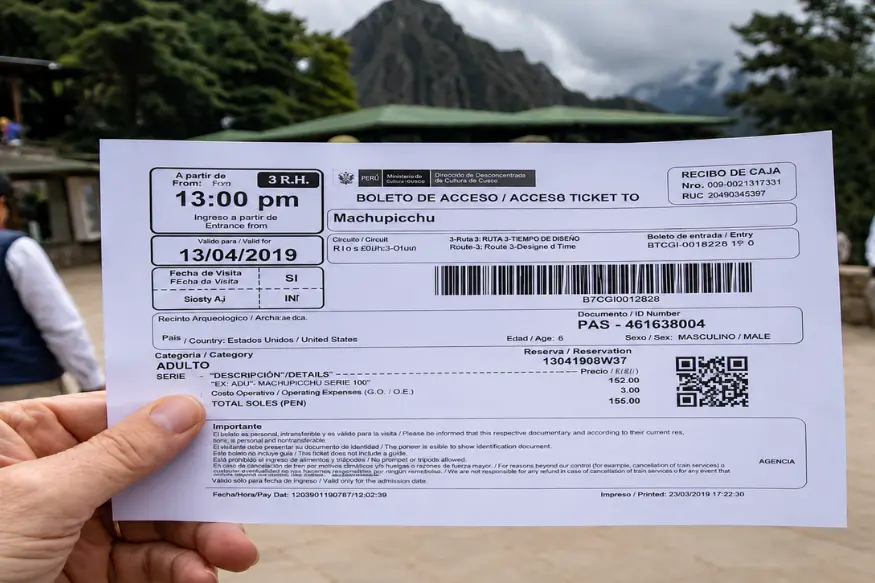
Your Machu Picchu entrance ticket should be one of the first things you confirm.
Train times and transportation can then be organized around your entrance schedule.
This becomes particularly important during high-demand periods.
Booking a train before knowing when you can enter Machu Picchu can leave you with inconvenient connections.
Think of the journey as one connected itinerary:
Machu Picchu ticket → train schedule → transfers → Aguas Calientes bus → return journey
Each part needs enough time to connect with the next.
Planning Your Cusco to Machu Picchu Journey
For most travelers, getting from Cusco to Machu Picchu is easier than it first appears.
You simply need to understand that it is not one continuous ride.
The most common journey is
Cusco → Ollantaytambo → Aguas Calientes → Machu Picchu
You travel by road, continue by train, and complete the final section by bus.
Once those three stages are clear, planning becomes much easier.
Choose your Machu Picchu entrance first, select a train that works with that schedule, and leave enough time between connections.
The mountains make Machu Picchu difficult to reach directly.
They are also the reason the journey there is unlike almost any other trip in Peru.
Related Articles
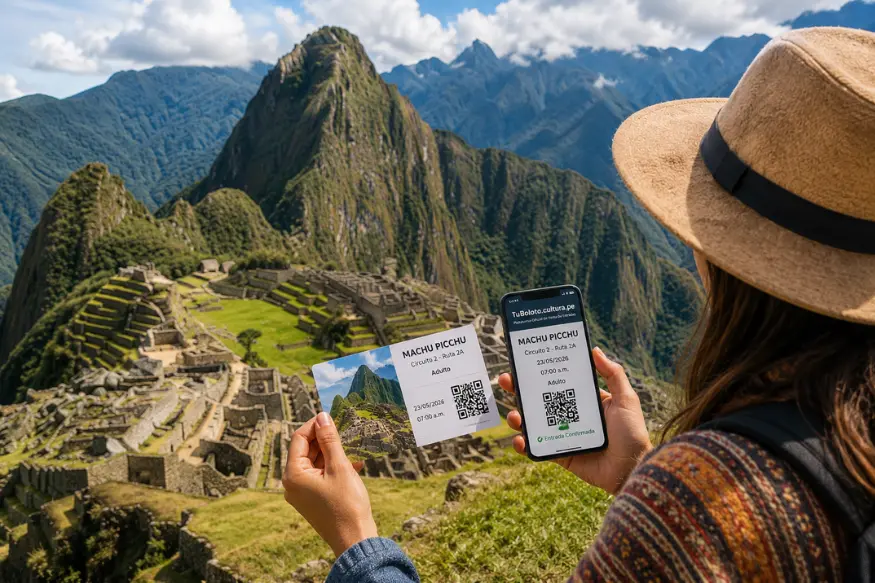
Machu Picchu Ticket Prices Machu Picchu ticket prices depend on the route you choose…
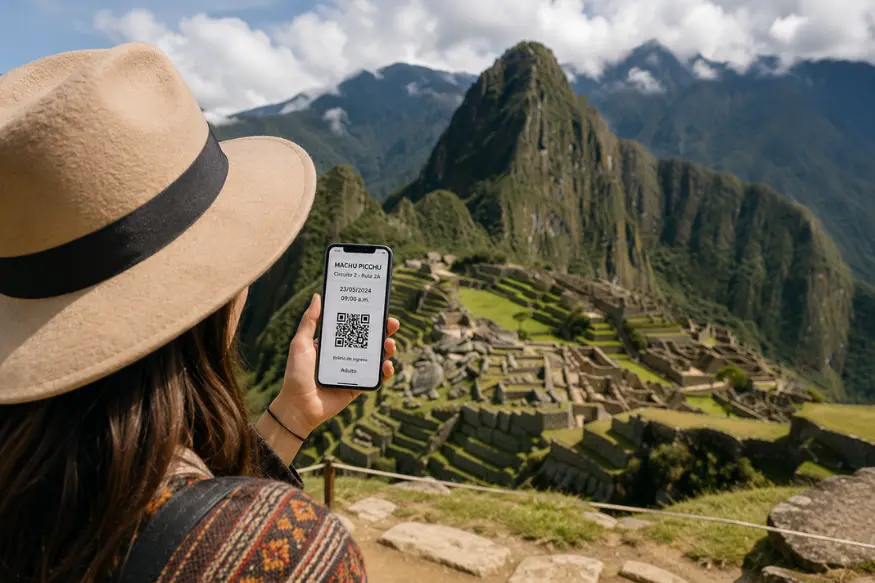
How to Buy Machu Picchu Tickets
How to Buy Machu Picchu Tickets: Step-by-Step Guide Buying Machu Picchu tickets is simple…
Machu Picchu Tickets Buying your Machu Picchu tickets is one of the most important…
Machu Picchu Elevation: How High Is Machu Picchu? Taking the train to Machu Picchu…
Aguas Calientes to Machu Picchu
Machu Picchu Elevation: How High Is Machu Picchu? Once you arrive in Aguas Calientes,…
Related Tours